Tag: Patient Education

Clear, practical explanations of common symptoms, causes, and next steps—so you understand what’s going on and what typically helps.

  • Neck Pain in Logansport, IN: Common Causes, Red Flags, and What Actually Helps

    Neck Pain in Logansport, IN: Common Causes, Red Flags, and What Actually Helps

    NECK PAIN · PATIENT EDUCATION · LOGANSPORT, IN

    Pattern-based neck pain guide Includes red flags + what helps first Built for desk, driving, sleep, and injury patterns

    Neck Pain in Logansport, IN: Common Causes, Red Flags, and What Actually Helps

    A practical guide to sort out neck pain patterns—posture, muscle, joint, nerve, headache, or injury-related.

    Educational image for neck pain in Logansport showing common causes, red flags, and what usually helps first.
    Image 1: Neck pain patterns often give clues about what is driving the problem.
    Location matters: neck-only, base-of-skull, shoulder blade, or arm symptoms tell different stories
    Red flags matter: weakness, spreading numbness, trauma, fever, or severe headache need prompt evaluation
    The best plan combines motion, posture strategy, strength, and targeted care when needed

    Neck pain is common, but the “why” matters. A stiff neck from desk posture is handled differently than arm tingling, whiplash, or neck-related headaches. If you want care options, start with Neck Pain Relief. If symptoms travel into the arm, see Numbness, Tingling & Pinched Nerve Treatment. If headaches are part of the pattern, see Headache & Migraine Relief.

    • Use the pattern check to narrow down what may be driving your neck pain
    • Start with gentle movement and position changes—not aggressive stretching
    • Get checked promptly if symptoms are worsening, neurological, or trauma-related

    Educational only. Not medical advice. Seek urgent care for severe/worsening symptoms or red flags.

    Quick Answer: What Neck Pain Usually Needs First

    Most neck pain improves best with a combination of gentle motion, better position habits, upper-back mobility, and gradually rebuilding strength. The key is matching the plan to the pattern—not guessing.

    Supporting image showing how careful assessment helps separate posture, joint, muscle, nerve, headache, and injury-related neck pain patterns.
    Image 2: The right plan depends on whether the pattern is posture, joint, muscle, nerve, headache, or injury-related.
    If it feels stiff/tight:

    Start with gentle motion, heat, posture breaks, and upper-back mobility. Avoid repeatedly forcing painful end ranges.

    If it travels into the arm:

    Treat it like a possible nerve pattern. Avoid loading positions that reproduce symptoms and get evaluated if symptoms persist or worsen.

    If headaches are involved:

    Look closely at the upper neck, screen posture, jaw tension, sleep position, and headache red flags.

    Not sure what bucket you’re in? Start with Neck Pain Relief or compare patterns with Neck Pain with Arm Tingling: Pinched Nerve vs. Muscle Tension.

    Pattern Check: What Kind of Neck Pain Does This Sound Like?

    Use these clues to self-sort. This is not a diagnosis—but it helps you choose the right next step.

    1

    Posture / tech-neck pattern

    Feels like: tightness, fatigue, soreness after desk work, phone use, driving, or reading.

    Usually helps: screen height changes, micro-breaks, upper-back motion, and neck endurance work.

    Read: Tech Neck: Why Screens Trigger Neck Pain.

    2

    Joint / stiffness pattern

    Feels like: restricted turning, one-sided stiffness, “blocked” motion, or pain with looking over your shoulder.

    Usually helps: gentle mobility, chiropractic adjustments when appropriate, and controlled strengthening.

    Start with: Chiropractic Adjustments.

    3

    Muscle guarding / tension pattern

    Feels like: tight traps, shoulder blade soreness, stress-related tension, or soreness after sleeping awkwardly.

    Usually helps: heat, movement, breathing/relaxation, and avoiding aggressive stretching.

    4

    Nerve / arm symptoms pattern

    Feels like: pain, numbness, tingling, burning, or weakness traveling into the shoulder, arm, hand, or fingers.

    Usually helps: careful evaluation, symptom-guided positioning, and avoiding repeated nerve irritation.

    Read: Pinched Nerve vs. Muscle Tension.

    5

    Headache-related neck pattern

    Feels like: pain starting at the base of the skull, neck tightness with headaches, or headaches after screens/posture.

    Usually helps: upper-neck/upper-back work, posture changes, and headache-specific screening.

    Read: Tension vs. Migraine vs. Neck-Related Headaches.

    6

    Injury / whiplash pattern

    Feels like: neck pain after a car accident, fall, sports hit, or sudden movement—often worse on day 2–3.

    Usually helps: red-flag screening, gentle early motion, and graded return to activity.

    Start with: Auto Accident & Whiplash Care.

    Common Causes of Neck Pain

    Most neck pain is not caused by one single thing. It is usually a mix of load, position, stiffness, stress, sleep, and tissue sensitivity.

    Cause Common clues Best first step
    Desk / screen posture Worse after computer, phone, or driving time Change the setup + add micro-breaks
    Joint stiffness Limited turning, one-sided stiffness, “blocked” motion Gentle mobility + exam-guided care
    Muscle tension Tight traps, shoulder blade ache, stress-related symptoms Heat, motion, breathing, light strength
    Nerve irritation Arm pain, tingling, numbness, weakness, burning Get evaluated if persistent or worsening
    Neck-related headache Base-of-skull pain, headaches with neck stiffness Screen headache red flags + address upper neck
    Whiplash / injury Symptoms after crash, fall, sports hit, or sudden movement Screen red flags + graded movement plan

    What Actually Helps Neck Pain?

    For most people, the winning plan is not “just stretch it.” It is: calm symptoms, restore motion, improve position tolerance, then build strength.

    1. Gentle motion beats complete rest

    Total rest can make neck pain feel stiffer. Use comfortable motion: slow turns, chin nods, shoulder rolls, and easy upper-back movement. Stay away from sharp pain or symptoms that travel into the arm.

    2. Fix the repeated trigger

    If the same position flares you every day, the setup matters. Monitor height, chair position, arm support, phone angle, and driving posture can all change neck load. Read next: Best Desk Setup for Neck Pain.

    3. Build tolerance with strength—not aggressive stretching

    Stretching may feel good for a few minutes, but recurring neck pain often needs endurance: deep neck flexor control, upper-back strength, shoulder blade support, and better break habits.

    4. Use care that matches the driver

    If joint stiffness, movement restriction, or guarding is part of the pattern, chiropractic care may help restore motion and calm irritation. Start here: Neck Pain Relief.

    A Simple 7-Day Neck Pain Calm-Down Plan

    Keep this gentle. The goal is to calm symptoms and stop feeding the trigger—not force your neck into submission.

    Day Focus What to do
    Day 1Calm symptomsHeat 10–15 minutes, gentle neck turns, short walks, avoid repeated painful positions.
    Day 2Change the triggerRaise screen, support arms, stop looking down at phone for long stretches.
    Day 3Add upper-back motionThoracic extension over chair, shoulder blade squeezes, easy walking.
    Day 4Build toleranceGentle chin nods, light rows or band pull-aparts if tolerated.
    Day 5Check the patternNotice whether symptoms are neck-only, headache-related, or traveling into the arm.
    Day 6Repeat what helpsKeep the top 2–3 helpful changes. Avoid “testing” painful motion repeatedly.
    Day 7Decide next stepIf improving, keep progressing. If recurring/worsening, get evaluated.

    If symptoms are improving: keep building gradually. If they are recurring, spreading, or worsening: schedule a visit through Book Now or start with Neck Pain Relief.

    Want Help Figuring Out What’s Driving Your Neck Pain?

    We’ll look at your movement, posture triggers, joint motion, nerve signs, headaches, and daily habits—then build a plan that fits your pattern.

    When to Worry About Neck Pain

    Most neck pain is not dangerous, but some symptoms should be evaluated promptly.

    Get checked promptly if you notice:

    • Weakness, numbness, or tingling that is spreading or worsening
    • Loss of balance, clumsiness, trouble walking, or coordination changes
    • Severe headache, confusion, vision changes, fainting, or repeated vomiting
    • Fever, severe neck stiffness, or feeling very ill
    • Neck pain after trauma, especially a car accident, fall, or sports collision
    • Pain that is rapidly worsening or not responding to reasonable modification

    If the neck pain started after a crash, start with Auto Accident & Whiplash Care. If arm symptoms are involved, see Numbness, Tingling & Pinched Nerve Treatment.

    Neck Pain FAQs

    Quick answers for common neck pain questions.

    What are the most common causes of neck pain?
    Common causes include posture overload, muscle guarding, joint stiffness, irritated discs, nerve irritation, neck-related headaches, stress tension, and whiplash or other injuries.
    When should I worry about neck pain?
    Get checked promptly for neck pain with spreading weakness, numbness, balance changes, fever, severe headache, trauma, or pain that is rapidly worsening.
    Can neck pain cause headaches?
    Yes. Neck stiffness, upper cervical irritation, and posture-related tension can contribute to headaches, especially when pain starts near the base of the skull or worsens with sustained positions.
    What helps neck pain the fastest?
    Many people do best with gentle movement, posture breaks, heat, avoiding repeated painful positions, and a plan that restores neck and upper-back motion gradually.
    Should I stretch my neck if it hurts?
    Gentle movement is often helpful, but aggressive stretching can irritate symptoms. Stay in comfortable ranges and avoid sharp pain, dizziness, or symptoms traveling into the arm.
    What if neck pain goes into my arm?
    Pain, numbness, tingling, or weakness traveling into the arm can suggest nerve irritation. It should be evaluated, especially if symptoms are spreading, worsening, or affecting grip strength.
    Can chiropractic care help neck pain?
    Often, yes—especially when neck pain is related to joint stiffness, posture overload, movement restriction, or muscle guarding. The best results usually combine hands-on care with movement and ergonomic changes.
    How long does neck pain take to improve?
    Simple neck pain often improves over days to weeks with the right plan. Recurring, nerve-related, or injury-related patterns may take longer and should be guided by an exam.

  • How to Sit, Sleep, and Lift with Low Back Pain (A Practical 7-Day Plan)

    How to Sit, Sleep, and Lift with Low Back Pain (A Practical 7-Day Plan)

    LOW BACK PAIN · PRACTICAL 7-DAY PLAN · LOGANSPORT, IN

    Position changes that calm irritation Sitting, sleeping, and lifting rules Built around the next-day rule

    How to Sit, Sleep, and Lift with Low Back Pain (A Practical 7-Day Plan)

    A simple, realistic plan to calm irritation, protect your back, and rebuild confidence without guessing.

    Infographic showing a practical 7-day plan for sitting, sleeping, and lifting with low back pain.
    Image 1: A practical 7-day plan for sitting, sleeping, and lifting with less low back irritation.
    Change positions often instead of trying to find one “perfect” posture
    Use the next-day rule to decide whether to progress or scale back
    Avoid fear-based rest — gentle motion usually beats staying still

    Low back pain can make normal things—sitting, sleeping, bending, lifting, driving, and getting out of bed—feel unpredictable. This guide gives you a 7-day plan to calm symptoms and rebuild confidence. If you want a full evaluation, start with Low Back Pain Treatment. If pain travels down the leg, also read Sciatica Treatment and Herniated Disc vs. Muscle Strain.

    • Mild soreness can be okay; sharp, spreading, or worsening pain is not
    • Your back should feel the same or better the next day
    • Progress by adding one thing at a time: time, range, or load

    Educational only. Not medical advice. Seek urgent care for severe/worsening symptoms or red flags.

    Start Here: The 3 Rules That Make This Plan Safe

    Use these rules before you worry about perfect posture, perfect exercises, or perfect lifting form.

    Supporting visual explaining safe movement rules for low back pain, including the next-day rule, position changes, and when to scale back.
    Image 2: Use the next-day rule and position changes to stay in the safe zone.
    Rule #1: The next-day rule

    You should feel better, the same, or only mildly sore the next day. If you are worse for 24–48 hours, scale back.

    Better / Same / Mild soreness
    Rule #2: Change positions before pain spikes

    Don’t wait until sitting, standing, or lying down becomes miserable. Change early and often.

    Movement snacks help
    Rule #3: Keep loads close and predictable

    For the first week, avoid surprise twisting, heavy awkward lifts, and “test it” movements.

    Calm first, build later

    Not sure what kind of low back pain pattern you have? Start with Low Back Pain in Logansport, IN: 7 Common Causes or compare Herniated Disc vs. Muscle Strain.

    The Big 3: How to Sit, Sleep, and Lift

    These are the three daily inputs that usually make or break the first week.

    1) Sitting with low back pain

    • Use a small lumbar support or rolled towel if it feels better.
    • Keep feet supported and avoid sitting on one leg or twisting for long stretches.
    • Take a 30–60 second movement break every 20–30 minutes.
    • If sitting is the main trigger, read: Best Desk Setup for Neck Pain for workstation mechanics that also help the spine.

    2) Sleeping with low back pain

    • Side sleeping: place a pillow between the knees.
    • Back sleeping: place a pillow under the knees.
    • Avoid sleeping twisted with one hip hiked up for hours.
    • If leg symptoms are involved, see: Best Sleeping Positions for Sciatica.

    3) Lifting with low back pain

    • Keep the object close to your body.
    • Brace gently before the lift—not a max-effort breath hold.
    • Avoid twisting while loaded. Turn your feet instead.
    • Use a smaller range and lighter load for one week, then progress gradually.
    • If the pain started from work or lifting, read: Lifting Injury at Work: Strain vs. Disc vs. SI Joint.

    The Practical 7-Day Low Back Pain Plan

    The goal is not to “fix everything” in one week. The goal is to calm the system, reduce fear, and build a repeatable baseline.

    Day Focus Time Goal
    Day 1Calm + walk5–15 minReduce threat and find safe positions
    Day 2Sitting resetAll dayBreak the sitting flare cycle
    Day 3Sleep setupNight routineWake up less irritated
    Day 4Gentle strength10–15 minReintroduce controlled motion
    Day 5Lifting practice10 minRebuild confidence with light loads
    Day 6Walking + mobility10–25 minBuild tolerance without flaring
    Day 7Review + progress10 minDecide what to increase next
    1

    Day 1 — Calm the System

    Pick two positions that reduce symptoms and take 1–3 short walks.

    • Walk 5–10 minutes if tolerated
    • Try side-lying with pillow between knees
    • Avoid testing painful end ranges repeatedly
    2

    Day 2 — Fix the Sitting Pattern

    Keep sitting from becoming the main irritant.

    • Use lumbar support if helpful
    • Stand or walk for 30–60 seconds every 20–30 minutes
    • Drive with hips level and wallet out of back pocket
    3

    Day 3 — Improve Sleep Setup

    Your morning symptoms tell you a lot.

    • Side: pillow between knees
    • Back: pillow under knees
    • Use the setup that helps you wake up same or better
    4

    Day 4 — Add Gentle Strength

    Start small. The goal is control, not intensity.

    • Glute bridges in a pain-safe range
    • Bird dog or dead bug variation if tolerated
    • Stop if symptoms spread or sharpen
    5

    Day 5 — Practice Light Lifting

    Rebuild confidence with a light, predictable object.

    • Keep load close
    • Brace gently
    • Turn your feet instead of twisting
    6

    Day 6 — Build Walking Tolerance

    Walking often helps low back pain when the dose is right.

    • Walk 10–25 minutes total, split if needed
    • Stay below the flare threshold
    • Use shorter steps if long strides irritate symptoms
    7

    Day 7 — Review and Choose One Progression

    Only increase one thing next week.

    • Add 5 minutes walking OR 1 set of strength
    • Do not add time, load, and range all at once
    • If worse next day, return to the prior level

    Flare-Day Swap

    Use this if you wake up noticeably worse.

    • Cut walking time in half
    • Use only gentle position changes and short walks
    • Skip lifting practice until symptoms stabilize

    If symptoms are traveling down the leg: read Sciatica vs. Piriformis Syndrome and Herniated Disc & Sciatica: What’s Normal, What’s Not, and What Helps. If you want an exam-guided plan, schedule here.

    How to Progress After 7 Days

    Week 2 is where most people either build momentum or accidentally overdo it. Progress one variable at a time.

    Progression recipe

    • Add 5 minutes to walking OR add 1 set of strength — not both.
    • Keep lifting light until next-day symptoms are consistently stable.
    • If pain spreads farther down the leg, scale back and get evaluated.

    When conservative care makes sense

    Conservative care often makes sense when symptoms behave mechanically, improve with position changes, and are not paired with red flags. Care may include chiropractic adjustments, movement-based rehab, soft tissue work, and, when appropriate, Spinal Decompression.

    If you’re not sure what’s driving it

    Low back pain can come from joints, muscles, discs, nerves, hips, or repeated load patterns. These guides can help you self-sort: Low Back Pain: 7 Common Causes, Disc Herniation vs. Bulge vs. Degeneration, and Herniated Disc Red Flags.

    Want a Plan Matched to Your Back?

    We’ll test motion, strength, nerve signs, and daily triggers—then build a plan for sitting, sleeping, lifting, and getting back to normal.

    When to Worry (Red Flags)

    Skip the 7-day plan and get urgent evaluation if any of these are present.

    • Loss of bowel or bladder control or saddle numbness
    • Severe or worsening leg weakness, foot drop, or trouble walking
    • Major trauma, fall, accident, or injury with severe pain
    • Fever, unexplained illness, or pain that feels non-mechanical
    • Pain that is rapidly worsening despite reducing activity

    If you’re unsure, start with Contact & Location and we’ll guide you.

    Low Back Pain Sitting, Sleeping, and Lifting FAQs

    Quick answers—including when to worry.

    What is the best sitting position for low back pain?
    The best position is the one you change often. Use lumbar support if helpful, keep feet supported, and take short movement breaks every 20–30 minutes.
    What is the best sleeping position for low back pain?
    Side sleeping with a pillow between the knees or back sleeping with a pillow under the knees often helps. Choose the setup that helps you wake up the same or better.
    Should I rest completely when my low back hurts?
    Usually no. Short rest can help during a flare, but gentle walking, position changes, and pain-safe movement usually work better than staying still all day.
    How should I lift if I have low back pain?
    Keep the object close, brace gently, avoid twisting under load, and use a pain-safe hip-hinge or squat pattern. Start lighter than you think you need.
    When should I worry about low back pain?
    Get checked urgently for bowel/bladder changes, saddle numbness, severe or worsening leg weakness, major trauma, fever with back pain, or rapidly worsening pain.
    What if pain goes down my leg?
    Pain traveling down the leg may involve nerve irritation or sciatica. Avoid forcing stretches or heavy lifting and get evaluated if symptoms are worsening, spreading, or paired with weakness or numbness.
    How long should I try this 7-day plan?
    Use it for one week and track next-day response. If symptoms improve, progress gradually. If symptoms worsen or do not improve, an exam can help identify the driver.
    Can chiropractic care help low back pain?
    Chiropractic care may help mechanical low back pain when matched to the exam. Care may include adjustments, rehab, decompression when appropriate, and practical daily-life guidance.

  • Low Back Pain in Logansport, IN: 7 Common Causes (and What Helps)

    Low Back Pain in Logansport, IN: 7 Common Causes (and What Helps)

    LOW BACK PAIN · PATIENT EDUCATION · LOGANSPORT, IN

    Pattern-based low back pain guide Muscle · joint · disc · nerve clues Practical next steps, not guesswork

    Low Back Pain in Logansport, IN: 7 Common Causes (and What Helps)

    Low back pain can feel simple — until it keeps coming back. The pattern matters.

    Low back pain guide image showing common causes and practical clues for low back pain in Logansport, Indiana.
    Image 1: Low back pain patterns can look similar — but the clues help point the way.
    Location matters — but behavior matters more
    Disc, muscle, joint, hip, and nerve patterns can overlap
    The best first step depends on what triggers and relieves it

    Low back pain is one of the most common reasons people search for a chiropractor in Logansport — but “low back pain” is not one single problem. It can come from irritated muscles, stiff joints, discs, nerve irritation, lifting mechanics, posture, or the hips/SI region. If you want the service overview, start with Low Back Pain Treatment. If symptoms travel into the buttock or leg, also see Sciatica Treatment and Disc Herniation & Degeneration.

    • Use symptom clues to narrow the likely driver
    • Learn what usually helps first — and what commonly flares it
    • Know when low back pain should be evaluated promptly

    Educational only. Not medical advice. Seek urgent care for severe/worsening symptoms or red flags.

    Quick Answer: What Usually Causes Low Back Pain?

    The most common low back pain patterns are usually related to muscles, joints, discs, nerves, hips/SI mechanics, posture, or lifting/load tolerance. The important part is not just where it hurts — it’s what makes it better, what makes it worse, and whether symptoms travel.

    Supporting image showing low back pain assessment and pattern recognition for choosing the right first step.
    Image 2: The right first step depends on the pattern — not just where it hurts.
    Rule #1: Traveling symptoms matter

    Pain that travels into the buttock, thigh, calf, or foot may involve nerve irritation, disc patterns, or referred pain.

    Check leg symptoms
    Rule #2: Triggers tell the story

    Sitting, bending, lifting, twisting, standing, walking, and coughing can each point toward different low back pain patterns.

    Track what flares it
    Rule #3: Improvement should be steady

    If pain is worsening day-to-day, repeatedly returning, or limiting normal activity, it is worth getting evaluated.

    Don’t guess forever

    Best next step: If your pain is staying local, start with gentle movement and load management. If it travels into the leg, compare this with Hip Pain vs. Sciatica vs. Low Back Pain and Herniated Disc vs. Muscle Strain.

    7 Common Causes of Low Back Pain

    These categories often overlap, but they give you a practical way to understand what might be driving your symptoms.

    1

    Muscle strain or overload

    This often follows lifting, twisting, yard work, workouts, or a sudden awkward movement.

    • Often feels tight, sore, or guarded
    • Usually stays more local
    • Often improves with gentle walking and controlled movement
    2

    Joint stiffness or irritation

    Spinal joints can become sensitive when movement is limited or repeated positions overload one area.

    • May feel stuck, compressed, or one-sided
    • Often worse after sitting or first thing in the morning
    • May respond well to mobility and chiropractic adjustments
    3

    Disc irritation

    Disc-related pain may be triggered by bending, sitting, lifting, or repeated flexed positions.

    4

    Sciatica or nerve irritation

    When symptoms travel below the buttock, nerve irritation becomes more likely — especially with numbness, tingling, or sharp leg pain.

    • May travel into thigh, calf, or foot
    • May feel burning, electric, shooting, or tingling
    • Start here: Sciatica Treatment
    5

    SI joint or hip referral

    Sometimes pain near the low back is actually driven by the pelvis, SI region, or hip mechanics.

    6

    Posture, sitting, and work habits

    Long sitting, poor desk setup, driving, and repeated flexed positions can reduce tolerance over time.

    7

    Lifting mechanics and load intolerance

    Some back pain is less about one “bad move” and more about the body not being ready for the load, repetition, or position.

    • Common after work tasks, moving furniture, gym lifts, or repetitive bending
    • May keep returning with the same activity
    • See Work & Lifting Injuries

    Pattern Clues: What Your Low Back Pain Behavior May Suggest

    This is not a diagnosis — but it helps you stop guessing and know what to pay attention to.

    Symptom Pattern Often Suggests Helpful First Step
    Local soreness after lifting Muscle strain, overload, guarded movement Gentle walking, avoid sharp-pain lifting, restore movement gradually
    Worse sitting or bending Disc sensitivity, flexion intolerance, posture/load issue Frequent position changes, avoid repeated bending, consider evaluation if leg symptoms appear
    Pain into buttock or leg Sciatica, nerve irritation, disc referral, hip/SI referral Track how far it travels; get checked if numbness, tingling, or weakness is present
    Worse first thing in the morning Stiff joints, inflammation, sleep position, deconditioning Gentle morning mobility and walking before heavier activity
    One-sided beltline pain SI joint, lumbar joint, hip/glute involvement Assess hip and pelvis mechanics, avoid aggressive stretching if it pinches
    Repeated flare with the same activity Load intolerance, mechanics issue, poor progression Modify the task and build tolerance with a progressive plan

    Need the “is it disc or muscle?” version? Read Herniated Disc vs. Muscle Strain. If pain follows a work injury, see Low Back Strain vs. Disc vs. SI Joint.

    What Usually Helps Low Back Pain First?

    The best plan depends on the pattern, but most low back pain responds best to calm, consistent, progressive steps.

    Step 1: Calm the irritated pattern

    Reduce the movements that spike pain for a few days, but avoid complete bed rest. Short walks and position changes usually beat staying still.

    Calm, not immobilize
    Step 2: Restore motion

    Use pain-free mobility and simple movement to reduce guarding. The goal is smoother movement, not forcing a stretch.

    Move in tolerable ranges
    Step 3: Rebuild tolerance

    Once symptoms calm, build back sitting, walking, lifting, and work tolerance gradually so the same flare does not keep returning.

    Progress one thing at a time

    Where chiropractic care fits

    Chiropractic care can be helpful when low back pain involves restricted joints, muscle guarding, poor mechanics, or movement sensitivity. At Balanced Chiropractic, the goal is not just “crack the back” — it is to identify the pattern, improve motion, calm irritation, and help you return to normal activity with a plan. Learn more about Chiropractic Adjustments.

    When disc-focused care may matter

    If pain travels into the buttock or leg, gets worse with sitting/bending, or includes numbness/tingling, the plan may need to account for disc or nerve irritation. In those cases, see Disc Herniation & Degeneration, Spinal Decompression, and Sciatica Treatment.

    A Simple 7-Day Low Back Reset

    This is a starting framework — not a replacement for an exam. Keep everything in a tolerable range.

    Day Focus Goal
    Day 1Short walks + avoid sharp-pain triggersCalm symptoms
    Day 2Gentle mobility + walkingReduce guarding
    Day 3Light core/bracing awarenessBuild control
    Day 4Hip/glute-friendly movementImprove support around the low back
    Day 5Practice safer sit/stand/lift patternsReduce repeated irritation
    Day 6Longer walk or easy activityBuild tolerance
    Day 7Review what helped and what flaredChoose the next step

    Important: your “next-day rule” still applies

    If a movement makes you feel significantly worse later that day or the next day, scale it back. A good plan should gradually improve confidence — not create repeated flare-ups. For a deeper practical guide, read How to Sit, Sleep, and Lift with Low Back Pain.

    Want Help Figuring Out What’s Driving Your Low Back Pain?

    We’ll look at your movement, history, symptom pattern, and daily demands — then build a plan around what your back actually needs.

    When to Worry About Low Back Pain

    Most low back pain is not dangerous, but some symptoms should be checked promptly.

    Get urgent medical care if you notice:

    • New bowel or bladder changes or loss of control
    • Numbness in the saddle area or groin region
    • Progressive leg weakness or foot drop
    • Fever, chills, unexplained weight loss, or feeling severely ill with back pain
    • Major trauma, fall, accident, or pain that is rapidly worsening

    Get evaluated soon if:

    • Pain travels into the leg and keeps spreading
    • Numbness or tingling is persistent or worsening
    • Back pain keeps returning with the same activity
    • You cannot work, sleep, lift, walk, or sit normally

    If you’re unsure, start with Contact & Location and we’ll help you decide the right next step.

    Low Back Pain FAQs

    Quick answers for common low back pain questions in Logansport, IN.

    What is the most common cause of low back pain?
    Many cases involve a mix of muscle irritation, joint stiffness, poor load tolerance, and movement patterns. The exact cause depends on how symptoms started, what makes them better or worse, and whether pain travels into the hip or leg.
    How do I know if low back pain is muscle or disc-related?
    Muscle-related pain is often more local and may feel tight or sore with certain movements. Disc-related irritation may worsen with sitting, bending, coughing, or may travel into the buttock or leg. Read Herniated Disc vs. Muscle Strain for a deeper comparison.
    Can chiropractic care help low back pain?
    Chiropractic care may help when low back pain involves joint restriction, movement sensitivity, muscle guarding, poor mechanics, or load intolerance. The best plans often combine adjustments, mobility work, strengthening, and practical habit changes.
    What should I do first for low back pain?
    Start with gentle walking, avoiding sharp-pain movements, changing positions often, and using simple movement that calms symptoms. If pain is worsening, traveling down the leg, or limiting normal activity, get checked.
    Should I rest or keep moving with low back pain?
    Most people do better with gentle, tolerable movement rather than full rest. Short walks, position changes, and pain-free mobility are often better than staying still for long periods.
    When should I worry about low back pain?
    Get checked urgently if you have new bowel or bladder changes, numbness in the saddle area, progressive leg weakness, fever, unexplained weight loss, major trauma, or severe pain that is rapidly worsening.
    How long does low back pain take to improve?
    Many uncomplicated flare-ups improve over days to a few weeks when load is managed well. Pain that keeps returning, travels into the leg, or fails to improve with reasonable self-care should be evaluated.
    When should I consider spinal decompression?
    Spinal decompression may be considered when symptoms fit a disc-related or nerve-related pattern, especially when pain travels into the buttock or leg and conservative care is appropriate. An exam helps determine whether it makes sense.

  • What to Expect During Spinal Decompression (Sessions, Timeline, FAQs)

    What to Expect During Spinal Decompression (Sessions, Timeline, FAQs)

    SPINAL DECOMPRESSION · DISC CARE · LOGANSPORT, IN

    Clear session-by-session expectations Disc, nerve, and sciatica-focused guidance Progressive care — not a one-visit fix

    What to Expect During Spinal Decompression (Sessions, Timeline, FAQs)

    A clear, honest walkthrough of what decompression feels like, how sessions work, and what the timeline usually looks like.

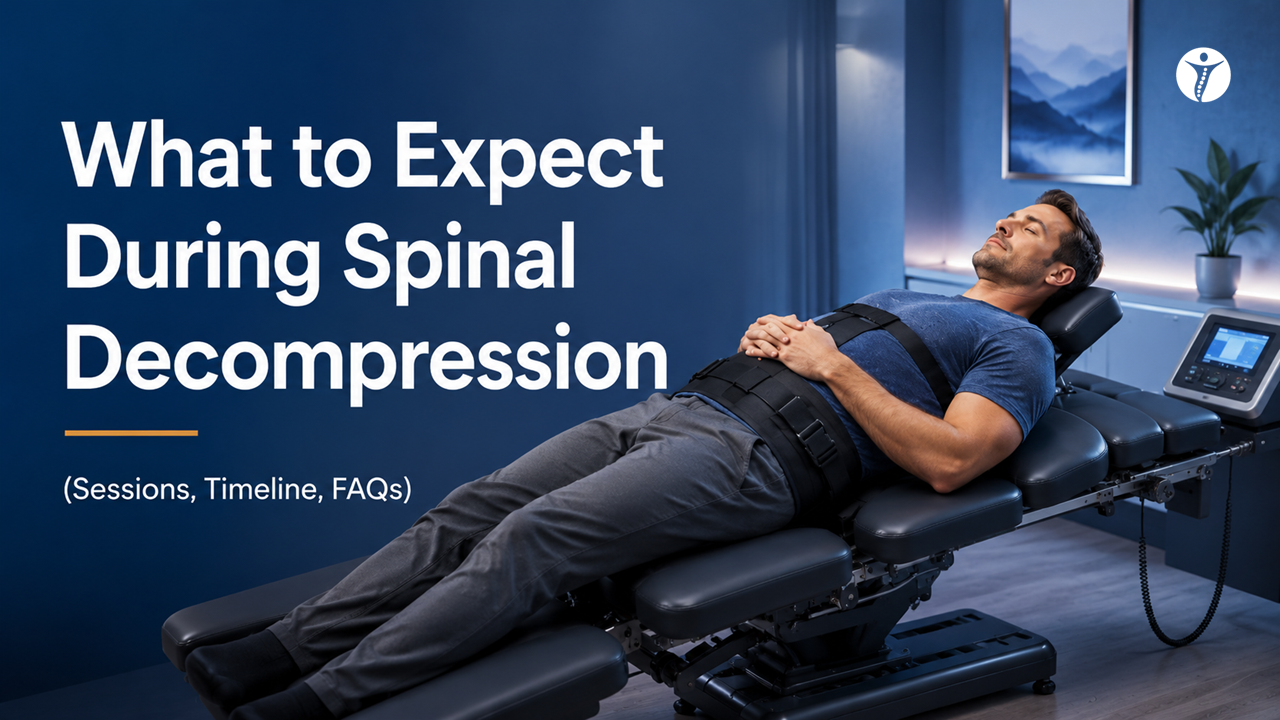
    Premium in-hero image explaining what to expect during spinal decompression sessions, including setup, comfort, timeline, and patient expectations.
    Image 1: A calm, practical look at what spinal decompression sessions usually involve.
    Decompression should feel controlled, not sharp or aggressive
    Progress usually builds over weeks, especially with disc and nerve symptoms
    The best results pair decompression with movement, rehab, and smart daily habits

    Spinal decompression is often considered when disc irritation, nerve pressure, or sciatica-type symptoms are not calming down with basic rest or home care. The goal is not to “yank” the spine or force a quick fix. The goal is controlled unloading, better tolerance, and a progressive plan. For the full service overview, start with Spinal Decompression. If your symptoms involve leg pain, numbness, or tingling, also see Sciatica Treatment and Disc Herniation & Degeneration.

    • What happens before, during, and after a decompression session
    • How the timeline usually works and what progress can feel like
    • Who may be a good fit—and who should be screened carefully first

    Educational only. Not medical advice. Seek urgent care for severe/worsening symptoms or red flags.

    Quick Answer: What Should You Expect?

    A spinal decompression session should feel calm, controlled, and specific. Most patients are positioned on a decompression table, gently secured, and guided through a traction-style unloading cycle designed around their condition and tolerance.

    Supporting image explaining that spinal decompression is a progressive care plan with session rhythm, timeline, and symptom response expectations.
    Image 2: Spinal decompression is usually a progressive plan—not a one-session fix.

    It should feel gentle

    You may feel pulling, stretching, or unloading. Sharp pain, intense pressure, or worsening symptoms should be reported immediately.

    It is usually progressive

    Disc and nerve symptoms often need repeated sessions, careful dosing, and supportive movement—not one aggressive visit.

    Response matters

    The plan should be adjusted based on next-day symptoms, walking tolerance, leg symptoms, sitting comfort, and sleep.

    The honest expectation

    Some patients feel early relief. Others need several sessions before the trend is obvious. The goal is not just “less pain for an hour” — it is better function, calmer nerve symptoms, and improved tolerance over time.

    What Happens During a Spinal Decompression Session?

    Here is the simple walkthrough most patients want before they try it.

    1

    Screening first

    We review symptoms, exam findings, history, red flags, and whether decompression is appropriate for your pattern.

    2

    Comfortable setup

    You are positioned on the table and secured so the decompression force is controlled and targeted.

    3

    Controlled unloading

    The table applies a gentle traction-style pull in cycles. The goal is unloading—not aggressive stretching.

    4

    Symptom check

    We monitor comfort during and after the session. Your response helps guide the next session.

    5

    Supportive care

    Depending on your case, we may pair decompression with chiropractic care, rehab, walking guidance, or daily-position coaching.

    6

    Next-day rule

    How you feel later that day and the next morning matters. That tells us whether the dose was right.

    What should it feel like?

    Most patients describe decompression as a gentle pulling or unloading sensation. You should not feel forced, trapped, or pushed through sharp pain. A good decompression plan is adjustable.

    The Typical Timeline: What Changes First?

    Every case is different, but this is the general sequence we watch for.

    Phase 1 — Calm the irritated pattern

    The early goal is to reduce irritability. We watch whether pain spikes less often, whether leg symptoms calm sooner, and whether you tolerate normal positions better.

    • Less severe flare-ups
    • Less frequent “zaps” or nerve-like symptoms
    • Better response after sessions

    Phase 2 — Build tolerance

    Once symptoms are less reactive, the goal becomes building tolerance for walking, sitting, standing, sleeping, and daily activity.

    • Walking feels easier
    • Sitting tolerance improves
    • Sleep positions become less sensitive

    Phase 3 — Reinforce with movement

    Decompression works best when paired with the right movement plan. The long-term goal is not needing the table forever—it is restoring confidence and capacity.

    • Gradual strengthening
    • Better lifting/sitting mechanics
    • Less fear around normal movement

    Progress is not always perfectly linear

    Disc and nerve symptoms can have good days and bad days. The bigger question is whether the trend is improving: less intensity, less spread, better function, and faster recovery after activity.

    Who Is Usually a Better Fit for Spinal Decompression?

    Decompression is not for every back pain case. Matching the treatment to the pattern matters.

    Potentially a better fit

    • Disc-related low back pain
    • Sciatica or leg symptoms linked to spinal irritation
    • Pain aggravated by sitting, bending, or compression-type positions
    • Symptoms that have not fully responded to basic care
    • Cases where conservative care still makes sense after screening

    Needs careful screening first

    • Progressive weakness, numbness, or neurological changes
    • Major trauma or suspected fracture
    • Severe osteoporosis or instability concerns
    • Some surgical histories or complex spinal conditions
    • Fever, cancer history, unexplained weight loss, or systemic symptoms

    Not sure if your MRI wording matters?

    Start with Disc Herniation vs. Bulge vs. Degeneration. MRI words can sound scary, but symptoms, exam findings, and function matter just as much as the image report.

    How to Tell If It’s Helping

    Do not judge progress only by one pain score. Watch these functional signs.

    Progress sign What it can mean
    Leg pain is less intense or less frequent The nerve/disc pattern may be calming down.
    Pain travels less far down the leg Symptoms may be centralizing or becoming less irritable.
    Sitting or driving is easier The spine may be tolerating compression-related positions better.
    Walking tolerance improves Your body may be building capacity again.
    Flare-ups recover faster Your symptom threshold may be improving even if pain is not gone yet.

    What not to expect

    Do not expect every disc or nerve case to resolve in one visit. Decompression is usually most helpful as part of a progressive plan: unload, calm symptoms, restore motion, build tolerance, and improve daily mechanics.

    What improves long-term results

    • Walking within tolerance
    • Avoiding repeated symptom spikes early on
    • Learning better sitting, sleeping, and lifting positions
    • Gradual strengthening when symptoms are less irritable
    • Following the plan instead of chasing random exercises online

    Helpful next read: How to Sit, Sleep, and Lift With a Herniated Disc.

    Wondering If Spinal Decompression Makes Sense for You?

    We’ll evaluate your symptoms, exam findings, history, and goals—then tell you whether decompression is a reasonable fit or whether another route makes more sense.

    When to Worry Before Trying Decompression

    Some symptoms need urgent evaluation or medical screening before conservative care.

    • New bowel or bladder changes or loss of control
    • Saddle numbness or numbness in the groin area
    • Progressive leg weakness, foot drop, or worsening neurological symptoms
    • Fever with severe back pain or signs of infection
    • Major trauma, fall, or suspected fracture
    • Unexplained weight loss, cancer history, or pain that is rapidly worsening

    For more detail, read: Herniated Disc Red Flags: When to Worry.

    Spinal Decompression FAQs

    Quick answers about sessions, comfort, timeline, and safety.

    What happens during a spinal decompression session?
    You are positioned comfortably on a decompression table while controlled traction gently unloads the spine. The goal is to reduce pressure and improve tolerance for irritated discs, nerves, or spinal joints when appropriate.
    Does spinal decompression hurt?
    It should not feel sharp, intense, or painful. Many patients describe it as gentle pulling, stretching, or unloading. If symptoms increase during a session, the force, position, or plan should be adjusted.
    How long is a spinal decompression session?
    Session length varies by case and protocol, but many visits include setup, decompression, and supportive care or follow-up movement. Your exact timing depends on your condition, tolerance, and care plan.
    How many spinal decompression sessions do I need?
    It depends on symptom severity, diagnosis, irritability, and how your body responds. Disc and nerve-related problems usually require a progressive plan rather than a one-session approach.
    How soon does spinal decompression start working?
    Some people feel early relief within the first few visits, while others improve gradually over several weeks. The best signs are improved walking, sitting, sleep, leg symptoms, and next-day tolerance.
    Can spinal decompression help sciatica?
    It may help when sciatica is related to disc irritation or nerve compression and you are an appropriate candidate. An exam helps determine whether decompression, chiropractic care, rehab, or another route makes the most sense.
    Who should not do spinal decompression?
    It may not be appropriate for certain fractures, severe instability, some surgical histories, advanced osteoporosis, infection, cancer-related spinal pain, or rapidly worsening neurological symptoms. Screening matters before starting care.
    When should I worry and get checked urgently?
    Seek urgent evaluation for new bowel or bladder changes, saddle numbness, progressive leg weakness, fever with severe back pain, major trauma, unexplained weight loss, or pain that is rapidly worsening.