Tag: Patient Education

Clear, practical explanations of common symptoms, causes, and next steps—so you understand what’s going on and what typically helps.

  • Best Sleeping Positions for Shoulder Pain (Plus What to Avoid)

    Best Sleeping Positions for Shoulder Pain (Plus What to Avoid)

    SHOULDER PAIN · SLEEP GUIDE · LOGANSPORT, IN

    Evidence-informed, conservative-first guidance Position + pillow setups that reduce compression Clear “when to worry” red flags

    Best Sleeping Positions for Shoulder Pain (Plus What to Avoid)

    The goal isn’t a perfect position—it’s less compression, better support, and calmer tissue overnight.

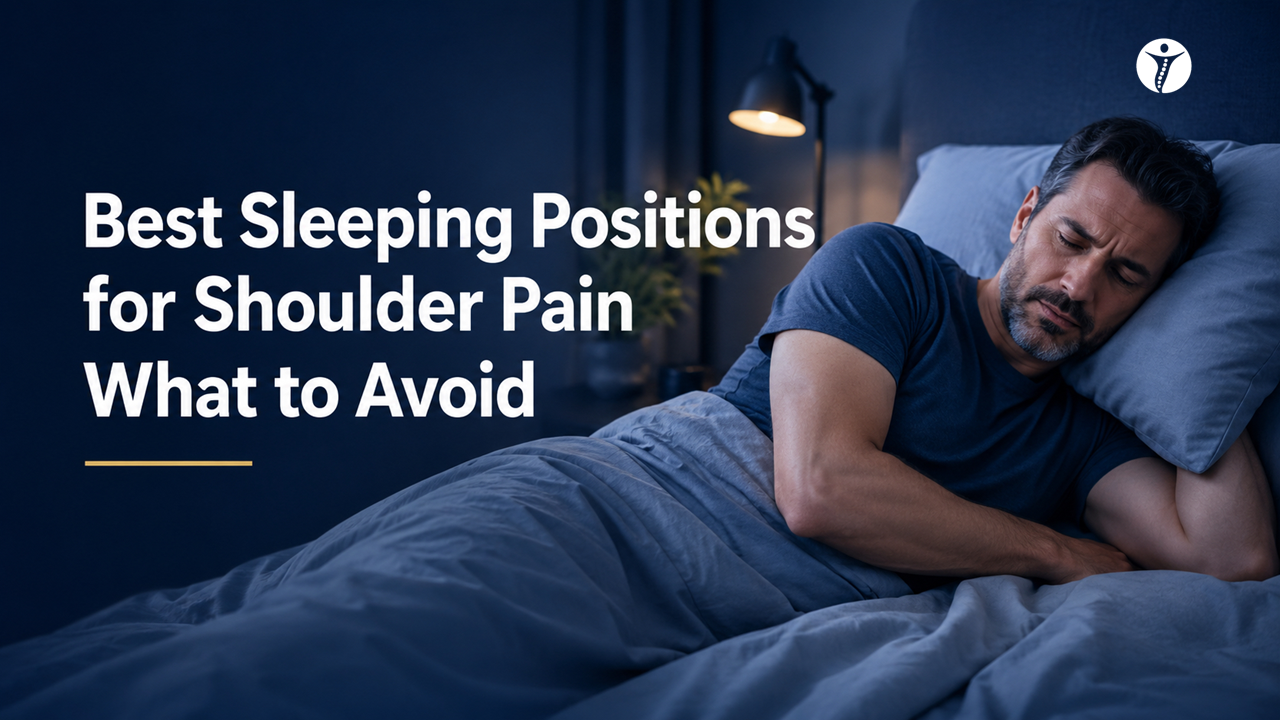
    Infographic showing best sleeping positions for shoulder pain and pillow setups to reduce compression, plus what to avoid.
    Image 1: Best positions + pillow setups to reduce compression and calm night pain.
    Side sleeping often fails due to direct compression
    Back sleeping often wins with arm support
    Escalating night pain or progressive stiffness → get evaluated

    Shoulder pain at night is miserable—and it’s usually fixable with better positioning and a smarter plan. For the service overview, start with Shoulder Pain Treatment. If you want to self-sort common shoulder patterns (rotator cuff vs impingement vs frozen shoulder), see How to Tell (and What to Do First).

    • Best default position + side-sleep modifications
    • Exact pillow setups (step-by-step)
    • Clear “when to worry” guidance

    Educational only. Not medical advice. If symptoms are severe or changing, get evaluated.

    Quick Answer (Best Positions, Fast)

    Best default: sleep on your back with the sore arm supported. Best side-sleep modification: sleep on the non-painful side and hug a pillow so the shoulder doesn’t roll forward. Avoid: stomach sleeping, sleeping directly on the painful shoulder, or the painful arm overhead.

    Supporting image reinforcing shoulder pain sleep modifications: reduce compression and support the arm and shoulder.
    Image 2: The goal is less compression + better support—sleep is part of the plan.

    The “night pain” rule

    • If pain wakes you nightly and is worsening week-to-week, get evaluated.
    • If pain improves quickly with better support, you’re probably dealing with a compression/irritation pattern.

    Position Selector (Pick Your Path)

    Use the path that matches how you naturally sleep—then modify it to reduce shoulder load.

    If you’re a back sleeper

    Goal: keep the shoulder supported so it doesn’t hang forward.

    • Pillow under forearm (and/or under elbow)
    • Keep arm slightly out from body (not pinned)
    • Optional: pillow under knees

    If you must side-sleep

    Goal: avoid compressing the painful shoulder and keep it from rolling forward.

    • Sleep on non-painful side
    • Hug a pillow to support top arm
    • Pillow between knees to reduce twist

    If you’re a stomach sleeper

    Goal: transition to a “semi-side” position to reduce shoulder rotation.

    • Use a body pillow as a wedge
    • Keep painful arm down (not overhead)
    • Consider training yourself toward side/back

    Key idea

    Most shoulder sleep pain improves when you reduce compression and avoid end-range positions (especially overhead and stomach sleeping).

    Best Sleeping Positions (With Exact Setup)

    Use these like recipes. Small changes in support make a big difference.

    Best overall: Back sleeping with arm support

    • Setup: pillow under forearm so the shoulder feels “held,” not hanging forward
    • Why it helps: reduces traction and prevents rolling into a painful position
    • Common mistake: arm falls off to the side → shoulder gets tugged forward

    Best for side sleepers: Non-painful side + hug pillow

    • Setup: hug pillow so top shoulder stays neutral (not rolled forward)
    • Why it helps: reduces anterior shoulder strain and compression
    • Upgrade: pillow between knees to reduce trunk rotation

    If you wake up on the painful side

    • Do this: switch sides and support the sore arm immediately
    • Try this tonight: place a pillow behind your back to prevent rolling onto the painful side

    If your shoulder feels stiff and blocked (not just sore), review: Rotator Cuff vs Impingement vs Frozen Shoulder.

    About sleeping on the painful shoulder

    Usually not recommended because direct compression increases irritation. If you must, use a short trial with careful arm support and stop if night pain escalates.

    Pillow Setup (Step-by-Step)

    These are the highest-ROI changes you can make tonight.

    Back sleeping setup

    • Pillow under forearm (and/or a small towel under elbow)
    • Keep shoulder from “hanging” forward
    • Optional: pillow under knees to reduce overall tension

    Side sleeping setup

    • Sleep on non-painful side
    • Hug a pillow (supports top shoulder)
    • Pillow between knees (reduces trunk rotation)
    • Optional: small pillow behind back to prevent rolling

    Neck matters too

    If your neck is cranked to one side all night, the shoulder can feel worse. If pain travels down the arm, review: Neck Pain with Arm Tingling.

    What to Avoid (Common Sleep Traps)

    These positions increase compression, strain, or rotation.

    • Sleeping directly on the painful shoulder (compression)
    • Painful arm overhead (end-range irritation)
    • Stomach sleeping (forces shoulder rotation)
    • Arm pinned under your body
    • “Testing” painful ranges repeatedly at night

    Why Night Pain Happens (What It Can Mean)

    This is meant to be calming and practical—not scary.

    Most common: compression + poor support

    If you lie on the shoulder or the arm hangs forward, irritated tissue gets compressed or strained for hours. Better support often helps quickly.

    Overload patterns (rotator cuff/impingement)

    Overhead work, lifting volume spikes, and poor shoulder blade mechanics can sensitize the shoulder—night pain becomes more noticeable. This often improves with a plan.

    Stiffness-dominant patterns (frozen shoulder-like)

    If you’re losing motion over weeks (especially reaching behind your back or rotating outward), the plan changes—get evaluated sooner.

    If you want the clearest “which pattern is it?” guide

    Start here: Rotator Cuff vs. Impingement vs. Frozen Shoulder.

    Optional: 1-Minute Bedtime Routine

    A tiny routine that can reduce sensitivity before you settle in.

    • 30 seconds of calm breathing (downshift tension)
    • 5 gentle shoulder blade squeezes (no pain)
    • 10–20 seconds of gentle pendulum motion (if tolerable)

    If pain is sharp or worsening, skip the “testing” and get evaluated.

    When to Worry (Red Flags)

    Get evaluated promptly if any of these are present.

    • Sudden weakness after injury (can’t lift arm like before)
    • Deformity, major swelling/bruising, suspected dislocation/fracture
    • Fever with a hot/red swollen shoulder
    • Numbness/tingling with weakness down the arm
    • Progressive loss of motion week-to-week (frozen shoulder pattern)
    • Severe night pain that keeps escalating

    If you’re unsure, start with Contact & Location and we’ll guide you.

    Want a Shoulder Plan That Improves Sleep and Function?

    We’ll identify your shoulder pattern, calm irritation, and build a plan that holds up—so sleep isn’t the hardest part of your day.

    Shoulder Pain Sleeping FAQs

    Quick answers—including “what to avoid” and “when to worry.”

    Why does shoulder pain feel worse at night?
    Night pain is often from compression (lying on the shoulder), poor support that lets the shoulder roll forward, or stiffness/irritation patterns that are more noticeable when you’re still.
    Should I sleep on the painful shoulder?
    Usually no. Direct compression often increases irritation. If you must, use a short trial with careful pillow support and stop if pain escalates or sleep worsens.
    What is the best sleeping position for shoulder pain?
    For most people, back sleeping with the arm supported reduces shoulder traction and compression. Side sleeping can work if you avoid direct compression and hug a pillow to keep the shoulder from rolling forward.
    What pillow setup helps shoulder pain most?
    Support the arm so the shoulder isn’t hanging forward: pillow under the forearm/elbow (back sleeping) or hugging a pillow (side sleeping). Many people also do better with a pillow between knees to reduce trunk rotation.
    What sleeping position should I avoid?
    Avoid stomach sleeping (forces shoulder rotation) and avoid sleeping with the painful arm overhead or pinned under your body.
    Can neck issues cause shoulder pain at night?
    Yes. If pain travels past the elbow or includes tingling/numbness, the neck may be involved and evaluation is wise.
    When should I worry about shoulder pain at night?
    Get checked promptly for sudden weakness after injury, deformity, major swelling/bruising, fever/hot red joint, progressive loss of motion, or numbness/tingling with weakness down the arm.
    How long does shoulder sleep pain take to improve?
    Many people feel improvement within days to a couple of weeks when compression is reduced and a plan restores motion and strength. Longer-standing patterns can take longer and benefit from structured progression.

  • Shoulder Pain in Logansport, IN: 7 Common Causes (and What Helps)

    Shoulder Pain in Logansport, IN: 7 Common Causes (and What Helps)

    SHOULDER PAIN · PATIENT EDUCATION · LOGANSPORT, IN

    Evidence-informed, conservative-first care Shoulder + scapula + neck considered together Clear “when to worry” red flags

    Shoulder Pain in Logansport, IN: 7 Common Causes (and What Helps)

    Most shoulder pain follows a pattern. Match the plan to the pattern—don’t guess.

    Infographic comparing common shoulder pain patterns and what helps, including rotator cuff, impingement, frozen shoulder, AC joint, biceps/labrum, neck referral, and overload spikes.
    Image 1: Compare common shoulder pain patterns and what helps.
    Overhead pain often points to cuff/impingement patterns
    Progressive loss of motion often suggests a frozen shoulder pattern
    Pain below the elbow/tingling may suggest a neck/nerve component

    Shoulder pain can make simple things—sleeping, lifting, reaching, working—feel impossible. The fastest way to improve is to identify the most likely driver and follow a plan that restores motion and strength safely. For the service overview, start with Shoulder Pain Treatment. For the clearest self-sorter, see Rotator Cuff vs. Impingement vs. Frozen Shoulder.

    • 4 big clues to narrow the pattern fast
    • 7 common causes + what helps first
    • Clear “when to worry” guidance

    Educational only. Not medical advice. Patterns overlap—an exam confirms the driver.

    Quick Answer (If You Only Read One Section)

    Most shoulder pain improves when you reduce the spike (overhead/pressing/sleep compression), then rebuild scap + rotator cuff capacity with a staged plan. The best clue is what triggers it most: overhead, behind-the-back, sleeping, pressing, or neck/arm symptoms.

    Supporting visual reinforcing shoulder pain pattern clues and conservative first steps: load control and motion/strength progression.
    Image 2: Most shoulder pain improves with load control + motion/strength progression—match the plan to the pattern.

    Three “do this first” steps

    • Stop daily painful tests: repeated overhead “checking” keeps irritation alive.
    • Reduce the spike: scale overhead/pressing volume for 7–14 days (and fix sleep compression).
    • Rebuild capacity: add pulling + scap control + pain-safe rotator cuff strength.

    Start Here: 4 “Big Clues” That Narrow Shoulder Pain Fast

    Use these clues to decide which cause to read first—then confirm the driver with an exam if symptoms persist.

    1) Where does it hurt?
    Top AC area? Front biceps area? Side deltoid ache? Deep joint? Or neck-to-arm?
    2) What triggers it most?
    Overhead reach, pressing, behind-the-back, cross-body reach, or sleeping?
    3) Is motion truly limited?
    If range is shrinking week-to-week (especially behind-back/external rotation), think stiffness-dominant pattern.
    4) Any tingling/numbness or pain past the elbow?
    That pattern can suggest a neck component—evaluate if worsening.

    Quick routing

    • Overhead/pressing pain: rotator cuff or impingement-type patterns.
    • Progressive stiffness: frozen shoulder pattern.
    • Top-of-shoulder pain: AC joint irritation pattern.
    • Arm symptoms past elbow: consider neck/nerve referral.

    7 Common Causes of Shoulder Pain (and What Usually Helps)

    These are the most common patterns we see in Logansport and across Cass County.

    1) Rotator cuff irritation (tendinopathy)

    Clue: hurts with lifting the arm, reaching away, or lowering from overhead; overload-related.

    2) Impingement / “pinch” patterns (often mechanics + load)

    Clue: pinch in front/side at a certain angle, especially overhead; often linked to scap/thoracic mechanics.

    • Helps first: scap control + thoracic mobility + smarter pressing angles
    • Fast win: neutral-grip pressing and pain-safe ranges

    3) Frozen shoulder (adhesive capsulitis) pattern

    Clue: true loss of motion that progresses—especially behind-back and external rotation; stiffness dominant.

    • Helps first: exam-guided plan + gentle, consistent mobility (no forcing sharp pain)
    • Evaluate sooner if range is shrinking week-to-week

    4) AC joint irritation (top-of-shoulder pain)

    Clue: pain on top near collarbone, worse with cross-body reach and pressing.

    • Helps first: modify pressing angles; reduce heavy dips/bench temporarily
    • Fast win: avoid deep dips/cross-body heavy loading for 2–3 weeks

    5) Biceps tendon / labrum irritation (front-of-shoulder)

    Clue: front ache, flares with overhead lifting/pulling; may include clicking/catching.

    • Helps first: load modification + scap mechanics + progressive stability
    • Evaluate if pain/weakness worsens or mechanical symptoms are persistent

    6) Neck referral / nerve irritation masquerading as shoulder pain

    Clue: pain travels down arm or includes tingling/numbness/weakness—neck may be driver.

    7) Overload + poor recovery (work/gym volume spike)

    Clue: you did more than the shoulder was ready for—then kept testing it daily.

    What Usually Helps (The Universal Shoulder Plan)

    This approach works across most non-emergency shoulder pain patterns.

    1) Reduce the spike (7–14 days)

    • Scale overhead volume and painful ranges
    • Stop daily “tests” of the painful movement
    • Fix sleep compression (see sleep positions)

    2) Rebuild scap + cuff capacity

    • Increase pulling volume (rows/face pulls)
    • Progressive cuff strengthening in pain-safe ranges
    • Consistency beats occasional hard sessions

    3) Restore motion (but don’t force sharp pain)

    • Gentle mobility in tolerated ranges
    • If range is shrinking week-to-week, get evaluated sooner

    If you want the clearest self-sorter

    Start here: Rotator Cuff vs Impingement vs Frozen Shoulder.

    When to Worry (Red Flags)

    Get checked promptly if any of these are present.

    • Sudden weakness after injury (can’t lift arm like before)
    • Deformity, major swelling/bruising, suspected dislocation/fracture
    • Fever with a hot/red swollen shoulder
    • Numbness/tingling with weakness down the arm
    • Progressive loss of motion week-to-week (frozen shoulder pattern)
    • Severe night pain that keeps escalating

    If you’re unsure, start with Contact & Location and we’ll guide you.

    Not urgent, but smart to book

    • Persistent symptoms beyond 2–3 weeks despite smart modification
    • Recurring flare cycles with work/training
    • Night pain not improving with positioning
    • You can’t regain motion week-to-week

    Want a Shoulder Plan That Fits Your Work and Training?

    We’ll identify your driver (shoulder + scapula + neck), calm irritation, and build a plan that holds up.

    Shoulder Pain FAQs

    Quick answers—including “when to worry.”

    What is the most common cause of shoulder pain?
    The most common causes are rotator cuff irritation, impingement/overload patterns, and stiffness patterns. The best clue is what movements trigger pain.
    How do I tell rotator cuff pain from frozen shoulder?
    Rotator cuff irritation often hurts with lifting but range is mostly available. Frozen shoulder includes a true loss of range (especially external rotation and behind-back reach) that worsens over weeks.
    Can neck problems cause shoulder pain?
    Yes. If pain travels below the elbow or includes tingling/numbness/weakness, the neck may be involved. See this guide.
    Why does shoulder pain feel worse at night?
    Night pain is often from compression (lying on the shoulder) or poor support. Better positioning often helps quickly. See sleep positions.
    Should I stop lifting if my shoulder hurts?
    Not always. Many cases improve with smart modification and progressive strengthening. Sudden weakness, deformity, or worsening symptoms should be evaluated.
    Do I need imaging for shoulder pain?
    Often not initially if there are no red flags and symptoms are improving. Imaging matters more with major trauma, sudden weakness, deformity, fever/hot red joint, or progressive loss of motion.
    How long does shoulder pain take to improve?
    Many mechanical shoulder problems improve over a few weeks with the right plan. Longer-standing or stiffness-dominant patterns can take longer.
    When should I worry about shoulder pain?
    Get checked promptly for sudden weakness after injury, deformity, major swelling/bruising, progressive loss of motion, numbness/tingling with weakness down the arm, fever/redness, or severe night pain that keeps escalating.
  • Mid Back Pain When Breathing or Twisting: What It Often Means (and When to Worry)

    Mid Back Pain When Breathing or Twisting: What It Often Means (and When to Worry)

    MID BACK PAIN · RIB PAIN · DECISION GUIDE · LOGANSPORT, IN

    Pattern checks (breath vs twist vs posture) Clear “when to worry” red flags Conservative first steps for mechanical causes

    Mid Back Pain When Breathing or Twisting: What It Often Means (and When to Worry)

    Breathing/twisting pain is often mechanical (ribs/thoracic joints), but certain patterns deserve urgent attention.

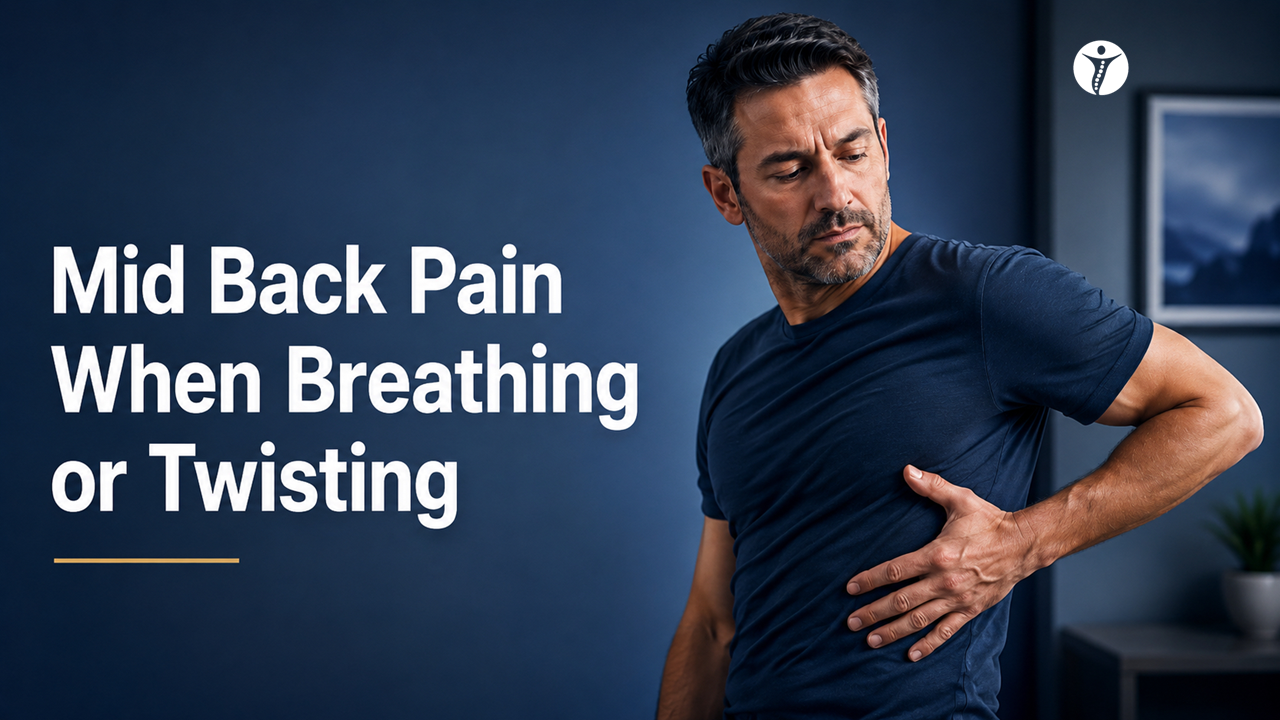
    Infographic comparing mechanical rib and thoracic spine causes of mid back pain with breathing or twisting versus red-flag patterns that need evaluation.
    Image 1: Mechanical rib/thoracic patterns vs “needs evaluation” patterns—how to tell.
    Sharp pain with deep breath often points to rib/thoracic mechanics
    Pain with twisting often points to joint/muscle strain + stiffness
    Chest pain, SOB, fever, trauma, worsening symptoms → evaluate urgently

    Mid back pain that shows up with breathing or twisting is commonly a rib/thoracic mechanics issue—but this is also a category where it’s smart to screen for red flags. If you want the service overview, start with Mid Back Pain Relief. If you’re deciding between rib pain vs mid-back pain patterns, see Rib Pain vs Mid Back Pain.

    • 60-second self-check + comparison table
    • Mechanical rib/thoracic patterns vs “needs evaluation” patterns
    • Clear “when to worry” guidance

    Educational only. Not medical advice. If symptoms are severe or changing, seek appropriate evaluation.

    Quick Answer (What It Often Means)

    If your pain is movement-dependent (worse with certain breaths, twists, or postures), it’s often mechanical—rib/thoracic joint irritation or muscle strain. If you also have shortness of breath, chest pain, fever, trauma, or worsening symptoms, treat it as “don’t guess” and get evaluated.

    Supporting visual reinforcing that movement-dependent mid back pain is often mechanical but red flags should be screened.
    Image 2: If symptoms are movement-dependent, mechanical causes are more likely—screen red flags first.

    Three safe first steps

    • Stop testing it: avoid repeated deep breaths/twists “to see if it’s still there” for 48–72 hours.
    • Keep gentle motion: short walks and pain-safe movement usually help more than total rest.
    • Use comfort tools: heat and calm breathing (without forcing) can reduce guarding.

    60-Second Self-Check (Safety Screen + Pattern Sorter)

    Answer quickly. You’re looking for “mechanical vs needs evaluation.”

    1) Chest pain or shortness of breath?
    If yes, seek urgent evaluation.
    2) Fever/chills or feeling unwell?
    If yes, get evaluated promptly.
    3) Recent fall/impact or severe coughing fit?
    If yes and pain is sharp/severe, consider evaluation (rib injury is possible).
    4) Does it change with posture/movement?
    If yes, mechanical causes are more likely.
    5) Is it pinpoint and reproduced by one breath angle/twist?
    Often rib/thoracic mechanics or intercostal strain.
    6) Worsening day-to-day despite rest?
    If yes, reassess—consider evaluation.

    Interpretation

    • Mostly movement-dependent + no red flags: mechanical rib/thoracic/muscle patterns are more likely.
    • Red-flag symptoms present: urgent evaluation is appropriate.
    • Not improving by 7–10 days: get checked and refine the plan.

    Comparison Table (How to Tell)

    This table helps you self-sort fast without spiraling.

    Pattern Rib/Thoracic Mechanics Muscle Strain / Overuse Needs Evaluation (Red Flags)
    Typical feel Sharp/pinpoint with certain breath or twist Achy/tight, worse after work/lifting Constant, systemic symptoms, severe worsening
    Triggers Deep breath, rotation, certain positions Repetitive load, posture, long days Chest pain, SOB, fever, trauma, cough blood
    What helps Gentle motion + calming guarding + gradual mobility Heat, light movement, graded return Medical evaluation
    Timeline Often improves within 1–3 weeks Often improves within 1–3 weeks Don’t wait if red flags are present
    When to worry Worsening daily, trauma, breathing difficulty Worsening daily, severe pain, neuro signs Any red flags → urgent evaluation

    What It Often Means (Most Common Mechanical Patterns)

    These are the common “not scary but miserable” causes.

    1) Rib / thoracic joint irritation (“stuck rib” feeling)

    Clue: sharp, localized pain with a deep breath or a specific twist angle.

    • Helps first: stop repeated testing, gentle motion, gradual return to rotation
    • Mistake: aggressive twisting early (keeps it irritated)

    2) Intercostal or upper back muscle strain

    Clue: pain after coughing, lifting, awkward reach, or a long workday; sore to touch.

    • Helps first: heat + walking + pain-safe mobility; gradual strengthening later
    • Mistake: total rest for a week (often increases stiffness)

    3) Thoracic stiffness + posture/overuse pattern

    Clue: stiff ache that’s worse after sitting/desk work or repetitive tasks; improves with movement.

    • Helps first: frequent movement breaks + gentle thoracic mobility + strength progression
    • Service overview: Mid Back Pain Relief

    Helpful framing

    If the pain is clearly linked to movement and positions, the plan is usually: calm the spike → gentle motion → graded return.

    What to Do First (Action Ladder)

    A simple plan that works for most mechanical mid-back/rib patterns.

    Step 1: Calm the spike (48–72 hours)

    • Avoid repeated deep twisting and repeated deep-breath “tests”
    • Use comfortable breathing—no forcing sharp pain

    Step 2: Keep gentle movement

    • Short walks help reduce guarding
    • Move often—don’t “lock up” all day

    Step 3: Add pain-safe mobility (days 3–7)

    • Gentle thoracic rotation in tolerated range
    • Stop before sharp pain

    Step 4: Gradual return (week 2)

    • Progress rotation + strength gradually
    • Volume before intensity

    Re-check point

    If you’re not clearly improving by day 7–10 (or you’re worsening), get evaluated and refine the plan.

    When to Worry (Red Flags)

    These are uncommon, but important. Seek urgent evaluation if any are present.

    • Chest pain or shortness of breath
    • Fever, chills, or feeling very unwell
    • Major trauma (fall, collision) or suspected fracture
    • Coughing blood, fainting, or severe dizziness
    • Severe pain that is worsening day-to-day despite reducing activity
    • Pain that is constant and not changing with movement/posture
    • New neurologic symptoms (numbness/weakness) or unexplained systemic symptoms

    If you’re unsure, start with Contact & Location and we’ll help guide the next step.

    Want to Know the Driver (and Calm It Fast)?

    We’ll assess ribs + thoracic spine + posture and give you a clear, conservative plan—so you’re not guessing.

    Mid Back Pain with Breathing/Twisting FAQs

    Quick answers—including “when to worry.”

    Why does my mid back hurt when I take a deep breath?
    Deep breaths move the rib cage and thoracic spine. If a rib/thoracic joint or the intercostal muscles are irritated, breathing can reproduce sharp, localized pain. If you also have shortness of breath, chest pain, fever, or feel unwell, seek urgent evaluation.
    Is mid back pain with twisting usually serious?
    Often it’s mechanical—thoracic joint stiffness or muscle strain—especially if it changes with posture and movement and improves gradually. Worsening day-to-day pain, fever, major trauma, or neurologic symptoms deserve evaluation.
    Can a rib be “out”?
    People often describe a stiff or irritated rib/thoracic joint as a rib being “out.” The key point is rib/thoracic mechanics can get irritated and often respond to conservative care and movement-based rehab.
    How long does a rib or mid-back strain take to heal?
    Many mild mechanical strains improve within 1–3 weeks with smart activity modification and gradual return. More irritable cases can take longer if you keep provoking deep twisting or heavy loading too soon.
    What should I do first for mid back pain with breathing?
    Avoid repeatedly testing deep breaths and twisting for 48–72 hours, keep gentle movement like walking, use heat if helpful, and gradually reintroduce motion as symptoms calm. If red flags are present, seek urgent evaluation.
    Do I need imaging?
    Often not initially if symptoms are improving and there are no red flags. Imaging is more important with major trauma, suspected fracture, persistent/worsening symptoms, fever, or concerning systemic signs.
    When should I worry about mid back pain?
    Seek urgent evaluation for chest pain, shortness of breath, fever, coughing blood, major trauma, severe worsening pain, fainting/dizziness, neurologic symptoms, or pain that is constant and not changing with movement.
    What sleeping position helps mid back pain?
    Many people do best on their back with knees supported or on their side with a pillow between knees to reduce rotation. The best position is the one that reduces symptoms and allows sleep.

  • Mid Back Pain in Logansport, IN: 7 Common Causes (and What Helps)

    Mid Back Pain in Logansport, IN: 7 Common Causes (and What Helps)

    MID BACK PAIN · PATIENT EDUCATION · LOGANSPORT, IN

    Evidence-informed, conservative-first care Ribs + thoracic spine + posture considered together Clear “when to worry” guidance

    Mid Back Pain in Logansport, IN: 7 Common Causes (and What Helps)

    Mid-back pain is often mechanical—but certain patterns deserve more attention. Match the plan to the pattern.

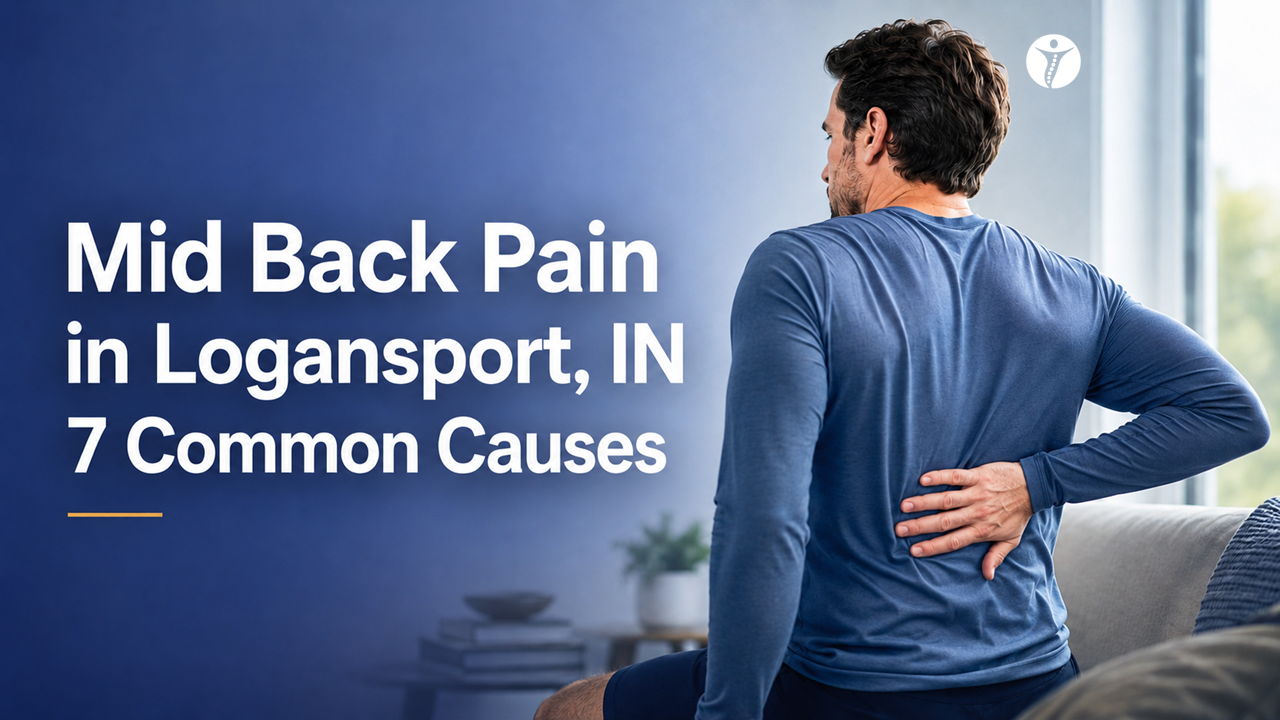
    Infographic showing common mid-back pain patterns including thoracic joint stiffness, rib mechanics irritation, muscle overuse, posture fatigue, and red-flag screening.
    Image 1: Common mid-back pain patterns and what helps.
    Pain with breathing/twisting often points to rib/thoracic mechanics
    Desk/posture pain often points to stiffness + muscle overload
    Chest pain/SOB/fever/trauma/worsening symptoms → evaluate urgently

    Mid-back pain can feel alarming, but most cases are mechanical and respond well to a conservative plan. If you want the service overview, start with Mid Back Pain Relief. If you’re deciding rib vs mid-back patterns, see Rib Pain vs Mid Back Pain. If your pain is linked to breathing or twisting, see Breathing/Twisting: What It Often Means.

    • 4 big clues to narrow the pattern fast
    • 7 common causes + what helps first
    • Clear “when to worry” guidance

    Educational only. Not medical advice. Patterns overlap—an exam confirms the driver.

    Quick Answer (If You Only Read One Section)

    Most mid-back pain improves when you keep gentle movement, reduce the spike that provokes it, and rebuild upper-back capacity over time. If you have chest pain, shortness of breath, fever, major trauma, or worsening symptoms—don’t guess; get evaluated.

    Supporting visual reinforcing mid-back pain pattern clues and conservative first steps: movement, load control, and red flag screening.
    Image 2: Most mid-back pain improves with movement + load control—screen red flags and rebuild capacity.

    Three “do this first” steps

    • Calm the spike: avoid repeated deep twisting/breath “tests” for 48–72 hours if sharp.
    • Move gently: short walks + frequent posture changes beat total rest.
    • Build capacity: gradual thoracic mobility + upper-back strength progression.

    Start Here: 4 “Big Clues” That Narrow Mid-Back Pain Fast

    Use these clues to decide which cause to read first—then get evaluated if symptoms persist or red flags are present.

    1) What triggers it most?
    Breathing? Twisting? Sitting? Lifting? Rolling in bed?
    2) Where is it?
    Pinpoint rib line vs broad midline vs between shoulder blades.
    3) Does it change with movement/posture?
    If yes, mechanical causes are more likely.
    4) Any red flags?
    Chest pain/SOB/fever/trauma/worsening daily or constant pain not changing with movement.

    Quick routing

    • Sharp pain with breath/twist: rib/thoracic mechanics or intercostal strain.
    • Broader ache after sitting/posture: thoracic stiffness + muscle overload.
    • Worsening daily or systemic symptoms: evaluate sooner.

    7 Common Causes of Mid-Back Pain (and What Usually Helps)

    These are the most common patterns we see in Logansport and across Cass County.

    1) Thoracic joint stiffness (segmental restriction)

    Clue: stiff ache that improves with movement and worsens with sitting.

    • Helps first: movement breaks + gentle mobility + strength progression

    2) Rib/thoracic mechanics irritation (“stuck rib” feeling)

    Clue: pinpoint pain with deep breath or a specific twist angle.

    3) Muscle strain/overuse (rhomboids/mid traps/intercostals)

    Clue: sore/achy after long days, awkward reaches, lifting, or stress.

    • Helps first: heat + walking + pain-safe mobility; gradual strengthening later

    4) Posture/desk overload (“upper back fatigue”)

    Clue: worsens through the day with sitting; better with movement and posture changes.

    5) Overhead/pressing volume spike (work/gym) + scap fatigue

    Clue: new or increased overhead work, pressing, or repetitive reaching.

    6) Neck/shoulder referral into the mid-back

    Clue: mid-back symptoms plus neck tension/headaches or shoulder blade involvement.

    7) “Not mechanical” / red-flag bucket (rare but important)

    Clue: chest pain/shortness of breath, fever/unwell, major trauma, worsening daily, or constant pain not changing with movement.

    • Next step: urgent evaluation is appropriate if red flags are present.
    • If unsure, start with Contact & Location.

    What Usually Helps (The Universal Mid-Back Plan)

    This approach works across most non-emergency mid-back patterns.

    1) Use the next-day rule

    • Same or better next day = okay
    • Mild soreness = okay
    • Worse next day (especially worsening daily) = scale down and reassess

    2) Calm the spike (48–72 hours if sharp)

    • Avoid repeated deep twisting and deep-breath “tests” if sharp
    • Use comfortable breathing and positions that reduce guarding

    3) Keep gentle movement

    • Short walks help more than total rest
    • Move often—avoid long stiff sitting blocks

    4) Build capacity (mobility + strength)

    • Progress thoracic mobility in tolerated ranges
    • Build upper-back/scap endurance gradually
    • Volume before intensity

    If your pain is specifically tied to breathing or twisting

    Start here: Mid Back Pain When Breathing or Twisting (and When to Worry).

    When to Worry (Red Flags)

    Seek urgent evaluation if any of these are present.

    • Chest pain or shortness of breath
    • Fever, chills, or feeling very unwell
    • Major trauma (fall, collision) or suspected fracture
    • Coughing blood, fainting, or severe dizziness
    • Severe pain that is worsening day-to-day
    • Pain that is constant and not changing with movement/posture
    • New neurologic symptoms (numbness/weakness)

    If you’re unsure, start with Contact & Location and we’ll help guide the next step.

    Not urgent, but smart to book

    • Not improving by day 7–10
    • Recurring flares that keep interrupting sleep/work
    • Persistent sharp breathing/twisting pain

    Want a Clear Mid-Back Answer (Not a Guess)?

    We’ll assess ribs + thoracic spine + posture and give you a step-by-step plan that holds up.

    Mid-Back Pain FAQs

    Quick answers—including “when to worry.”

    What is the most common cause of mid back pain?
    Most commonly it’s mechanical: thoracic joint stiffness, muscle strain/overuse, posture-related overload, and rib/thoracic mechanics irritation. The best clue is whether it changes with posture and movement.
    Why does mid back pain hurt when I breathe?
    Breathing moves the rib cage and thoracic spine. If a rib/thoracic joint or intercostal muscle is irritated, deep breaths can reproduce sharp, localized pain. If you also have chest pain, shortness of breath, fever, or feel unwell, seek urgent evaluation.
    How do I tell rib pain vs mid back pain?
    Rib pain is often pinpoint and reproduced by deep breaths, coughing/sneezing, or pressing on one spot. Mid-back pain is often broader and reproduced by posture, twisting, or overuse. See this guide.
    Do I need imaging for mid back pain?
    Often not initially if symptoms are improving and there are no red flags. Imaging matters more with major trauma, suspected fracture, fever, concerning systemic symptoms, or persistent/worsening pain.
    How long does mid back pain take to improve?
    Many mechanical mid-back patterns improve within 1–3 weeks with activity modification and gradual return to movement and strength. If you’re not improving by 7–10 days or you’re worsening daily, get evaluated.
    Is it okay to crack my mid back?
    Occasional gentle movement is usually fine, but repeatedly chasing cracks can irritate sensitive tissues and miss the real driver. A plan that improves mobility and strength tends to hold up better than constant cracking.
    When should I worry about mid back pain?
    Seek urgent evaluation for chest pain, shortness of breath, fever, coughing blood, major trauma, fainting/dizziness, severe worsening pain, neurologic symptoms, or pain that is constant and not changing with movement.
    What sleeping position helps mid back pain?
    Many people do best on their back with knees supported or on their side with a pillow between knees to reduce rotation. The best position is the one that reduces symptoms and allows sleep.

  • Weekend Warrior Recovery: A Simple 48-Hour Plan After Hard Workouts or Games

    Weekend Warrior Recovery: A Simple 48-Hour Plan After Hard Workouts or Games

    SPORTS RECOVERY · PERFORMANCE CARE · LOGANSPORT, IN

    Evidence-informed recovery strategy (no “biohacks”) Load + tissue tolerance + sleep prioritized Soreness vs injury (clear “when to worry” rules)

    Weekend Warrior Recovery: A Simple 48-Hour Plan After Hard Workouts or Games

    Recover faster without overdoing it—48 hours of smart movement beats total rest.

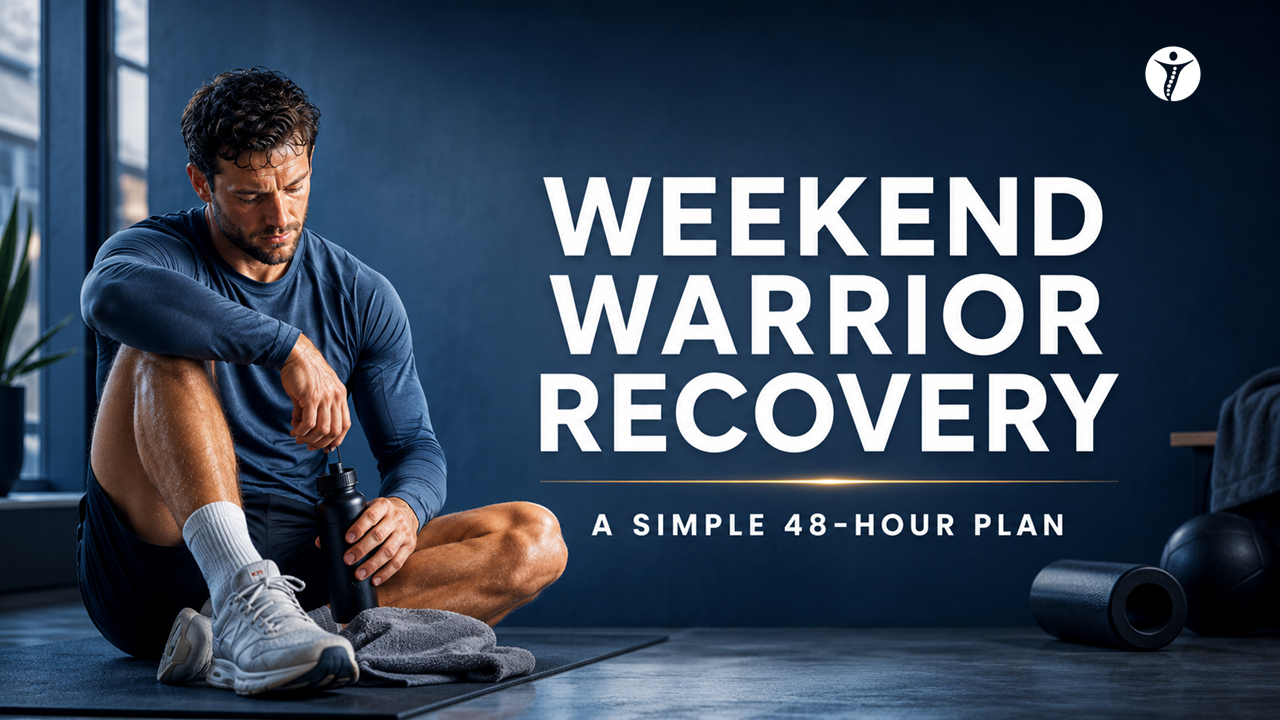
    Infographic showing a time-blocked 48-hour recovery plan after hard workouts or games, including movement, hydration, sleep, and return-to-training rules.
    Image 1: A simple 48-hour plan—move, fuel, sleep, and return smart.
    Light movement usually reduces soreness faster than total rest
    Sleep + hydration are the highest-ROI levers
    Sharp pain, swelling, limping, or worsening symptoms → get checked

    If you go hard on weekends and feel wrecked on Monday, you’re not alone. The goal is to recover faster without turning soreness into an injury loop. For performance-focused care, start with Sports & Athletic Performance. If your soreness is tied to work + lifting demands, see Work & Lifting Injuries.

    • Time-blocked recovery plan (0–48 hours)
    • Soreness vs injury rules (when to worry)
    • Return-to-training guidance that prevents re-injury

    Educational only. Not medical advice. If you’re unsure, err on the side of safety.

    Quick Answer (What to Do Today, Tomorrow, Day 2)

    Today (0–6h): cool down + hydrate + eat a real meal. Tomorrow (24h): low-impact movement (Zone 2) + gentle mobility. Day 2 (48h): light strength return if you can move well and pain isn’t sharp. If you’re limping, swollen, bruised, or worsening day-to-day—treat it like an injury and get checked.

    Supporting visual reinforcing recovery priorities: light movement, sleep, hydration, and a gradual return to training.
    Image 2: Light movement + sleep + hydration usually beats total rest.

    The “next-day rule”

    • Same or better next day: good sign.
    • Mild soreness: normal.
    • Worse next day (especially sharp localized pain): scale back and reassess.

    The 48-Hour Weekend Warrior Recovery Plan

    Use this like a template. Choose the version you can do consistently without limping or symptom spikes.

    0–2 hours (right after)

    • 5–10 minute cool down: easy walk or bike
    • Hydrate: water + electrolytes if heavy sweating
    • Eat: carbs + protein (real food wins)

    2–12 hours

    • Light mobility: pain-free range only
    • Short easy walk: 10–20 minutes
    • Avoid: long “couch lock” blocks (stiffness worsens)

    12–24 hours (next day)

    • Zone 2 cardio: 15–30 minutes (you can talk)
    • Gentle tissue work: optional; keep it light
    • Rule: no limping; no sharp pain “through it”

    24–48 hours (day 2)

    • Light strength return: reduce load, shorten range if needed
    • Technique focus: smooth reps, no grinding
    • Stop early if sharp pain or instability shows up

    Pick your track (quick self-sort)

    • Mostly sore but functional: do the full plan.
    • Sore + stiff + sleep affected: prioritize sleep + light movement + gentle mobility.
    • One spot feels sharp/unstable: stop testing it and get evaluated.

    Soreness vs Injury: How to Tell

    This section prevents the biggest mistake: treating an injury like “normal soreness.”

    Normal soreness (DOMS) usually looks like

    • Diffuse muscle ache, not one pinpoint spot
    • Stiffness that warms up and improves with light movement
    • Peak soreness around 24–48 hours, then gradually improves

    Injury patterns (get checked sooner)

    • Sharp localized pain that changes your movement
    • Swelling, bruising, or a “pop” during the event
    • Limping or inability to bear weight normally
    • Instability (knee giving way, ankle rolling, shoulder slipping)
    • Numbness/tingling/weakness that’s new or worsening

    If you’re not sure

    Start with Contact & Location and we’ll help you choose the safest next step.

    Fuel & Hydration (Simple, High-ROI)

    Keep it basic. You’re restoring fluid, salt, and energy so recovery can happen.

    Hydration

    • Drink water through the day (not just at night)
    • If you sweated a lot: include electrolytes/salty foods
    • Dark urine and headaches often mean you’re behind

    Food

    • Protein + carbs within a few hours helps recovery
    • Don’t under-eat the day after a hard session
    • Prioritize real meals over “perfect supplements”

    Sleep (The #1 Recovery Tool)

    If you do one thing right, do this.

    Tonight checklist

    • Consistent bedtime (as close as possible)
    • Cool, dark room
    • Light walk after dinner if stiff
    • Avoid late alcohol (often worsens sleep quality)

    Common Recovery Mistakes (That Keep You Sore Longer)

    These are the traps that turn a fun weekend into a rough week.

    • Total rest for 48 hours (often increases stiffness)
    • Testing heavy lifts the next day “to see if it’s okay”
    • Aggressive stretching into sharp pain
    • Ignoring sleep while focusing on minor recovery tools
    • Alcohol + poor sleep after a hard session

    Return-to-Training Rules (So You Don’t Re-Injure Yourself)

    A simple checklist to decide what’s safe at 48 hours.

    Green lights

    • No limping and normal basic movement
    • Soreness is diffuse and warms up
    • Next-day response is same or better

    Red lights (don’t push through)

    • Sharp localized pain or instability
    • Swelling/bruising
    • Worsening day-to-day pain

    Simple rule

    Don’t increase volume and intensity at the same time when returning. Ramp one variable at a time.

    When to Worry (Get Checked)

    These signs suggest injury rather than normal soreness.

    • Significant swelling/bruising or a “pop” during the event
    • Inability to bear weight or limping
    • Joint instability (giving way, slipping)
    • Numbness/tingling/weakness that’s new or worsening
    • Fever or feeling unwell with pain
    • Pain that is worsening day-to-day despite rest

    If you’re unsure, start with Contact & Location and we’ll guide you.

    Want to Recover Faster (and Keep Playing)?

    We’ll assess what’s limiting you, calm irritation, and build capacity—so weekends don’t wreck your week.

    Weekend Warrior Recovery FAQs

    Quick answers—including “is it soreness or injury?”

    Is it better to rest or move when you’re sore?
    For most people, light movement is better than total rest. Easy walking, cycling, or mobility helps circulation and reduces stiffness without adding stress.
    How long should muscle soreness last after a hard workout?
    DOMS often peaks around 24–48 hours and improves over the next few days. If pain is worsening daily, causing limping, or sharply localized, treat it more like an injury and get evaluated.
    What’s the best cardio for recovery?
    Low-impact Zone 2 options (easy walking on flat ground, cycling, or pool work) are common winners. The best choice is the one you can do without limping or symptom spikes.
    Should I stretch when I’m sore?
    Gentle mobility is often helpful. Avoid aggressive stretching into sharp pain—especially early after a hard session.
    What helps soreness the most?
    The biggest levers are sleep, hydration (especially after heavy sweating), light movement, and a gradual return to load.
    When should I worry that it’s an injury?
    Signs include significant swelling/bruising, sharp localized pain, a pop at injury, inability to bear weight, limping, joint instability, numbness/tingling/weakness, fever, or pain that worsens day-to-day.
    Is it okay to work out sore the next day?
    Often yes if it’s normal soreness and you can move well. Keep intensity low, avoid painful ranges, and don’t increase volume and intensity at the same time.
    Can chiropractic care help recovery?
    It can help when soreness is paired with stiffness or movement restriction. The best approach is a plan: restore motion, manage load, and build capacity so soreness doesn’t become a recurring injury loop.

  • Lifting Shoulder Pain: 5 Common Mistakes (and Fixes That Actually Work)

    Lifting Shoulder Pain: 5 Common Mistakes (and Fixes That Actually Work)

    SHOULDER PAIN · LIFTING / TRAINING · LOGANSPORT, IN

    Evidence-informed, non-salesy lifting guidance Technique + load + scap/rotator cuff considered together Clear red flags (tear/instability/nerve signs)

    Lifting Shoulder Pain: 5 Common Mistakes (and Fixes That Actually Work)

    Most lifting shoulder pain is a load/technique mismatch—not a “broken shoulder.” Fix the pattern, then rebuild.

    Infographic showing five common lifting shoulder pain mistakes and practical fixes, including volume spikes, pressing dominance, painful angles, scapular control, and forcing range of motion.
    Image 1: The 5 most common lifting mistakes—and the fixes that actually work.
    Reduce overhead spike for 7–14 days (stop daily painful testing)
    Add pulling + scap control (most lifters under-dose)
    Night pain + progressive weakness/ROM loss → evaluate

    If your shoulder hurts when you press, bench, or go overhead, the fastest win is usually changing volume, angles, and balance—not stopping all training. For a full shoulder pain overview, see Shoulder Pain: 7 Common Causes. For the clearest “which pattern is it?” self-sorter, see Rotator Cuff vs Impingement vs Frozen Shoulder.

    • 5 mistakes + specific fixes you can use this week
    • Safe pressing checklist + 5-minute warm-up
    • 2-week return-to-overhead plan

    Educational only. Not medical advice. If symptoms are severe or worsening, get evaluated.

    Quick Answer (Do This First This Week)

    The fastest shoulder-friendly shift is usually: (1) stop painful daily testing and reduce overhead volume, (2) increase pulling volume (rows/face pulls), (3) choose safer pressing angles/grips and a pain-safe range. If pain is sharp, you’re losing motion week-to-week, or weakness is worsening—get evaluated.

    Supporting visual reinforcing safe pressing choices and return-to-overhead rules: reduce overhead spike, choose safer angles, and rebuild pulling and scapular control.
    Image 2: Reduce the spike, choose safer angles, and rebuild pulling/scap control.

    The 7–14 day modification window (simple and effective)

    • Scale overhead volume and painful ranges
    • Keep training with pain-safe substitutions
    • Re-check weekly (not hourly)

    The 5 Mistakes (and Fixes That Actually Work)

    Each fix is designed to lower irritation now and build capacity so it doesn’t keep coming back.

    1) Too much pressing, not enough pulling

    What it looks like: lots of bench/overhead work, minimal rows/pulls—shoulder gets cranky.

    Why it hurts: pressing-dominant volume overloads the front of the shoulder and under-trains scap control.

    • Fix: for 2 weeks, match (or exceed) pressing volume with rows/face pulls.
    • Swap: add chest-supported rows, cable rows, face pulls between pressing sets.
    • Test window: 7–14 days.

    2) Overhead volume spike (too much too soon)

    What it looks like: “back in the gym” week + lots of overhead + soreness turns into pain.

    Why it hurts: tissue tolerance lags behind enthusiasm; irritation builds when you keep testing it daily.

    • Fix: reduce overhead volume for 7–14 days; keep pain-safe strength and pulling.
    • Swap: landmine press, neutral-grip DB press (short range), incline pressing as tolerated.
    • Test window: 7–14 days.

    3) Pressing in painful angles (elbows flared, grip not matched)

    What it looks like: pinch at a certain angle; flared elbows; wide grip that feels “jammed.”

    Why it hurts: certain angles reduce space and increase irritation when tissue is sensitized.

    • Fix: neutral grip + elbows ~30–45° + pain-safe range.
    • Swap: neutral-grip DB press, floor press, push-up handles, cable press in tolerated arc.
    • Test window: 7–14 days.

    4) Ignoring scapular control + thoracic mobility

    What it looks like: shoulder blade “shrugs” up, upper traps take over, upper back feels stiff.

    Why it hurts: scap and thoracic mechanics affect shoulder position and tolerance under load.

    • Fix: add 5 minutes of scap + thoracic prep before pressing days.
    • Swap: wall slides, serratus work, thoracic opener + face pulls.
    • Test window: 7–14 days.

    5) Forcing painful ROM (chasing depth, stretching into pinches)

    What it looks like: deep dips/behind-neck work; aggressive stretching that spikes pain.

    Why it hurts: irritated tissue hates repeated end-range stress.

    • Fix: choose a “green range” (pain-free or mild discomfort only) and build from there.
    • Swap: shorten ROM temporarily; tempo + control beats depth.
    • Test window: 7–14 days.

    Key point

    If you keep “testing” the painful move every day, you keep the tissue irritated. Re-check weekly, not hourly.

    The “Safe Pressing” Checklist

    These are the small changes that make the biggest difference for most lifters.

    Angle + grip

    • Neutral grip is often shoulder-friendly
    • Elbows ~30–45° (avoid extreme flare if it pinches)
    • Use a pain-safe range (no sharp pinches)

    Balance + control

    • Match pressing volume with rows/pulls
    • Keep ribs down; avoid excessive “jam” arching
    • Smooth reps > grind reps while irritated

    If you want the clearest self-sorter

    Start here: Rotator Cuff vs. Impingement vs. Frozen Shoulder.

    5-Minute Warm-Up (Simple and Repeatable)

    Do this before pressing days for 2 weeks and track next-day response.

    Warm-up template

    • 1 minute: gentle thoracic opener (no forcing)
    • 2 minutes: scap control (rows/face pull light band/cable)
    • 2 minutes: light cuff activation in pain-safe range

    2-Week Return-to-Overhead Plan

    A simple ramp that prevents the “feel better → do too much → flare” loop.

    Week 1: Calm irritation + rebuild base

    • Reduce overhead volume (don’t eliminate all training)
    • Increase pulling + scap control
    • Choose safer pressing angles and a pain-safe range

    Week 2: Reintroduce overhead gradually

    • Add small overhead volume (light, controlled)
    • Keep technique clean; stop short of sharp pinches
    • Don’t increase volume and intensity at the same time

    Success metric

    Same or better next day. If you’re worse next day, you did too much too soon—scale down and rebuild.

    When to Worry (Red Flags)

    Get checked promptly if any of these are present.

    • Sudden weakness after an injury (can’t lift like before)
    • Deformity or major swelling/bruising
    • Progressive loss of motion week-to-week (stiffness-dominant pattern)
    • Numbness/tingling with weakness down the arm
    • Severe night pain that keeps escalating

    If you’re unsure, start with Contact & Location and we’ll guide you.

    Want a Shoulder Plan That Fits Your Training?

    We’ll identify your driver (shoulder + scapula + neck), calm irritation, and build a plan that holds up.

    Lifting Shoulder Pain FAQs

    Quick answers—including “when to worry.”

    Should I stop lifting if my shoulder hurts?
    Not always. Many lifters improve with smart modifications: reduce overhead volume temporarily, choose safer angles/grips, increase pulling volume, and rebuild scap/rotator cuff capacity. Sharp pain, sudden weakness, or worsening symptoms should be evaluated.
    How long should I rest a sore shoulder?
    Total rest often isn’t necessary. Many cases do best with 7–14 days of load modification while you keep pain-safe strength and pulling work.
    Is it rotator cuff or impingement?
    They overlap. Rotator cuff irritation is often load-dominant; impingement-type patterns are often angle-dominant and improve with scap/thoracic mechanics and smart angles. See this guide.
    What’s a safer way to press when my shoulder hurts?
    Neutral grips, a slightly narrower elbow angle, pain-safe range, and smoother reps tend to be more shoulder-friendly. Avoid pressing through sharp pinches.
    What if my pain is worse at night?
    Night pain is often from compression or poor support. Better sleep positioning can help quickly. See sleep positions.
    Do I need imaging?
    Often not initially if you’re improving and have no red flags. Imaging matters more with major trauma, sudden weakness, deformity, progressive loss of motion, fever/hot red joint, or worsening neurologic symptoms.
    When should I worry about a tear?
    Seek evaluation promptly if you had a sudden injury with a pop, bruising, deformity, significant weakness, or you can’t lift the arm like before.
    What’s the best next step if I’m not sure?
    Use a 7–14 day modification window and stop daily painful testing. If symptoms keep returning, you’re losing motion week-to-week, or weakness is worsening, an exam-guided plan is the safest next step.

  • Kids’ Posture & “Tech Neck”: Screen Habits That Reduce Neck Pain and Headaches

    Kids’ Posture & “Tech Neck”: Screen Habits That Reduce Neck Pain and Headaches

    KIDS’ POSTURE · TECH NECK · HEADACHES · LOGANSPORT, IN

    Evidence-informed, kid-friendly guidance (no fear) Screen habits + movement “snacks” > perfect posture Clear headache red flags (when to worry)

    Kids’ Posture & “Tech Neck”: Screen Habits That Reduce Neck Pain and Headaches

    You don’t need perfect posture—you need better screen habits and frequent movement.

    Infographic showing kid-friendly screen habits and posture setups that reduce tech neck and headaches, including raising the screen, supporting elbows, and taking breaks.
    Image 1: Better screen habits beat “perfect posture.”
    Frequent breaks beat “perfect posture” every time
    Raise the screen + support elbows to reduce neck load
    Headache red flags or neuro symptoms → evaluate

    Screens aren’t the enemy. Long, unbroken screen time with a bent neck is. The goal is a few simple habit changes that reduce neck strain and headache patterns. For kid-focused care, start with Pediatric Chiropractic. For posture-focused care, see Posture & Tech Neck.

    • 5 screen habits that reduce neck load
    • Desk/couch/bed setup checklist (kid-sized)
    • 2-minute daily reset routine + headache red flags

    Educational only. Not medical advice. If symptoms are severe or worsening, seek appropriate evaluation.

    Quick Answer (3 Changes That Help Most)

    The biggest wins are: (1) raise the screen (not in the lap), (2) support elbows/forearms (less neck/shoulder strain), and (3) take breaks every 20–30 minutes (movement “snacks”). Avoid long screen sessions in bed with the neck bent. If headaches are severe/sudden, worsen over time, or come with neurologic signs—get checked.

    Supporting visual summarizing the highest-impact screen habit changes and a simple daily reset routine for kids’ tech neck.
    Image 2: Raise the screen, support the elbows, take breaks, and use a 2-minute reset.

    Parent-friendly goal

    You’re not trying to force perfect posture. You’re trying to reduce the total daily “bent neck minutes.”

    What “Tech Neck” Actually Is (In Kids)

    It’s usually a combination of neck/upper-back strain, shoulder tension, and fatigue from long, unbroken screen positions.

    Why it happens

    • Screen position (lap/low device) encourages neck bending
    • Long duration without breaks
    • Stress + sleep debt can increase muscle tension and headaches

    Good news

    Small changes—screen height, arm support, and breaks—often reduce symptoms quickly.

    The 5 Screen Habits That Reduce Neck Pain and Headaches

    Use “good enough” habits consistently. Don’t aim for perfection.

    1) Raise the screen

    Do this: prop tablets/phones higher (book/stand) so the neck bends less.

    Why it helps: less neck flexion = less sustained strain.

    2) Support the elbows/forearms

    Do this: rest forearms on desk/table or a pillow on the couch.

    Why it helps: reduces shoulder/neck muscle load.

    3) Break every 20–30 minutes

    Do this: stand up, walk, stretch for 30–60 seconds.

    Why it helps: breaks the “one position for hours” pattern.

    4) Two-hand use + bring the device up (not head down)

    Do this: use two hands; bring the device closer to eye level.

    Why it helps: reduces sustained end-range neck flexion.

    5) No screens in bed (especially for headaches)

    Do this: keep screens out of bed; set a simple “screen-off” window before sleep.

    Why it helps: better sleep + less neck strain = fewer tension patterns.

    One change today

    If you only do one thing: raise the screen and support the elbows. It’s the fastest win for most kids.

    Setup Checklist (Desk + Couch + Bed)

    Same principles as adults—just kid-sized. You’re minimizing “bent neck minutes.”

    Desk setup

    • Feet supported (stool/books if needed)
    • Screen higher (not in the lap)
    • Elbows supported on desk/armrests

    Related: Best Desk Setup for Neck Pain (same principles).

    Couch setup

    • Pillow behind the back
    • Pillow under forearms so the device sits higher
    • Breaks every 20–30 minutes

    Bed setup (best option: don’t)

    • Avoid screens in bed when possible
    • If they must: prop elbows/forearms and raise the screen (don’t bend the neck)
    • Prioritize sleep consistency (biggest headache lever)

    The 2-Minute Daily Reset (Easy and Kid-Friendly)

    Use this once or twice per day—or after long screen sessions.

    Reset routine

    • 30 seconds: stand tall and “look far away” (eyes + posture reset)
    • 30 seconds: gentle chin tuck (no forcing)
    • 30 seconds: upper-back opener (hands behind head, gentle extension)
    • 30 seconds: shoulder blade squeeze + relax

    Rule

    Gentle is the point. If any movement increases sharp pain, stop and get evaluated.

    Headache Tie-In: What Screen Habits Often Trigger

    Long screen sessions can increase neck tension and eye strain, which can contribute to headache patterns.

    Common clues screens are contributing

    • Headaches after long screen blocks
    • Neck/shoulder tightness with headache
    • Improvement on weekends/vacation or with better breaks

    When to Worry (Headache / Neck Red Flags)

    Seek evaluation promptly if any of these are present.

    • Sudden severe headache or “worst headache”
    • Headache with fever, stiff neck, rash, or feeling very unwell
    • Headache after head injury (concussion concerns)
    • Repeated vomiting, fainting, vision changes, confusion
    • New neurologic symptoms (weakness, numbness, balance issues)
    • Headaches that are worsening over time or waking them at night

    If you’re unsure, start with Contact & Location and we’ll guide you.

    Not urgent, but smart to book

    • Symptoms lasting > 2–3 weeks despite habit changes
    • Neck pain limiting school/sports/sleep
    • Arm tingling/weakness or frequent headaches

    Want a Kid-Friendly Plan (Not a Lecture)?

    We’ll assess posture, mobility, and headache/neck patterns and give you a simple plan that fits school and sports.

    Kids’ Tech Neck FAQs

    Quick answers for parents.

    Do kids need perfect posture to avoid tech neck?
    No. Kids don’t need perfect posture—they need better screen habits: raise the screen, support the arms, take regular breaks, and vary positions throughout the day.
    What screen habits help neck pain the most?
    Raising the screen, supporting elbows/forearms, taking movement breaks every 20–30 minutes, and avoiding long screen sessions in bed with the neck flexed are the biggest wins.
    Can screens trigger headaches in kids?
    They can. Long screen time can increase neck tension, eye strain, and stress, which can contribute to headaches. Better setup and movement breaks often reduce symptoms.
    What is the best desk setup for a child?
    Feet supported, screen higher (not in the lap), and elbows supported. Small changes—like a book under a tablet or a pillow under forearms—can reduce neck load.
    What pillow or sleeping position helps neck pain?
    The best pillow supports the neck without forcing the head forward. Side sleepers often do well with a pillow that fills the shoulder-to-neck gap; back sleepers often do well with a thinner pillow.
    How often should kids take screen breaks?
    Many kids do well with a short movement break every 20–30 minutes and a longer break every 60–90 minutes. Consistency matters more than perfection.
    When should I worry about headaches or neck pain in a child?
    Seek evaluation for sudden severe headache, headache with fever/stiff neck, headache after head injury, vomiting, fainting, vision changes, neurologic symptoms, or headaches that are worsening over time.
    When should we get checked for tech neck?
    If symptoms persist beyond 2–3 weeks despite habit changes, pain limits school/sports/sleep, there’s arm tingling/weakness, or headaches are frequent, an exam-guided plan is appropriate.

  • Pediatric Chiropractic in Logansport, IN: What Parents Can Expect (First Visit, Safety, FAQs)

    Pediatric Chiropractic in Logansport, IN: What Parents Can Expect (First Visit, Safety, FAQs)

    PEDIATRIC CHIROPRACTIC · NEW PARENTS · LOGANSPORT, IN

    Gentle, age-appropriate techniques Safety screening + referral when needed No pressure. No contracts. Just a clear plan.

    Pediatric Chiropractic in Logansport, IN: What Parents Can Expect (First Visit, Safety, FAQs)

    Here’s exactly what happens at a pediatric visit—step by step—so you can decide confidently.

    Calm clinic image representing a pediatric chiropractic visit with parent involvement and gentle, age-appropriate care.
    Image 1: A calm, step-by-step look at a pediatric visit—gentle, age-appropriate, and parent-involved.
    Parents stay involved; we explain what we’re doing and why
    We screen red flags and refer when appropriate
    Clear plan, minimum-effective care—no pressure

    If you’re considering pediatric chiropractic, the biggest question is usually safety and what the visit actually looks like. This guide is designed to make the process clear and calm. For the service overview, see Pediatric Chiropractic. For general clinic expectations, see What to Expect at Your First Visit.

    • Exactly what happens at a pediatric visit
    • Safety screening + what we do (and don’t do)
    • Clear FAQs + when to worry guidance

    Educational only. Not medical advice. If your child has urgent red flags, seek appropriate medical care.

    Quick Answer (The Parent Summary)

    A pediatric visit should be gentle, age-appropriate, and parent-involved. We start with history + movement/posture assessment, screen red flags, explain what we find, and build a clear plan. We don’t do forceful twisting or anything painful. If something doesn’t fit a typical conservative pattern, we refer.

    Supporting visual reinforcing pediatric chiropractic safety screening, parent involvement, and a clear plan with gentle techniques.
    Image 2: Gentle techniques, safety screening, and a clear plan—no pressure.

    Our approach in one line

    Listen → Evaluate → Explain → Plan (and only treat if it makes sense and you’re comfortable).

    What a Pediatric Chiropractic Visit Looks Like

    Every kid is different. The process is consistent: understand the story, assess movement, explain findings, and create a plan.

    Step 1: History (the “why”)

    • What you’re noticing and what you’ve tried
    • Sports/school posture/screen habits
    • Sleep, stress, and daily routines
    • Any injuries, falls, or recent changes

    Step 2: Movement + posture assessment

    • How they move (walking, bending, balance—age appropriate)
    • Posture and breathing patterns
    • Key mobility/strength checkpoints

    Step 3: Explain findings + options

    • What we think is driving the symptoms
    • What’s likely to help first (and what to avoid)
    • When we’d refer or recommend medical evaluation

    Step 4: A simple plan

    • Age-appropriate care options (gentle)
    • Home habits (posture, movement, sleep)
    • Progress checks so you’re not guessing

    Safety (and What We Don’t Do)

    Good pediatric care is conservative, clear, and calm. Screening matters more than “doing something.”

    What safety looks like

    • We screen red flags and ask the questions that matter
    • We choose technique based on age, comfort, and findings
    • Parents are involved throughout—consent-first
    • We refer when symptoms don’t fit a conservative pattern

    What we do

    • Gentle, age-appropriate techniques
    • Movement/posture assessment and education
    • Parent-involved, consent-first care
    • Home habit guidance (posture, movement, sleep)
    • Progress re-checks so you’re not guessing
    • Refer when needed

    What we don’t do

    • Forceful twisting or anything painful
    • “One-size-fits-all” adjustments
    • Pressure plans or contracts
    • Ignore red flags or delay necessary medical referral

    Parent comfort matters

    If something doesn’t feel right to you, we slow down, explain, and adjust the plan. You’re in control.

    Common Reasons Parents Bring Kids In

    We keep this practical and conservative—focused on movement, posture, and function.

    • Posture / tech neck: neck tension, upper-back fatigue, screen habits
    • Headache patterns: especially with neck/shoulder tension (with red-flag screening)
    • Sports overuse aches: soreness that keeps recurring or limits performance
    • Backpack / school strain: posture load changes
    • Minor strains after sports/falls: when appropriate and screened
    • Teen athlete performance care: mobility restrictions and return-to-sport planning

    Helpful reads: Kids’ Tech Neck Screen Habits · Soreness vs Injury (Youth Sports) · Headache Posture Trap

    What to Expect by Age

    The same principles apply—gentle assessment, age-appropriate technique, and clear communication.

    Toddlers / young kids

    • Short, simple assessments
    • Gentle techniques selected for comfort
    • Parent present and involved

    School-age kids

    • Posture/screen habits and school load considerations
    • Movement patterns and sports participation
    • Simple home habits are often a big lever

    Teens / athletes

    • Sports demands + training load patterns
    • Mobility/strength checkpoints
    • Return-to-sport guidance and prevention strategies

    If you have a specific age question

    Start with Contact & Location and we’ll help you choose the best next step.

    First Visit Timeline (What Happens, Step by Step)

    This is the part most parents appreciate—clear expectations, no surprises.

    Typical flow

    • 5–10 min: talk through concerns + goals
    • 10–15 min: movement + posture assessment
    • 5–10 min: gentle exam checks (age appropriate)
    • 5–10 min: explain findings + outline a plan
    • If care is appropriate: we discuss options and proceed only with your consent

    After the Visit: What’s Normal (and What’s Not)

    Most kids feel the same or looser. Mild soreness can happen—but should be short-lived.

    Normal

    • Same or improved movement
    • Brief mild soreness
    • Better awareness of posture/movement

    Not normal (contact us)

    • Symptoms that clearly worsen and don’t settle
    • New numbness/tingling/weakness
    • Any concern that doesn’t feel right to you

    When to Worry (Red Flags / When We Refer)

    Some patterns should be evaluated medically. If these apply, seek appropriate medical care.

    • Fever with severe pain or a hot/red swollen joint
    • Significant swelling/deformity or suspected fracture/dislocation
    • Suspected concussion (confusion, worsening headache, vomiting, balance issues)
    • New neurologic weakness, numbness, or trouble walking
    • Severe/worsening headaches or “worst headache” patterns

    If you’re unsure, start with Contact & Location and we’ll guide you to the safest next step.

    How to Choose a Pediatric Chiropractor (A Simple Checklist)

    If you’re comparing options, these questions help you choose a conservative, kid-first approach.

    • Do they clearly explain safety screening and when they refer?
    • Are parents involved and is care consent-first?
    • Do they describe techniques as gentle and age-appropriate?
    • Do they give a clear plan without pressure, contracts, or fear tactics?
    • Do they focus on function, habits, and prevention—not just “cracking”?

    Our standard

    Conservative care, clear communication, and the minimum effective plan—always.

    Want a Calm, Clear First Visit?

    We’ll listen, evaluate, explain, and build a plan that fits your child and your comfort level—no pressure.

    Pediatric Chiropractic FAQs

    Quick answers for parents—especially on safety and first visit expectations.

    Is pediatric chiropractic safe?
    Pediatric care should be gentle and age-appropriate, with safety screening and referral when needed. Parents should be involved, and care should never be forceful or painful.
    Does a pediatric adjustment hurt?
    It shouldn’t. Pediatric techniques are typically gentle and tailored to age and comfort. If something feels uncomfortable, we stop and adjust the approach.
    Do you “crack” kids’ necks and backs?
    Care is age-appropriate and technique-selected. The goal is comfortable movement and function—not a sound. We don’t do forceful twisting or anything that causes pain.
    Can parents stay in the room?
    Yes. Parents are involved throughout the visit. We explain what we’re doing and why, and you can ask questions at any time.
    What happens at the first visit?
    We listen to your concerns, review history, do a gentle movement and posture assessment, explain what we find, and outline a clear plan. If care is appropriate, we’ll discuss options and proceed only with your consent.
    What should my child wear?
    Comfortable clothing that allows easy movement is best. Athletic wear or loose-fitting clothes work well.
    What’s normal after a pediatric visit?
    Many kids feel the same or looser. Mild soreness can happen but should be short-lived. If symptoms worsen or new symptoms appear, contact us.
    When should we see a pediatrician or urgent care first?
    Seek medical evaluation for fever with severe pain, significant swelling/deformity, suspected fracture/dislocation, concussion symptoms, neurologic weakness, or severe/worsening headaches.
    How many visits will my child need?
    It depends on the pattern, goals, and response. We focus on the minimum effective plan and re-check progress so you’re not guessing.
    Do you accept insurance?
    Insurance coverage varies. For details, see Insurance & Payment or contact our office and we’ll help you understand your options.
  • Sciatica in Pregnancy: Positions, Walking Tips, and When to Get Checked

    Sciatica in Pregnancy: Positions, Walking Tips, and When to Get Checked

    PREGNANCY SCIATICA · WALKING + POSITIONS · LOGANSPORT, IN

    Conservative, pregnancy-safe guidance Positions + walking tips that reduce spikes Clear “when to get checked” red flags

    Sciatica in Pregnancy: Positions, Walking Tips, and When to Get Checked

    Most pregnancy sciatica responds to smarter positions, walking tweaks, and load management—plus knowing when to get checked.

    Infographic showing pregnancy-safe positions and walking tips for sciatica symptoms, including sleep, sitting, standing, and when to get checked.
    Image 1: Small position changes can make a big difference—sleep, sit, stand, and walk smarter.
    Small position changes often reduce symptoms fast
    Walking tweaks can help without “resting all day”
    New weakness, saddle numbness, bowel/bladder changes → urgent evaluation

    Pregnancy can change how your pelvis, hips, and low back share load—so sciatic-type symptoms can flare. This guide gives pregnancy-safe position and walking strategies and a clear “when to get checked” screen. For prenatal care, see Pregnancy & Prenatal Chiropractic. For pregnancy back pain patterns, see Pregnancy Back Pain: What’s Normal, What’s Not.

    • Positions for sleep, sitting, and standing
    • Walking tips + a short daily reset routine
    • Self-sort: sciatica vs pelvic girdle pain + red flags

    Educational only. Not medical advice. Always coordinate with your prenatal provider for concerning symptoms.

    Quick Answer (What to Do Today)

    Start with positions that reduce pressure (supported side-lying, hips stacked), short walks with a shorter stride, and breaks from long sitting. Avoid aggressive stretching into nerve pain. Use the next-day rule: same or better tomorrow is the goal. If you have new weakness, saddle numbness, or bowel/bladder changes—seek urgent evaluation.

    Supporting visual reinforcing pregnancy-safe sciatica positions, walking tips, and the next-day rule for symptom response.
    Image 2: Use the next-day rule—same or better tomorrow is the goal.

    Provider coordination (trust)

    We keep care conservative and pregnancy-safe and can coordinate with your OB/midwife when needed.

    Is It Sciatica… or Pelvic Girdle Pain?

    These are commonly confused. This quick self-sort helps you choose the right “bucket” before changing everything.

    More “sciatica / nerve-ish” clues
    • Pain that travels past the knee
    • Tingling/numbness or a “zing” sensation
    • Often worse with long sitting or certain bending positions
    • Relief with position changes and short walks
    More “pelvic girdle (SI/pubic)” clues
    • Pain around SI joint, groin, or pubic region
    • Worse with rolling in bed, stairs, or single-leg tasks
    • “Waddling” or pain when getting in/out of the car
    • Often responds to support + symmetry + pacing

    Best Positions (Sleep, Sit, Stand)

    Goal: reduce asymmetry and avoid long, compressed positions.

    Sleep

    • Side-lying with a pillow between knees
    • Add belly support (pillow/rolled blanket) so hips don’t twist
    • Keep hips “stacked” (avoid rolling forward)

    Sitting

    • Use a small lumbar roll (towel)
    • Hips slightly higher than knees if possible
    • Take a short standing/walking break every 20–30 minutes

    Standing

    • Avoid long “one hip popped” standing
    • Use a small foot stool in the kitchen (switch sides)
    • Change positions before symptoms spike

    Walking Tips That Reduce Symptom Spikes

    Walking is often helpful—when it’s done in a way your body tolerates.

    The three biggest tweaks

    • Shorter stride (less tug/rotation)
    • Flatter routes (hills can spike symptoms)
    • Stop before limping (don’t push through)

    Support options (optional)

    • Supportive shoes (avoid worn-out or floppy pairs)
    • Some find a belly band/SI belt helpful for walking tolerance
    • If you’re unsure, coordinate with your prenatal provider

    Progress rule

    Increase time gradually only if your next-day response is the same or better.

    3–5 Minute Daily Reset (Pregnancy-Safe)

    Gentle movements that often calm sensitivity without aggressive stretching.

    Reset routine (choose pain-safe ranges)

    • 60 seconds: slow breathing (ribcage + belly)
    • 60 seconds: gentle pelvic tilts (comfortable range)
    • 60 seconds: glute activation (easy bridges or standing squeeze)
    • 60 seconds: short walk (or gentle march in place)

    Rule

    If any movement increases tingling/sharp nerve pain, stop and switch to positions and gentle walking instead.

    What to Avoid (Common Triggers)

    These are the moves and patterns that most often keep symptoms active.

    • Aggressive hamstring stretching into nerve pain
    • Long car rides or long static sitting without breaks
    • Heavy asymmetric carrying (one hip/one side)
    • Repeated deep forward bending when symptoms are active
    • Long standing without switching stance/support

    Car Ride Strategy (Common Flare Trigger)

    Small setup changes can reduce the “drive → flare” cycle.

    Before you drive

    • Use a small lumbar roll
    • Keep hips supported (avoid slumping)
    • Slide seat to avoid reaching forward

    During + after

    • Take breaks every 20–30 minutes when possible
    • Do a 1–2 minute walk after driving
    • Avoid immediately doing a long standing task after a long drive

    7-Day Symptom Tracker (So You Don’t Guess)

    This makes patterns obvious fast—and helps your provider help you.

    Track these daily (30 seconds)

    Pain (0–10)

    Morning / evening rating.

    Location

    Buttock? down leg? past knee? groin/pubic?

    Triggers

    Sitting, walking, stairs, rolling in bed, car rides.

    What helped

    Position changes, short walk, pillow setup, breaks.

    Next-day response

    Same/better/worse after walking or activity.

    Red flags?

    New weakness, numbness, bladder changes—seek care.

    Win condition

    Your goal is stable or improved next day. If you’re worse next day, you did too much—scale down.

    When to Get Checked (Red Flags)

    Seek urgent evaluation if any of these are present.

    • New or worsening weakness in the leg/foot
    • Saddle numbness (numbness in groin/saddle region)
    • Bowel or bladder changes (difficulty controlling)
    • Severe/worsening pain that escalates day-to-day
    • Fever or feeling very unwell with pain
    • Concerning symptoms like shortness of breath or significant one-sided leg swelling (seek urgent medical evaluation)

    If you’re unsure, start with Contact & Location and we’ll guide you to the safest next step.

    Want a Pregnancy-Safe Plan That Fits Your Day?

    We’ll identify your likely driver (nerve vs pelvic girdle pattern), calm symptoms, and help you walk and sleep more comfortably.

    Pregnancy Sciatica FAQs

    Quick answers—including “when to get checked.”

    Is sciatica common in pregnancy?
    Sciatica-like symptoms and pelvic/hip-related referral pain can be common in pregnancy due to changing mechanics. Many cases improve with smarter positions, walking tweaks, and load management.
    How do I tell sciatica from pelvic girdle pain?
    Sciatica often feels nerve-y and can travel below the knee. Pelvic girdle pain often centers around the pelvis (SI/groin/pubic area) and is worse with rolling in bed, stairs, or single-leg tasks. See this guide.
    Is walking safe with pregnancy sciatica?
    Often yes if it doesn’t cause limping or sharp pain. Shorter stride, flatter routes, and stopping before symptoms spike can help. Use next-day response to guide progress.
    What sleeping position helps?
    Side-lying with pillows between knees and under the belly often helps. Keep hips stacked and avoid twisting.
    Should I stretch my hamstrings?
    Avoid aggressive stretching into nerve-type pain. Gentle movement and position changes are often better early on. If stretching increases tingling or sharp pain, stop and reassess.
    Can a belly band or SI belt help?
    Some people find support belts helpful for walking and standing tolerance. Fit matters. Coordinate with your prenatal provider if you’re unsure.
    When should I get checked urgently?
    Seek urgent evaluation for new/worsening weakness, saddle numbness, bowel/bladder changes, severe/worsening pain, fever, or concerning symptoms like shortness of breath or significant unilateral leg swelling.
    How long does it take to improve?
    Many people notice improvement within 1–2 weeks with the right position and walking changes. If symptoms persist or limit function, an exam-guided plan is often the fastest path to clarity.
    Can prenatal chiropractic care help?
    It can help when symptoms relate to mechanics and load tolerance. Care should be pregnancy-safe, conservative, and coordinated with your prenatal provider as needed.
    What should I do if car rides flare my symptoms?
    Use a small lumbar roll, keep hips supported, take breaks every 20–30 minutes when possible, and do a short walk after driving. Avoid long static sitting when symptoms are active.

  • Pregnancy Back Pain in Logansport, IN: What’s Normal, What’s Not, and What Helps

    Pregnancy Back Pain in Logansport, IN: What’s Normal, What’s Not, and What Helps

    PREGNANCY BACK PAIN · WHAT’S NORMAL vs NOT · LOGANSPORT, IN

    Conservative, pregnancy-safe guidance Pattern checks that reduce anxiety + guesswork Clear “when to get checked” red flags

    Pregnancy Back Pain in Logansport, IN: What’s Normal, What’s Not, and What Helps

    Back pain is common in pregnancy—but not all patterns are “normal.” Self-sort your pattern and choose the safest next step.

    Infographic mapping pregnancy back pain patterns (mechanical, pelvic girdle, sciatica-like) to safe first steps and red flag screening.
    Image 1: Self-sort your pattern—then use the smallest change that works.
    Many patterns improve with positions + pacing + gentle strength support
    Next-day response is the best guide
    Red flags (weakness, bowel/bladder, fever, severe worsening) → urgent evaluation

    Pregnancy changes how your pelvis, hips, and low back share load—so back pain can flare. This guide helps you decide what’s common vs concerning, and what to do first. For prenatal care, see Pregnancy & Prenatal Chiropractic. If symptoms feel nerve-like down the leg, see Sciatica in Pregnancy.

    • Self-sort your pattern (mechanical vs pelvic vs sciatica)
    • Positions + walking rules + 3–5 minute reset
    • Clear red flags (when to get checked)

    Educational only. Not medical advice. Always coordinate with your prenatal provider for concerning symptoms.

    Quick Answer (Calm, Practical)

    Most pregnancy back pain is mechanical and responds to supportive positions, pacing, short walks with a shorter stride, and gentle strength support. Use the next-day rule: same or better tomorrow is the goal. If you have new weakness, saddle numbness, bowel/bladder changes, fever, or severe worsening pain—seek urgent evaluation.

    Supporting visual summarizing a simple pregnancy back pain plan: positions and pacing today, gentle strength this week, and when to get checked.
    Image 2: Today: positions + pacing. This week: gentle strength. If not improving: get checked.

    Provider coordination (trust)

    We keep care conservative and pregnancy-safe and can coordinate with your OB/midwife when needed.

    The One-Page Plan

    Today
    • Support sleep (pillows, hips stacked)
    • Break up long sitting/standing
    • Short flat walk (short stride)
    This week
    • 3–5 minute reset daily
    • Gentle glute/core support (pain-safe)
    • Avoid biggest trigger (hills, long drives, asymmetry)
    If not improving
    • Use the self-sort below
    • Track symptoms for 7 days
    • Get evaluated for the driver

    What’s Normal vs Not (Which Bucket Are You In?)

    This is the fastest way to reduce anxiety and choose the right first step.

    1) Mechanical low back pain
    • Changes with posture and movement
    • Often improves with short walks and position changes
    • Usually worse after long sitting/standing

    Best first step: positions + pacing + gentle reset routine.

    2) Pelvic girdle pain (SI/pubic)
    • Worse with rolling in bed, stairs, or single-leg tasks
    • Front pelvic/groin or back pelvis/SI pain
    • Often needs symmetry + transition rules

    Best first step: use this guide: SI vs Pubic Pain (How to Tell).

    3) Sciatica / nerve-ish pattern
    • Pain can travel below the knee
    • Tingling/numbness or “zing” sensation
    • Often worse with certain sitting/bending positions

    Best first step: see Sciatica in Pregnancy.

    4) “Not normal” / red flag bucket
    • New/worsening weakness
    • Saddle numbness or bowel/bladder changes
    • Fever/unwell or severe worsening pain

    Best first step: urgent medical evaluation.

    Most common truth

    Many pregnancy pain patterns overlap. That’s why tracking triggers and next-day response works so well.

    Common Causes (Simple, Not Scary)

    Pregnancy changes load, posture, and tissue sensitivity. That’s often enough to create symptoms—without anything being “damaged.”

    • Center of mass shifts → different back/hip demands
    • Pelvic tissues become more load-sensitive
    • Glute/core endurance changes as pregnancy progresses
    • Sleep changes + stress can increase muscle tension
    • Activity spikes (long walks, hills, long drives) can trigger flares

    What Usually Helps (The Plan)

    Think “support + pacing + gentle strength,” not “push through.”

    Core principles

    • Support: pillows, lumbar roll, stable shoes
    • Pacing: break up long sitting/standing/walking
    • Strength support: gentle glute/core work (pain-safe)
    • Next-day rule: same or better tomorrow is the goal

    When to escalate

    If symptoms persist beyond 10–14 days despite smart modification—or you’re limping, losing sleep, or function is dropping—get evaluated.

    Positions (Sleep, Sit, Stand)

    Goal: reduce long static positions and keep hips supported and stacked.

    Sleep

    • Side-lying with pillow between knees
    • Add belly support (pillow/rolled blanket)
    • Keep hips stacked (avoid twisting)

    Sitting

    • Small lumbar roll (towel)
    • Hips slightly higher than knees if possible
    • Stand/walk break every 20–30 minutes

    Standing

    • Avoid long “one hip popped” stance
    • Use a small foot stool; switch sides
    • Change positions before symptoms spike

    Walking + Activity Rules (Pregnancy-Friendly)

    Walking is often helpful—when dose and mechanics match your tolerance.

    The best tweaks

    • Shorter stride + flatter routes
    • Stop before limping or waddling
    • Use “doses” (10–20 minutes) rather than one long walk
    • Don’t increase volume and intensity in the same week

    Rule

    Progress only if you’re stable or improved the next day.

    3–5 Minute Daily Reset (Pregnancy-Safe)

    Gentle movements that often reduce sensitivity without aggressive stretching.

    Reset routine

    • 60 seconds: slow breathing (ribcage + belly)
    • 60 seconds: gentle pelvic tilts (comfortable range)
    • 60 seconds: glute activation (easy bridge or standing squeeze)
    • 60 seconds: short walk (or march in place)

    Rule

    If any movement increases sharp pain or nerve symptoms, stop and return to positions + pacing.

    Car Ride Strategy (Common Trigger)

    Small setup changes can reduce the “drive → flare” cycle.

    Before you drive

    • Use a small lumbar roll
    • Keep hips supported (avoid slumping)
    • Slide seat forward so you’re not reaching

    During + after

    • Break every 20–30 minutes when possible
    • Walk 1–2 minutes after driving
    • Avoid immediately doing a long standing task after a long drive

    7-Day Symptom Tracker (So You Don’t Guess)

    Track for one week and your biggest driver usually becomes obvious.

    Track these daily (30 seconds)

    Pain (0–10)

    Morning / evening rating.

    Location

    Low back? SI? pubic/groin? down the leg?

    Top triggers

    Rolling, stairs, sitting, walking, car rides, standing.

    What helped

    Pillows, breaks, stride change, reset routine.

    Next-day response

    Same/better/worse after activity.

    Red flags?

    Weakness, numbness, bladder changes—seek care.

    Win condition

    Stable or improved next day. If worse, reduce the biggest trigger and reassess.

    When to Get Checked (Red Flags)

    Seek urgent evaluation if any of these are present.

    • New or worsening weakness in the leg/foot
    • Saddle numbness (numbness in groin/saddle region)
    • Bowel or bladder changes (difficulty controlling)
    • Severe/worsening pain that escalates day-to-day
    • Fever or feeling very unwell with pain
    • Concerning symptoms like shortness of breath or significant one-sided leg swelling (seek urgent medical evaluation)

    If you’re unsure, start with Contact & Location and we’ll guide you to the safest next step.

    Want a Pregnancy-Safe Plan That Fits Your Day?

    We’ll confirm your pattern (mechanical vs pelvic vs sciatica) and build a conservative plan that helps you move and sleep more comfortably.

    Pregnancy Back Pain FAQs

    Quick answers—including “what’s normal vs not.”

    Is back pain normal in pregnancy?
    Back and pelvic pain can be common in pregnancy due to changing mechanics. Many patterns improve with positions, pacing, and gentle strength support. Some patterns require evaluation—see the red flags section above.
    How do I tell pelvic girdle pain from sciatica?
    Pelvic girdle pain often centers around the pelvis and flares with rolling in bed, stairs, or single-leg tasks. Sciatica-like symptoms often feel nerve-y and can travel below the knee. See this guide and this guide.
    Is walking safe if I have pregnancy back pain?
    Often yes if it doesn’t cause limping or sharp pain. Shorter stride, flatter routes, and stopping before symptoms spike can help. Next-day response is the best guide.
    What sleeping position helps?
    Side-lying with pillows supporting the belly and between the knees often helps. Keeping hips stacked (not twisted) reduces strain.
    Should I stretch when my back hurts during pregnancy?
    Avoid aggressive stretching into sharp pain or nerve symptoms. Gentle movement, breathing, and position changes are often better early on.
    Can a belly band or SI belt help?
    Some people find support belts helpful for standing and walking tolerance. Comfort and fit matter. Coordinate with your prenatal provider if you’re unsure.
    When should I get checked urgently?
    Seek urgent evaluation for new/worsening weakness, saddle numbness, bowel/bladder changes, fever, severe/worsening pain, or concerning symptoms like shortness of breath or significant unilateral leg swelling.
    How long does it take to improve?
    Many people notice improvement within 1–2 weeks with the right modifications. If symptoms persist or limit function, an exam-guided plan is often the fastest path to clarity.
    Can prenatal chiropractic care help?
    It can help when pain relates to mechanics and load tolerance. Care should be pregnancy-safe, conservative, and coordinated with your prenatal provider as needed.
    What should I do if car rides flare my back pain?
    Use a small lumbar roll, keep hips supported, take breaks every 20–30 minutes when possible, and do a short walk after driving. Avoid long static sitting when symptoms are active.
  • Arthritis in Logansport, IN: 6 Joint Pain Patterns (and What Usually Helps)

    Arthritis in Logansport, IN: 6 Joint Pain Patterns (and What Usually Helps)

    ARTHRITIS & JOINT PAIN · PATTERN GUIDE · LOGANSPORT, IN

    Evidence-informed, conservative care Pattern recognition (don’t guess) Clear “when to worry” red flags

    Arthritis in Logansport, IN: 6 Joint Pain Patterns (and What Usually Helps)

    Arthritis pain isn’t one thing. Match the plan to the pattern—then build tolerance without flares.

    Infographic mapping six common arthritis and joint pain patterns to safe first steps and when to get checked.
    Image 1: Match the plan to the pattern—don’t guess.
    Mild soreness is okay; sharp pain is not
    Next-day response is the best guide
    Hot/red swelling, locking, giving way, or systemic signs → get checked

    If you’re in Logansport or Cass County and joint pain is limiting walking, stairs, sleep, or work, this guide helps you self-sort the most common arthritis patterns and choose a plan that builds tolerance safely. For care options, start with Arthritis & Joint Pain Treatment. Knee-limited? See Knee Pain Treatment. Hip-limited? See Hip Pain Treatment.

    • 6 patterns with “what it often means + what helps”
    • 7-day calm-the-flare plan + action ladder
    • Clear red flags (when to get checked)

    Educational only. Not medical advice. If you’re unsure about symptoms, err on the side of safety.

    Quick Answer (What Most People Need)

    Most people do best with daily gentle movement and light strengthening 2–4 days per week. Consistency matters more than intensity. Use the next-day rule: your joint should feel the same or better tomorrow. If you swell, lock, give way, or feel worse day-to-day, scale back and consider evaluation.

    Supporting visual reinforcing daily gentle movement and light strength as a common best approach for arthritis, with pacing and next-day response.
    Image 2: Daily gentle movement + light strength usually beats rest-only.

    Simple rule

    Sharp pain is a stop sign. Mild soreness that settles and feels stable next day is usually okay.

    The 6 Joint Pain Patterns (and What Usually Helps)

    Find the pattern that fits best—then match the plan to the pattern.

    1) Morning stiffness that eases with movement

    What it often means: a “needs motion” joint—stiffness dominates early, then improves with gentle activity.

    • Usually helps: daily mobility + short walks + heat
    • Fast win: 5–10 minutes of easy movement within an hour of waking

    2) Swelling/flare pattern (reactive joint)

    What it often means: the joint got overloaded (too much volume, too deep a range, or a spike day).

    • Usually helps: scale volume/range 7–10 days + low-impact cardio
    • Fast win: remove the “spike” activity and keep gentle movement daily

    3) Stairs/squats pain (knee load pattern)

    What it often means: the knee is sensitive to load in deeper angles and needs graded tolerance.

    4) Night pain / side-sleep pain (hip/pelvis pattern)

    What it often means: compression/position sensitivity or hip load intolerance.

    5) Grip/hand stiffness pattern (hand OA / overuse)

    What it often means: small joints need frequent gentle motion and better pacing with gripping tasks.

    • Usually helps: frequent gentle open/close motion + heat + pacing
    • Fast win: “movement snacks” for hands every 1–2 hours (30–60 seconds)

    6) Multi-joint pain + fatigue (inflammatory/systemic “get checked” pattern)

    What it can suggest: an inflammatory pattern (not a diagnosis)—worth medical evaluation.

    What to Do First (Without Guessing)

    A simple ladder that avoids wasted time and repeated flares.

    The Action Ladder

    1. Reduce spike activities for 7–10 days (deep loaded angles, big volume days)—but keep moving daily.
    2. Pick joint-safe cardio you can do consistently (flat walking, cycling, pool).
    3. Add light strength 2–4 days/week (pain-safe range) to build tolerance.
    4. Track next-day response. If worse next day, reduce range/volume; if stable, progress slowly.
    5. If flares keep repeating, consider an evaluation to match the plan to the true driver.

    7-Day “Calm the Flare” Plan (Mini)

    A practical week that reduces stiffness and rebuilds confidence without overdoing it.

    Mini plan (repeat weekly if it helps)

    Days 1–2
    • Mobility + short walks
    • Keep range pain-safe
    • Stop before limping
    Days 3–5
    • Light strength 2 days
    • 1 cardio day (talk test pace)
    • No spike activities
    Days 6–7
    • Active recovery + reassess
    • If calmer: progress slightly
    • If worse: scale range/volume

    Want the full version? See: A 7-Day Low-Impact Movement Plan for Arthritis (Knee, Hip, or Hands).

    Strength + Cardio Rules (Joint-Safe)

    These rules keep you out of the flare loop.

    Cardio

    • Use the talk test pace (you can talk)
    • Flat routes early; avoid hills if they spike symptoms
    • Shorter sessions more often beats one long session

    Strength

    • 2–4 days/week is a strong baseline
    • Start with pain-safe range (shallow is okay)
    • Progress load or range slowly—one variable at a time

    The next-day rule

    Your joint should be stable or improved the next day. Swelling or a big pain spike means the dose was too high.

    What to Avoid (Flare Traps)

    These patterns keep arthritis pain stuck.

    • Doing nothing all week, then doing a lot on one day
    • Deep loaded angles that spike symptoms
    • Aggressive stretching into sharp pain
    • Daily “testing” of the painful movement

    7-Day Symptom Tracker (So You Don’t Guess)

    This makes your pattern obvious fast—and helps your provider help you.

    Track these daily (30 seconds)

    Pain (0–10)

    Morning / evening rating.

    Swelling

    Yes/no + when it appears.

    Top triggers

    Stairs, squats, walking, gripping, sleep position.

    What helped

    Heat, short walks, pacing, modified range.

    Next-day response

    Same/better/worse after activity.

    Function

    Walking, stairs, sleep: better/same/worse.

    When Escalation Is Discussed (Meds / Injections / Surgery)

    A neutral, practical perspective (not medical advice).

    • Many arthritis plans start with conservative care: movement, strength, pacing, and load management.
    • If pain is rapidly worsening, function keeps dropping, or there are concerning red flags, medical evaluation is appropriate.
    • If you’re considering injections or surgery, it still helps to optimize the basics (strength, walking tolerance, sleep, and mechanics) to improve outcomes.

    Our goal

    Conservative, non-salesy care—help you move better, flare less, and make clear decisions.

    When to Get Checked (Red Flags)

    Get checked promptly if any of these are true.

    • Hot, red joint with fever or feeling very unwell
    • Rapidly worsening swelling or bruising
    • Unable to bear weight or severe worsening pain
    • True locking/giving way that increases fall risk
    • Multi-joint swelling + fatigue with prolonged morning stiffness (inflammatory pattern—get checked)

    If you’re unsure, start with Contact & Location and we’ll guide you.

    Want a Joint Plan That Actually Holds Up?

    We’ll match your plan to your pattern, calm flares, and build strength and tolerance without guessing.

    Arthritis Pattern FAQs

    Quick answers—including “when to worry.”

    Is exercise safe with arthritis?
    For most people, yes—when the plan matches tolerance. Daily gentle movement plus light strengthening 2–4 days per week is often protective and improves function.
    What’s the best cardio for arthritis?
    Flat walking, cycling, and pool exercise are common options. The best choice is what you can do consistently without worsening symptoms the next day.
    How do I tell osteoarthritis from rheumatoid arthritis?
    OA often relates to loading patterns and stiffness that improves with movement. Inflammatory patterns often include longer morning stiffness, multiple swollen joints, and fatigue. If you suspect an inflammatory pattern, get checked. See this guide.
    What does it mean if my joint swells after activity?
    Swelling suggests overload. Scale back range/volume, use low-impact movement, and rebuild gradually. Persistent swelling should be evaluated.
    How long does it take to feel improvement?
    Many people notice reduced stiffness within 1–2 weeks with consistent movement. Strength and endurance improvements build over weeks and compound over time.
    When should I worry and get checked?
    Get checked for a hot/red joint with fever, rapidly worsening swelling, inability to bear weight, true locking/giving way, severe worsening pain, or multi-joint symptoms with fatigue and prolonged morning stiffness.
    Do I need imaging for arthritis?
    Not always. Many plans start with symptom pattern and response to conservative care. Imaging is more important with major trauma, inability to bear weight, or concerning red flags.
    What helps hand arthritis?
    Frequent gentle motion, heat, pacing repetitive grip tasks, and light strengthening can help. If swelling, numbness/tingling, or rapid worsening occurs, get evaluated.
    What helps knee arthritis the most?
    Consistent low-impact cardio plus quadriceps/hip strengthening, shallow range early, and avoiding spikes are common best practices. Build tolerance gradually using next-day response.
    Can chiropractic care help arthritis?
    It can help when pain relates to mechanics, mobility restrictions, and load tolerance. The goal is a conservative plan that improves movement and function.

  • A 7-Day Low-Impact Movement Plan for Arthritis (Knee, Hip, or Hands)

    A 7-Day Low-Impact Movement Plan for Arthritis (Knee, Hip, or Hands)

    ARTHRITIS & JOINT PAIN · 7-DAY PLAN · LOGANSPORT, IN

    Conservative, evidence-informed plan Pain-safe progress rules (no flare spiral) Clear “when to worry” red flags

    A 7-Day Low-Impact Movement Plan for Arthritis (Knee, Hip, or Hands)

    A simple week you can repeat that reduces stiffness and builds tolerance—without flaring symptoms.

    Infographic showing a 7-day low-impact movement plan for arthritis with mobility, low-impact cardio, and light strengthening options for knee, hip, or hand arthritis.
    Image 1: A simple week you can repeat—reduce stiffness and build confidence without flaring symptoms.
    Daily motion improves stiffness and joint “feel”
    Strength protects joints (even light, 2–4 days/week)
    Progress one thing at a time (minutes OR sets OR range)

    Arthritis doesn’t mean you should stop moving—it means you need a smarter dose. If you want the service overview, start with Arthritis & Joint Pain Treatment and our hub guide Arthritis: 6 Joint Pain Patterns. If a specific joint is the limiter, see Knee Pain Treatment or Hip Pain Treatment.

    • Traffic-light safety rules + flare-day swaps
    • Joint tracks (knee / hip / hands) + exercise library
    • Week 2–4 progression so you know what to do next

    Educational only. Not medical advice. Seek urgent care for severe/worsening symptoms or red flags.

    Quick Answer

    Do daily gentle movement, add light strength 2–4 days/week, and choose a low-impact cardio option you can do consistently. Use the next-day rule: your joint should feel the same or better tomorrow.

    Supporting visual explaining safe intensity rules and next-day guidance for arthritis-friendly movement.
    Image 2: Use the safety rules and next-day guide to stay in the “green zone.”

    Copy/Paste Plan Card (This Week)

    Daily
    • 10–20 min gentle movement
    • Short walk/bike/pool if tolerated
    • Stop before limping
    2–4 days
    • Light strength (pain-safe range)
    • Slow tempo > heavy load
    • One joint track (knee/hip/hands)
    Rules
    • Same/better tomorrow = progress
    • Swelling = scale back
    • Sharp pain = stop

    Not sure what kind of arthritis pattern you have? Start with 6 Joint Pain Patterns or read OA vs. RA (How to Tell) for a clearer “what bucket am I in?” guide.

    Start Here: The Safety Rules That Prevent Flares

    Use the traffic-light system, then apply the 3 rules below. That’s how you stay in the “green zone.”

    Green light

    Same next day Better next day Mild soreness that settles

    Keep going and progress slowly.

    Yellow light

    More sore for a few hours Still functional

    Repeat the same dose (don’t progress yet). Reduce range or reps if needed.

    Red light

    Swelling increases Sharp pain New locking/giving way

    Scale back immediately. Return to gentle movement only and consider evaluation if it persists.

    Rule #1: The next-day rule

    You should feel better, the same, or only mildly sore the next day. If you’re worse for 24–48 hours, scale back range or volume.

    Better / Same / Mild soreness
    Rule #2: Stay in a “green range”

    Choose pain-free to mild discomfort. Avoid sharp pain, catching/locking, or “giving way.” If swelling increases, scale back immediately.

    Pain-safe range
    Rule #3: Avoid spike activities for 7 days

    For one week, reduce deep loaded joint positions and high impact (jumping, long hills, deep squats if they flare you). Replace with flat walking, cycling, pool, and controlled strength.

    Progressive, not aggressive

    If you keep flaring despite scaling down, start with Arthritis Care so we can match the plan to your joint and your load tolerance.

    Choose Your Joint (Knee · Hip · Hands)

    Same 7-day structure. Pick the joint that limits you most and use the matching options below.

    Knee focus (most common limiter)

    • Cardio best bets: flat walking, cycling, pool
    • Strength best bets: sit-to-stand, shallow mini-squat, step-ups to a low step
    • Avoid early on: long hills, deep squats, jumping, “pushing through” sharp pain
    • Helpful reads: Knee Pain on Stairs and Knee Pain Treatment

    Hip focus

    • Cardio best bets: flat walking, cycling, pool
    • Strength best bets: bridges, side steps, controlled hip hinge (pain-safe)
    • Avoid early on: deep pinchy ranges, long strides if they pinch, aggressive stretching
    • Helpful reads: Hip Pain: Common Causes and Hip Pain Treatment

    Hands focus

    • Best bets: tendon glides, gentle open/close work, light putty/ball squeezes, wrist extensor strength
    • Avoid early on: long sustained gripping that flares symptoms
    • Pro tip: short doses (1–3 minutes) multiple times/day often beats one long session
    • Start here: Arthritis & Joint Pain Treatment

    The 7-Day Low-Impact Arthritis Movement Plan

    Keep it easy enough to repeat. The goal is calmer joints—not a hard workout.

    Day Focus Time Goal
    Day 1Mobility10–15 minReduce stiffness + restore motion
    Day 2Light Strength15–20 minProtect joints with controlled strength
    Day 3Low-Impact Cardio15–30 minBuild tolerance with steady movement
    Day 4Mobility + Balance10–15 minControl + confidence
    Day 5Strength Repeat15–20 minReinforce strength safely
    Day 6Active Recovery10–20 minMove without flaring
    Day 7Rest or Light Mobility0–15 minRecover + reset
    1

    Day 1 — Mobility (10–15 minutes)

    Pick the joint that limits you most and stay in a pain-safe range.

    • Knees: gentle knee bends + easy quad activation
    • Hips: hip circles + controlled bridges
    • Hands: open/close + tendon glides + gentle squeezes
    2

    Day 2 — Light Strength (15–20 minutes)

    Controlled strength is joint “insurance.” Keep reps smooth and easy.

    • Knees: sit-to-stand (chair), shallow mini-squats
    • Hips: bridges + side steps (band if tolerated)
    • Hands: light putty/ball squeezes + wrist extensor work
    3

    Day 3 — Low-Impact Cardio (15–30 minutes)

    Use the “talk test” pace (you can talk in full sentences).

    • Flat walking, cycling, or pool
    • Stop if limping begins or pain escalates sharply
    • Shorter is fine. Consistency wins.
    4

    Day 4 — Mobility + Balance (10–15 minutes)

    Repeat Day 1 mobility, then add balance (supported).

    • Mobility: repeat Day 1
    • Balance: supported single-leg stance as tolerated
    5

    Day 5 — Strength Repeat (15–20 minutes)

    Repeat Day 2 but use a slower tempo (control over load).

    • Same movements as Day 2
    • Slow down the lowering phase
    6

    Day 6 — Active Recovery (10–20 minutes)

    This is your “keep moving without poking the bear” day.

    • Short walk or bike (flat)
    • Gentle range work only
    7

    Day 7 — Rest or Light Mobility

    If stiff, do Day 1 mobility. If calm, take a true rest day.

    • Stiff: mobility
    • Calm: rest

    Flare Day Swap (if you wake up worse)

    Use this if the next-day rule fails or swelling increases.

    • Cut cardio time in half (or switch to bike/pool)
    • Use smaller ranges for strength and do 1 fewer set
    • Do gentle mobility only and return to the plan once stable

    If knee pain is the limiter: see Knee Pain on Stairs. If hip pain is the limiter: see Hip Pain: Common Causes. If you want a plan tailored to your joint + gait, book here: Schedule an Evaluation.

    Exercise Library (Bookmark This)

    Simple options you can rotate without overthinking.

    Mobility

    • Gentle knee bends (pain-safe range)
    • Hip circles
    • Pelvic tilts
    • Hand open/close + tendon glides

    Strength

    • Knee: sit-to-stand, mini-squat (shallow), low step-ups
    • Hip: bridges, side steps, gentle hinge pattern
    • Hands: light squeezes, wrist extensor work

    Cardio

    • Flat walking
    • Cycling
    • Pool walking/swimming

    Balance

    • Supported single-leg stance
    • Heel-to-toe walk (near counter)

    Bad-Day vs Good-Day Modifications

    This is how you stay consistent without flaring.

    If you’re flared today

    • Cut volume by 50% (time/reps)
    • Keep range smaller and pain-safe
    • Do mobility + short walk only

    If you’re stable today

    • Progress one variable only (time OR reps OR range)
    • Add 5 minutes cardio OR 1 set strength
    • Keep next-day response as the judge

    Pro move: If you flare, revert for 3–4 sessions, then try again—most people progress smoothly on the second attempt.

    Week 2–4 Progression (What to Do Next)

    Most plans fail because they stop at Week 1. Here’s the simple path forward.

    Progress ONE variable at a time

    • Add 5 minutes to cardio or add 1 set to strength—not both
    • Keep the same pain-safe range until next-day symptoms stay stable
    • If you flare: revert for 3–4 sessions, then progress again

    Progression rules

    Week 2
    • Add 5 minutes to cardio OR
    • Add 1 set to one strength day
    Week 3
    • Add one more strength day OR
    • Increase range slightly (pain-safe)
    Week 4
    • Maintain consistency
    • Re-check your biggest trigger
    • Progress slowly (one variable)

    Joint mechanics tip (often overlooked)

    For knee arthritis especially, the “chain” matters—feet, hips, and walking mechanics can change joint load. If you’re not sure what’s driving your pattern, we can evaluate the chain; orthotic support may help some people. See Custom Orthotics.

    7-Day Tracker (So You Don’t Guess)

    Track for a week and you’ll usually identify your biggest flare trigger.

    Track these daily

    Pain (0–10)

    Morning / evening rating.

    Swelling

    Yes/no + when it appears.

    What you did

    Walk/bike/pool + strength + mobility.

    Next-day response

    Same/better/worse.

    Top trigger

    Stairs? deep bend? long walk? grip?

    Sleep/function

    Walking, stairs, sleep: better/same/worse.

    Want a Plan Tailored to Your Arthritis?

    We’ll match the plan to your joint, your lifestyle, and your goals—so you’re not guessing. We also look at the full chain (feet → knees → hips).

    When to Worry (Red Flags)

    Get checked promptly if any of these are true.

    • Hot, red joint with fever or feeling unwell
    • Rapidly worsening swelling or bruising
    • Unable to bear weight or severe worsening pain
    • True locking/giving way that increases fall risk
    • Pain worsening day-to-day despite scaling down

    If you’re unsure, start with Contact & Location and we’ll guide you.

    Arthritis Movement FAQs

    Quick answers—including “when to worry.”

    Is it safe to exercise with arthritis?
    Yes—when the plan matches your tolerance. Low-impact, controlled movement is one of the best ways to reduce stiffness and improve function.
    How often should I move if I have arthritis?
    Daily gentle movement plus 2–4 days per week of light strengthening is a strong baseline. Consistency beats intensity.
    What exercises should I avoid with arthritis?
    Avoid high-impact and deep loaded positions that cause sharp pain, and anything that increases swelling or worsens pain for 24–48 hours.
    What’s the best cardio for arthritis?
    Flat walking, cycling, and pool exercise are common low-impact options. The best choice is what you can do consistently without flare-ups.
    Is soreness normal when starting?
    Mild soreness can be normal. Sharp pain, swelling, limping, or feeling worse the next day means you should scale back range or volume.
    How long does it take to feel improvement?
    Many people notice reduced stiffness within 1–2 weeks when movement is consistent. Strength improvements build over time.
    When should I worry and get checked?
    Get checked for a hot/red joint with fever, rapidly worsening swelling, inability to bear weight, true locking/giving way, or worsening symptoms day-to-day despite scaling down.
    What if I flare during the week?
    Swap to a “flare day”: shorten cardio, use smaller ranges for strength, reduce sets, and return to the plan once next-day symptoms are stable.