Tag: Patient Education

Clear, practical explanations of common symptoms, causes, and next steps—so you understand what’s going on and what typically helps.

  • Disc Herniation vs. Bulge vs. Degeneration: What MRI Words Actually Mean

    Disc Herniation vs. Bulge vs. Degeneration: What MRI Words Actually Mean

    DISC HERNIATION & DEGENERATION · MRI REPORT GUIDE · LOGANSPORT, IN

    Plain-English MRI translation Symptoms + exam matter most Clear red-flag guidance

    Disc Herniation vs. Bulge vs. Degeneration: What MRI Words Actually Mean

    The report is one clue. The diagnosis comes from matching the words to your symptoms, function, and exam.

    Educational image explaining that MRI terms like disc bulge, herniation, and degeneration should be matched to symptoms, function, and exam findings.
    Image 1: MRI words matter most when they match symptoms, function, and exam findings.
    Disc bulge usually means a broader disc shape change
    Herniation is usually more focal — but still must match symptoms
    Degeneration can be common — scary wording does not automatically mean serious damage

    Reading an MRI report can feel overwhelming: bulge, herniation, protrusion, extrusion, degeneration, stenosis, nerve root contact. But the most important question is not “What word is on the report?” It is: does the imaging match your symptom pattern and exam? For the service overview, start with Disc Herniation & Degeneration Treatment. If pain travels down the leg, also see Sciatica Treatment and Spinal Decompression.

    • Plain-English MRI terms without panic
    • How to tell what findings may actually matter
    • When conservative care makes sense — and when to worry

    Educational only. Not medical advice. Seek urgent care for severe/worsening symptoms or red flags.

    Quick Answer: The MRI Report Is Not the Whole Diagnosis

    MRI words are useful — but they are not enough by themselves. The finding matters most when it lines up with your symptoms, your movement pattern, and your exam.

    Supporting educational image showing that MRI findings should be matched to symptoms, function, and exam results before deciding what to do.
    Image 2: The report is one clue. The diagnosis comes from matching the report to the pattern.
    1

    Symptom map

    Back-only pain behaves differently than pain traveling into the leg, foot, arm, or hand.

    2

    Triggers + relief

    Sitting, bending, coughing, walking, standing, and position relief all help identify the pattern.

    3

    Exam findings

    Strength, reflexes, sensation, range of motion, and nerve tension signs matter more than wording alone.

    The most important reframe

    “I have degeneration” does not automatically mean “my spine is falling apart.” “I have a bulge” does not automatically mean “I need surgery.” The better question is: does this finding explain my symptoms — and what is the safest next step?

    Common MRI Words — Plain English

    Use this as a translation guide, not a diagnosis.

    Disc bulge

    A broader outward change in the disc shape. It can be painless or painful depending on inflammation, nerve space, and whether symptoms match.

    Disc herniation / protrusion

    A more focal displacement of disc material. It may matter more when pain travels, tingling/numbness appears, or the exam shows nerve irritation.

    Disc extrusion

    A larger or more extended herniation pattern. It sounds scary, but the real question is still symptoms, function, nerve findings, and trend over time.

    Degeneration / dehydration

    Age-related disc changes. These can be common and do not automatically explain pain. Relevance depends on load tolerance and exam findings.

    Stenosis / narrowing

    Less space around nerves or the spinal canal. It may matter if walking tolerance, leg symptoms, or nerve findings match the location.

    Nerve root contact / compression

    Potential irritation or pressure near a nerve. This matters most when symptoms travel in a matching pattern and strength/reflex/sensation findings line up.

    Disc Bulge vs. Herniation vs. Degeneration

    Here is the clean comparison most patients wish came with the report.

    Term Plain-English Meaning When It May Matter More
    Disc bulge Broad disc shape change. When symptoms and exam match the level/side, especially with nerve irritation or recurring mechanical pain.
    Disc herniation More focal disc displacement. When pain travels down the leg/arm, numbness/tingling appears, or strength/reflex/sensation changes match.
    Degeneration Disc aging, dehydration, or height loss. When it contributes to load intolerance, stiffness, recurrent flare-ups, or narrowing around nerves.
    Stenosis Narrowing around the spinal canal or nerve openings. When walking/standing tolerance changes, symptoms ease with sitting/flexion, or nerve signs match.
    Annular tear Change in the disc’s outer ring. When symptoms behave like disc irritation and flare with certain loads/positions.

    Key point

    The MRI tells you what the structure looks like. The exam tells you whether that structure is likely driving the problem. That distinction changes everything.

    What Matters Most: Match the Report to the Pattern

    These “pattern clues” help separate scary wording from clinically useful information.

    1

    Green-light clues

    Symptoms are stable or improving, no major weakness, pain changes with position, and daily function is gradually returning.

    Stable Improving
    2

    Yellow-light clues

    Pain travels into the leg/foot or arm/hand, tingling comes and goes, sitting/walking tolerance is limited, or symptoms keep flaring.

    ! Evaluate ! Match pattern
    3

    Red-light clues

    Progressive weakness, bowel/bladder changes, saddle numbness, severe worsening numbness, major trauma, or fever with spinal pain.

    ! Urgent ! Don’t wait

    The “does it match?” checklist

    • Side match: Does the MRI finding match the side of symptoms?
    • Level match: Does the nerve level match where symptoms travel?
    • Behavior match: Do positions, loads, and triggers fit a disc/nerve pattern?
    • Exam match: Do strength, sensation, reflexes, or nerve tension signs support the report?

    What to Do First After Reading a Scary MRI Report

    A simple decision ladder so you do not overreact — or ignore something important.

    1

    Do not chase the word alone

    “Bulge,” “degeneration,” or “protrusion” does not automatically tell you what to do. Start by matching the report to symptoms.

    2

    Look at function

    Can you walk, sit, sleep, lift, and work? Function and trend over time help determine urgency and plan.

    3

    Get the pattern examined

    An exam checks motion, nerve signs, strength, reflexes, sensation, and whether conservative care is appropriate.

    When conservative care often makes sense

    • No urgent red flags
    • Symptoms are mechanical or position-sensitive
    • Nerve symptoms are stable or improving
    • Strength is not progressively worsening
    • Your goal is to improve function before considering more invasive steps

    Helpful next reads: Herniated Disc Red Flags, How to Sit, Sleep, and Lift With a Herniated Disc, and What to Expect During Spinal Decompression.

    Want Help Understanding Your MRI Report?

    We’ll compare your symptoms, function, and exam findings to the report so you know what likely matters — and what to do next.

    When to Worry (Red Flags)

    Do not wait on these symptoms. Get urgent medical evaluation.

    • Loss of bowel or bladder control or new difficulty controlling either
    • Saddle numbness or numbness in the groin/saddle region
    • Progressive weakness in the leg, foot, arm, or hand
    • Severe or worsening numbness that is spreading
    • Major trauma, fall, accident, or injury with severe spinal pain
    • Fever, chills, or feeling very ill with spinal pain
    • Pain that is rapidly worsening and not responding to position changes or rest

    If you are unsure whether your symptoms are urgent, err on the side of safety. For non-urgent questions, start with Contact & Location.

    Disc MRI Report FAQs

    Quick answers — including what matters, what does not, and when to worry.

    Does an MRI automatically explain my pain?
    Not always. MRI findings must be matched to symptoms, function, and exam findings. Some findings can show up even when they are not the main pain driver.
    What is the difference between a disc bulge and a herniation?
    A disc bulge is usually a broader outward change in disc shape. A herniation is typically more focal. Either can be painful or painless depending on inflammation, nerve involvement, and whether the finding matches the symptom pattern.
    Is disc degeneration normal?
    Disc degeneration can be a common age-related finding. Whether it matters depends on symptoms, function, load tolerance, and exam findings — not the word alone.
    What does nerve root compression mean?
    It means a nerve may have less space or pressure near it. It matters most when symptoms travel in a matching pattern and the exam shows nerve findings like weakness, reflex change, sensation change, or nerve tension signs.
    Can disc problems improve without surgery?
    Many mechanical disc-related patterns can improve with conservative care when there are no urgent red flags. The plan depends on symptoms, exam findings, tolerance, and whether nerve symptoms are stable or improving.
    When does spinal decompression make sense?
    Spinal decompression may be considered when symptoms and exam findings suggest a disc or nerve-root irritation pattern and the patient is appropriate for conservative care. It should be matched to the case, not used just because an MRI report contains disc words.
    When should I worry about a disc finding?
    Seek urgent evaluation for bowel or bladder changes, saddle numbness, progressive weakness, severe/worsening numbness, major trauma, fever with spinal pain, or symptoms that are rapidly worsening.
    What should I do first after reading a scary MRI report?
    Do not panic based on the words alone. Compare the report to your symptoms and exam findings. If pain is limiting daily life, symptoms are traveling, or you are unsure what is safe, schedule an evaluation for a clear plan.

  • How to Sit, Sleep, and Lift With a Herniated Disc (Positions That Usually Help)

    How to Sit, Sleep, and Lift With a Herniated Disc (Positions That Usually Help)

    DISC HERNIATION & DEGENERATION · PRACTICAL GUIDE · LOGANSPORT, IN

    Position-sensitive disc guidance Sitting + sleeping + lifting rules Clear red flags included

    How to Sit, Sleep, and Lift With a Herniated Disc (Positions That Usually Help)

    Disc flare-ups often feel position-sensitive. The goal is to calm symptoms, protect the irritated area, and rebuild confidence without making leg symptoms worse.

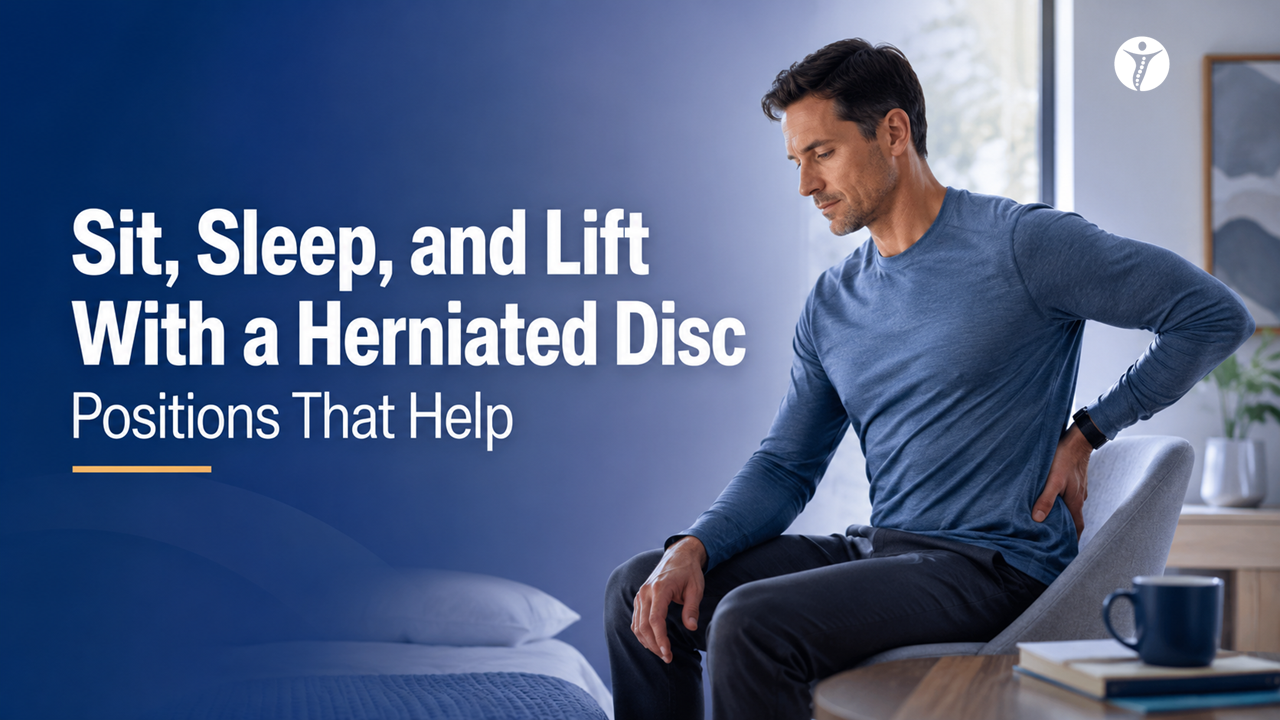
    Educational hero image showing practical sitting, sleeping, and lifting strategies for a herniated disc or disc-related leg pain.
    Image 1: The goal is to find positions that calm leg symptoms, reduce irritation, and help you move safely.
    The best position is the one that reduces leg symptoms and lets you change often
    Walking tolerance is often a better progress sign than sitting tolerance
    If symptoms travel farther down the leg, scale back and get evaluated

    Disc flare-ups can make normal life feel complicated: sitting hurts, sleep is interrupted, and bending or lifting feels risky. This guide gives you practical position rules for the first phase of calming symptoms. If symptoms travel into the leg, also see Sciatica Treatment. For the bigger picture, start with Disc Herniation & Degeneration and our plain-English MRI guide: Disc Herniation vs. Bulge vs. Degeneration.

    • Simple sitting, sleeping, and lifting setup rules
    • Traffic-light system: keep, modify, or stop
    • Clear “when to worry” guidance for disc and nerve symptoms

    Educational only. Not medical advice. Seek urgent care for severe/worsening symptoms or red flags.

    Quick Answer: The Position That Helps Is the One That Centralizes Symptoms

    With disc-related pain, the most important clue is not just “back pain.” It is whether symptoms are moving out of the leg and closer to the back or traveling farther down the leg.

    Supporting image explaining traffic-light rules for sitting, sleeping, and lifting with a herniated disc.
    Image 2: Use the traffic-light rules to decide what to keep, modify, or stop.

    The simple rule

    If a position makes leg pain, numbness, or tingling less intense or move closer to the back, it is usually a better direction. If symptoms travel farther down the leg, intensify, or create weakness, scale back and get checked.

    Sitting goal

    Reduce pressure, support the low back, and change positions before symptoms build.

    Sleeping goal

    Find a position that calms leg symptoms and lets the nervous system settle overnight.

    Lifting goal

    Keep load close, avoid twisting, and rebuild tolerance gradually—not all at once.

    The Disc Pain Traffic-Light Rules

    Use this to decide whether a position or movement is helping, needs modification, or should stop for now.

    GREEN — keep it

    Symptoms calm or centralize

    • Leg pain reduces
    • Numbness/tingling decreases
    • You can walk or stand better afterward
    • Symptoms move closer to the low back
    YELLOW — modify it

    Symptoms are mildly irritated

    • Pain increases slightly but settles quickly
    • Stiffness increases but no new leg symptoms
    • You need a smaller range or shorter duration
    • Next-day response is stable
    RED — stop and reassess

    Symptoms worsen or peripheralize

    • Pain travels farther down the leg
    • Numbness/tingling spreads
    • Weakness appears or worsens
    • Pain keeps worsening after activity

    Next-level tip: track the leg first

    Low back soreness can fluctuate. Leg symptoms are often the better “signal.” If leg symptoms are improving, that is usually a better sign than chasing a perfectly pain-free back on day one.

    How to Sit With a Herniated Disc

    Sitting often aggravates disc-related pain because it can increase load and reduce position variety. The goal is supported, changeable sitting—not perfect posture forever.

    Best sitting setup to try first

    • Hips slightly higher than knees if tolerated
    • Feet flat instead of tucked under the chair
    • Small lumbar support or towel roll at the low back
    • Screen/desk close enough so you are not rounding forward for long periods

    The 20–30 minute rule

    Do not wait until symptoms are screaming. Stand, walk, or gently reset every 20–30 minutes. Short breaks are often more effective than trying to “hold good posture” for hours.

    Stand Walk Reset

    If sitting sends pain down the leg

    Reduce sitting duration, increase walking breaks, and avoid slumped sitting for now. If symptoms keep traveling down the leg or you notice weakness, an exam is the safest next step. Start with Disc Herniation & Degeneration or Sciatica Treatment.

    How to Sleep With a Herniated Disc

    The “best” sleep position is the one that reduces leg symptoms and lets you actually rest.

    Option 1: Side-lying with pillow support

    • Place a pillow between the knees
    • Keep hips stacked instead of twisted
    • Use enough pillow height to keep the spine relaxed

    Option 2: Back-lying with knees supported

    • Place a pillow under the knees
    • Let the low back relax
    • Try this if side-lying increases leg symptoms

    Option 3: Short reset before bed

    • Take a short, easy walk
    • Avoid aggressive stretching
    • Use gentle positions that calm symptoms

    Avoid this common sleep mistake

    Do not force a position just because someone online said it is “best for discs.” If it makes leg symptoms worse, it is not the best position for your current pattern.

    How to Lift With a Herniated Disc

    During a flare, lifting should be treated like a progression—not a test of toughness.

    Rule What to do Why it matters
    Keep it close Hold the load near your body Reduces leverage and strain on the irritated area
    Hinge, don’t fold Move through the hips instead of repeatedly rounding the low back Helps keep the motion more controlled
    Turn your feet Avoid twisting while holding weight Twisting + load is a common flare trigger
    Start light Rebuild with easy loads first Disc/nerve irritation needs capacity rebuilt gradually
    Watch the leg Stop if symptoms travel farther down the leg Peripheralizing symptoms are a “scale back” sign

    Good first lifts

    • Light grocery bag close to body
    • Hip hinge practice with no weight
    • Short-range sit-to-stand if tolerated
    • Two-hand carry instead of one heavy side carry

    Pause these during a flare

    • Heavy floor lifts
    • Loaded twisting
    • Repeated bending while symptoms are hot
    • “Testing it” with a heavy lift too early

    Work-related lifting injury?

    If this started at work, your plan should also account for job demands, repeated bending, and return-to-work progression. Read Return-to-Work Plan After a Back Injury and Lifting Injury at Work: Low Back Strain vs. Disc vs. SI Joint.

    What to Avoid During a Disc Flare

    This is not forever. These are short-term guardrails while symptoms calm down.

    Avoid repeatedly provoking the same pattern

    • Long slumped sitting without breaks
    • Repeated bending first thing in the morning
    • Heavy lifting while symptoms are traveling down the leg
    • Twisting while carrying weight

    Avoid chasing aggressive stretches

    A stretch that feels intense is not automatically helpful. If it worsens leg symptoms or creates a sharper nerve sensation, back off and use a calmer position or shorter range.

    The goal is not bed rest

    Most people do better with gentle movement, short walks, and smart position changes than total rest. The key is staying inside a symptom-safe range while gradually rebuilding tolerance.

    A Simple 7-Day “Calm It Down” Ladder

    Use this when sitting, sleeping, and lifting are all irritating symptoms. Progress only if the leg symptoms are stable or improving.

    1

    Days 1–2: Reduce the spike

    • Short walks instead of long sitting
    • Use supported sitting and sleep positions
    • Avoid heavy lifting and repeated bending
    • Track whether leg symptoms are moving closer to the back or farther down the leg
    2

    Days 3–4: Add gentle consistency

    • Increase walk frequency before increasing duration
    • Practice easy hip hinge mechanics without load
    • Use micro-breaks before symptoms build
    • Keep sleep setup consistent
    3

    Days 5–7: Rebuild tolerance

    • Add light daily tasks back in gradually
    • Keep loads close and avoid twisting
    • Progress one variable at a time: time, distance, or load
    • If leg symptoms worsen, drop back to the previous step

    Progress sign to look for

    A good week usually means: better walking tolerance, less intense leg symptoms, fewer sleep interruptions, and less fear with basic daily movement. If those are not improving, it is time to get a clearer exam-based plan.

    When Conservative Care or Spinal Decompression May Make Sense

    Positions can help calm the flare, but they are not the whole plan.

    Conservative care may fit if…

    • Symptoms are mechanical and position-sensitive
    • Leg symptoms are stable or improving
    • No urgent red flags are present
    • You need help rebuilding movement and load tolerance

    Spinal decompression may be considered if…

    • Disc/nerve irritation is likely based on exam
    • Sciatica-type symptoms are part of the pattern
    • You are appropriate for conservative care
    • The plan includes movement, education, and progression—not just passive care

    Helpful next reads

    For decompression details, read What to Expect During Spinal Decompression and Does Spinal Decompression Work?. If your symptoms behave more like sciatica, read Best Sleeping Positions for Sciatica.

    Want a Clear Plan for Your Disc Symptoms?

    We’ll check how your symptoms behave, screen for red flags, and build a plan around sitting, sleeping, lifting, walking tolerance, and nerve irritation.

    When to Worry About a Herniated Disc

    Get urgent evaluation if any of these are present.

    • Loss of bowel or bladder control
    • Numbness in the groin/saddle area
    • Worsening leg weakness or foot drop
    • Rapidly worsening numbness or symptoms spreading farther down the leg
    • Fever with severe back pain or feeling very unwell
    • Major trauma such as a fall or car accident
    • Pain that is progressively worsening day-to-day despite reducing activity

    If you are unsure, start with Contact & Location and we’ll help you decide the right next step. For a deeper red-flag guide, read Herniated Disc Red Flags: When to Worry.

    Herniated Disc Positions FAQs

    Quick answers about sitting, sleeping, lifting, walking, decompression, and red flags.

    What is the best position to sit with a herniated disc?
    The best sitting position is the one that reduces leg symptoms and lets you change positions often. Try hips slightly higher than knees, feet flat, a small lumbar support, and micro-breaks every 20–30 minutes.
    Is it better to lie on my back or side with a herniated disc?
    Both can work. Side-lying with a pillow between the knees or back-lying with a pillow under the knees are common starting points. Choose the one that calms leg symptoms and helps you sleep.
    What movements should I avoid with a herniated disc?
    Avoid repeated painful bending, loaded twisting, heavy lifting during a flare, and any movement that sends symptoms farther down the leg.
    Is walking good for a herniated disc?
    Walking is often helpful when it does not worsen symptoms. Short, frequent walks usually work better than one long walk during a flare.
    How should I lift with a herniated disc?
    Keep the load close, hinge through the hips, avoid twisting while loaded, and start light. Stop if lifting sends symptoms farther down the leg.
    When should I worry about a herniated disc?
    Urgent evaluation is needed for bowel/bladder changes, saddle numbness, worsening weakness, severe/worsening numbness, fever with spinal pain, major trauma, or rapidly worsening symptoms.
    Does spinal decompression help a herniated disc?
    Sometimes. Spinal decompression may help certain disc and sciatica patterns when the exam suggests disc or nerve-root irritation and you are appropriate for conservative care.
    How long does it take a herniated disc flare-up to calm down?
    Many disc flare-ups improve over weeks with the right plan, but timelines vary. Good signs include improved walking tolerance, fewer leg symptoms, and less symptom spread down the leg.

  • Plantar Fasciitis in Logansport, IN: Morning Heel Pain Fixes That Actually Help

    Plantar Fasciitis in Logansport, IN: Morning Heel Pain Fixes That Actually Help

    FOOT & ANKLE PAIN · PLANTAR FASCIITIS · LOGANSPORT, IN

    Morning heel pain pattern guide Support + strength + load plan Clear “when to worry” rules

    Plantar Fasciitis in Logansport, IN: Morning Heel Pain Fixes That Actually Help

    If your first steps out of bed feel sharp, tight, or bruised under the heel, this guide is for you.

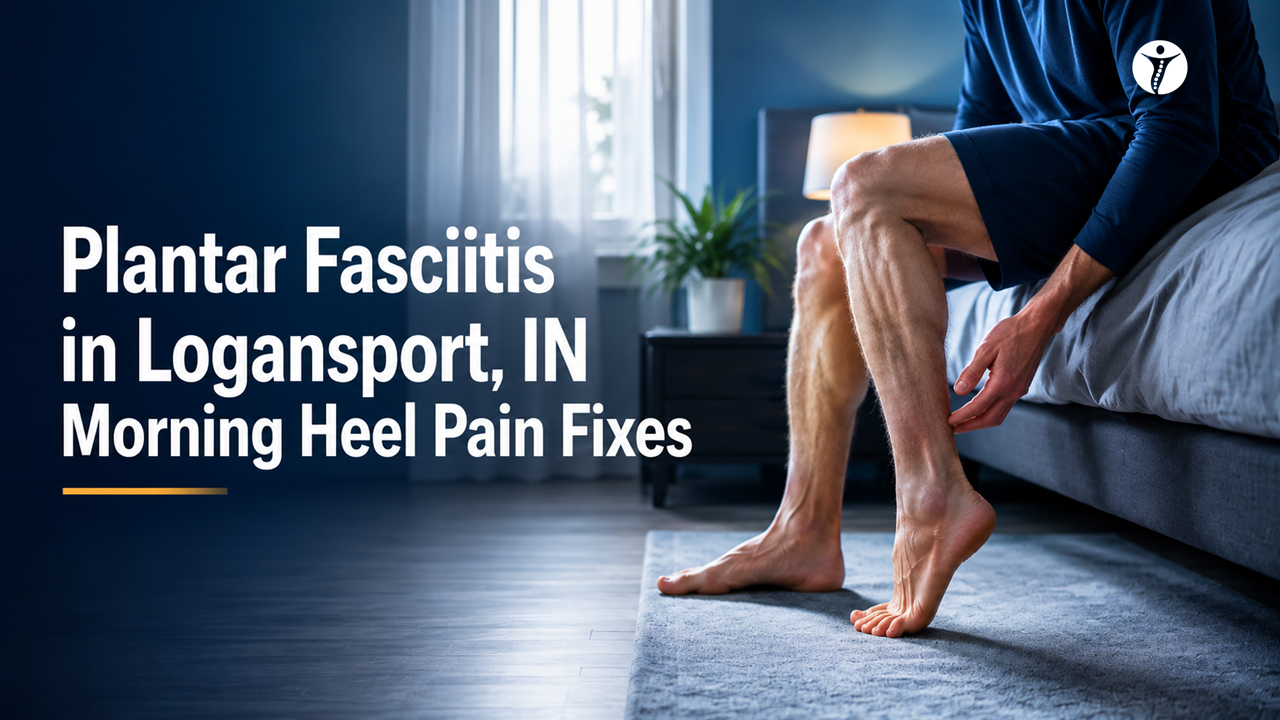
    Plantar fasciitis morning heel pain guide showing first-step pain, supportive footwear, gentle warm-up, and progressive loading.
    Image 1: Morning heel pain usually needs support, gentle warm-up, and progressive loading—not aggressive stretching.
    First-step pain usually comes from stiff tissue being loaded suddenly
    Support before standing often beats stretching after it already hurts
    Long-term improvement comes from load control + calf/foot strength

    Plantar fasciitis is one of the most common causes of morning heel pain—that sharp, bruised, or stabbing feeling during the first few steps out of bed. The goal is not to “stretch harder.” The goal is to reduce the first-step load, support the foot, calm the irritated tissue, and gradually rebuild tolerance. For the full service overview, start with Plantar Fasciitis Treatment. If your pain involves more of the foot or ankle, see Foot & Ankle Pain Treatment.

    • Morning routine: what to do before your first steps
    • Fixes ranked by what usually matters most
    • Clear signs it may not be “just plantar fasciitis”

    Educational only. Not medical advice. Seek urgent care for severe/worsening symptoms or red flags.

    Quick Answer: What Usually Helps Morning Heel Pain Fastest?

    The fastest practical fix is usually a combination of support before standing, gentle foot/calf warm-up, and reducing the biggest load spike for a few days. Long-term improvement usually requires progressive calf and foot strengthening—not just stretching.

    Supporting image showing a first-step routine for plantar fasciitis, including gentle warm-up, supportive shoes, and next-day symptom tracking.
    Image 2: Start with the first-step routine—warm up the foot before loading it.
    1

    Before you stand

    Do 60–90 seconds of gentle ankle pumps, toe curls/spreads, and calf movement before the first step.

    2

    Support immediately

    Put on supportive shoes or recovery sandals before walking around. Avoid barefoot hard-floor steps early.

    3

    Track the next day

    If pain is worse the next morning, your total load was too high. Reduce steps, hills, standing time, or intensity.

    The key principle

    Plantar fasciitis often behaves like a load-tolerance problem. That means your foot is not “broken” — it is irritated by more stress than it can currently handle. The fix is to calm the tissue, support it, and rebuild capacity gradually.

    Why Plantar Fasciitis Hurts Most in the Morning

    That sharp first-step pain is one of the clearest plantar fasciitis patterns.

    Overnight stiffness + sudden loading

    While you sleep, the calf/Achilles/plantar fascia chain can stiffen. Then the first few steps suddenly load the bottom of the heel and arch. That quick jump from “rested and stiff” to “fully loaded” is why the first steps can feel so sharp.

    Why it may feel better after you walk

    As the tissue warms up, symptoms often ease. But that does not always mean it is fixed. If the pain returns every morning, the underlying load problem is still present.

    Why aggressive stretching can backfire

    Stretching hard into sharp pain can irritate the tissue more. Gentle mobility is useful. Forced stretching is different. Your goal is to warm the tissue, not win a flexibility contest.

    The First-Step Routine: Do This Before You Stand

    Use this before your first bathroom trip, before long standing, or after sitting for a while.

    Step 1: Gentle ankle pumps

    • Move the ankle up and down slowly
    • Do 20–30 reps before standing
    • Keep it easy—not aggressive

    Step 2: Toe curls and toe spreads

    • Curl and relax the toes gently
    • Spread toes if comfortable
    • Do 10–20 slow reps

    Step 3: Gentle calf warm-up

    • Point and flex the foot
    • Use a towel only if it stays mild
    • No sharp stretching

    Step 4: Shoes before steps

    • Put supportive shoes/sandals by the bed
    • Avoid barefoot hard-floor walking
    • Track whether first-step pain improves in 3–7 days

    If this routine helps but symptoms keep returning, the next question is usually support + mechanics. See Custom Orthotics vs. OTC Inserts and Custom Orthotics.

    5 Fixes That Actually Help Plantar Fasciitis

    These are the big levers: reduce the load spike, support the foot, and rebuild tolerance.

    1) Stop barefoot “first steps”

    This is often the simplest high-impact change. Keep supportive shoes, recovery sandals, or house shoes beside the bed. The goal is to reduce the sharp first-step load while the tissue is stiff.

    2) Temporarily reduce the biggest aggravator

    Common aggravators include long standing, hills, speed walking, running, hard floors, and sudden increases in steps. You do not need to stop moving completely — you need to reduce the specific load that keeps re-irritating the heel.

    3) Build calf and foot strength gradually

    Long-term improvement usually requires stronger calves and feet. Start with pain-safe calf raises, toe control, and foot intrinsic work. Keep symptoms stable the next day before progressing.

    4) Use shoes that match the job

    If you stand on hard floors, walk all day, or train regularly, flimsy shoes may keep symptoms alive. A stable heel counter, enough width, and support that matches your foot can make a major difference.

    5) Consider orthotic support if symptoms keep returning

    Orthotics are not magic, but they can help when mechanics and load distribution are part of the pattern. If you have tried better shoes and basic support and symptoms still repeat, see Custom Orthotics: Do You Need Them?

    What not to do

    • Do not aggressively stretch into sharp pain every morning
    • Do not ignore worsening next-day symptoms
    • Do not walk barefoot on hard floors if first-step pain is intense
    • Do not keep increasing steps, hills, or standing time while symptoms are escalating

    Shoes, Inserts, and Custom Orthotics: What Should You Try First?

    The best support depends on your symptoms, shoes, workload, and how often the pattern returns.

    Scenario Best First Step Why
    First-time mild flare Supportive shoes + short-term OTC insert Many mild cases respond when first-step load and hard-floor stress are reduced.
    Recurring morning heel pain Exam + support strategy Repeated flares usually mean mechanics, load, footwear, or calf/foot capacity need a plan.
    Work on hard floors Stable shoes + possible custom support Long standing creates repeated load. The shoe/orthotic combination matters.
    OTC inserts helped but not enough Consider custom orthotics Custom support may better match your foot mechanics, shoes, and daily demands.
    Numbness, burning, or spreading symptoms Get evaluated That pattern may involve nerve irritation or another diagnosis, not just plantar fascia pain.

    Quick shoe checklist

    • Heel counter: stable, not collapsing
    • Width: enough room for toes and insert/support
    • Midsole: not worn out or flattened
    • Use-case: work shoes, walking shoes, and running shoes may need different support

    A Simple 7-Day Calmer-Heel Plan

    Use this to reduce the morning pain spike and start rebuilding tolerance.

    1

    Days 1–2: Calm the first step

    • Supportive shoes before walking
    • 60–90 second pre-stand routine
    • Reduce hills, long walks, and hard-floor barefoot time
    2

    Days 3–4: Add gentle strength

    • Short, pain-safe calf raises
    • Toe control and foot intrinsic work
    • Stop if sharp pain increases
    3

    Days 5–6: Build walking tolerance

    • Flat walking in supportive shoes
    • Keep walks short enough that next morning is stable
    • Avoid “testing it” with long hills or speed work
    7

    Day 7: Review the pattern

    • Is first-step pain lower?
    • Are you less sore the next morning?
    • If not improving, get the mechanics checked

    How to know you are on the right track

    First-step pain should gradually become less intense, settle faster, and show fewer next-day flare-ups. If pain is worsening day-to-day, the plan is too aggressive or the diagnosis may need a closer look.

    Want a Plan Matched to Your Feet, Shoes, and Daily Routine?

    We’ll evaluate the heel, foot mechanics, calf/Achilles chain, footwear, and walking pattern—then build a plan that fits your actual life.

    When to Worry About Heel Pain

    Most morning heel pain is mechanical, but some patterns deserve prompt evaluation.

    • Unable to bear weight or pain is rapidly worsening
    • Major swelling or bruising, especially after a twist, fall, or injury
    • Hot/red foot, fever, or feeling sick with foot pain
    • Numbness, tingling, burning, or weakness that spreads or worsens
    • Pain that is worsening day-to-day despite reducing activity
    • Heel pain that does not fit the classic “first-step pain that warms up” pattern

    If you’re unsure, start with Contact & Location and we’ll guide you.

    Plantar Fasciitis FAQs

    Quick answers for morning heel pain, support, stretching, orthotics, and when to get checked.

    Why is plantar fasciitis worst in the morning?
    Overnight, the plantar fascia and calf/Achilles complex can stiffen. The first steps suddenly reload the tissue, which can create sharp heel pain until the area warms up.
    What is the fastest thing that helps morning heel pain?
    Support plus gentle warm-up usually helps most. Put supportive shoes on before walking, do 60–90 seconds of gentle foot and calf mobility before standing, and reduce the main aggravator for a few days.
    Should I stretch plantar fasciitis aggressively?
    Usually no. Aggressive stretching into sharp pain can flare symptoms. Gentle mobility, supportive footwear, load management, and progressive calf/foot strengthening usually work better.
    Do custom orthotics help plantar fasciitis?
    Sometimes—especially when foot mechanics and load distribution are major drivers or when symptoms keep returning despite good shoes and basic support. Orthotics work best when paired with strength and load progression.
    Can I walk with plantar fasciitis?
    Often yes, if walking does not cause limping or worsening next-day pain. Flat, shorter walks in supportive shoes are usually better than long walks, hills, barefoot steps, or pushing through sharp pain.
    How long does plantar fasciitis take to improve?
    Many cases improve over several weeks with consistent support, progressive strengthening, and load management. Long-standing symptoms often take longer and benefit from a more specific plan.
    When should I worry about heel pain?
    Get checked promptly if you cannot bear weight, have major swelling or bruising, pain is worsening daily, pain followed a clear injury, the foot is hot or red with fever, or symptoms include spreading numbness, tingling, or weakness.
    What should I do first if I think I have plantar fasciitis?
    Start by avoiding barefoot first steps, using supportive shoes, doing a gentle pre-stand warm-up, reducing the main aggravator, and tracking next-day symptoms. If symptoms keep returning, schedule an evaluation.

  • Ankle Sprain Recovery Timeline: What’s Normal, What’s Not, and Rehab Steps

    Ankle Sprain Recovery Timeline: What’s Normal, What’s Not, and Rehab Steps

    FOOT & ANKLE PAIN · RECOVERY TIMELINE · LOGANSPORT, IN

    Clear timeline: normal vs not normal Rehab steps by phase Built to reduce repeat sprains

    Ankle Sprain Recovery Timeline: What’s Normal, What’s Not, and Rehab Steps

    A clear week-by-week guide—plus the strength, balance, and return-to-activity steps that matter most.

    Ankle sprain recovery timeline guide showing normal healing stages, rehab progression, and return-to-activity checkpoints.
    Image 1: A clear ankle sprain timeline—from swelling and stiffness to strength, balance, and return to activity.
    Swelling and bruising can be normal early—trend matters more than one bad day
    Balance + calf/foot strength are key for preventing repeat sprains
    Can’t bear weight, worsening pain, or giving way means get checked

    An ankle sprain can feel “minor” at first—then turn into weeks of swelling, stiffness, and instability if the right rehab is skipped. This guide breaks down what’s normal, what’s not, and how to rebuild ankle confidence safely. If you have recurring ankle pain or repeated sprains, start with Foot & Ankle Pain Treatment. If foot mechanics, footwear, or support may be part of the pattern, see Custom Orthotics.

    • Goal: calm irritation → restore motion → rebuild strength + balance
    • Return to work or sport is based on function—not just “days since injury”
    • Red flags and “when to worry” are included below

    Educational only. Not medical advice. Seek urgent care for severe/worsening symptoms or red flags.

    Quick Answer: How Long Does an Ankle Sprain Take to Heal?

    A mild ankle sprain may improve a lot in 1–3 weeks. A moderate sprain often takes 3–6+ weeks. A more severe sprain, “high ankle” sprain, unstable ankle, or repeat sprain can take 8–12+ weeks and usually needs a more structured plan.

    Supporting visual showing ankle sprain rehab principles including strength, balance, stability, and gradual return to activity.
    Image 2: Strength, balance, and controlled progression help reduce repeat ankle sprains.
    Normal early:

    Swelling, bruising, stiffness, and soreness with walking can be normal in the first several days.

    Improving trend
    Not normal:

    Pain that worsens daily, inability to bear weight, severe instability, numbness, or pain high above the ankle.

    ! Get checked
    Most missed step:

    People stop once walking feels better—but balance, calf strength, and side-ankle control prevent re-sprains.

    Rehab matters

    Start Here: 5 Quick Checks After an Ankle Sprain

    These checks help you decide whether you can start gentle rehab—or whether you should be evaluated first.

    1) Can you bear weight for a few steps?

    If you cannot bear weight, or you have a severe limp, get evaluated to rule out fracture or higher-grade injury. “Walking it off” is not the best strategy when weight-bearing is sharply limited.

    2) Where is the pain?

    Pain on the outside of the ankle is common with many sprains. Pain on the inside ankle, pain at the base of the 5th metatarsal, or pain high above the ankle can change the timeline and should be taken more seriously.

    3) Is swelling/bruising improving week-to-week?

    Bruising can spread toward the heel or toes and still be part of a normal healing response. The bigger question is whether your walking tolerance, swelling, and range of motion are trending better.

    4) Does the ankle feel unstable or like it might “give way”?

    That often means balance/proprioception and peroneal strength need focused work. Instability is one of the biggest reasons people keep re-spraining the same ankle.

    5) Are you testing it every day?

    Repeatedly jumping, cutting, twisting, or walking too far “to see if it’s better” can delay recovery. Rehab should be consistent and progressive—not aggressive.

    Not sure if this is more than a simple sprain? Start with Foot & Ankle Pain Treatment, or if this happened during sport, see Sports & Athletic Performance.

    Ankle Sprain Recovery Timeline: What’s Normal vs. What’s Not

    Use this as a practical guide. Your exact timeline depends on severity, stability, prior sprains, footwear, and how quickly you restore strength and balance.

    Phase What’s often normal What to focus on When to be concerned
    Days 1–3 Swelling, bruising, stiffness, pain with walking Protection, compression, elevation, gentle range Can’t bear weight, severe pain, obvious deformity
    Days 4–10 Gradual improvement; still sore with longer walking Restore motion, gentle strength, supported balance Swelling/pain worsening daily
    Weeks 2–3 Stiff after rest; mild soreness after rehab Calf strength, balance, controlled steps Still limping heavily or feeling unstable
    Weeks 3–6+ Most daily walking is better; sport/work demands may still expose weakness Single-leg strength, hopping/cutting prep, endurance Repeated giving way or inability to progress
    8–12+ weeks More severe sprains may still need rebuilding Return-to-sport/work testing and prevention plan Chronic instability, repeat sprains, persistent swelling

    The most important timeline rule

    Don’t judge recovery by pain alone. An ankle can feel “mostly better” while balance, calf strength, and side-to-side control are still not ready. That gap is where many repeat sprains happen.

    Ankle Sprain Rehab Steps: What to Do by Phase

    The goal is to restore confidence in layers: motion, walking tolerance, strength, balance, then return to harder demands.

    1

    Phase 1 — Calm + Protect

    Best for: first few days after injury or when swelling is still reactive.

    • Compression and elevation as needed
    • Short walking bouts only if tolerated
    • Gentle ankle pumps and circles in a pain-safe range
    • Avoid “testing” painful ranges repeatedly
    2

    Phase 2 — Restore Motion

    Best for: days 4–10 when swelling is improving and walking is less painful.

    • Ankle circles, alphabet, or controlled range work
    • Gentle calf mobility
    • Progress walking on flat ground
    • Begin light band work if symptoms stay calm
    3

    Phase 3 — Strength + Balance

    Best for: weeks 2–3+ when daily walking is improving.

    • Calf raises
    • Band eversion/inversion work
    • Supported single-leg balance
    • Controlled step-ups and step-downs
    4

    Phase 4 — Return to Activity

    Best for: when motion, walking, strength, and balance are close to normal.

    • Longer walks before jogging
    • Jogging before sprinting
    • Linear movement before cutting/pivoting
    • Sport drills before full competition

    Rehab progression rule

    Progress only if symptoms are stable the next day. Mild soreness can be okay. Increased swelling, sharper pain, limping, or new instability means scale back the range, volume, or intensity.

    Can I Walk on a Sprained Ankle?

    Sometimes yes—but walking should help you gradually rebuild tolerance, not keep re-irritating the injury.

    Walking is usually okay if…

    • You can walk without severe pain
    • Your limp is mild and improving
    • Swelling does not spike afterward or the next day
    • You can keep walks short, flat, and controlled

    Scale back walking if…

    • You limp more as the walk continues
    • Swelling increases later that day
    • Pain is sharper with each step
    • You feel unstable on uneven ground

    Do braces, shoes, or orthotics help?

    An ankle brace can help early by reducing excessive motion and improving confidence. Shoes matter too—especially heel stability and traction. If repeated sprains, arch collapse, or foot mechanics are part of the pattern, support may be worth discussing. See Custom Orthotics, Do You Need Orthotics? 9 Signs, and Custom Orthotics vs. OTC Inserts.

    Return-to-Work or Sport Rules: Don’t Skip This Step

    Return should be based on what your ankle can do—not just how many days it has been since the sprain.

    Before returning to harder activity, you want:

    • Walking without a meaningful limp
    • Near-normal ankle range of motion
    • Calf raises without sharp pain
    • Single-leg balance that feels controlled
    • No significant swelling increase the next day

    For athletes: the return ladder

    • Step 1: flat walking
    • Step 2: longer walking + light strength
    • Step 3: jogging / linear movement
    • Step 4: controlled agility and direction changes
    • Step 5: sport-specific drills before full competition

    If you’re returning to games, workouts, or cutting sports, see Sports & Athletic Performance and Youth Sports Injuries: When Soreness Is Normal vs. When to Get Checked.

    For work demands: stairs, ladders, uneven ground, and long shifts matter

    If your job requires standing, climbing, lifting, or uneven surfaces, the ankle needs more than “it feels okay at home.” Build tolerance gradually and avoid jumping straight from rest to a full-demand workday.

    Why Ankle Sprains Keep Coming Back

    The biggest issue is usually not that the ligament “didn’t heal.” It’s that balance, strength, and control were never fully rebuilt.

    Balance/proprioception

    Your ankle needs to sense the ground quickly—especially on uneven surfaces or during sport.

    Calf + foot strength

    Strong calves and feet help control load, absorb force, and reduce compensation.

    Footwear + mechanics

    Shoes, arch control, old injuries, and sport/work demands can all change ankle load.

    If your ankle keeps rolling: don’t just rest it again. Get the pattern assessed through Foot & Ankle Pain Treatment so the plan addresses strength, balance, mechanics, and return-to-activity demands.

    Want a Clear Plan for Your Ankle Sprain?

    We’ll check your ankle, identify what phase you’re in, and help you rebuild motion, strength, balance, and confidence—without guessing.

    When to Worry After an Ankle Sprain

    Most sprains improve with the right plan—but these signs deserve prompt evaluation.

    • Unable to bear weight for a few steps after the injury
    • Severe swelling or bruising, especially if worsening
    • Pain high above the ankle or pain that feels different than a typical rolled ankle
    • Obvious deformity, cold foot, or color change
    • Numbness/tingling or symptoms spreading into the foot
    • Repeated giving way or the ankle feels unstable after the acute phase
    • Pain that is worsening day-to-day despite reducing activity

    If you’re unsure, start with Contact & Location and we’ll help guide the next step.

    Ankle Sprain Recovery FAQs

    Quick answers about healing timelines, walking, braces, rehab, and when to get checked.

    How long does a typical ankle sprain take to heal?
    Many mild ankle sprains improve significantly within 1–3 weeks. Moderate sprains often take 3–6+ weeks. Severe sprains, high ankle sprains, unstable ankles, or repeat sprains can take 8–12+ weeks and usually need structured rehab.
    Is swelling and bruising normal after an ankle sprain?
    Yes. Swelling and bruising are common early, and bruising can travel toward the heel or toes. The key is whether swelling, motion, pain, and walking tolerance improve over time.
    Can I walk on a sprained ankle?
    Walking is usually okay if pain is mild, your limp is improving, and swelling does not spike afterward. If you cannot bear weight, have severe pain, or symptoms worsen after walking, get evaluated.
    When should I worry and get my ankle checked?
    Get checked if you cannot bear weight, have severe swelling/bruising, pain high above the ankle, numbness, obvious deformity, worsening daily pain, or repeated giving way.
    What is the most important rehab after an ankle sprain?
    Restore motion first, then rebuild calf/foot strength and balance. Balance/proprioception work is especially important because it helps reduce repeat sprains.
    Do ankle braces help after a sprain?
    They can. A brace can help control excessive motion and improve confidence early on, especially for walking or sport. It should usually be paired with rehab instead of replacing it.
    When can I return to sports after an ankle sprain?
    Return should be based on function, not just time. You should have good walking tolerance, near-normal motion, strength, balance, and the ability to jog, cut, hop, or change direction without pain, swelling, or instability.
    Why do I keep spraining the same ankle?
    Repeat sprains often happen when balance, proprioception, calf strength, foot control, or ankle mobility were never fully restored. Foot mechanics, footwear, and sport/work demands can also contribute.

  • Custom Orthotics: Do You Need Them? 9 Signs Your Feet Need Support

    Custom Orthotics: Do You Need Them? 9 Signs Your Feet Need Support

    CUSTOM ORTHOTICS · FOOT & ANKLE PAIN · LOGANSPORT, IN

    Exam-guided, not guesswork Feet → knees → hips → low back Support + strength + shoe strategy

    Custom Orthotics: Do You Need Them? 9 Signs Your Feet Need Support

    Orthotics aren’t for everyone. Here’s how to tell when they’re worth it—and when better shoes or simpler support may be enough.

    Premium custom orthotics guide image showing 9 signs your feet may need support and how foot mechanics can affect pain up the chain.
    Image 1: A practical guide to tell whether your feet may need more support.
    Recurring heel/arch pain is one of the strongest clues
    Foot mechanics can overload knees, hips, and low back
    Custom support works best when matched to your shoes + lifestyle

    Custom orthotics can be a game-changer for the right person—and a waste of money for the wrong person. The goal is simple: reduce repeated overload and improve how force travels through the chain from foot → ankle → knee → hip → low back. If you want the full service overview, start with Custom Orthotics. If pain is already limiting walking, standing, or activity, see Foot & Ankle Pain Treatment.

    • Best results come from matching support to your feet, shoes, symptoms, and daily demands
    • We look at the whole chain—not just the arch
    • Clear “when to worry” guidance is included below

    Educational only. Not medical advice. Seek urgent care for severe/worsening symptoms or red flags.

    Quick Answer: Do You Actually Need Custom Orthotics?

    You may need custom orthotics if symptoms keep returning despite supportive shoes, reasonable inserts, load changes, and basic strengthening—especially if the same heel, arch, ankle, knee, hip, or low back pattern keeps showing up.

    Supporting image showing how custom orthotics should match foot mechanics, shoe fit, symptoms, and daily activity demands.
    Image 2: Support works best when it matches your feet, shoes, symptoms, and daily demands.

    Custom is more likely worth it if…

    You have a repeatable flare pattern, uneven loading, stubborn heel/arch pain, or symptoms that travel up the chain into the knee, hip, or low back.

    OTC may be enough if…

    Symptoms are mild, new, mostly comfort-related, and improve with a better shoe + a reasonable insert within 1–2 weeks.

    Neither is enough if…

    You have red flags, suspected fracture, progressive nerve symptoms, major swelling/bruising, or pain that is worsening day-to-day.

    The big idea

    Orthotics are not magic. They are a tool for changing load. They work best when the problem is mechanical and the plan also includes shoe fit, strength, mobility, and gradual load progression.

    9 Signs Your Feet May Need More Support

    One sign alone does not automatically mean you need custom orthotics. But if several are true—and symptoms keep returning—it is worth getting evaluated.

    1

    Recurring heel pain

    Especially morning heel pain or pain that returns after long standing, walking, or hard floors. Start with Plantar Fasciitis Treatment if this is your main pattern.

    2

    Arch pain or fatigue

    Your feet feel tired, achy, or overloaded by the end of the day, even when the activity is not unusual for you.

    3

    Uneven shoe wear

    One side of the shoe breaks down faster, or one shoe looks dramatically different than the other after normal use.

    4

    Pain that keeps returning

    You feel better temporarily, but the same pain returns whenever you increase steps, workouts, work demands, or time on your feet.

    5

    Knee pain with walking or stairs

    Foot and ankle mechanics can change knee load. If stairs are a major trigger, read Knee Pain on Stairs.

    6

    Hip or low back symptoms

    Sometimes foot mechanics affect how force travels up the chain. This does not mean the foot is always the cause—but it is worth checking when patterns repeat.

    7

    Repeated ankle issues

    Frequent rolling, instability, or repeated ankle irritation may suggest a support, strength, or control issue. See Ankle Sprain Recovery Timeline.

    8

    Your feet collapse or overwork

    You notice your arches dropping, ankles rolling inward, or feet “working too hard” during walking, running, or standing.

    9

    OTC inserts helped—but not enough

    If over-the-counter inserts help a little but the same symptoms keep returning, custom support may be the next smarter step.

    Most important clue: repeatability

    The strongest clue is not just “pain.” It is a repeatable pattern: same activity, same pain location, same flare cycle, same next-day response. That pattern gives us something to evaluate and change.

    Quick Self-Score: How Strong Is Your Orthotics Case?

    Use this as a practical gut check before deciding whether to schedule an evaluation.

    Count how many are true

    0–2 signs

    Start with better shoes, load management, and simple strength work. Custom orthotics may not be necessary yet.

    3–5 signs

    You are in the “worth evaluating” zone—especially if symptoms keep returning or affect work, walking, or exercise.

    6+ signs

    A custom orthotics evaluation is more likely to be helpful because the pattern may involve repeated mechanical overload.

    Important: the score does not replace an exam

    This score helps you decide whether the conversation is worth having. The real decision comes from examining foot mechanics, ankle mobility, gait, shoe fit, symptom behavior, and what you have already tried.

    Before Custom Orthotics: Do This Shoe + Insert Check

    Sometimes the issue is not that you need custom orthotics. Sometimes the shoe is simply not giving your foot a fair chance.

    Good shoe signs

    • Stable heel counter that does not collapse easily
    • Enough width for your foot and toes
    • Enough internal volume if you add an insert
    • Midsole is not crushed, tilted, or worn out
    • The shoe matches the job: work, walking, running, or daily wear

    Bad shoe signs

    • Too narrow or squeezing the forefoot
    • Heel slips or foot slides inside the shoe
    • Shoe bends/twists too easily for your needs
    • Insert makes the shoe tighter or changes pressure spots
    • Old shoes feel “fine” but look collapsed or uneven

    Try this 7–14 day test

    • Use a supportive shoe that fits well
    • Try a reasonable OTC insert if symptoms are mild
    • Reduce the activity that spikes symptoms most
    • Track whether next-day pain is better, the same, or worse

    For a direct comparison, read: Custom Orthotics vs. Over-the-Counter Inserts.

    Rule of thumb

    If symptoms improve and stay improved with better shoes and a reasonable insert, custom may not be necessary. If symptoms keep returning, custom becomes more worth considering.

    What Custom Orthotics Can Do — and What They Cannot Do

    This is where honest expectations matter.

    Custom orthotics can help with… Custom orthotics cannot replace…
    Redistributing pressure through the foot A correct diagnosis when red flags are present
    Improving shock absorption and load tolerance Strengthening weak or irritated tissues
    Supporting foot mechanics during standing/walking Fixing every knee, hip, or back problem by themselves
    Reducing repeated irritation when mechanics are part of the driver Poor shoe fit, worn-out shoes, or sudden training/workload spikes
    Helping the chain: foot → ankle → knee → hip → low back A full plan when symptoms are complex or worsening

    The “chain” explanation

    Your foot is the first contact point with the ground. If force is distributed poorly, the ankle, knee, hip, and low back may compensate. That does not mean every knee or back problem starts in the foot—but if the pattern repeats with walking, standing, stairs, or work demands, it is worth evaluating the chain.

    Foot/ankle clue

    Heel pain, arch fatigue, top-of-foot irritation, ankle instability, or symptoms that spike with longer standing.

    Knee/hip clue

    Knee pain on stairs, hip irritation after walking, or symptoms that change when footwear changes.

    Low back clue

    Back fatigue or aching that shows up after long standing or walking and improves when you change shoes or support.

    Break-In Expectations: What’s Normal vs. Not Normal

    Orthotics should not feel like torture. A gradual break-in helps your feet, calves, knees, and hips adapt.

    Normal early sensations

    • Mild new pressure under the arch or heel
    • Awareness that the shoe feels different
    • Mild calf/foot fatigue while adapting
    • Comfort improves as wear time increases gradually

    Not normal

    • Sharp pain or symptoms worsening every day
    • Numbness, tingling, or burning that starts or spreads
    • Increasing swelling or new major pressure spots
    • New knee, hip, or back pain that does not settle

    Read next if you get orthotics

    Use our break-in guide here: Orthotics Break-In Schedule: What’s Normal, What’s Not.

    Common mistakes that ruin results

    • Putting inserts into shoes that are too narrow or too worn out
    • Wearing new orthotics all day immediately
    • Expecting orthotics to replace strengthening
    • Ignoring the activity that keeps re-triggering symptoms
    • Using the same orthotic strategy for every shoe and every activity

    Want to Know if Custom Orthotics Actually Make Sense for You?

    We’ll evaluate your feet, gait, shoes, symptoms, and activity demands—then give you a clear answer without guessing.

    When to Worry About Foot Pain

    Orthotics are not the first step when symptoms suggest something more urgent or more complex.

    • Unable to bear weight or pain after a fall, twist, or injury
    • Major swelling or bruising, especially if it appeared quickly
    • Hot, red, or swollen foot/joint with fever or systemic symptoms
    • Numbness, tingling, burning, or weakness that is spreading
    • Night pain that is escalating or pain that is worsening day-to-day
    • Diabetes, circulation concerns, or wounds with foot pain or skin changes

    If you are unsure, start with Contact & Location and we will guide you on the safest next step.

    Custom Orthotics FAQs

    Quick answers before you decide whether to schedule an evaluation.

    Do custom orthotics actually work?
    They can—especially when foot mechanics, uneven loading, or poor shock absorption are contributing to recurring symptoms. Orthotics work best when they are exam-guided, matched to your shoes and activities, and paired with strength and mobility work.
    How do I know if I need custom orthotics or just better shoes?
    If better shoes reduce symptoms and flare-ups do not keep returning, you may not need custom orthotics. If pain keeps recurring despite supportive shoes, smart load changes, and reasonable inserts, an exam-guided orthotics evaluation may be worth it.
    What are the biggest signs that my feet need support?
    Recurring heel or arch pain, uneven shoe wear, symptoms that return with standing or walking, foot collapse, repeated ankle issues, and knee/hip/low back symptoms that seem connected to walking mechanics can all be clues.
    What’s the difference between custom orthotics and over-the-counter inserts?
    OTC inserts are generalized and can help mild comfort/support needs. Custom orthotics are built around your foot structure, gait, symptoms, shoes, and activity demands, which can make them more useful for persistent or recurring patterns.
    Can orthotics help knee, hip, or low back pain?
    Sometimes. If foot collapse, uneven loading, poor shock absorption, or walking mechanics are contributing to stress up the chain, orthotics may help reduce strain at the knee, hip, or low back—especially when paired with strengthening.
    How long does it take to get used to orthotics?
    Many people need a gradual break-in period over 1–3 weeks. Mild new pressure can be normal early on, but sharp pain, worsening symptoms, numbness, tingling, or increasing swelling are signs to stop and reassess.
    Do I need custom orthotics forever?
    Not always. Some people use orthotics long-term because of work, sport, or structural demands. Others use them as part of a plan while strength, mobility, load tolerance, and shoe strategy improve.
    When should I worry about foot pain and get checked?
    Get checked promptly if you cannot bear weight, have major swelling or bruising, pain that is worsening day-to-day, night pain that is escalating, fever/redness/warmth, or numbness/tingling that is spreading.

  • Whiplash Timeline: How Long Does It Take to Heal (and What Changes the Timeline)?

    Whiplash Timeline: How Long Does It Take to Heal (and What Changes the Timeline)?

    AUTO ACCIDENT & WHIPLASH · PATIENT EDUCATION · LOGANSPORT, IN

    Timeline + red-flag guidance Neck pain, headache, and nerve screening Exam-guided accident care

    Whiplash Timeline: How Long Does It Take to Heal (and What Changes the Timeline)?

    Most whiplash follows a predictable recovery curve—but the first 2 weeks matter.

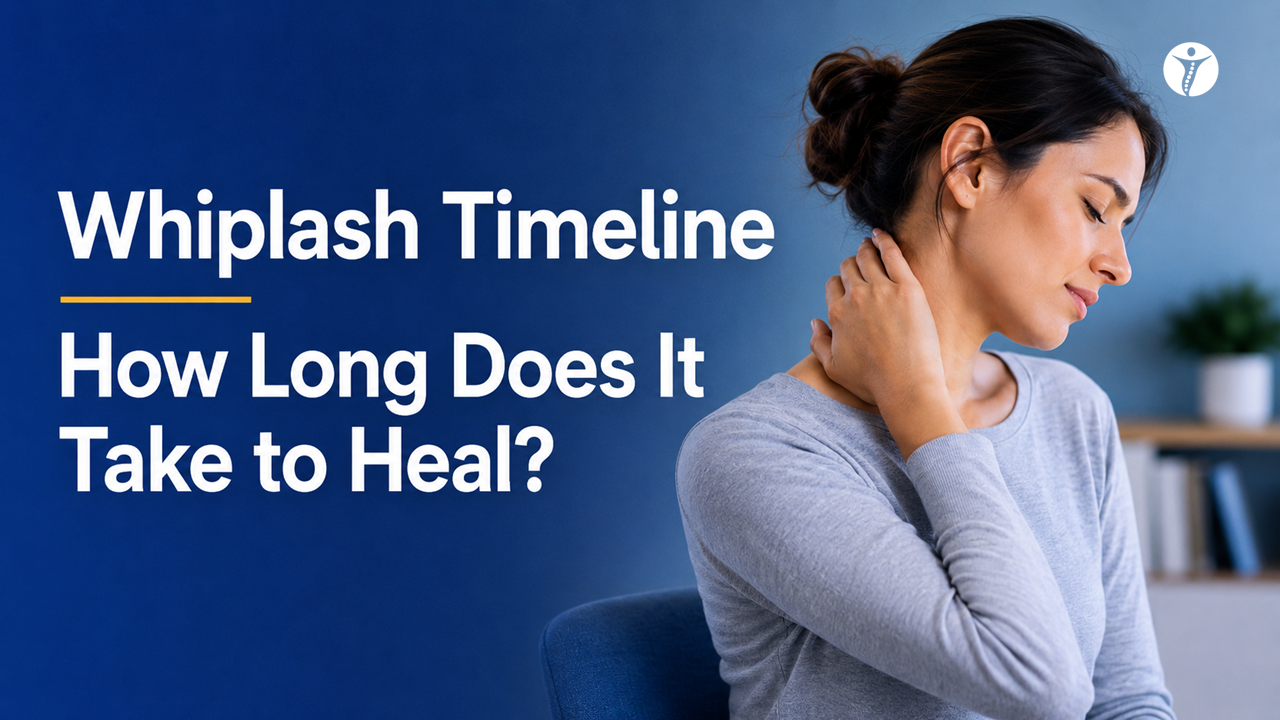
    Whiplash recovery timeline showing common stages after a car accident, including the first 72 hours, early recovery, rebuilding tolerance, and longer recovery patterns.
    Image 1: A practical timeline for whiplash recovery after a car accident.
    Day 2–3 can feel worse as inflammation and guarding increase
    Gentle movement usually beats prolonged complete rest
    Headaches, dizziness, and nerve symptoms can change the timeline

    Whiplash symptoms can be confusing: you may feel “fine” right after a crash, then wake up stiff, sore, and headachy 24–72 hours later. That delayed pattern is common, but it still deserves a smart plan. If you need evaluation, documentation, and a safe return-to-activity strategy, start with Auto Accident & Whiplash Chiropractic Care. If your symptoms include neck pain or headaches, also see Neck Pain Relief and Headache & Migraine Relief.

    • Clear timeline: first 72 hours, 1–2 weeks, 3–6 weeks, and beyond
    • What slows healing: sleep disruption, headaches, dizziness, nerve symptoms, and high irritability
    • Red flags and “when to get checked” included below

    Educational only. Not medical advice. Seek urgent care for severe/worsening symptoms or red flags.

    Quick Answer: How Long Does Whiplash Take to Heal?

    Many mild whiplash injuries improve significantly within 2–6 weeks. More irritated cases can take 6–12+ weeks, especially when headaches, dizziness, nerve symptoms, poor sleep, high stress, or prior neck issues are involved.

    The honest answer

    The timeline is less about the crash alone and more about your symptom pattern: how intense symptoms are early, whether they improve week-to-week, whether headaches or dizziness are present, whether your sleep is disrupted, and whether you can gradually restore movement without flare-ups.

    Important: If you feel worse on day 2–3, you are not automatically “going backward.” That delayed spike is common after a crash. Read next: Delayed Pain After a Car Accident: Why You Feel Worse on Day 2–3.

    The Typical Whiplash Recovery Timeline

    Use this as a map—not a guarantee. The key is whether symptoms trend better week-to-week.

    Timeframe What’s Common Main Goal
    0–72 hours Stiffness, soreness, headaches, guarding, delayed symptom increase Screen red flags, calm symptoms, avoid panic and overdoing it
    Week 1–2 Neck tightness, limited motion, headache patterns, sleep disruption Restore gentle motion and reduce irritability
    Weeks 3–6 Many people feel mostly improved, but stiffness can linger Rebuild strength, tolerance, and confidence
    6–12+ weeks More complex cases: headaches, dizziness, nerve symptoms, high sensitivity Reassess drivers and progress carefully
    0–72h

    Symptoms often rise

    Day 2–3 can feel worse than the day of the crash. This often reflects inflammation, muscle guarding, stress, and the adrenaline drop—not automatically “new damage.”

    • Neck stiffness may increase
    • Headaches can show up
    • Upper back / shoulder tightness is common
    1–2w

    Calm sensitivity + restore motion

    This phase should focus on gentle movement, sleep support, and avoiding the two big mistakes: total rest for too long or aggressive stretching too early.

    • Gentle range of motion
    • Walking as tolerated
    • Careful return to normal daily activity
    3–6w

    Rebuild tolerance

    Many people feel much better here, but lingering stiffness often means the neck still needs strength, control, and confidence—not just symptom relief.

    • Gradual strengthening
    • Posture and work tolerance
    • Return to exercise / lifting with progression
    6–12+

    Complex or slower cases

    Recovery can take longer when symptoms were intense early, headaches or dizziness persist, sleep is poor, nerve symptoms develop, or prior neck issues were already present.

    • Reassess symptom drivers
    • Screen headache / nerve / dizziness patterns
    • Progress one variable at a time

    What Changes the Whiplash Timeline?

    These are the most common reasons one person feels better in weeks while another takes months.

    Supporting image explaining factors that affect whiplash recovery, including symptom severity, headaches, dizziness, sleep, stress, movement, and red flags.
    Image 2: What changes the whiplash timeline—symptoms, sleep, stress, movement, and red flags.
    Initial pain level

    Higher early pain and major motion loss usually mean a more irritated system and a slower ramp-up.

    Headaches or dizziness

    Headache, light sensitivity, dizziness, or nausea after a crash should be taken seriously and screened appropriately.

    Nerve symptoms

    Arm tingling, numbness, weakness, or symptoms into the hand can change the plan and timeline.

    Sleep disruption

    Poor sleep keeps the nervous system more sensitive and slows recovery momentum.

    Stress and fear

    Crashes are stressful. Feeling guarded, anxious, or uncertain can make symptoms feel louder.

    Early activity choices

    Too much rest can increase stiffness. Too much intensity can flare symptoms. The sweet spot is gradual progression.

    If your main symptom is neck pain with arm symptoms: read Neck Pain with Arm Tingling: Pinched Nerve vs. Muscle Tension or start with Numbness, Tingling & Pinched Nerve Treatment.

    What to Do in the First 72 Hours

    The goal is not to “push through.” The goal is to calm symptoms, protect motion, and avoid mistakes that extend the timeline.

    Do this

    • Use gentle neck range of motion in a pain-safe range
    • Take short, easy walks if tolerated
    • Support sleep posture as much as possible
    • Track symptoms: neck pain, headaches, dizziness, arm symptoms
    • Get evaluated if symptoms are intense, worsening, or confusing

    Avoid this early

    • Aggressive stretching into sharp pain
    • Heavy lifting or hard workouts before symptoms stabilize
    • Staying completely still for days if movement is safe
    • Ignoring headaches, dizziness, or nerve symptoms
    • Assuming “no car damage” means “no body injury”

    The “next-day rule” for whiplash

    Whatever you do today should not make tomorrow clearly worse. If a movement, workout, or work task increases symptoms for 24–48 hours, reduce the range, time, load, or speed and rebuild more gradually.

    What Usually Helps Whiplash Recover Well?

    A good plan changes as symptoms calm down. Early care is different from later strengthening.

    Phase 1: Calm symptoms and screen red flags

    The first step is making sure the pattern is appropriate for conservative care. This includes screening for concussion-like symptoms, severe headache patterns, neurological changes, and other red flags.

    Phase 2: Restore motion without flaring

    Gentle motion helps reduce stiffness and guarding. The goal is not to force range—it is to build confidence and reduce sensitivity. If neck pain is the dominant issue, see Neck Pain Relief.

    Phase 3: Rebuild strength, posture tolerance, and daily capacity

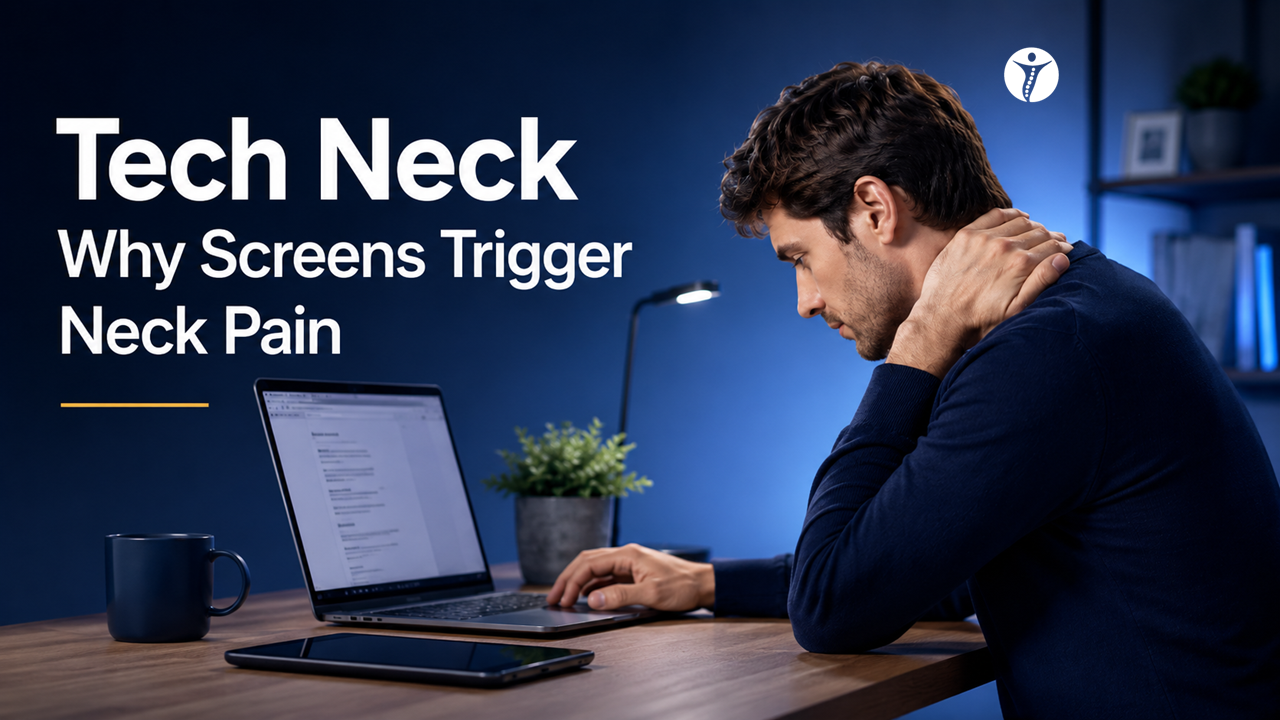
    Once symptoms are calmer, the neck needs strength and endurance so driving, desk work, lifting, sleep, and normal activity do not keep re-triggering symptoms. If screens aggravate your neck, read Tech Neck: Why Screens Trigger Neck Pain.

    Phase 4: Return to full activity with a plan

    The final step is returning to workouts, work demands, driving tolerance, and daily life without cycling between “better” and “flared.” This is where a structured plan matters most.

    Need Whiplash Care After a Car Accident?

    We’ll screen your symptoms, document your exam findings, and build a step-by-step plan to calm pain, restore motion, and rebuild confidence safely.

    Why Getting Checked Early Can Matter

    Whiplash is not just about pain relief. It is also about clarity, safety, and having a record of what changed after the crash.

    Early evaluation helps answer 4 important questions

    • Is this pattern appropriate for conservative care?
    • Are there red flags, concussion-like symptoms, or nerve signs?
    • What movements and daily tasks are safe right now?
    • What should be documented if symptoms persist?

    For a full accident-care overview, visit Auto Accident & Whiplash Chiropractic Care in Logansport, IN. For first-visit expectations, see What to Expect at Your First Visit.

    When to Worry After Whiplash

    Get checked promptly or seek urgent care if any of these are present.

    • Severe or worsening headache, especially if it feels unusual or intense
    • Dizziness, fainting, confusion, vomiting, vision changes, or trouble walking
    • Spreading numbness, tingling, weakness, or loss of coordination
    • Severe neck pain that is worsening or paired with neurological symptoms
    • Symptoms that worsen day-to-day instead of gradually improving
    • Fever, unexplained illness symptoms, or severe night pain

    If you are unsure whether your symptoms are normal, start with Contact & Location and we’ll help you decide the right next step.

    Whiplash Timeline FAQs

    Quick answers about recovery time, delayed pain, movement, imaging, and red flags.

    How long does whiplash usually take to heal?
    Many mild cases improve significantly within 2–6 weeks. More irritated cases can take 6–12+ weeks, especially with headaches, dizziness, nerve symptoms, poor sleep, high stress, or prior neck issues.
    Why do I feel worse 24–72 hours after a car accident?
    It is common for symptoms to increase after the adrenaline of the crash wears off. Inflammation, muscle guarding, joint irritation, headaches, and stress can make day 2–3 feel worse than the day of the accident.
    What makes whiplash recovery take longer?
    Recovery can take longer when pain is intense early, range of motion is very limited, headaches or dizziness are present, sleep is poor, stress is high, nerve symptoms appear, or activity is progressed too aggressively.
    Should I rest after whiplash or keep moving?
    Short-term relative rest can help, but prolonged complete rest often increases stiffness. Most people do best with gentle, pain-safe motion and gradual return to activity.
    Can whiplash cause headaches?
    Yes. Whiplash can irritate neck joints, muscles, nerves, and movement patterns that contribute to headaches. Severe, worsening, or unusual headaches should be evaluated promptly.
    Do I need imaging after whiplash?
    Not every whiplash injury needs imaging. Imaging may be considered when there are red flags, significant trauma, suspected fracture, neurological signs, severe worsening symptoms, or symptoms that do not match a typical recovery pattern.
    When should I worry after whiplash?
    Get checked promptly for severe or worsening headache, dizziness, fainting, confusion, vision changes, weakness, spreading numbness or tingling, trouble walking, severe neck pain, fever, or symptoms that are worsening instead of improving.
    What helps whiplash heal faster?
    The most helpful approach is usually early evaluation, red-flag screening, gentle movement, sleep support, avoiding aggressive stretching early, gradual strengthening, and a clear return-to-activity plan.

  • Delayed Pain After a Car Accident: Why You Feel Worse on Day 2–3 (and What to Do)

    Delayed Pain After a Car Accident: Why You Feel Worse on Day 2–3 (and What to Do)

    AUTO ACCIDENT & WHIPLASH · PRACTICAL GUIDE · LOGANSPORT, IN

    Day 2–3 symptom clarity Gentle first-72-hour plan Clear red flags after a crash

    Delayed Pain After a Car Accident: Why You Feel Worse on Day 2–3 (and What to Do)

    Feeling “fine” at first is common. Day 2–3 is when many post-accident symptoms finally show up.

    Educational image explaining delayed pain after a car accident and why symptoms may feel worse on day 2 or day 3.
    Image 1: Why pain can feel worse on day 2–3 after a crash—and what to do first.
    Adrenaline fades and soreness becomes more noticeable
    Inflammation and guarding often peak over 24–72 hours
    Gentle movement + tracking beats repeatedly “testing it”

    If you were in a crash and felt okay at first—then woke up sore, stiff, headachy, or “locked up” on day 2–3—you’re not imagining it. Delayed pain is common with whiplash-type strain, soft-tissue irritation, and protective muscle guarding. For the service overview, start with Auto Accident & Whiplash Chiropractic. If neck pain or headaches are part of the picture, also see Neck Pain Relief and Headache & Migraine Relief.

    • We assess neck, upper back, shoulders, headaches, motion, and nerve signs
    • Early care should calm irritation—not force painful ranges
    • Red flags after a crash are clearly listed below

    Educational only. Not medical advice. Seek urgent care for severe/worsening symptoms or red flags.

    Quick Answer: Why Day 2–3 Can Feel Worse

    Delayed pain after a car accident often happens because adrenaline wears off, inflammation ramps up, and your muscles begin guarding irritated areas. The goal early on is not to “stretch it out hard” or prove you’re fine—the goal is to calm symptoms, keep gentle motion, track changes, and get checked if symptoms are worsening or unusual.

    Supporting visual showing the first 72 hours after a car accident with symptom tracking, gentle movement, and red flag awareness.
    Image 2: The first 72 hours—calm symptoms, track changes, and know when to get checked.

    The “don’t panic, don’t ignore it” rule

    Mild-to-moderate soreness can be expected after a crash, especially around day 2–3. But symptoms that are severe, spreading, neurological, worsening day-to-day, or paired with concussion-like signs should be evaluated promptly.

    Why Delayed Pain Happens After a Crash

    This is the day 2–3 pattern in plain English.

    1) Adrenaline wears off

    Right after a crash, adrenaline and shock can mask symptoms. Once your system settles, pain and stiffness become easier to feel.

    Common early pattern
    2) Inflammation ramps up

    Soft-tissue irritation often becomes more noticeable over the first 24–72 hours, especially after whiplash-type force.

    Day 2–3 peak
    3) Muscle guarding kicks in

    Your body tightens around irritated areas to protect them. This can make the neck, upper back, shoulders, or low back feel stiff and restricted.

    Protective tension

    4) Normal life reveals the irritated area

    Driving, working, screens, lifting kids, sleeping in an awkward position, or turning your head repeatedly can reveal what the crash irritated. This is why symptoms may look mild at first and then feel more obvious once you return to normal activity.

    Common After a Crash vs. Not Normal

    Use this section to decide whether you’re in a “monitor and calm it down” pattern or a “get checked promptly” pattern.

    Common / Often Expected Get Checked Promptly
    Mild-to-moderate soreness that appears over 24–72 hours Severe pain, rapidly worsening pain, or pain that does not calm with reduced activity
    Neck or upper back stiffness that changes with movement New weakness, numbness/tingling, balance changes, or trouble walking
    Headache that feels similar to neck tension and improves with rest Severe/worst headache, confusion, repeated vomiting, vision changes, or fainting
    Sleep disruption because it is hard to get comfortable Chest pain, shortness of breath, severe abdominal pain, or worsening neurological symptoms
    Muscle tightness that improves with gentle motion Severe neck/back pain after high-speed collision, rollover, or major trauma

    Important distinction

    “Common” does not mean “ignore it.” It means the pattern can happen after a crash. The best early move is to document what you feel, keep movement gentle, and get evaluated if symptoms are worsening, spreading, or limiting normal function.

    What to Do First: The First 72 Hours

    Simple steps that help most people calm irritation without accidentally poking the bear.

    Timeframe Focus What to Do
    Day 0–1 Safety + symptom awareness Watch for red flags, avoid heavy lifting, take short walks, and note where symptoms appear.
    Day 2–3 Calm irritation Use gentle motion, avoid repeated painful testing, prioritize sleep, hydration, and short movement breaks.
    Day 4–7 Restore tolerance Gradually resume normal activity if symptoms are stable; get evaluated if symptoms are worsening or limiting function.
    1

    Move gently — don’t freeze

    Complete rest often makes stiffness worse. Use easy motion that stays comfortable.

    • Short walks: 5–15 minutes
    • Gentle neck/upper-back motion
    • Comfortable ranges only—no forcing
    2

    Stop repeatedly “testing it”

    A common mistake is turning your neck into the painful range every hour to see if it’s better.

    • Check motion occasionally—not constantly
    • Avoid aggressive stretching into sharp pain
    • Let irritated tissues calm before pushing range
    3

    Track symptoms for clarity

    Simple notes help you and your provider understand the pattern.

    • Where: neck, mid back, shoulder, jaw, low back
    • When: driving, sleeping, screens, reaching, lifting
    • Trend: improving, stable, or worsening
    4

    Prioritize sleep and recovery basics

    Poor sleep and stress can amplify pain sensitivity after a crash.

    • Use supportive positions that reduce neck strain
    • Hydrate consistently
    • Take movement breaks instead of staying locked in one position

    What Not to Do on Day 2–3

    These are the moves that often turn a normal soreness pattern into a bigger flare.

    Don’t aggressively stretch into pain

    Gentle motion is helpful. Forcing end-range stretching when tissues are irritated can increase guarding and sensitivity. Think “easy motion often,” not “hard stretch once.”

    Don’t jump straight back into heavy lifting

    Give your system a few days to show you what is irritated. Heavy lifting, overhead work, and long drives can be too much too soon if symptoms are still escalating.

    Don’t assume “no pain at the scene” means no injury

    Delayed symptoms happen. If symptoms are worsening, spreading, or interfering with work/sleep/driving, it is worth getting evaluated.

    Don’t ignore neurological symptoms

    New arm/hand symptoms, leg symptoms, weakness, numbness, balance problems, or changes in coordination deserve prompt evaluation. For nerve-like patterns, see Numbness, Tingling & Pinched Nerve Treatment.

    Feeling Worse on Day 2–3? Get Clarity.

    We’ll assess your motion, pain pattern, neck/upper-back mechanics, headaches, and nerve signs—then guide what is safe and what needs more attention. Start with Auto Accident & Whiplash Chiropractic.

    When to Worry After a Car Accident

    Seek urgent evaluation if any of these are present.

    • Chest pain, shortness of breath, fainting, or severe abdominal pain
    • Severe or worsening headache, confusion, repeated vomiting, or new vision changes
    • New weakness, numbness/tingling, balance problems, coordination changes, or trouble walking
    • Loss of bowel/bladder control or saddle numbness
    • Severe neck or back pain after major trauma, high-speed collision, rollover, or ejection risk
    • Pain that is worsening day-to-day despite reducing activity

    Not sure where to start? Use Contact & Location and we’ll help guide the next step.

    What about imaging?

    Imaging is not automatic for every soreness pattern, but it may be important when the crash mechanism, exam findings, neurological symptoms, or red flags suggest a higher-risk issue. An exam helps determine whether conservative care makes sense or whether imaging/referral should happen first.

    Delayed Pain After an Accident FAQs

    Quick answers—including “when to worry.”

    Why do I feel worse 2–3 days after a car accident?
    Adrenaline drops, inflammation ramps up over 24–72 hours, and muscle guarding increases—especially in the neck, upper back, shoulders, and low back.
    Is delayed pain after an accident normal?
    Mild-to-moderate soreness and stiffness peaking around day 2–3 can be common. Severe, worsening, neurological, or unusual symptoms should be evaluated promptly.
    What should I do in the first 72 hours?
    Use gentle movement, hydration, sleep, and symptom tracking. Avoid aggressive stretching, heavy lifting, or repeatedly “testing” painful ranges.
    When should I go to the ER after an accident?
    Go urgently for chest pain, trouble breathing, fainting, severe/worsening headache, confusion, repeated vomiting, weakness/numbness, balance issues, loss of bowel/bladder control, or severe neck/back pain after major trauma.
    Do I need imaging after a car accident?
    Not always. Imaging depends on the mechanism of injury, severity, red flags, neurological symptoms, and exam findings.
    Can whiplash symptoms be delayed?
    Yes. Whiplash-type symptoms such as neck stiffness, headaches, upper back pain, and difficulty turning the head can become more noticeable over the first few days.
    Should I rest completely after a car accident?
    Usually no. Gentle movement and short walks are often better than complete rest, as long as symptoms stay controlled and there are no red flags.
    What if symptoms keep getting worse after day 3?
    If symptoms are worsening day-to-day, spreading, causing weakness/numbness, interfering with sleep, or limiting normal activities, it is smart to get evaluated instead of waiting it out.

  • Whiplash After a Car Accident in Logansport, IN: What’s Normal, What’s Not, and What Helps

    Whiplash After a Car Accident in Logansport, IN: What’s Normal, What’s Not, and What Helps

    AUTO ACCIDENT & WHIPLASH · PILLAR GUIDE · LOGANSPORT, IN

    Red-flag screening first Neck + upper back + headache patterns Conservative, step-by-step recovery plan

    Whiplash After a Car Accident in Logansport, IN: What’s Normal, What’s Not, and What Helps

    A clear guide to whiplash symptoms, red flags, recovery timelines, and what usually helps after a crash.

    Educational whiplash guide image explaining what is normal, what is not normal, and what usually helps after a car accident in Logansport, Indiana.
    Image 1: What’s normal, what’s not, and what usually helps after a whiplash-type injury.
    Day 2–3 soreness is common after a crash
    Gentle movement usually beats prolonged complete rest
    Red flags matter — some symptoms need urgent evaluation

    Whiplash is a rapid acceleration-deceleration injury that can irritate joints, muscles, ligaments, discs, and nerves in the neck and upper back. Many people feel “okay” right after the accident and then feel worse over the next 24–72 hours. If you want an exam-driven plan, start with our Auto Accident & Whiplash page. If your symptoms showed up on day 2–3, read Delayed Pain After a Car Accident.

    • We screen for red flags and nerve symptoms first
    • Then we work to restore motion, reduce guarding, and rebuild tolerance
    • You’ll leave with clear “what’s normal” and “when to worry” guidance

    Educational only. Not medical advice. Seek urgent evaluation for severe, rapidly worsening, or red-flag symptoms.

    Quick Answer: What’s Normal After Whiplash?

    Mild-to-moderate neck stiffness, upper back tightness, headaches, and soreness that shows up 24–72 hours after a crash can be common. What is not normal is severe or worsening neurological symptoms, major balance changes, severe headache with neurologic signs, or severe midline neck pain after significant trauma.

    Supporting image showing how to sort whiplash symptoms into common patterns, symptoms to monitor, and red flags after a car accident.
    Image 2: Sort symptoms, watch the red flags, and choose the safest next step.
    1

    Common early pattern

    You feel okay at first, then neck stiffness, headache, or upper back tightness ramps up on day 2–3.

    2

    Best first move

    Use gentle movement, avoid repeatedly testing painful ranges, and get evaluated if symptoms are significant or not improving.

    3

    Don’t ignore red flags

    Worsening weakness, spreading numbness, severe headache, confusion, vomiting, or major balance changes deserve urgent attention.

    The big idea

    Whiplash recovery is not just “wait it out.” The goal is to screen for anything serious, calm irritated tissues, restore motion safely, and rebuild strength so driving, working, sleeping, and normal activity become comfortable again.

    What’s Normal vs. What’s Not After a Car Accident

    Use this section to self-sort. When in doubt, it is better to get checked than to guess.

    Common / expected whiplash patterns

    • Neck soreness, stiffness, or tightness
    • Upper back and shoulder blade tension
    • Headaches that feel tension-like or posture-sensitive
    • Reduced range of motion when turning or looking down
    • Symptoms that fluctuate through the day
    • Feeling worse 24–72 hours after the accident

    Not normal / get checked promptly

    • Worsening weakness, dropping objects, or progressive numbness/tingling
    • Severe headache with vision changes, speech changes, confusion, or fainting
    • Major midline neck pain after significant trauma
    • Balance problems, severe dizziness, or trouble walking
    • Chest pain, trouble breathing, or repeated vomiting
    • Loss of bowel/bladder control or saddle numbness

    Day 2–3 symptoms? Read the companion guide: Delayed Pain After a Car Accident: Why You Feel Worse on Day 2–3.

    What to Do in the First 72 Hours

    The first few days should focus on safety, symptom tracking, and keeping gentle motion—not forcing aggressive stretches.

    1

    Track symptoms

    Write down headache, dizziness, numbness/tingling, neck pain, sleep disruption, and what makes symptoms better or worse.

    2

    Move gently

    Use easy neck and upper back motion inside a comfortable range. Avoid “checking” the painful end range repeatedly.

    3

    Avoid spike activities

    Pause heavy lifting, intense workouts, aggressive stretching, or long drives that clearly flare symptoms.

    A simple 72-hour rule

    Symptoms should gradually feel more understandable and manageable—not sharply worse each day. If pain is escalating, neurological symptoms are spreading, or you feel unsafe driving/working, get evaluated promptly.

    What Usually Helps Whiplash Recovery

    A good plan is progressive. It starts with calming irritability, then rebuilds motion, strength, and confidence.

    The conservative recovery stack

    • Step 1: Screen first — rule out red flags, neurological concerns, and imaging needs.
    • Step 2: Calm irritability — reduce repeated flare-ups with smart activity modification.
    • Step 3: Restore motion — gentle neck and upper back mobility inside tolerance.
    • Step 4: Reduce guarding — soft tissue work, breathing, posture support, and better sleep positions.
    • Step 5: Rebuild strength — neck, shoulder blade, and upper back stability work.
    • Step 6: Return to normal tasks — driving, desk work, lifting, exercise, and daily routines gradually.

    Helpful early movements

    • Gentle neck rotations within comfort
    • Chin nods or controlled range work
    • Shoulder blade squeezes
    • Easy upper back extension over a chair
    • Short walking breaks

    Common mistakes

    • Testing painful motion over and over
    • Stretching aggressively into sharp pain
    • Doing nothing for weeks and getting stiffer
    • Returning to heavy lifting too soon
    • Ignoring headaches, dizziness, or nerve symptoms

    If neck posture and desk work flare symptoms

    Car-accident symptoms often become more noticeable with driving, computer work, and looking down. If desk posture is part of your flare pattern, read Best Desk Setup for Neck Pain and Tech Neck: Why Screens Trigger Neck Pain.

    Whiplash Recovery Timeline: What to Expect

    Recovery depends on severity, irritability, sleep, stress, prior neck issues, headache/dizziness symptoms, and how well activity is progressed.

    Phase Common pattern Best focus
    Day 0–3 Adrenaline fades, stiffness and soreness may increase Screen red flags, gentle motion, avoid repeated painful testing
    Week 1–2 Motion may still feel guarded; headaches or upper back tension may fluctuate Restore comfortable motion, reduce guarding, begin light stability work
    Week 2–6 Many cases improve substantially with the right progression Build strength, improve tolerance, return to driving/work/exercise gradually
    Beyond 6 weeks Persistent symptoms may need a more detailed plan Reassess drivers: neck mechanics, headaches, nerve symptoms, sleep, stress, workload

    Do You Need Imaging After Whiplash?

    Not every whiplash injury needs an X-ray or MRI, but imaging may be appropriate when the history, exam, or red flags point that direction.

    Imaging may be considered when…

    • There was significant trauma or high-speed collision
    • Severe midline neck pain is present
    • There are progressive neurological symptoms
    • There is concern for fracture, instability, or serious injury
    • Symptoms are worsening or not matching a typical recovery pattern

    Imaging may not be necessary when…

    • Symptoms are mild-to-moderate and improving
    • There are no neurological red flags
    • Range of motion and function are progressing
    • The exam supports a conservative care plan

    Bottom line

    Imaging decisions should be guided by mechanism, red flags, and exam findings—not fear alone. If imaging is appropriate, we’ll help guide the next step.

    Want a Clear Plan After Your Accident?

    We’ll screen for red flags, evaluate your neck and upper back mechanics, and build a conservative plan that matches your symptoms and timeline. Start with Auto Accident & Whiplash Care.

    When to Worry After a Car Accident

    Get urgent evaluation if any of these are present.

    Red flags after whiplash or a crash

    • Severe or worsening headache, especially with vision/speech changes, confusion, fainting, or repeated vomiting
    • Worsening weakness, spreading numbness/tingling, dropping objects, or trouble walking
    • Loss of bowel/bladder control or saddle numbness
    • Severe midline neck pain after significant trauma or high-speed collision
    • Chest pain, shortness of breath, fainting, or severe dizziness
    • Balance problems or neurological symptoms that are new or worsening

    Not sure? Start with Contact & Location and we’ll guide next steps.

    Whiplash After a Car Accident FAQs

    Quick answers—including what is normal, what is not, and when to worry.

    Is it normal to feel worse 24–72 hours after a car accident?
    Yes. Many people feel okay right after an accident and then worsen over the next 1–3 days as adrenaline fades, inflammation increases, and muscle guarding builds. Severe or worsening symptoms should be evaluated.
    What symptoms are common with whiplash?
    Common symptoms include neck pain, stiffness, headaches, upper back tightness, reduced range of motion, shoulder or arm aching, and sensitivity with driving, turning, looking down, or sitting.
    What is not normal after whiplash?
    Worsening weakness, spreading numbness/tingling, severe headache with neurologic symptoms, confusion, fainting, repeated vomiting, major balance changes, or severe midline neck pain after major trauma should be checked promptly.
    Should I rest or keep moving after whiplash?
    Most people do best with relative rest briefly, then gentle frequent movement within tolerance. Avoid aggressive stretching, repeated painful testing, and pushing through sharp pain.
    How long does whiplash usually take to heal?
    Many cases improve over a few weeks, but timelines vary. Severity, prior neck issues, sleep, stress, headache/dizziness symptoms, and activity progression all matter. Read more: Whiplash Timeline.
    Do I need imaging after a car accident or whiplash?
    Not always. Imaging is guided by the accident mechanism, exam findings, red flags, severe midline pain, neurological symptoms, and concern for fracture or serious injury.
    Can chiropractic care help after a car accident?
    Conservative chiropractic care may help by screening for red flags, improving neck and upper back motion, calming muscle guarding, rebuilding strength, and guiding a graded return to driving, work, and normal activity.
    When should I seek urgent care after a car accident?
    Seek urgent care for chest pain, trouble breathing, fainting, confusion, repeated vomiting, severe or worsening headache, worsening weakness/numbness, trouble walking, loss of bowel/bladder control, or severe neck/back pain after major trauma.
  • When to Worry About a Headache: Red Flags vs. “Common but Miserable”

    When to Worry About a Headache: Red Flags vs. “Common but Miserable”

    HEADACHE & MIGRAINE RELIEF · SAFETY GUIDE · LOGANSPORT, IN

    Red flags first Clear pattern-recognition guide Neck, posture, migraine, and tension clues

    When to Worry About a Headache: Red Flags vs. “Common but Miserable”

    Most headaches aren’t dangerous. Some are. Here’s how to self-sort safely—and what to do next.

    Premium headache safety guide image explaining headache red flags versus common but miserable headache patterns.
    Image 1: Red flags first—then sort the common headache patterns.
    Thunderclap, neurologic symptoms, fever/stiff neck, or trauma = urgent evaluation
    Common does not mean harmless to your life—recurring headaches still deserve a plan
    Neck tension + posture + screens are frequent drivers when red flags are absent

    If you’re dealing with a headache, the first question is not “What stretch should I do?” It is: Is this dangerous—or common but miserable? This guide starts with red flags, then helps you sort common headache patterns like tension-type headaches, migraines, neck-related headaches, and posture-driven headaches. If headaches keep returning and you want an exam-driven plan in Logansport, start with Headache & Migraine Relief. If screens or neck tension are a major trigger, see Posture & Tech Neck and Neck Pain Relief.

    • Start with the red flags that should not be ignored
    • Then compare common headache patterns and triggers
    • Use the action ladder to decide what to do next

    Educational only. Not medical advice. If you suspect an emergency, call 911 or go to the ER.

    Start Here: The Headache Red Flags

    If any of these apply, do not try to “treat it yourself” first. Get urgent medical evaluation.

    Seek urgent care / ER evaluation for these patterns

    • Thunderclap onset: sudden, severe headache that peaks within seconds to minutes
    • New neurologic symptoms: weakness, numbness, facial droop, confusion, seizure, trouble speaking, or balance problems
    • Fever + stiff neck or severe illness with headache
    • Headache after head injury, car accident, fall, or significant trauma
    • New vision loss, double vision, or severe eye pain
    • New headache after age 50 or a headache that is clearly different from your normal pattern
    • Rapidly worsening headache day-to-day or headache with repeated vomiting/fainting
    Rule #1: New + severe is different

    A brand-new severe headache—especially one that comes on suddenly—deserves urgent evaluation.

    ! Do not wait
    Rule #2: Brain/body symptoms matter

    Weakness, numbness, slurred speech, confusion, seizure, fainting, or vision loss changes the situation immediately.

    ! Neuro signs = urgent
    Rule #3: Trauma changes the rules

    After a crash, fall, or head injury, severe/worsening headache should not be brushed off as “just tension.”

    ! Trauma needs caution

    Urgent vs. “Common but Miserable” Headaches

    This table is not a diagnosis—but it helps you decide which bucket you may be in.

    Pattern More Concerning More Common-but-Miserable
    Onset Sudden “thunderclap” or worst headache of life Builds gradually, often tied to stress, screens, sleep, posture, or known triggers
    Neurologic symptoms Weakness, numbness, slurred speech, confusion, seizure, fainting No new neurologic symptoms; pain/stiffness is the main complaint
    Fever / illness Fever, stiff neck, rash, severe illness, repeated vomiting No fever; symptoms behave like previous tension/migraine/neck pattern
    Trauma Headache after crash, fall, head injury, or major whiplash No trauma; symptoms linked to posture, stress, sleep, or screen time
    Trend Worsening day-to-day or clearly different than normal Fluctuates with triggers and improves with rest, hydration, movement, or normal care

    Important safety note

    A headache can be “common” and still be miserable, disabling, and worth treating. But red flags come first. If the pattern feels new, severe, unusual, or neurologic, get evaluated urgently.

    Common but Miserable Headache Patterns

    Once red flags are ruled out, the next step is pattern recognition.

    Supporting image showing headache pattern clues such as onset, triggers, neck tension, posture, migraine features, and when to seek help.
    Image 2: Look for pattern clues—onset, symptoms, triggers, neck involvement, and change over time.
    1

    Tension-type headache

    Often feels like pressure, tightness, or a band-like ache. Stress, jaw tension, long workdays, and neck/shoulder tightness may contribute.

    • Usually not sudden or neurologic
    • Often builds through the day
    • May pair with upper-trap or neck tightness
    2

    Migraine pattern

    Migraines often include throbbing, light/sound sensitivity, nausea, or worsening with activity. They can be disabling even when not dangerous.

    • May have known triggers
    • Can last hours to days
    • New neurologic symptoms still require caution
    3

    Neck-related headache

    Often starts near the upper neck/base of skull and can travel toward the temple, forehead, or behind the eye.

    • Changes with neck position or movement
    • Worse after screens, driving, desk work, or poor sleep posture
    • May improve when neck motion and posture improve
    4

    Jaw / clenching-related headache

    Jaw tension, clenching, grinding, and TMJ irritation can overlap with temple pain, facial tightness, and neck tension.

    • May be worse in the morning
    • May pair with jaw clicking, soreness, or tooth sensitivity
    • Often overlaps with stress and neck tension

    For a deeper comparison, read Headaches in Logansport, IN: Tension vs. Migraine vs. Neck-Related. If neck tension is the main driver, read The “Headache Posture” Trap.

    Clues Your Headache May Be Neck-Related

    Neck-related headaches are common, especially with desk work, screens, driving, stress, or poor sleep positions.

    Look for these neck/posture clues

    • The headache starts near the base of the skull or upper neck
    • It is worse after sitting, screen time, driving, or looking down
    • Neck movement changes the headache intensity or location
    • You also notice shoulder blade tightness, jaw tension, or upper-trap tightness
    • The same headache pattern keeps returning after similar posture triggers

    Why this matters

    If neck mechanics, posture endurance, or muscle tension are driving the pattern, the best plan is usually not just “take something and wait.” A better plan may include joint assessment, soft tissue work, posture strategy, mobility, strengthening, and trigger modification. Start with Headache & Migraine Relief or Neck Pain Relief.

    Screen-time clue

    If headaches build later in the day after laptop work, phone scrolling, or long drives, read Tech Neck: Why Screens Trigger Neck Pain and Best Desk Setup for Neck Pain.

    What to Do Next: A Simple Action Ladder

    Start with safety. Then match your next step to the pattern.

    Step 1: Rule out red flags

    If the headache is sudden/severe, neurologic, associated with fever/stiff neck, after trauma, or rapidly worsening, do not use this guide as a substitute for urgent care.

    Step 2: Track the pattern for 24–72 hours

    • Where does it start: temples, forehead, behind eye, base of skull, neck?
    • What triggers it: screens, sleep, stress, food, light, activity, driving?
    • What comes with it: nausea, light sensitivity, neck stiffness, jaw tension?
    • Is it improving, stable, recurring, or worsening?

    Step 3: Use conservative basics if no red flags are present

    • Hydrate and prioritize sleep
    • Take screen breaks and reduce sustained neck positions
    • Use gentle neck/upper-back motion in a comfortable range
    • Avoid aggressive stretching into sharp pain
    • Do not repeatedly “test” painful neck ranges every few minutes

    Step 4: Get evaluated if headaches keep returning

    Recurrent headaches are worth understanding. If the pattern keeps repeating, if neck tension is involved, or if headaches are interfering with work, sleep, workouts, or family life, an exam can clarify what is driving it.

    Need a practical next step? Schedule an evaluation or start with Headache & Migraine Relief.

    Headaches Keep Coming Back?

    We’ll help sort whether your pattern looks neck-related, posture-driven, migraine-like, jaw-related, or something that needs another referral. For the full service overview, start with Headache & Migraine Relief.

    When to Worry About a Headache

    Use this as your quick safety checklist.

    Get checked urgently if any of these are true

    • Sudden “worst headache” or thunderclap onset
    • Weakness, numbness, facial droop, confusion, seizure, fainting, or slurred speech
    • Fever, stiff neck, severe illness, rash, or repeated vomiting
    • New vision loss, double vision, severe eye pain, or new balance problems
    • Headache after a crash, fall, head injury, or major whiplash
    • New headache after age 50 or a headache that is very different from your usual pattern
    • Worsening day-to-day despite rest, hydration, and reducing triggers

    Schedule a non-urgent evaluation if…

    • Your headaches are becoming more frequent
    • You rely on medication more often than you want
    • Headaches interfere with sleep, work, exercise, or daily life
    • Neck tension, jaw tension, posture, or screens seem to trigger the pattern
    • You are not sure what type of headache you are dealing with

    If you’re unsure, start with Contact & Location and we’ll help guide the right next step.

    Headache Red Flag FAQs

    Quick answers—including when to seek urgent care and when conservative care may make sense.

    What are the biggest red flags for a dangerous headache?
    Red flags include sudden thunderclap onset, new neurologic symptoms, fever or stiff neck, headache after head injury, new headache after age 50, vision loss, repeated vomiting, or a headache that is rapidly worsening.
    When should I go to the ER for a headache?
    Go urgently if you have a sudden worst headache, fainting, confusion, seizure, new weakness/numbness, trouble speaking, new vision loss, high fever with stiff neck, repeated vomiting, or headache after significant trauma.
    Are migraines dangerous?
    Most migraines are not dangerous, but they can be disabling. A new or changing migraine pattern, migraine with new neurologic symptoms, or any headache with red-flag features should be evaluated.
    How do I tell a tension headache from a migraine?
    Tension headaches often feel like pressure or tightness and may relate to stress, posture, or neck tension. Migraines more often include throbbing pain, nausea, light/sound sensitivity, and worsening with activity. Overlap can happen.
    Can neck issues cause headaches?
    Yes. Neck-related headaches often link to sustained posture, screen time, driving, upper-neck stiffness, jaw tension, and muscle guarding. Read The “Headache Posture” Trap for a deeper guide.
    How long is too long for a headache to last?
    It depends on the type, but headaches lasting more than 72 hours, worsening day-to-day, changing from your normal pattern, or paired with red flags should be evaluated.
    What headache symptoms are common but miserable?
    Common but miserable patterns can include tension-type pressure, migraine features, neck-related headache, jaw-related headache, or headaches triggered by posture, stress, screens, sleep disruption, or dehydration.
    When should I schedule a non-urgent headache evaluation?
    Schedule an evaluation if headaches keep returning, are becoming more frequent, are linked to neck tension or posture, interfere with work or sleep, require frequent medication, or do not respond to reasonable self-care.

  • The “Headache Posture” Trap: How Neck Tension Triggers Headaches (and What to Do)

    The “Headache Posture” Trap: How Neck Tension Triggers Headaches (and What to Do)

    HEADACHE RELIEF · NECK TENSION · POSTURE & TECH NECK · LOGANSPORT, IN

    Pattern-based headache guidance Neck + posture + screen habits Red flags clearly explained

    The “Headache Posture” Trap: How Neck Tension Triggers Headaches (and What to Do)

    If your headaches build after desk work, driving, phone use, or neck tension, posture may be part of the loop — but it is rarely the whole story.

    Premium medical blog image showing the posture-headache loop with neck tension, screen posture, and headache sensitivity.
    Image 1: The posture-headache loop—neck tension, screen habits, and headache sensitivity.
    Posture can trigger headaches when neck tension and screen habits stack up
    The fix is not just “sit up straight” — it is movement, strength, setup, and recovery
    Some headaches need urgent care — red flags are listed below

    Many people with recurring headaches notice a pattern: symptoms build after computer work, phone scrolling, driving, stress, or sleeping “wrong.” That does not mean posture is the only cause — but it can be a major driver. For the service overview, start with Headache & Migraine Relief. If neck tension is part of your pattern, also see Neck Pain Relief and Posture & Tech Neck.

    • Learn the headache-posture loop
    • Use a simple pattern check to decide if neck tension may be involved
    • Get a practical reset plan without aggressive stretching

    Educational only. Not medical advice. Seek urgent care for severe, sudden, unusual, or neurologic headache symptoms.

    Quick Answer: What Is the “Headache Posture” Trap?

    The trap is thinking the solution is simply “sit up straight.” In reality, posture-related headaches usually come from a loop: long static positions → neck and upper-trap tension → irritated joints/muscles → headache sensitivity → more guarding.

    Supporting visual showing a practical reset plan for posture-related headaches and neck tension.
    Image 2: A practical reset plan for neck tension and posture-driven headaches.
    Rule #1: Posture is a load, not a moral failure

    The problem is not “bad posture.” The problem is staying in one position too long without enough movement capacity.

    Reduce static load
    Rule #2: Stretching alone is usually not enough

    If tissue is irritated, aggressive stretching can poke the bear. Mobility plus endurance usually works better.

    Mobility + strength
    Rule #3: Headache red flags matter

    Most posture-linked headaches are not emergencies, but sudden, severe, unusual, or neurologic symptoms should be taken seriously.

    Safety first

    How Neck Tension Can Trigger Headaches

    The neck, upper back, jaw, shoulders, and screen habits often work together. That is why the symptoms can feel stubborn.

    1

    Static posture builds tension

    Long desk work, driving, phone scrolling, or looking down can increase load through the base of the skull, neck, and upper traps.

    2

    The neck gets sensitive

    Joint stiffness, muscle guarding, and trigger-point irritation can make the neck more reactive to normal daily positions.

    3

    The headache loop starts

    Pain may travel from the upper neck toward the temples, forehead, behind the eyes, or around the head — especially after screen-heavy days.

    Important: posture is usually one piece, not the whole puzzle

    Some headaches are migraine-driven, sinus-related, blood-pressure related, medication-related, stress-related, or caused by other medical issues. If you are unsure which pattern fits, read Headaches in Logansport, IN: Tension vs. Migraine vs. Neck-Related.

    Pattern Check: Does Your Headache Behave Like a Neck/Posture Problem?

    Use these clues to decide whether neck tension and posture may be involved.

    More likely neck/posture-related if…

    • It builds after desk work, laptop use, phone scrolling, or long drives
    • You feel tightness at the base of the skull, upper neck, or upper traps
    • Neck movement, position, or pressure changes the headache
    • The headache often starts in the neck and travels forward
    • You also notice jaw tension, shoulder tension, or tech-neck posture

    More likely migraine-type if…

    • You have nausea, light sensitivity, sound sensitivity, or throbbing pain
    • You need to lie down in a dark room
    • You notice visual symptoms or aura
    • The headache is less tied to neck position and more tied to triggers like sleep, hormones, food, weather, or stress

    Can it be both?

    Yes. Neck tension can coexist with migraine or tension-type headaches. That is why a pattern-based exam is helpful: it can identify whether the neck is the primary driver, a secondary amplifier, or not the main issue.

    What to Do First: The 10-Minute Posture Headache Reset

    This is not a cure-all. It is a low-risk starting point when your headache pattern feels neck/posture-driven.

    Step 1: Change the load before stretching

    • Raise your screen closer to eye level
    • Bring your phone up instead of dropping your head down
    • Support your elbows if shoulder/neck tension builds while typing
    • Take a 30–60 second movement break every 30–45 minutes

    For a deeper setup guide, read Best Desk Setup for Neck Pain.

    Step 2: Use gentle movement, not aggressive yanking

    • Slow neck rotations in a comfortable range
    • Shoulder blade squeezes without shrugging
    • Gentle upper-back extension over a chair back
    • Easy chin nods — not forceful chin tucks

    Step 3: Add endurance so the relief lasts longer

    • Deep neck flexor endurance work
    • Lower-trap and mid-back strengthening
    • Breathing mechanics to reduce upper-trap dominance
    • Gradual return to longer work blocks without symptoms building

    The goal is not perfect posture

    The goal is better tolerance. The best posture is often the next posture — meaning your body does better when you change positions, move often, and build capacity.

    How to Prevent the Pattern From Coming Back

    The long-term fix is a system, not a single stretch.

    1

    Fix the repeat trigger

    Desk height, monitor position, phone posture, pillow setup, and driving posture often matter more than one perfect exercise.

    2

    Build neck + upper-back capacity

    Strength and endurance help your neck tolerate normal life without turning every long workday into a headache trigger.

    3

    Address joint mechanics

    If the upper neck, mid-back, or ribs are restricted, targeted care may help reduce the mechanical stress feeding the loop.

    Where chiropractic care fits

    At Balanced Chiropractic, we look at the pattern: neck motion, upper-back mobility, headache behavior, posture load, shoulder tension, and red flags. When appropriate, care may include chiropractic adjustments, soft-tissue work, mobility drills, strengthening, and desk/lifestyle strategies. Start with Chiropractic Adjustments or Headache & Migraine Relief.

    Want to Know If Your Headaches Are Neck/Posture-Driven?

    We’ll check your headache pattern, neck motion, posture load, muscle tension, and red flags — then build a plan that fits your day-to-day life.

    When to Worry About a Headache

    Do not assume every headache is from posture. Get urgent care if any red flags are present.

    • Worst headache of your life or sudden thunderclap onset
    • New weakness, numbness, facial droop, confusion, fainting, or trouble speaking
    • Fever, stiff neck, rash, or severe illness with headache
    • Headache after major trauma or a car accident
    • New or unusual headache if you are over 50, pregnant/postpartum, immunocompromised, or have a cancer history
    • Headache with chest pain, shortness of breath, or severe dizziness

    For a deeper safety guide, read When to Worry About a Headache: Red Flags vs. “Common but Miserable”.

    Posture Headache FAQs

    Quick answers for neck tension, screen posture, and headache patterns.

    Can bad posture really cause headaches?
    Posture can contribute when neck joints, upper-trap muscles, jaw tension, screen habits, and stress repeatedly load the same area. It is usually posture plus tension, workload, and recovery — not posture alone.
    What does a neck-related headache feel like?
    It often begins near the base of the skull or upper neck and may travel toward the temples, forehead, or behind the eyes. It often changes with neck position, desk posture, driving, or screen time.
    How do I know if my headaches are from posture or migraine?
    Posture-related headaches often change with neck movement or desk position. Migraine patterns may include nausea, light sensitivity, sound sensitivity, throbbing pain, or visual symptoms. Some people have both patterns.
    What should I do first for posture-related headaches?
    Change the load first: improve screen height, reduce long static positions, take short movement breaks, and use gentle neck/upper-back motion instead of aggressive stretching.
    Are neck stretches enough to fix posture headaches?
    Not always. Stretching may help temporarily, but lasting improvement usually requires joint mobility, upper-back strength, neck endurance, desk setup, breathing mechanics, and load management.
    When should I worry about a headache?
    Seek urgent care for the worst headache of your life, sudden severe headache, headache with weakness/numbness, vision changes, confusion, fever, stiff neck, fainting, chest pain, or headache after major trauma.
    Can chiropractic care help neck tension headaches?
    It may help when headaches are connected to mechanical neck tension, joint restriction, posture strain, or upper-back mobility limits. The best plan includes evaluation, targeted care, and practical home strategies.
    What if my headaches keep coming back?
    Recurring headaches should be evaluated to identify the driver. If they repeatedly follow screen time, desk work, neck tension, or stress, a mechanical/postural plan may help. If symptoms are worsening, unusual, or neurologic, get checked promptly.

  • Headaches in Logansport, IN: Tension vs. Migraine vs. Neck-Related (How to Tell)

    Headaches in Logansport, IN: Tension vs. Migraine vs. Neck-Related (How to Tell)

    HEADACHE & MIGRAINE RELIEF · DECISION GUIDE · LOGANSPORT, IN

    Pattern-first headache guide Tension vs migraine vs neck-related Includes red flags + next steps

    Headaches in Logansport, IN: Tension vs. Migraine vs. Neck-Related (How to Tell)

    Most people do not need random headache tips. They need a clear pattern—so the plan matches the driver.

    Premium headache decision-guide image showing pattern recognition clues for tension headaches, migraines, and neck-related headaches.
    Image 1: Use pattern clues to sort tension, migraine, and neck-related headaches.
    Tension headaches often feel like pressure or tightness
    Migraine-like headaches often include sensitivity, nausea, or throbbing
    Neck-related headaches often change with posture, screens, or neck motion

    Headaches can overlap, which is why guessing often leads to the wrong plan. This guide helps you compare the most common patterns and decide what to do first. If headaches are recurring, changing, or paired with neck stiffness, start with Headache & Migraine Relief. If screen time or posture is a major trigger, also see Posture & Tech Neck and Neck Pain Relief.

    • Fast comparison table for tension, migraine, and neck-related clues
    • Simple “what to track” checklist so you are not guessing
    • Clear red flags for when headache symptoms should be evaluated urgently

    Educational only. Not medical advice. Seek urgent care for severe, sudden, worsening, or red-flag headache symptoms.

    Quick Answer: The Pattern Matters More Than the Label

    A headache label is useful only if it leads to the right next step. The most useful clues are: where it starts, what it feels like, what triggers it, what comes with it, and what reliably helps or worsens it.

    Supporting image showing practical headache clues such as neck tension, posture triggers, screen time, and symptom location.
    Image 2: Neck tension, posture, and daily triggers can help reveal the headache pattern.

    The simplest way to sort it

    If the headache is mostly pressure/tightness, think tension-type. If it includes light sensitivity, sound sensitivity, nausea, throbbing, or activity intolerance, think migraine-like. If it starts near the base of the skull, pairs with neck stiffness, and changes with posture or neck motion, think neck-related. Many people have a mix.

    Tension vs. Migraine vs. Neck-Related: Fast Comparison Table

    This table is not a diagnosis. It is a practical way to notice patterns before you choose the next step.

    Clue Tension-Type Migraine-Like Neck-Related
    Common feel Pressure, tightness, band-like ache Throbbing, pulsing, intense, one-sided or whole-head Deep ache from upper neck/base of skull, may wrap forward
    Common location Forehead, temples, both sides, “helmet” feeling Often one-sided, temple/eye area, can move or spread Upper neck, base of skull, behind eye, temple, one side often more than the other
    Common add-ons Neck/shoulder tightness, stress, fatigue Light/sound sensitivity, nausea, dizziness, visual symptoms for some Neck stiffness, limited rotation, tenderness, posture sensitivity
    Common triggers Stress, long workdays, jaw clenching, poor sleep Sleep disruption, hormones, certain foods/drinks, stress shifts, sensory overload Desk work, driving, scrolling, monitor height, sustained neck positions
    Often improves with Rest, hydration, stress reduction, gentle movement Dark/quiet room, sleep, medication plan from provider, trigger management Neck movement, posture changes, heat, walking, targeted neck/upper back care
    Best first step Reduce load + improve recovery habits Track triggers + discuss medical migraine options when needed Evaluate neck mobility, posture load, and upper neck/upper back mechanics

    Important: patterns can overlap

    A neck-related headache can feel intense. A migraine can create neck pain. A tension headache can be triggered by posture. The goal is not to force your headache into a perfect box—it is to identify the strongest driver and start there.

    Self-Sorter: Which Pattern Sounds Most Like Yours?

    Use these as “clue clusters.” The more boxes that fit, the more likely that pattern is part of your headache driver.

    Pattern 1

    Tension-Type Clues

    This is often the “tight band” or pressure pattern.

    • Pressure around forehead, temples, or both sides
    • Neck/shoulder tightness but no major nausea
    • Builds with stress, fatigue, long workdays, or jaw tension
    • Usually not dramatically worse with normal activity
    Pattern 2

    Migraine-Like Clues

    This pattern often involves nervous-system sensitivity, not just muscle tightness.

    • Light sensitivity, sound sensitivity, nausea, or smell sensitivity
    • Throbbing/pulsing or one-sided pain
    • Worse with activity or movement
    • May need a dark/quiet room or sleep to calm down
    Pattern 3

    Neck-Related Clues

    This is the pattern we often see with posture, screens, driving, and upper-neck stiffness.

    • Starts at the base of the skull or upper neck
    • Wraps forward toward the temple, forehead, or behind the eye
    • Worse after desk work, scrolling, or driving
    • Changes with neck position, rotation, posture, or gentle movement

    When neck-related headaches are especially likely

    Neck-related headaches become more likely when the headache has a mechanical pattern: it appears after certain positions, comes with neck stiffness, improves when you move, or repeatedly follows screen-heavy days. If this sounds familiar, read The “Headache Posture” Trap and Tech Neck: Why Screens Trigger Neck Pain.

    Why Headaches Are Often Confusing: More Than One Driver Can Be Involved

    Many headaches are not purely one category. That is why pattern recognition matters.

    Example: “It feels like a migraine, but my neck is always tight first.”

    Some people have migraine biology with a neck/posture trigger. Others have neck-related headaches that become intense enough to mimic migraine. The practical question is: what is the repeatable trigger? If screen time, driving, sleep position, or neck stiffness consistently comes first, the neck and posture component deserves attention.

    Example: “It starts as tension, then turns into a bigger headache.”

    This can happen when daily neck and shoulder tension accumulates until the nervous system becomes more sensitive. In that case, waiting until the headache is severe is usually less effective than reducing the trigger earlier: monitor height, arm support, micro-breaks, neck mobility, and upper-back strength.

    The “driver first” rule

    Do not chase every symptom at once. Start with the most repeatable driver: posture/screen load, sleep disruption, stress changes, neck stiffness, hydration, medication overuse concerns, or medical migraine features. If you are not sure, that is exactly what an evaluation is for.

    Track These 7 Things for 7 Days

    A simple headache log can make the pattern much clearer—and it gives your provider better information.

    Your 7-day headache pattern checklist

    • Time of day: morning, mid-day, end of workday, evening, overnight
    • Location: forehead, temples, behind eye, base of skull, one side, both sides
    • Feel: pressure, throbbing, sharp, dull, tight, pulsing
    • Neck clues: stiffness, limited rotation, pain with looking down/up, shoulder tension
    • Migraine clues: nausea, light sensitivity, sound sensitivity, aura, activity intolerance
    • Triggers: screens, driving, sleep, stress, hydration, food/alcohol, hormones, weather
    • What helps: movement, rest, dark room, heat, stretching, posture change, medication

    Simple calm-down plan when posture or neck tension is involved

    • Change position and walk for 1–3 minutes
    • Drop the shoulders and breathe slowly for 5–6 breaths
    • Gently rotate the neck in a pain-free range
    • Use heat if it helps neck/shoulder tension
    • Fix the trigger before returning: screen height, arm support, chair distance, phone position

    For setup help, read Best Desk Setup for Neck Pain.

    Want Help Sorting Your Headache Pattern?

    We’ll look at headache location, neck motion, posture triggers, daily habits, and red flags—so the plan fits the pattern instead of guessing.

    When to Worry About a Headache

    Most headaches are not emergencies—but some patterns should be evaluated urgently.

    Seek urgent care now for headache red flags

    • Sudden “worst headache” or thunderclap onset
    • New neurologic symptoms: weakness, numbness, slurred speech, confusion, seizure, fainting, new vision loss
    • Fever with severe headache, stiff neck, rash, or feeling severely ill
    • Headache after significant trauma or car accident, especially if worsening
    • New or changing headache after age 50
    • Rapidly worsening pattern or headache that feels very different from your usual

    For a deeper red-flag guide, read When to Worry About a Headache: Red Flags vs. “Common but Miserable”.

    Not urgent, but worth evaluating

    Get checked if headaches are recurring, changing, interfering with work or sleep, paired with neck stiffness, requiring frequent medication, or not responding to the usual strategies.

    Headache Pattern FAQs

    Quick answers for tension, migraine, neck-related headaches, and red flags.

    How can I tell if my headache is tension, migraine, or neck-related?
    Tension headaches often feel like pressure or tightness. Migraine-like headaches often include light or sound sensitivity, nausea, throbbing, or worsening with activity. Neck-related headaches often start near the base of the skull, change with neck position, and pair with neck stiffness.
    How do I know if my headache is coming from my neck?
    A neck-related pattern often starts at the base of the skull, wraps forward, worsens after screens or driving, and changes with neck movement or posture. A focused exam helps confirm the driver.
    Are migraines just bad tension headaches?
    Not usually. Migraines commonly include light/sound sensitivity, nausea, throbbing, one-sided pain, or worsening with activity. Tension headaches are more often pressure-like and usually do not include strong migraine features.
    Can posture and screen time trigger headaches?
    Yes. Long screen sessions, poor monitor height, unsupported arms, driving, and sustained forward-head posture can increase neck and shoulder tension, which may contribute to tension-type or neck-related headaches.
    What headache symptoms are red flags?
    Seek urgent care for a sudden worst headache, headache with fever or stiff neck, new neurologic symptoms, head injury, fainting, confusion, seizure, new vision loss, or a rapidly worsening headache pattern.
    Can chiropractic care help headaches?
    Chiropractic care may help when headaches are linked to neck stiffness, posture strain, joint restriction, or muscle tension. The best results usually come from matching care to the pattern and combining manual care with home strategies.
    What should I track if I keep getting headaches?
    Track timing, location, triggers, neck stiffness, light/sound sensitivity, nausea, sleep, hydration, screen time, stress changes, and what helps or worsens symptoms.
    When should I schedule an evaluation instead of guessing?
    Schedule an evaluation if headaches keep returning, are changing, pair with neck stiffness, limit work or daily life, require frequent medication, or you are unsure whether the pattern is tension, migraine, neck-related, or something else.

  • Tech Neck: Why Screens Trigger Neck Pain (and the Fixes That Actually Work)

    Tech Neck: Why Screens Trigger Neck Pain (and the Fixes That Actually Work)

    NECK PAIN · TECH NECK · LOGANSPORT, IN

    Screen posture made simple Fixes beyond “sit up straight” Neck + upper back + headache-aware

    Tech Neck: Why Screens Trigger Neck Pain (and the Fixes That Actually Work)

    The problem usually is not one “bad posture.” It is repeated load, limited movement, and poor recovery.

    Educational tech neck image showing how screen posture and repeated forward-head loading can contribute to neck pain, upper-back tension, and headaches.
    Image 1: Screens do not just create bad posture—they create repeated load.
    Perfect posture is not the goal — movement variety is
    Screen height + breaks usually beat random stretching
    Recurring symptoms often need neck + upper-back mechanics addressed

    If your neck feels tight after work, your shoulders creep toward your ears, or headaches show up after screen-heavy days, this guide will help you understand what is actually driving the pattern. For a full service overview, start with Posture & Tech Neck Treatment. If symptoms are persistent, also see Neck Pain Relief and Chiropractic Adjustments.

    • Learn why screens trigger neck pain in the first place
    • Use a practical hierarchy: setup → breaks → exercises → care
    • Know when neck pain, arm symptoms, or headaches should be checked

    Educational only. Not medical advice. Seek urgent care for severe/worsening symptoms or red flags.

    Quick Answer: Why Screens Trigger Neck Pain

    Screens usually trigger neck pain because they combine forward-head posture, long static holds, reduced upper-back motion, and poor recovery breaks. The fix is not “sit perfectly forever.” The fix is better positioning, more movement variety, and stronger tolerance.

    Supporting visual showing practical tech neck fixes, including screen height, movement breaks, neck mobility, and upper-back strengthening.
    Image 2: The fix is not perfect posture—it is better position, better breaks, and stronger tolerance.
    Rule #1: Move before you hurt

    Do not wait until your neck is screaming. A 30–60 second reset every 30–45 minutes is often more useful than one long stretch later.

    Breaks beat marathons
    Rule #2: Raise the screen, not the shoulders

    If your screen is low, your head follows. If your shoulders are tense, the setup may be asking your neck to do too much.

    Screen setup matters
    Rule #3: Strength matters

    Stretching can help short-term, but recurring tech neck usually needs upper-back and neck endurance—not just looseness.

    Build tolerance

    Want a deeper work setup guide? Read Best Desk Setup for Neck Pain. If symptoms keep returning, start with Posture & Tech Neck Treatment.

    Why Screens Hurt: The 4-Part Tech Neck Loop

    Most tech neck is not one dramatic injury. It is a repeated daily loop that slowly overloads the neck and upper back.

    1

    Forward-head loading

    The farther your head drifts forward, the more your neck and upper-back tissues have to work to hold it there.

    2

    Static screen holds

    Even “good posture” can irritate tissues if you hold it too long. The body likes options, not one frozen position.

    3

    Upper-back stiffness

    If the mid/upper back does not move well, the neck often compensates—especially with laptop work and phone use.

    4

    Poor recovery breaks

    Waiting until the end of the day to stretch is late. Small resets during the day usually work better.

    Key idea: tech neck is a load-management problem

    The goal is not to shame posture. It is to reduce repeated irritation and increase your neck’s tolerance for work, screens, driving, and daily life.

    Self-Check: Is Your Neck Pain Screen-Driven?

    If several of these are true, screens are likely part of your pattern.

    Common tech neck clues

    • Neck tightness builds during computer work, studying, charting, or phone use
    • Symptoms improve when you move, walk, or change positions
    • Upper traps feel tight or “always on” by the end of the day
    • Headaches show up after screen-heavy days
    • Neck feels worse after laptop use compared with desktop use
    • You feel temporary relief after stretching, but symptoms return quickly
    • Driving, scrolling, or looking down at the phone makes symptoms worse

    When it may be more than simple tech neck

    If symptoms travel down the arm, include numbness/tingling, or feel like a “pinched nerve” pattern, read Neck Pain with Arm Tingling: Pinched Nerve vs. Muscle Tension. If headaches are the main issue, see Headaches: Tension vs. Migraine vs. Neck-Related.

    The 5 Fixes That Actually Help Tech Neck

    Use these in order. The biggest mistake is jumping straight to random stretches while your setup keeps re-triggering the same pattern.

    Fix #1 — Raise your screen to reduce forward-head drift

    • Top third of the screen near eye level
    • Use a separate keyboard/mouse if working from a laptop
    • Keep the screen close enough that you do not lean forward to read

    Fix #2 — Use micro-breaks instead of “posture willpower”

    • Every 30–45 minutes: 30–60 seconds of movement
    • Stand up, extend through the upper back, gently turn the neck
    • Do not wait until symptoms are intense

    Fix #3 — Reset the upper back, not just the neck

    • Thoracic extension over a chair back or foam roller
    • Shoulder blade squeezes with relaxed shoulders
    • Gentle open-book rotations if tolerated

    Fix #4 — Add neck endurance work

    • Gentle chin tucks
    • Short isometric holds in pain-free directions
    • Light, consistent work beats aggressive stretching

    Fix #5 — Address the pattern if it keeps returning

    If you improve for a day or two but symptoms keep coming back, you may need a more specific plan. That can include joint mobility, soft tissue work, strengthening, ergonomic strategy, and chiropractic adjustments when appropriate.

    Best next read: Tech Neck Treatment: Ergonomics vs. Exercises vs. Chiropractic explains which piece usually matters most depending on your symptoms.

    A Simple 7-Day Tech Neck Reset

    This is not a workout challenge. It is a practical reset to reduce repeated irritation and build better habits.

    Day Focus What to Do
    Day 1 Screen height Raise your main screen and stop using a laptop flat on the desk for long sessions.
    Day 2 Break schedule Set 30–45 minute movement reminders. Keep breaks short and repeatable.
    Day 3 Upper-back mobility Add 2–3 rounds of thoracic extension and shoulder blade resets.
    Day 4 Neck endurance Add gentle chin tucks and pain-free isometrics.
    Day 5 Phone habits Bring the phone up more often and stop long sessions of looking down.
    Day 6 Recovery Walk, move, and avoid long static screen blocks if possible.
    Day 7 Review Ask: What improved? What still triggers symptoms? What needs a more specific plan?

    Progress rule

    If symptoms are improving, keep the same plan for another week before adding more exercises. If symptoms are worse, scale back and get checked—especially if headaches, arm symptoms, or sleep disruption are increasing.

    When Chiropractic Care Makes Sense

    Tech neck care works best when it is not just “crack and hope.” The plan should address the pattern.

    1

    Exam first

    We look at neck motion, upper-back mechanics, posture habits, symptom triggers, and whether symptoms suggest nerve involvement.

    2

    Care plan

    Treatment may include adjustments, soft tissue work, mobility drills, strengthening, and ergonomic strategy.

    3

    Long-term fix

    The goal is not just short-term relief. It is building neck and upper-back tolerance so symptoms do not keep returning.

    Local next step: Start with Posture & Tech Neck Treatment in Logansport, IN, or book directly if symptoms are limiting work, sleep, driving, or workouts.

    Want Help Fixing the Pattern, Not Just Stretching It?

    We’ll evaluate your neck, upper back, posture habits, and symptom triggers—then build a plan that fits your work and daily routine.

    When to Worry (Red Flags)

    Get checked promptly if any of these are true.

    • Neck pain after trauma, fall, or car accident
    • Pain traveling down the arm with numbness, tingling, or weakness
    • Loss of coordination, balance changes, or hand clumsiness
    • Severe or unusual headache, especially if sudden or rapidly worsening
    • Fever, unexplained weight loss, night sweats, or feeling very unwell
    • Pain that is worsening day-to-day despite reducing screen time and activity

    If headaches are part of the pattern, read When to Worry About a Headache. If arm symptoms are present, read Neck Pain with Arm Tingling.

    Tech Neck FAQs

    Quick answers about screen posture, neck pain, headaches, and when to get checked.

    What is tech neck?
    Tech neck is a common pattern of neck, upper-back, and shoulder tension linked to prolonged screen use, forward-head posture, and reduced movement during the day.
    Why do screens trigger neck pain?
    Screens often pull the head forward and reduce movement variety. Over time, repeated low-level load can irritate the neck, upper back, shoulders, and headache-related muscles.
    Do I need perfect posture to fix tech neck?
    No. The goal is not perfect posture all day. Most people do better with better screen position, frequent movement breaks, simple strength work, and less time spent in one position.
    What exercises help tech neck?
    Helpful exercises often include chin tucks, thoracic extension, shoulder blade squeezes, gentle neck mobility, and light upper-back strengthening. The best choice depends on your symptoms and tolerance.
    Can tech neck cause headaches?
    It can contribute to neck-related headaches when neck joints, muscles, and posture-sensitive tissues become irritated. Headaches with red flags should be evaluated promptly.
    How long does tech neck take to improve?
    Mild cases often improve within 1–2 weeks when screen setup, breaks, and exercises are consistent. Long-standing or recurring symptoms may need a more specific exam-guided plan.
    When should I worry about neck pain from screens?
    Get checked if neck pain follows trauma, is rapidly worsening, travels down the arm with numbness or weakness, causes balance problems, or is paired with severe headache, fever, unexplained weight loss, or other concerning symptoms.
    When should I see a chiropractor for tech neck?
    Consider an evaluation if symptoms keep returning despite better ergonomics and breaks, if headaches are increasing, or if neck pain is limiting work, sleep, driving, or exercise.