
HIP PAIN · SLEEP GUIDE · LOGANSPORT, IN
Hip Pain at Night: Best Sleeping Positions (and When to Worry)
Most night hip pain is pressure + position + irritability. The right setup can change sleep fast.
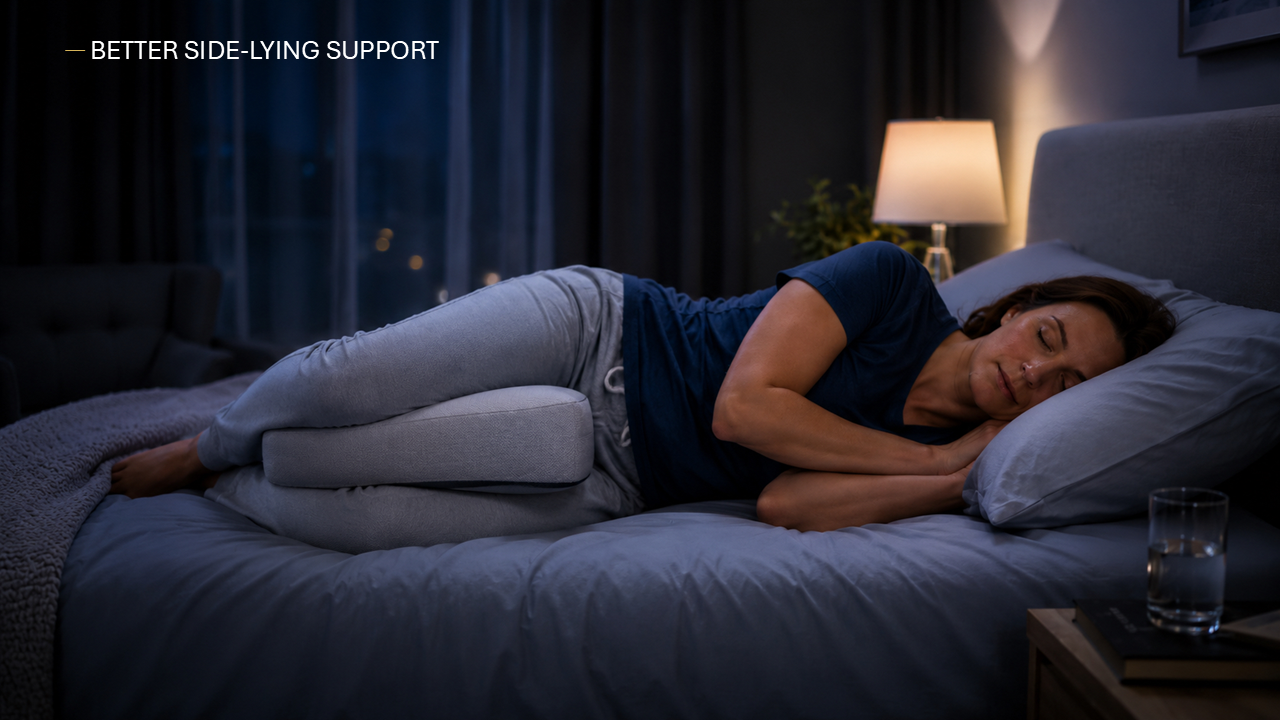
If your hip hurts at night, the goal is to reduce pressure, keep the pelvis/hips aligned, and stop “testing” the painful position for hours. If pain persists or keeps returning, start with Hip Pain Treatment. If symptoms travel down the leg, compare patterns here: Hip Pain vs. Sciatica vs. Low Back Pain.
- Best positions + pillow setups you can use tonight
- Pattern clues (outer hip vs groin vs sciatica-like)
- Clear “when to worry” guidance
Educational only. Not medical advice. Seek urgent evaluation for severe/worsening symptoms or red flags.
Quick Answer (Do This Tonight)
Hip pain is often worse at night because the hip is compressed for long periods (especially side sleeping), you move less, and irritated tissues become more sensitive. The fastest fix is usually reducing pressure and stacking the hips with pillows.
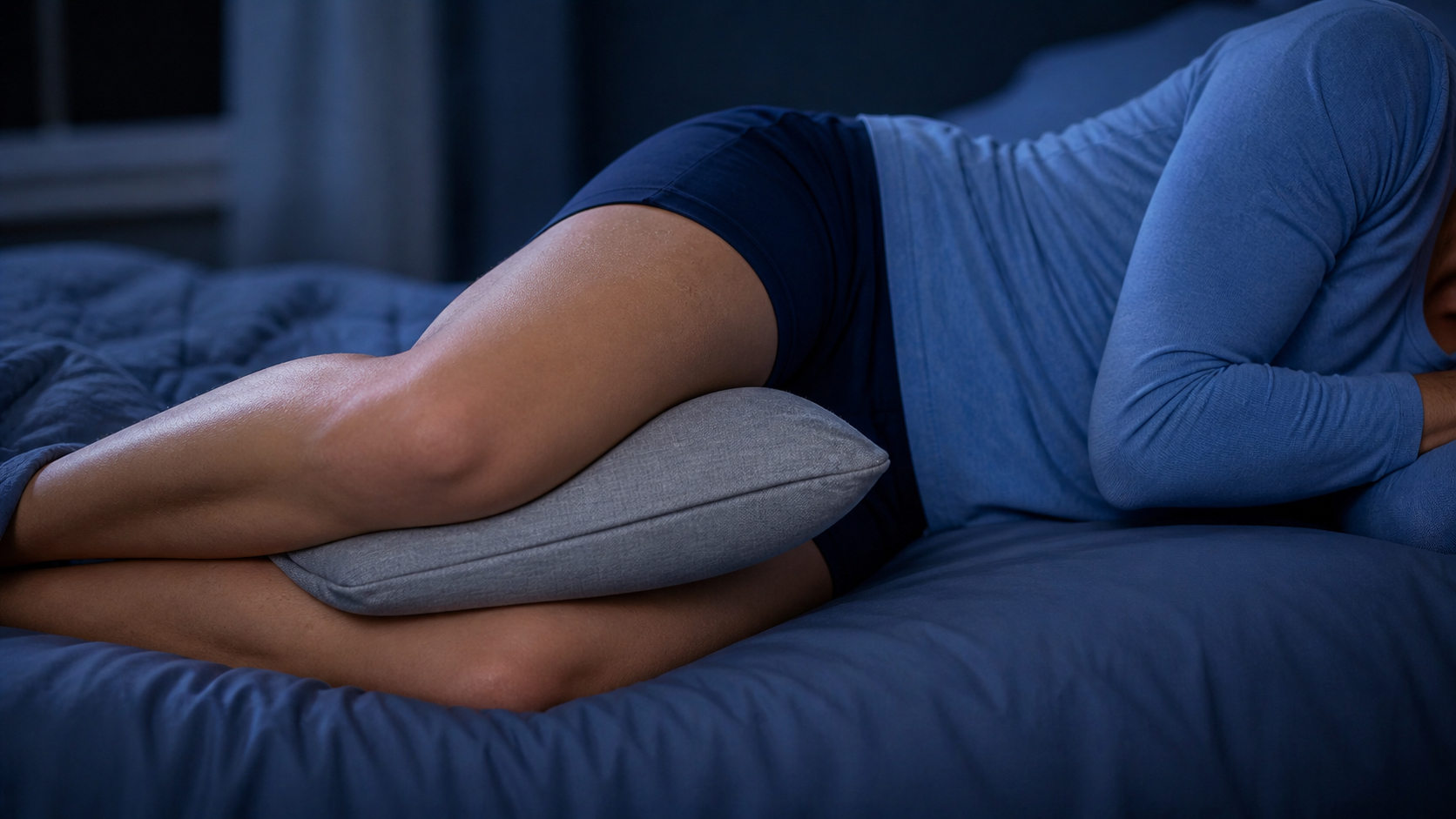
Tonight checklist (fast wins)
- Side sleepers: put a pillow between knees (thick enough to keep top knee from dropping)
- Back sleepers: pillow under knees to reduce hip/back tension
- Avoid: sleeping directly on the painful outer hip for long stretches
- Micro-roll: if side sleeping, roll slightly forward (unloads the side of hip for many people)
- Comfort add-on: short heat or ice session before bed—use what helps you sleep
Next-day rule
If your hip feels the same or better the next morning, you chose a good setup. If it’s worse, adjust the pillow thickness and avoid the painful side longer.
Best Sleeping Positions for Hip Pain
Pick the option that reduces pressure and keeps your pelvis/hips aligned.
Side sleeping (most common)
- Key goal: keep hips stacked (don’t let top knee drop)
- Best setup: pillow between knees + slight forward roll
- Avoid: long periods directly on painful outer hip
Back sleeping (often best for pressure relief)
- Best setup: pillow under knees
- Reduces pull on hips and low back for many people
- If one hip feels “pulled,” try a small towel under that thigh
Stomach sleeping (not ideal, but if you must)
- Stomach sleeping often increases hip rotation and low back extension
- If you must: small pillow under pelvis to reduce extension
- Try to avoid hard head rotation all night
If you keep rolling onto the painful side
- Use a “backstop” pillow behind you
- Or place a pillow in front (hug it) to keep you slightly forward
- Goal: reduce hours of direct compression
Pillow Setup (The Part That Makes It Work)
Most “best sleeping positions” advice fails because the pillow thickness doesn’t match your body.
Pillow between knees: how thick?
- Thick enough that the top knee doesn’t drop toward the bed
- If the pillow is too thin, the top hip falls inward and increases compression
- If too thick, you may feel strain in the low back—adjust down
Optional: “waist pillow” for side sleepers
- If you feel your spine is “hanging,” add a small pillow at the waist
- This keeps spine/pelvis more neutral and can reduce hip irritation
Back sleepers: knee bolster height
A pillow under knees should feel like it takes tension off the hip and low back. If it feels cramped, lower the bolster height.
Pattern Clues (How to Tell What’s Driving It)
Hip pain at night can come from different “buckets.” Use location + symptoms to choose the right direction.
Outer hip pain (side of hip) — often pressure-driven
If pain is on the outside of the hip and is worse when lying directly on that side, it often fits a glute tendon / bursitis-type irritation pattern. The best first step is reducing compression and building hip tolerance over time.
Groin/front hip pain
Groin/front pain can be more hip-joint or hip flexor–related, and may respond differently than outer hip compression. If this is persistent, an exam helps clarify the driver.
Buttock/SI-region pain
Pain more in the buttock or SI area can be a different pathway (pelvis/SI/low back mechanics). If symptoms behave like back referral, compare patterns here: Hip Pain vs. Sciatica vs. Low Back Pain.
If pain travels down the leg or feels nerve-y
Tingling, numbness, burning, or pain that travels below the knee can suggest a nerve/back pattern rather than “just the hip.” Consider evaluation and review Sciatica Treatment.
What to Avoid (Common Traps)
These often keep night pain stuck in a loop.
- Sleeping directly on the painful outer hip for hours
- Side sleeping with knees together (no pillow) → hip collapse inward
- Over-testing the painful position night after night
- Forcing aggressive stretches into sharp pain before bed
When to Worry (Red Flags)
Get checked promptly if any of these are present.
- Unable to bear weight or sudden severe pain
- Major trauma (fall, collision)
- Fever or a hot/red joint
- Rapidly worsening pain that doesn’t change with position
- Progressive weakness or new/worsening numbness/tingling down the leg
- Night pain with systemic symptoms (unexplained weight loss/night sweats) — get evaluated
If you’re unsure, start with Contact & Location and we’ll guide you.
Not urgent, but smart to book
- Sleep disrupted for > 1–2 weeks
- Pain progressing week to week
- Recurring cycles that return when you resume normal activity
Start here: Hip Pain Treatment.
Hip Pain at Night FAQs
Quick answers—including sleeping positions and “when to worry.”
Leave a Reply