Category: Hip Pain

Hip pain help in Logansport—common causes, red flags, and practical next steps for walking, sleeping, stairs, and workouts (including when pain may be coming from the low back or sciatica).

  • Hip Pain at Night: Best Sleeping Positions (and When to Worry)

    Hip Pain at Night: Best Sleeping Positions (and When to Worry)

    HIP PAIN · SLEEP GUIDE · LOGANSPORT, IN

    Evidence-informed, conservative-first guidance Sleep-position fixes that reduce pressure Clear “when to worry” red flags

    Hip Pain at Night: Best Sleeping Positions (and When to Worry)

    Most night hip pain is pressure + position + irritability. The right setup can change sleep fast.

    Infographic showing best sleeping positions for hip pain, including side sleeping with pillow between knees and back sleeping with pillow under knees.
    Image 1: The right setup reduces pressure and lets the hip calm down overnight.
    Side-sleep pressure often drives outer hip pain
    Pillows can stack hips and reduce compression fast
    If pain travels down leg or feels nerve-y, consider back/nerve pattern

    If your hip hurts at night, the goal is to reduce pressure, keep the pelvis/hips aligned, and stop “testing” the painful position for hours. If pain persists or keeps returning, start with Hip Pain Treatment. If symptoms travel down the leg, compare patterns here: Hip Pain vs. Sciatica vs. Low Back Pain.

    • Best positions + pillow setups you can use tonight
    • Pattern clues (outer hip vs groin vs sciatica-like)
    • Clear “when to worry” guidance

    Educational only. Not medical advice. Seek urgent evaluation for severe/worsening symptoms or red flags.

    Quick Answer (Do This Tonight)

    Hip pain is often worse at night because the hip is compressed for long periods (especially side sleeping), you move less, and irritated tissues become more sensitive. The fastest fix is usually reducing pressure and stacking the hips with pillows.

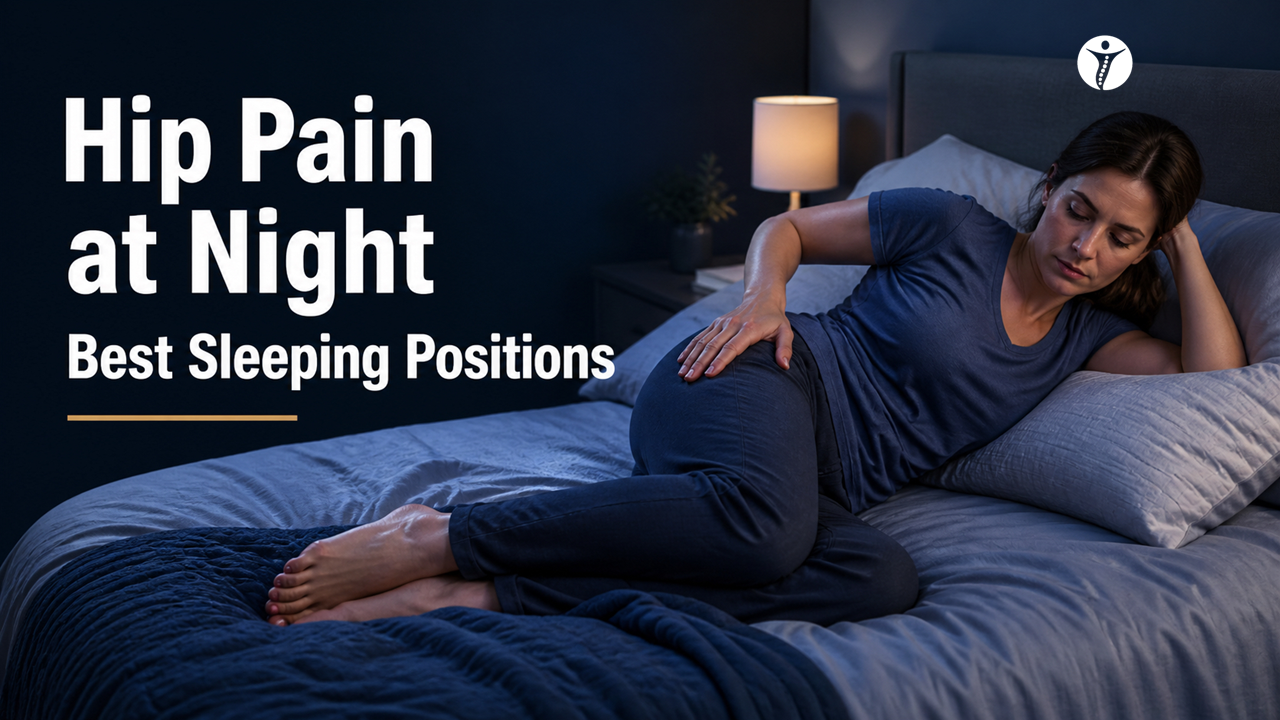
    Side sleeping pillow setup for hip pain, using a pillow between the knees to keep hips aligned and reduce pressure.
    Image 2: Side sleepers—pillow between knees + small alignment tweaks can change sleep fast.

    Tonight checklist (fast wins)

    • Side sleepers: put a pillow between knees (thick enough to keep top knee from dropping)
    • Back sleepers: pillow under knees to reduce hip/back tension
    • Avoid: sleeping directly on the painful outer hip for long stretches
    • Micro-roll: if side sleeping, roll slightly forward (unloads the side of hip for many people)
    • Comfort add-on: short heat or ice session before bed—use what helps you sleep

    Next-day rule

    If your hip feels the same or better the next morning, you chose a good setup. If it’s worse, adjust the pillow thickness and avoid the painful side longer.

    Best Sleeping Positions for Hip Pain

    Pick the option that reduces pressure and keeps your pelvis/hips aligned.

    Side sleeping (most common)

    • Key goal: keep hips stacked (don’t let top knee drop)
    • Best setup: pillow between knees + slight forward roll
    • Avoid: long periods directly on painful outer hip

    Back sleeping (often best for pressure relief)

    • Best setup: pillow under knees
    • Reduces pull on hips and low back for many people
    • If one hip feels “pulled,” try a small towel under that thigh

    Stomach sleeping (not ideal, but if you must)

    • Stomach sleeping often increases hip rotation and low back extension
    • If you must: small pillow under pelvis to reduce extension
    • Try to avoid hard head rotation all night

    If you keep rolling onto the painful side

    • Use a “backstop” pillow behind you
    • Or place a pillow in front (hug it) to keep you slightly forward
    • Goal: reduce hours of direct compression

    Pillow Setup (The Part That Makes It Work)

    Most “best sleeping positions” advice fails because the pillow thickness doesn’t match your body.

    Pillow between knees: how thick?

    • Thick enough that the top knee doesn’t drop toward the bed
    • If the pillow is too thin, the top hip falls inward and increases compression
    • If too thick, you may feel strain in the low back—adjust down

    Optional: “waist pillow” for side sleepers

    • If you feel your spine is “hanging,” add a small pillow at the waist
    • This keeps spine/pelvis more neutral and can reduce hip irritation

    Back sleepers: knee bolster height

    A pillow under knees should feel like it takes tension off the hip and low back. If it feels cramped, lower the bolster height.

    Pattern Clues (How to Tell What’s Driving It)

    Hip pain at night can come from different “buckets.” Use location + symptoms to choose the right direction.

    Outer hip pain (side of hip) — often pressure-driven

    If pain is on the outside of the hip and is worse when lying directly on that side, it often fits a glute tendon / bursitis-type irritation pattern. The best first step is reducing compression and building hip tolerance over time.

    Groin/front hip pain

    Groin/front pain can be more hip-joint or hip flexor–related, and may respond differently than outer hip compression. If this is persistent, an exam helps clarify the driver.

    Buttock/SI-region pain

    Pain more in the buttock or SI area can be a different pathway (pelvis/SI/low back mechanics). If symptoms behave like back referral, compare patterns here: Hip Pain vs. Sciatica vs. Low Back Pain.

    If pain travels down the leg or feels nerve-y

    Tingling, numbness, burning, or pain that travels below the knee can suggest a nerve/back pattern rather than “just the hip.” Consider evaluation and review Sciatica Treatment.

    What to Avoid (Common Traps)

    These often keep night pain stuck in a loop.

    • Sleeping directly on the painful outer hip for hours
    • Side sleeping with knees together (no pillow) → hip collapse inward
    • Over-testing the painful position night after night
    • Forcing aggressive stretches into sharp pain before bed

    When to Worry (Red Flags)

    Get checked promptly if any of these are present.

    • Unable to bear weight or sudden severe pain
    • Major trauma (fall, collision)
    • Fever or a hot/red joint
    • Rapidly worsening pain that doesn’t change with position
    • Progressive weakness or new/worsening numbness/tingling down the leg
    • Night pain with systemic symptoms (unexplained weight loss/night sweats) — get evaluated

    If you’re unsure, start with Contact & Location and we’ll guide you.

    Not urgent, but smart to book

    • Sleep disrupted for > 1–2 weeks
    • Pain progressing week to week
    • Recurring cycles that return when you resume normal activity

    Start here: Hip Pain Treatment.

    Want a Hip Plan That Improves Sleep and Holds Up?

    We’ll identify your pattern (outer hip compression, hip joint, SI/low back referral) and build a plan that reduces night pain and improves tolerance.

    Hip Pain at Night FAQs

    Quick answers—including sleeping positions and “when to worry.”

    Why is hip pain worse at night?
    Night pain is often worse because the hip is compressed for long periods (especially side sleeping), you move less, and irritated tissues become more sensitive.
    What is the best sleeping position for hip pain?
    Many people do best on their back with a pillow under the knees, or on their side with a pillow between the knees to keep hips stacked. Avoid long periods directly on the painful outer hip.
    How should side sleepers position pillows?
    Use a pillow between the knees thick enough to keep the top knee from dropping. Some people also benefit from a small pillow at the waist for neutral alignment.
    Could this be bursitis or glute tendon pain?
    Outer hip pain that’s worse when lying on that side often fits a glute tendon/bursitis-type pattern. Reducing compression and improving hip tolerance usually helps.
    Could this be sciatica or low back related?
    Yes. Pain that travels down the leg, includes tingling/numbness, or feels nerve-y can suggest a back/nerve pattern. Compare patterns here: Hip vs Sciatica vs Low Back.
    Should I use heat or ice?
    Either can help. Many people prefer heat for tightness and ice for sharp irritation. Use what improves comfort and sleep.
    How long does it take to improve?
    Many people notice better sleep within days when pressure is reduced. Longer-standing patterns often improve over weeks with a plan that addresses strength, load, and mechanics.
    When should I worry and get checked?
    Get checked promptly for inability to bear weight, major trauma, fever/hot red joint, rapidly worsening pain, progressive weakness, or new/worsening numbness or tingling down the leg.

  • Hip Pain vs. Sciatica vs. Low Back Pain: How to Tell (and What to Do First)

    Hip Pain vs. Sciatica vs. Low Back Pain: How to Tell (and What to Do First)

    HIP PAIN · SCIATICA · LOW BACK · DECISION GUIDE · LOGANSPORT, IN

    Pattern checks (not guesswork) Clear red flags + when to image Conservative first steps for each bucket

    Hip Pain vs. Sciatica vs. Low Back Pain: How to Tell (and What to Do First)

    Same area, different drivers. The best first step depends on where it hurts, what triggers it, and whether symptoms travel.

    Infographic comparing hip pain, sciatica, and low back pain patterns, highlighting location, triggers, and whether symptoms travel below the knee.
    Image 1: Three common patterns—use location, triggers, and “does it travel?” to self-sort.
    Hip pain often = groin/side pain with hip-specific triggers
    Sciatica often = leg symptoms + nerve-y signs (often below knee)
    Low back pain often stays local and changes with posture/movement

    If you’re not sure whether your pain is hip-driven, back-driven, or nerve-driven, you’re not alone—these overlap constantly. This guide helps you self-sort the dominant pattern and choose a safe first step. Service overview links: Hip Pain Treatment, Sciatica Treatment, Low Back Pain Treatment.

    • 60-second self-check + comparison table
    • Three pattern buckets + “what to do first” ladders
    • Clear “when to worry” guidance

    Educational only. Not medical advice. Patterns overlap—an exam confirms the driver.

    Quick Answer (The Biggest Clues)

    Hip pain is often felt in the groin or side of hip and flares with hip-specific tasks (shoes, car, stairs). Sciatica often includes leg symptoms (often below the knee) and may include tingling/numbness/weakness. Low back pain is more often centered in the lumbar area and changes with posture and movement.

    Supporting visual emphasizing that symptoms traveling below the knee often indicates a nerve-driven pattern rather than isolated hip pain.
    Image 2: The biggest clue: symptoms traveling below the knee often points to a nerve pattern.

    One rule that prevents most wrong turns

    If symptoms are traveling below the knee or feel nerve-y (tingling/numbness/weakness), treat it like a nerve pattern first and get evaluated if it’s worsening.

    60-Second Self-Check (3-Way Sorter)

    Answer quickly. You’re looking for the dominant pattern.

    1) Where is it strongest?
    Groin/side hip? Low back? Buttock?
    2) Does it travel below the knee?
    If yes, sciatic/nerve pattern is more likely.
    3) Any tingling, numbness, or weakness?
    If yes, nerve pathway deserves attention.
    4) Worse with sitting?
    Often points toward lumbar/nerve patterns.
    5) Worse putting on socks/shoes or getting in/out of car?
    Often points toward hip-driven patterns.
    6) Worse with cough/sneeze/straining?
    Can point toward nerve irritation in some cases.

    Interpretation

    • Mostly hip clues: groin/side pain + hip tasks trigger it.
    • Mostly nerve clues: travels below knee and/or tingling/numbness/weakness.
    • Mostly low back clues: centered low back pain that changes with movement/posture.

    Comparison Table (Fast, Skimmable)

    This table keeps it simple and prevents “wrong-plan” mistakes.

    Clue Hip Pain Pattern Sciatica Pattern Low Back Pattern
    Common location Groin/side hip (sometimes deep ache) Buttock + leg symptoms (often below knee) Centered low back
    Common triggers Socks/shoes, car, stairs, side sleeping Sitting/bending, certain positions, cough/sneeze sometimes Bending, sitting, standing, lifting
    Does it travel? Often thigh, less often below knee Often below knee Usually stays local (can refer to buttock)
    Nerve-y signs Less common More common (tingling/numbness/weakness) Usually none unless nerve involved
    Best first step Calm hip irritability + restore motion + build strength Stop provocation + positions that centralize + staged return Reduce spike + gentle movement + strength progression
    When to evaluate sooner Severe worsening or inability to bear weight Progressive weakness, bowel/bladder changes, severe nerve symptoms Worsening neuro signs, trauma, systemic illness

    Hip Pain Pattern (Hip-Driven)

    Hip pain is often groin/side pain that’s provoked by hip-specific tasks.

    Common clues

    • Groin pain or deep ache in the hip
    • Side-of-hip pain (especially with side sleeping)
    • Worse with socks/shoes, car in/out, stairs

    Service overview: Hip Pain Treatment.

    What usually helps first

    • Short 7–10 day “calm the spike” window (avoid the worst provokers)
    • Gentle range + walking tolerance
    • Progressive hip/glute strength (pain-safe)

    Night pain? Read: Hip Pain at Night: Best Sleeping Positions.

    Sciatica Pattern (Nerve-Driven)

    Sciatica often includes leg symptoms (often below the knee) and can feel sharp, burning, or electric.

    Common clues

    • Pain traveling into the leg, often below the knee
    • Tingling, numbness, or weakness
    • Often worse with sitting or certain bending positions

    Service overview: Sciatica Treatment.

    What usually helps first

    • Stop repeated provocation (don’t “test” it all day)
    • Walk and use positions that reduce leg symptoms
    • Staged return + strength progression

    Read next: Best Sleeping Positions for Sciatica and Sciatica vs. Piriformis Syndrome.

    Low Back Pain Pattern (Lumbar-Driven)

    Low back pain often stays local and changes with posture, bending, or lifting.

    Common clues

    • Centered low back pain (may refer to buttock)
    • Changes with bending, sitting, standing, lifting
    • Often improves with gentle movement over time

    Service overview: Low Back Pain Treatment.

    What usually helps first

    • Reduce the spike (avoid repeated deep bending early)
    • Gentle movement (short walks) + pain-safe positions
    • Progressive strength and hinge strategy

    Read next: Low Back Pain Causes (and What Helps).

    What to Do First (3 Ladders)

    Pick the ladder that fits your dominant pattern.

    Hip ladder

    1. Calm the spike: avoid the worst hip provokers 7–10 days
    2. Walk: short, frequent walks (tolerance building)
    3. Restore motion: gentle range (no forcing)
    4. Build strength: glute/hip progression

    Sciatica ladder

    1. Stop provocation: avoid positions that worsen leg symptoms
    2. Centralize: choose positions that reduce leg pain (walk often helps)
    3. Stage return: gradual reintroduction of bending/sitting tolerance
    4. Evaluate if worsening or neurologic signs appear

    Low back ladder

    1. Reduce spike: stop repeated painful “tests”
    2. Gentle motion: short walks + pain-safe positions
    3. Strength: progressive trunk/hip strength + hinge strategy
    4. Return: graded return to work/lifting

    Centralization = often a good sign

    If leg symptoms move up and become more local (less traveling), that often suggests you’re moving in the right direction. If symptoms spread farther down the leg, reassess.

    When to Worry (Red Flags)

    Seek urgent evaluation if any of these are present.

    • Progressive weakness (foot drop, worsening leg weakness)
    • Bowel/bladder changes or saddle numbness
    • Fever or feeling very unwell with back/hip pain
    • Major trauma (fall, car accident)
    • Severe night pain that keeps escalating
    • Rapidly worsening symptoms day-to-day

    If you’re unsure, start with Contact & Location and we’ll guide you.

    Want a Clear Answer (Not a Guess)?

    We’ll confirm the driver (hip vs back vs nerve), calm irritation, and build a step-by-step plan that holds up.

    Hip vs Sciatica vs Low Back FAQs

    Quick answers—including the “does it travel?” clue.

    How do I know if it’s sciatica?
    Sciatica often includes pain traveling into the leg (especially below the knee) and may include tingling, numbness, or weakness. Symptoms are often provoked by certain positions (sitting/bending) and may improve with positions that reduce nerve irritation.
    Can hip pain mimic sciatica?
    Yes. Hip joint or glute/tendon pain can refer into the thigh and feel “sciatica-like,” but true sciatica more often includes nerve symptoms and pain traveling below the knee.
    How do I tell hip pain vs low back pain?
    Hip pain is often felt in the groin/side hip and is provoked by hip-specific tasks (car, shoes, stairs). Low back pain is more often centered in the lumbar area and changes with bending, sitting, or standing.
    What’s the safest first step if I’m not sure?
    Start with a short 7–10 day “calm the spike” window: reduce provoking positions, keep gentle walking, and avoid repeated testing. If symptoms travel below the knee, include tingling/numbness, or worsen, get evaluated.
    Do I need imaging?
    Often not initially if there are no red flags and symptoms are improving. Imaging is more important with major trauma, progressive weakness, bowel/bladder changes, fever, severe night pain that escalates, or persistent/worsening symptoms.
    What sleeping positions help sciatica?
    Many people do best with side-lying with a pillow between knees or on the back with knees supported. The best position is the one that reduces leg symptoms and allows sleep.
    How long does it take to improve?
    Many mechanical patterns improve over a few weeks with the right plan. Nerve-driven symptoms can take longer and improve best with staged progression and avoiding repeated provocation.
    When should I worry and get checked urgently?
    Seek urgent evaluation for progressive weakness, new bowel/bladder changes or saddle numbness, fever, major trauma, severe/worsening night pain, or significant neurologic symptoms.
  • Hip Pain in Logansport, IN: 6 Common Causes (and What Helps)

    Hip Pain in Logansport, IN: 6 Common Causes (and What Helps)

    HIP PAIN · PATIENT EDUCATION · LOGANSPORT, IN

    Evidence-informed, conservative-first care Pattern clues (groin vs side vs buttock) Clear “when to worry” guidance

    Hip Pain in Logansport, IN: 6 Common Causes (and What Helps)

    Hip pain isn’t always “tight hip flexors.” Match the plan to the pattern—don’t guess.

    Infographic showing hip pain patterns by location (groin/front, side hip, buttock/back) and common causes with next steps.
    Image 1: Hip pain patterns—groin vs side hip vs buttock/back—plus what helps.
    Groin pain often points hip-joint side
    Side hip pain often points glute/tendon overload
    Buttock + leg symptoms may be back/nerve pattern

    Hip pain is one of the most common problems we see in Logansport—runners, lifters, workers on concrete, and anyone whose activity volume recently increased. If you want the service overview, start with Hip Pain Treatment. If you’re unsure whether it’s hip vs back vs nerve, start with Hip vs Sciatica vs Low Back (How to Tell).

    • 4 big clues to narrow the pattern fast
    • 6 common causes + what helps first
    • Clear “when to worry” guidance

    Educational only. Not medical advice. Patterns overlap—an exam confirms the driver.

    Quick Answer (If You Only Read One Section)

    Most hip pain improves when you reduce the spike (the movement/position that flares it), then rebuild hip/glute capacity with a staged plan. The best clue is where it hurts: groin vs side hip vs buttock/back.

    Supporting visual reinforcing hip pain pattern clues and conservative first steps: load control and strength progression.
    Image 2: Most hip pain improves with load control + strength progression—match the plan to the pattern.

    Three “do this first” steps

    • Next-day rule: you should feel the same or better the next day (mild soreness is okay).
    • Calm the spike: reduce the worst provokers for 7–10 days (don’t test it all day).
    • Build capacity: progressive glute/hip strength + walking tolerance.

    Start Here: 4 “Big Clues” That Narrow Hip Pain Fast

    Use these clues to decide which cause to read first—then confirm the driver with an exam if symptoms persist.

    1) Where does it hurt most?
    Groin/front? Side hip? Buttock/back of hip?
    2) What triggers it most?
    Shoes/socks, car in/out, stairs, side sleeping, walking distance, sitting?
    3) Does it travel below the knee or feel nerve-y?
    Tingling/numbness/weakness suggests a nerve pathway—evaluate if worsening.
    4) Is motion truly limited?
    If hip motion feels blocked (not just painful), the plan may differ.

    Quick routing

    • Groin pain + stiffness: consider hip joint irritation patterns.
    • Side hip pain + night pain: consider glute tendon overload patterns.
    • Buttock + leg symptoms: consider back/nerve patterns.

    6 Common Causes of Hip Pain (and What Usually Helps)

    These are the most common hip pain patterns we see around Logansport and Cass County.

    1) Hip joint irritation / arthritis-type pattern

    Clue: groin pain and stiffness, worse with deep hip flexion and after inactivity.

    • Helps first: walking tolerance + gentle range + staged strength
    • Evaluate if inability to bear weight or rapidly worsening pain

    2) Glute med/min tendon overload (side hip pain)

    Clue: side-of-hip pain, often worse with side sleeping, stairs, or single-leg loading.

    3) “Bursitis-like” lateral hip pain pattern (often overlaps with #2)

    Clue: tender lateral hip, pain with direct pressure and walking volume spikes.

    • Helps first: reduce direct compression + build glute capacity gradually
    • Note: many “bursitis” cases are really tendon overload + compression sensitivity.

    4) Hip flexor / adductor strain (front/groin)

    Clue: pain with lifting the knee, sprinting, getting up from deep positions, or sudden activity spikes.

    • Helps first: calm the spike + graded strengthening (not aggressive stretching early)
    • Evaluate if bruising, major weakness, or severe pain after an injury

    5) SI joint or low back referral masquerading as hip pain

    Clue: buttock/back-of-hip pain that changes with posture, bending, or lifting.

    6) Sciatica / nerve referral (hip/buttock + leg symptoms)

    Clue: symptoms traveling into the leg (often below the knee) with tingling/numbness/weakness.

    What Usually Helps (The Universal Hip Plan)

    This approach works across most non-emergency hip pain patterns.

    1) Use the next-day rule

    • Same or better next day = okay
    • Mild soreness = okay
    • Worse next day (especially with limp) = too much → scale down

    2) Calm the spike (7–10 days)

    • Temporarily reduce the movements/positions that flare you most
    • Stop daily “tests” of the painful motion
    • Use short, frequent walks as tolerated

    3) Build capacity (glute/hip strength)

    • Progressive glute/hip strength is the long-term solution for many patterns
    • Progress volume before intensity
    • Consistency beats occasional hard sessions

    If you’re not sure what bucket you’re in

    Start here: Hip Pain vs Sciatica vs Low Back (How to Tell).

    When to Worry (Red Flags)

    Get checked promptly if any of these are present.

    • Unable to bear weight or severe worsening pain
    • Major trauma (fall, collision)
    • Fever or a hot/red swollen joint
    • Progressive weakness or worsening numbness/tingling
    • Bowel/bladder changes or saddle numbness
    • Severe night pain that keeps escalating

    If you’re unsure, start with Contact & Location and we’ll guide you.

    Not urgent, but smart to book

    • Persistent symptoms beyond 2–3 weeks despite a smart plan
    • Recurring flare cycles
    • Significant limp
    • Symptoms traveling below the knee

    Want a Hip Plan That Actually Holds?

    We’ll identify your pattern, calm irritation, and build a step-by-step plan that holds up for work, sleep, and training.

    Hip Pain FAQs

    Quick answers—including “how to tell” and “when to worry.”

    What is the most common cause of hip pain?
    Common causes include hip joint irritation patterns, side-hip glute tendon overload, and referral patterns from the low back. The best clue is where it hurts and what triggers it.
    How do I tell hip pain vs sciatica vs low back pain?
    Hip pain is often groin/side pain provoked by hip tasks (shoes, car, stairs). Sciatica more often includes leg symptoms and nerve-y signs (often below the knee). Low back pain is more centered in the lumbar area and changes with bending, sitting, or standing.
    Why does side hip pain hurt at night?
    Side sleeping compresses irritated glute tendons/bursa-like tissues. A pillow between knees and changing positions can reduce compression and help sleep.
    Do I need imaging for hip pain?
    Often not initially if there are no red flags and you’re improving. Imaging is more important with major trauma, inability to bear weight, fever/hot red joint, progressive weakness/numbness, or persistent/worsening symptoms.
    Should I keep walking if my hip hurts?
    Often yes—within tolerance. Short, frequent walks usually help more than complete rest. If walking causes a limp that worsens or pain escalates sharply, scale back and get evaluated.
    What exercises help hip pain most?
    Most people benefit from a staged progression that builds glute/hip strength and improves tolerance. The best plan matches your pain pattern and avoids repeated provocation early on.
    How long does hip pain take to improve?
    Many mechanical and overload patterns improve over a few weeks with consistent load management and strengthening. Longer-standing patterns can take longer but still respond well to a staged plan.
    When should I worry and get checked?
    Get checked promptly for inability to bear weight, major trauma, fever/hot red joint, rapidly worsening pain, progressive weakness/numbness, severe night pain that escalates, or symptoms traveling below the knee.