
WORK & LIFTING INJURIES · SELF-SORTER · LOGANSPORT, IN
Lifting Injury at Work: Low Back Strain vs. Disc vs. SI Joint (How to Tell)
These three are commonly confused—but the best first step differs. Use this self-sorter to narrow your likely “bucket.”
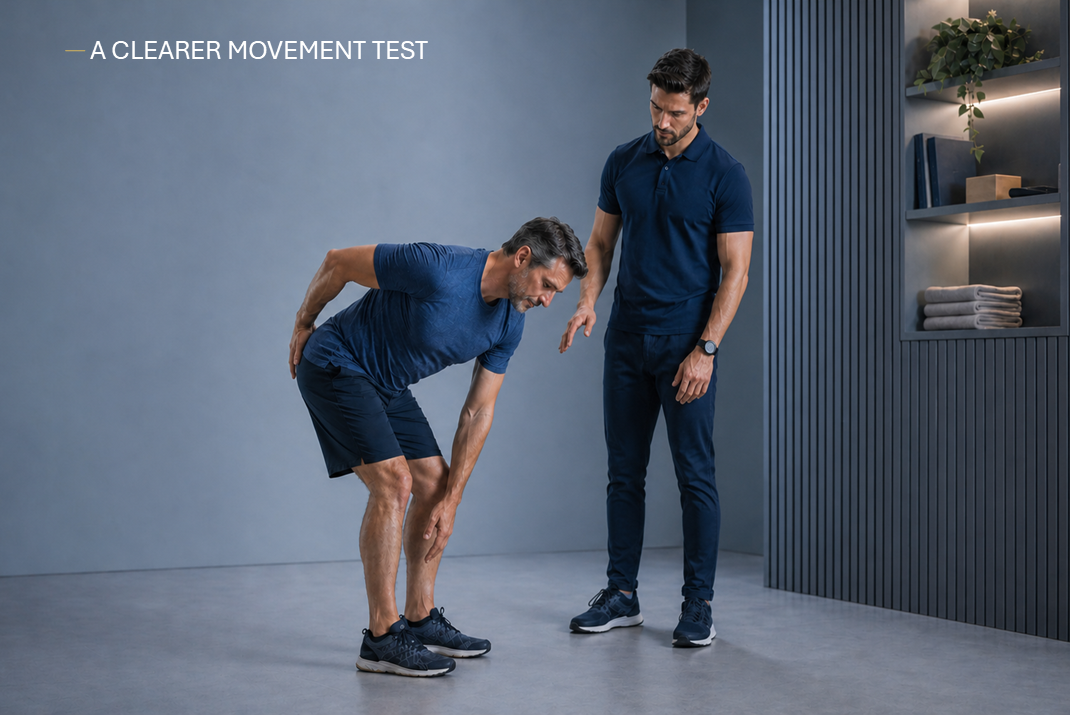
After a lifting injury at work, it’s normal to wonder: “Did I strain something… or is it a disc… or my SI joint?” This guide helps you narrow the pattern, then choose the safest first step. For the service overview, start with Work & Lifting Injuries. If your pain is severe or you have leg symptoms, also see Low Back Pain Treatment.
- 60-second self-check + comparison table
- What to do first for each pattern
- Clear “when to worry” guidance
Educational only. Not medical advice. Patterns overlap—an exam confirms the driver.
Quick Answer (Choose Your Most Likely Bucket)
This is not a diagnosis—just a fast way to narrow the most likely pattern.
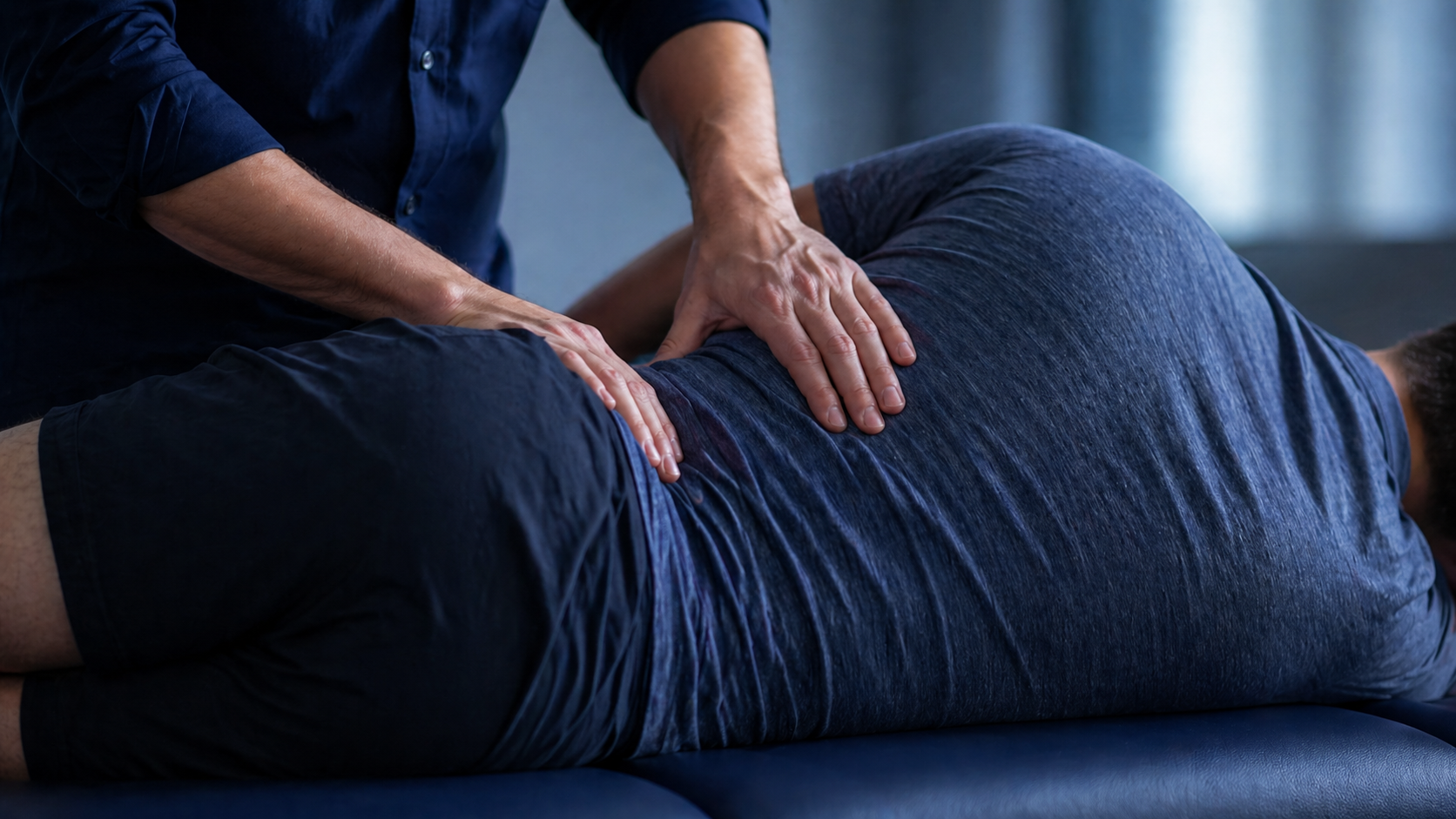
If it’s mostly local back pain after a lift…
Often fits: strain/overload pattern. Best first step: calm the spike, restore motion, then rebuild capacity.
If it shoots down the leg or feels nerve-y…
Often fits: disc/nerve irritation pattern. Best first step: stop provoking positions, protect the nerve, and progress gradually.
If it’s one-sided buttock/SI area with rolling/stairs triggers…
Often fits: SI joint pattern. Best first step: reduce asymmetry, stabilize, and rebuild tolerance to single-leg/carry tasks.
Two rules that work for almost everyone
- Next-day rule: you should feel the same or better the next day (mild soreness is okay).
- Stop “testing”: repeated painful bends/lifts usually keep you irritated.
60-Second Self-Check (Not a Diagnosis)
Answer these quickly. The goal is pattern direction—not certainty.
How to interpret it
- More “yes” to #3 and #6: often a strain/overload pattern.
- More “yes” to #1 and #2: often a disc/nerve pattern.
- More “yes” to #4 and #5: often an SI joint pattern.
If you’re unsure, a focused exam is the fastest way to stop guessing.
Comparison Table (Fast, Skimmable)
Similar pain. Different clues. Different first steps.
| Clue | Strain / Overload | Disc / Nerve | SI Joint |
|---|---|---|---|
| Where it hurts | Mostly local low back | Back + buttock/leg (may go below knee) | One-sided low back/buttock near SI area |
| Common triggers | Bending/lifting, long work bouts | Bending, sitting, cough/sneeze, nerve stretch | Rolling in bed, stairs, single-leg loading, uneven carries |
| What helps first | Gentle movement + gradual reload | Stop provocation + walk/positions + staged return | Reduce asymmetry + stabilization + graded tolerance |
| Work hint | Better after warm-up; worse with volume spikes | Leg symptoms worsen with certain positions | Feels “catchy” with transitions and uneven tasks |
| When to get checked | Not improving or keeps re-flaring | Weakness/leg symptoms or worsening | Persistent one-sided pain or unstable feeling |
Important
Patterns overlap. You can have a strain plus nerve irritation. If symptoms are changing or not improving, an exam is the safest next step.
Pattern 1: Low Back Strain / Overload
Often the most common after a lifting day that exceeded tolerance.
What it often feels like
- Local low back soreness/tightness
- Worse with bending/lifting, better after warming up
- Less likely to have true numbness/tingling down the leg
What usually helps first
- Short walks + gentle range in safe directions
- Reduce spikes (heavy lifts, long carries) for 7–14 days
- Gradually rebuild hinge/tolerance
Mistakes that prolong strain
- Repeatedly “testing” the painful lift
- Stretching aggressively into sharp pain
- Going from rest → full duty in one day
Pattern 2: Disc / Nerve Irritation
This pattern is more about nerve sensitivity and provocation than “how strong you are.”
What it often feels like
- Pain that travels into buttock/leg (sometimes below the knee)
- Tingling/numbness, or weakness
- Sometimes worse with coughing/sneezing/straining
What usually helps first
- Stop provocative positions (often repeated bending/slumped sitting)
- Short walks and positions that reduce leg symptoms
- Gradual return to motion; then rebuild tolerance
When this should be evaluated promptly
- Progressive weakness (foot drop, worsening strength)
- Rapidly worsening leg symptoms
- Bowel/bladder changes or saddle numbness (urgent)
Pattern 3: SI Joint Pain
Often one-sided and tied to transitions and asymmetrical loading.
What it often feels like
- One-sided low back/buttock pain near the “dimple” area
- Worse with rolling in bed, stairs, getting in/out of a car
- Single-leg loading and uneven carries can flare it
What usually helps first
- Reduce asymmetry (avoid twisting under load, uneven carries)
- Stabilization + hip strength progression
- Gradual return to stairs/carries as tolerance improves
Mistakes that prolong SI patterns
- Forcing deep stretches that spike pain
- Returning to uneven lifting/carry patterns too soon
- Ignoring single-leg tolerance (stairs, step-ups)
What to Do First (Without Guessing)
Use the ladder that matches your most likely pattern.
Strain / overload ladder
- Calm the spike: short walks + gentle ROM; stop “testing” the painful lift
- Restore hinge tolerance: light hinge practice in safe range
- Build capacity: glute/trunk endurance, volume before intensity
- Return-to-work blocks: spread heavy tasks into tolerable blocks
Disc / nerve ladder
- Reduce provocation: avoid repeated bending/slumped sitting
- Find relief: walk/positions that calm leg symptoms
- Restore motion gradually: don’t force pain spikes
- Rebuild tolerance: progressive strength + staged return to work tasks
SI joint ladder
- Reduce asymmetry: avoid twisting under load, uneven carries
- Stabilize: hip/trunk stability progression
- Re-load stairs/carries: graded exposure with next-day rule
- Work simulation: practice job tasks before full duty volume
Return-to-work plan (recommended next read)
If you’re returning to full duty, follow a staged plan: Return-to-Work Plan After a Back Injury: 5 Steps to Reduce Re-Injury.
Imaging question?
Most cases don’t need immediate MRI if there are no red flags and you’re improving. Use this guide: Do You Need Imaging for a Work Injury? A Clear MRI Decision Guide.
When to Worry (Red Flags)
Get checked urgently if any of these are present.
- Progressive weakness (foot drop, worsening strength)
- Loss of bowel/bladder control or saddle numbness
- Fever with spinal pain or feeling very unwell
- Major trauma (fall, car accident)
- Rapidly worsening symptoms day-to-day
If you’re unsure, start with Contact & Location and we’ll guide you.
Strain vs Disc vs SI FAQs
Quick answers—including imaging and work guidance.
Leave a Reply