
ARTHRITIS & JOINT PAIN · 7-DAY PLAN · LOGANSPORT, IN
A 7-Day Low-Impact Movement Plan for Arthritis (Knee, Hip, or Hands)
A simple week you can repeat that reduces stiffness and builds tolerance—without flaring symptoms.

Arthritis doesn’t mean you should stop moving—it means you need a smarter dose. If you want the service overview, start with Arthritis & Joint Pain Treatment and our hub guide Arthritis: 6 Joint Pain Patterns. If a specific joint is the limiter, see Knee Pain Treatment or Hip Pain Treatment.
- Traffic-light safety rules + flare-day swaps
- Joint tracks (knee / hip / hands) + exercise library
- Week 2–4 progression so you know what to do next
Educational only. Not medical advice. Seek urgent care for severe/worsening symptoms or red flags.
Quick Answer
Do daily gentle movement, add light strength 2–4 days/week, and choose a low-impact cardio option you can do consistently. Use the next-day rule: your joint should feel the same or better tomorrow.
Copy/Paste Plan Card (This Week)
- 10–20 min gentle movement
- Short walk/bike/pool if tolerated
- Stop before limping
- Light strength (pain-safe range)
- Slow tempo > heavy load
- One joint track (knee/hip/hands)
- Same/better tomorrow = progress
- Swelling = scale back
- Sharp pain = stop
Not sure what kind of arthritis pattern you have? Start with 6 Joint Pain Patterns or read OA vs. RA (How to Tell) for a clearer “what bucket am I in?” guide.
Start Here: The Safety Rules That Prevent Flares
Use the traffic-light system, then apply the 3 rules below. That’s how you stay in the “green zone.”
Green light
Keep going and progress slowly.
Yellow light
Repeat the same dose (don’t progress yet). Reduce range or reps if needed.
Red light
Scale back immediately. Return to gentle movement only and consider evaluation if it persists.
You should feel better, the same, or only mildly sore the next day. If you’re worse for 24–48 hours, scale back range or volume.
Choose pain-free to mild discomfort. Avoid sharp pain, catching/locking, or “giving way.” If swelling increases, scale back immediately.
For one week, reduce deep loaded joint positions and high impact (jumping, long hills, deep squats if they flare you). Replace with flat walking, cycling, pool, and controlled strength.
If you keep flaring despite scaling down, start with Arthritis Care so we can match the plan to your joint and your load tolerance.
Choose Your Joint (Knee · Hip · Hands)
Same 7-day structure. Pick the joint that limits you most and use the matching options below.
Knee focus (most common limiter)
- Cardio best bets: flat walking, cycling, pool
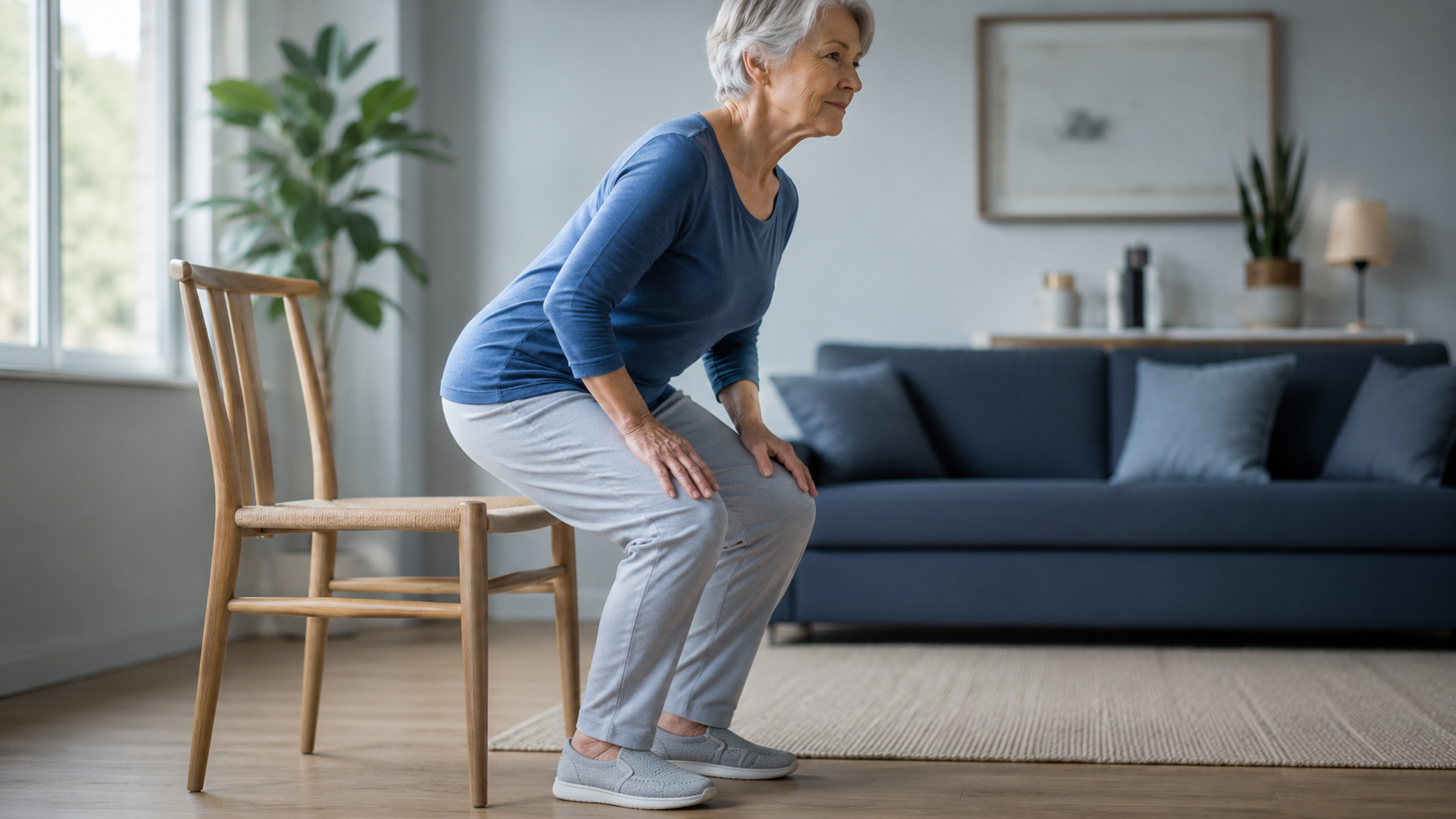
- Strength best bets: sit-to-stand, shallow mini-squat, step-ups to a low step
- Avoid early on: long hills, deep squats, jumping, “pushing through” sharp pain
- Helpful reads: Knee Pain on Stairs and Knee Pain Treatment
Hip focus
- Cardio best bets: flat walking, cycling, pool
- Strength best bets: bridges, side steps, controlled hip hinge (pain-safe)
- Avoid early on: deep pinchy ranges, long strides if they pinch, aggressive stretching
- Helpful reads: Hip Pain: Common Causes and Hip Pain Treatment
Hands focus
- Best bets: tendon glides, gentle open/close work, light putty/ball squeezes, wrist extensor strength
- Avoid early on: long sustained gripping that flares symptoms
- Pro tip: short doses (1–3 minutes) multiple times/day often beats one long session
- Start here: Arthritis & Joint Pain Treatment
The 7-Day Low-Impact Arthritis Movement Plan
Keep it easy enough to repeat. The goal is calmer joints—not a hard workout.
| Day | Focus | Time | Goal |
|---|---|---|---|
| Day 1 | Mobility | 10–15 min | Reduce stiffness + restore motion |
| Day 2 | Light Strength | 15–20 min | Protect joints with controlled strength |
| Day 3 | Low-Impact Cardio | 15–30 min | Build tolerance with steady movement |
| Day 4 | Mobility + Balance | 10–15 min | Control + confidence |
| Day 5 | Strength Repeat | 15–20 min | Reinforce strength safely |
| Day 6 | Active Recovery | 10–20 min | Move without flaring |
| Day 7 | Rest or Light Mobility | 0–15 min | Recover + reset |
Day 1 — Mobility (10–15 minutes)
Pick the joint that limits you most and stay in a pain-safe range.
- Knees: gentle knee bends + easy quad activation
- Hips: hip circles + controlled bridges
- Hands: open/close + tendon glides + gentle squeezes
Day 2 — Light Strength (15–20 minutes)
Controlled strength is joint “insurance.” Keep reps smooth and easy.
- Knees: sit-to-stand (chair), shallow mini-squats
- Hips: bridges + side steps (band if tolerated)
- Hands: light putty/ball squeezes + wrist extensor work
Day 3 — Low-Impact Cardio (15–30 minutes)
Use the “talk test” pace (you can talk in full sentences).
- Flat walking, cycling, or pool
- Stop if limping begins or pain escalates sharply
- Shorter is fine. Consistency wins.
Day 4 — Mobility + Balance (10–15 minutes)
Repeat Day 1 mobility, then add balance (supported).
- Mobility: repeat Day 1
- Balance: supported single-leg stance as tolerated
Day 5 — Strength Repeat (15–20 minutes)
Repeat Day 2 but use a slower tempo (control over load).
- Same movements as Day 2
- Slow down the lowering phase
Day 6 — Active Recovery (10–20 minutes)
This is your “keep moving without poking the bear” day.
- Short walk or bike (flat)
- Gentle range work only
Day 7 — Rest or Light Mobility
If stiff, do Day 1 mobility. If calm, take a true rest day.
- Stiff: mobility
- Calm: rest
Flare Day Swap (if you wake up worse)
Use this if the next-day rule fails or swelling increases.
- Cut cardio time in half (or switch to bike/pool)
- Use smaller ranges for strength and do 1 fewer set
- Do gentle mobility only and return to the plan once stable
If knee pain is the limiter: see Knee Pain on Stairs. If hip pain is the limiter: see Hip Pain: Common Causes. If you want a plan tailored to your joint + gait, book here: Schedule an Evaluation.
Exercise Library (Bookmark This)
Simple options you can rotate without overthinking.
Mobility
- Gentle knee bends (pain-safe range)
- Hip circles
- Pelvic tilts
- Hand open/close + tendon glides
Strength
- Knee: sit-to-stand, mini-squat (shallow), low step-ups
- Hip: bridges, side steps, gentle hinge pattern
- Hands: light squeezes, wrist extensor work
Cardio
- Flat walking
- Cycling
- Pool walking/swimming
Balance
- Supported single-leg stance
- Heel-to-toe walk (near counter)
Bad-Day vs Good-Day Modifications
This is how you stay consistent without flaring.
If you’re flared today
- Cut volume by 50% (time/reps)
- Keep range smaller and pain-safe
- Do mobility + short walk only
If you’re stable today
- Progress one variable only (time OR reps OR range)
- Add 5 minutes cardio OR 1 set strength
- Keep next-day response as the judge
Pro move: If you flare, revert for 3–4 sessions, then try again—most people progress smoothly on the second attempt.
Week 2–4 Progression (What to Do Next)
Most plans fail because they stop at Week 1. Here’s the simple path forward.
Progress ONE variable at a time
- Add 5 minutes to cardio or add 1 set to strength—not both
- Keep the same pain-safe range until next-day symptoms stay stable
- If you flare: revert for 3–4 sessions, then progress again
Progression rules
- Add 5 minutes to cardio OR
- Add 1 set to one strength day
- Add one more strength day OR
- Increase range slightly (pain-safe)
- Maintain consistency
- Re-check your biggest trigger
- Progress slowly (one variable)
Joint mechanics tip (often overlooked)
For knee arthritis especially, the “chain” matters—feet, hips, and walking mechanics can change joint load. If you’re not sure what’s driving your pattern, we can evaluate the chain; orthotic support may help some people. See Custom Orthotics.
7-Day Tracker (So You Don’t Guess)
Track for a week and you’ll usually identify your biggest flare trigger.
Track these daily
Morning / evening rating.
Yes/no + when it appears.
Walk/bike/pool + strength + mobility.
Same/better/worse.
Stairs? deep bend? long walk? grip?
Walking, stairs, sleep: better/same/worse.
When to Worry (Red Flags)
Get checked promptly if any of these are true.
- Hot, red joint with fever or feeling unwell
- Rapidly worsening swelling or bruising
- Unable to bear weight or severe worsening pain
- True locking/giving way that increases fall risk
- Pain worsening day-to-day despite scaling down
If you’re unsure, start with Contact & Location and we’ll guide you.
Arthritis Movement FAQs
Quick answers—including “when to worry.”
Leave a Reply