
LOW BACK PAIN · PRACTICAL 7-DAY PLAN · LOGANSPORT, IN
How to Sit, Sleep, and Lift with Low Back Pain (A Practical 7-Day Plan)
A simple, realistic plan to calm irritation, protect your back, and rebuild confidence without guessing.
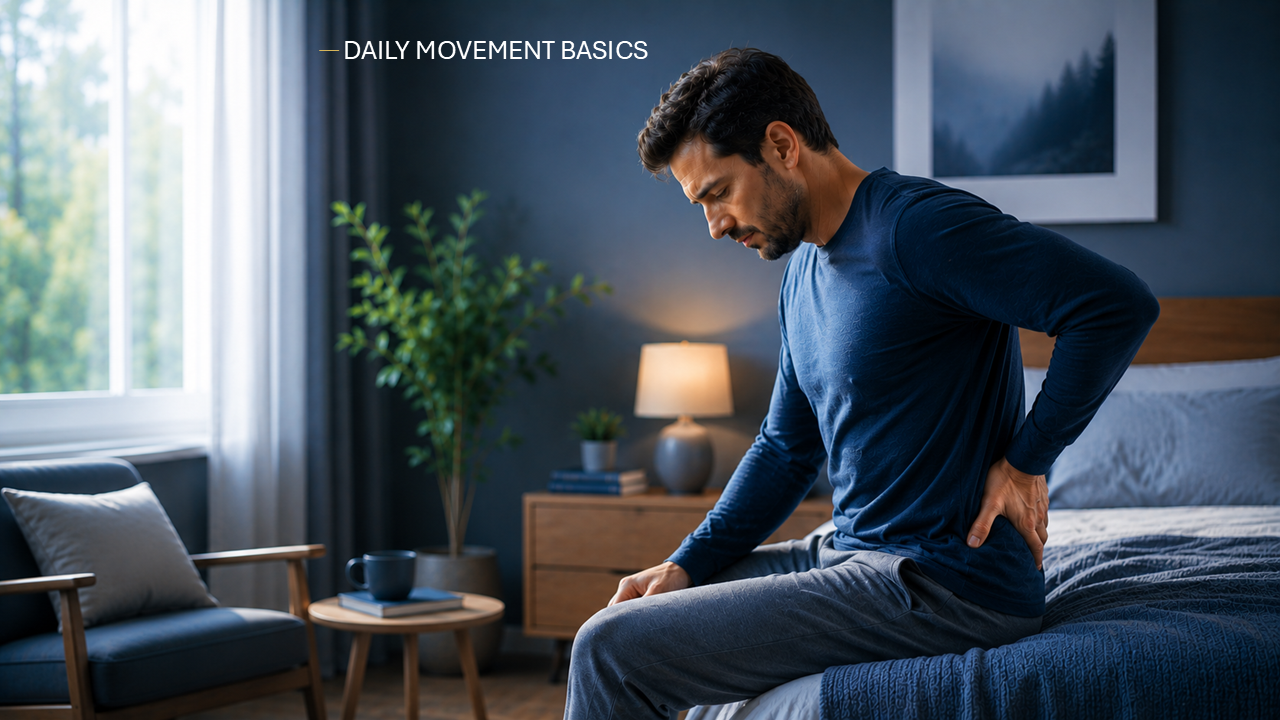
Low back pain can make normal things—sitting, sleeping, bending, lifting, driving, and getting out of bed—feel unpredictable. This guide gives you a 7-day plan to calm symptoms and rebuild confidence. If you want a full evaluation, start with Low Back Pain Treatment. If pain travels down the leg, also read Sciatica Treatment and Herniated Disc vs. Muscle Strain.
- Mild soreness can be okay; sharp, spreading, or worsening pain is not
- Your back should feel the same or better the next day
- Progress by adding one thing at a time: time, range, or load
Educational only. Not medical advice. Seek urgent care for severe/worsening symptoms or red flags.
Start Here: The 3 Rules That Make This Plan Safe
Use these rules before you worry about perfect posture, perfect exercises, or perfect lifting form.

You should feel better, the same, or only mildly sore the next day. If you are worse for 24–48 hours, scale back.
Don’t wait until sitting, standing, or lying down becomes miserable. Change early and often.
For the first week, avoid surprise twisting, heavy awkward lifts, and “test it” movements.
Not sure what kind of low back pain pattern you have? Start with Low Back Pain in Logansport, IN: 7 Common Causes or compare Herniated Disc vs. Muscle Strain.
The Big 3: How to Sit, Sleep, and Lift
These are the three daily inputs that usually make or break the first week.
1) Sitting with low back pain
- Use a small lumbar support or rolled towel if it feels better.
- Keep feet supported and avoid sitting on one leg or twisting for long stretches.
- Take a 30–60 second movement break every 20–30 minutes.
- If sitting is the main trigger, read: Best Desk Setup for Neck Pain for workstation mechanics that also help the spine.
2) Sleeping with low back pain
- Side sleeping: place a pillow between the knees.
- Back sleeping: place a pillow under the knees.
- Avoid sleeping twisted with one hip hiked up for hours.
- If leg symptoms are involved, see: Best Sleeping Positions for Sciatica.
3) Lifting with low back pain
- Keep the object close to your body.
- Brace gently before the lift—not a max-effort breath hold.
- Avoid twisting while loaded. Turn your feet instead.
- Use a smaller range and lighter load for one week, then progress gradually.
- If the pain started from work or lifting, read: Lifting Injury at Work: Strain vs. Disc vs. SI Joint.
The Practical 7-Day Low Back Pain Plan
The goal is not to “fix everything” in one week. The goal is to calm the system, reduce fear, and build a repeatable baseline.
| Day | Focus | Time | Goal |
|---|---|---|---|
| Day 1 | Calm + walk | 5–15 min | Reduce threat and find safe positions |
| Day 2 | Sitting reset | All day | Break the sitting flare cycle |
| Day 3 | Sleep setup | Night routine | Wake up less irritated |
| Day 4 | Gentle strength | 10–15 min | Reintroduce controlled motion |
| Day 5 | Lifting practice | 10 min | Rebuild confidence with light loads |
| Day 6 | Walking + mobility | 10–25 min | Build tolerance without flaring |
| Day 7 | Review + progress | 10 min | Decide what to increase next |
Day 1 — Calm the System
Pick two positions that reduce symptoms and take 1–3 short walks.
- Walk 5–10 minutes if tolerated
- Try side-lying with pillow between knees
- Avoid testing painful end ranges repeatedly
Day 2 — Fix the Sitting Pattern
Keep sitting from becoming the main irritant.
- Use lumbar support if helpful
- Stand or walk for 30–60 seconds every 20–30 minutes
- Drive with hips level and wallet out of back pocket
Day 3 — Improve Sleep Setup
Your morning symptoms tell you a lot.
- Side: pillow between knees
- Back: pillow under knees
- Use the setup that helps you wake up same or better
Day 4 — Add Gentle Strength
Start small. The goal is control, not intensity.
- Glute bridges in a pain-safe range
- Bird dog or dead bug variation if tolerated
- Stop if symptoms spread or sharpen
Day 5 — Practice Light Lifting
Rebuild confidence with a light, predictable object.
- Keep load close
- Brace gently
- Turn your feet instead of twisting
Day 6 — Build Walking Tolerance
Walking often helps low back pain when the dose is right.
- Walk 10–25 minutes total, split if needed
- Stay below the flare threshold
- Use shorter steps if long strides irritate symptoms
Day 7 — Review and Choose One Progression
Only increase one thing next week.
- Add 5 minutes walking OR 1 set of strength
- Do not add time, load, and range all at once
- If worse next day, return to the prior level
Flare-Day Swap
Use this if you wake up noticeably worse.
- Cut walking time in half
- Use only gentle position changes and short walks
- Skip lifting practice until symptoms stabilize
If symptoms are traveling down the leg: read Sciatica vs. Piriformis Syndrome and Herniated Disc & Sciatica: What’s Normal, What’s Not, and What Helps. If you want an exam-guided plan, schedule here.
How to Progress After 7 Days
Week 2 is where most people either build momentum or accidentally overdo it. Progress one variable at a time.
Progression recipe
- Add 5 minutes to walking OR add 1 set of strength — not both.
- Keep lifting light until next-day symptoms are consistently stable.
- If pain spreads farther down the leg, scale back and get evaluated.
When conservative care makes sense
Conservative care often makes sense when symptoms behave mechanically, improve with position changes, and are not paired with red flags. Care may include chiropractic adjustments, movement-based rehab, soft tissue work, and, when appropriate, Spinal Decompression.
If you’re not sure what’s driving it
Low back pain can come from joints, muscles, discs, nerves, hips, or repeated load patterns. These guides can help you self-sort: Low Back Pain: 7 Common Causes, Disc Herniation vs. Bulge vs. Degeneration, and Herniated Disc Red Flags.
When to Worry (Red Flags)
Skip the 7-day plan and get urgent evaluation if any of these are present.
- Loss of bowel or bladder control or saddle numbness
- Severe or worsening leg weakness, foot drop, or trouble walking
- Major trauma, fall, accident, or injury with severe pain
- Fever, unexplained illness, or pain that feels non-mechanical
- Pain that is rapidly worsening despite reducing activity
If you’re unsure, start with Contact & Location and we’ll guide you.
Low Back Pain Sitting, Sleeping, and Lifting FAQs
Quick answers—including when to worry.
Leave a Reply