Tag: Decision Guide

Comparison-style guides to help you choose the right next step (what’s normal vs not, what to try first, and when to get checked).

  • Custom Orthotics vs. Over-the-Counter Inserts: A Clear Comparison (Who Wins and Why)

    Custom Orthotics vs. Over-the-Counter Inserts: A Clear Comparison (Who Wins and Why)

    CUSTOM ORTHOTICS · DECISION GUIDE · LOGANSPORT, IN

    Evidence-informed, non-salesy guidance We consider gait + shoes + load Clear “who benefits / who doesn’t” rules

    Custom Orthotics vs. Over-the-Counter Inserts: A Clear Comparison (Who Wins and Why)

    Both can help — but they solve different problems. Match the insert to the job (and the shoe).

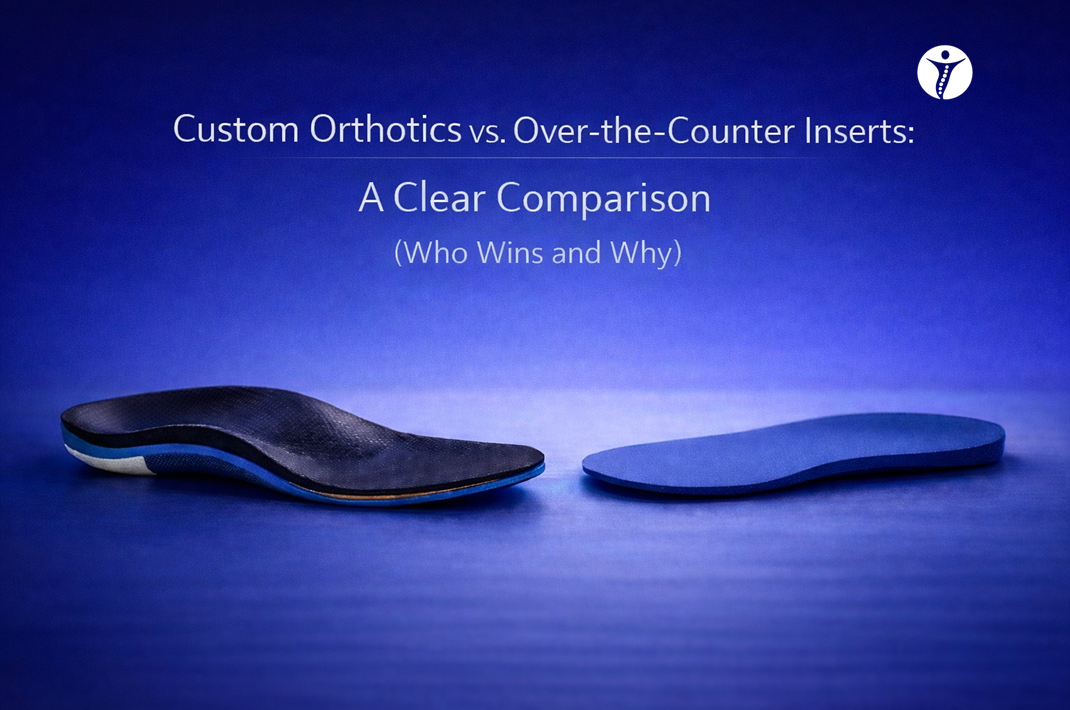
    Infographic comparing custom orthotics and over-the-counter inserts, including best use cases, pros/cons, and decision rules.
    Image 1: A clear comparison—who wins, why, and what to do first.
    OTC inserts often win for comfort + mild support
    Custom orthotics win when symptoms repeat despite OTC/shoe changes
    The shoe matters as much as the insert

    If you’re deciding between a $30 insert and custom orthotics, you’re asking the right question: “What actually fits my problem?” For the service overview, start with Custom Orthotics. If your main issue is foot or heel pain, also see Foot & Ankle Pain and Plantar Fasciitis Treatment.

    • Quick answer + comparison table + decision rules
    • Break-in expectations (what’s normal vs not)
    • Clear “when to worry” guidance

    Educational only. Not medical advice. Seek urgent care for severe/worsening symptoms or red flags.

    Quick Answer (If You Only Read One Section)

    OTC inserts are usually enough when you need comfort and mild support and symptoms improve quickly. Custom orthotics are usually worth it when symptoms are recurring, you’ve already tried OTC more than once, or your workload (work/sport) keeps re-triggering the same pattern.

    Supporting visual reinforcing decision rules for choosing between OTC inserts and custom orthotics, emphasizing matching the insert to the shoe and symptoms.
    Image 2: Quick answer—match the insert to the job (and the shoe).

    Rule of thumb (simple and honest)

    If you’ve tried a reasonable OTC insert and better shoes and you still flare repeatedly (or can’t build tolerance), custom orthotics become the higher-value step because they’re built around your mechanics + your shoe + your goals.

    Comparison Table (Fast, Skimmable)

    Not everyone needs custom. Not every OTC insert is a good match. This table keeps it simple.

    Feature OTC Inserts Custom Orthotics
    Goal Comfort + mild support Targeted mechanics/load strategy
    Customization Limited (generic shapes) Matched to your foot + gait + symptoms
    Best for First-time flare or mild recurring issues Repeatable flare pattern, stubborn symptoms, higher demands
    Shoe match Often the limiting factor Built with your footwear and use-case in mind
    Break-in Usually faster Usually more structured (progressive)
    Durability Variable Typically higher (depends on use)
    Risk of “wrong match” Higher if you guess arch height/stiffness Lower with exam-guided selection and adjustment
    Cost/value Lower upfront Higher upfront; higher value when it solves recurring pattern

    Important (and rarely said): “Neither wins if the shoe is wrong.”

    If your shoe is too narrow, too low-volume for the insert, too flexible, or too worn out, the best orthotic in the world won’t feel right. The insert has to match the shoe.

    Who Should Choose Which (Decision Rules)

    Use this section to self-sort honestly—then decide what’s worth your time and money.

    1

    OTC is usually enough if…

    Symptoms are mild, first-time, or improve quickly with better shoes and a reasonable insert.

    Green signs: better within 7–14 days, next-day soreness settles, no repeated flare pattern.

    2

    Custom is usually worth it if…

    You have a repeatable flare pattern (work/sport), or you’ve already tried OTC (more than once) and symptoms keep returning.

    Green signs: same hotspot flares, tolerance won’t build, mechanics clearly matter.

    3

    Neither “wins” if…

    The problem isn’t primarily mechanics/load (or there’s a red-flag pattern).

    Examples: significant swelling/bruising, suspected stress fracture, worsening numbness/weakness, systemic symptoms.

    What custom orthotics actually do (the honest version)

    Orthotics can change how load is distributed and how your foot interacts with the ground and shoe. That can reduce repeated tissue irritation and make walking/running/work more tolerable. They work best when paired with a plan (strength + load progression + shoe strategy).

    Fit, Comfort, and Break-In (What’s Normal vs Not)

    This is the section most people wish they had before buying anything.

    Normal early sensations

    • Mild “new pressure” under arch or heel
    • A short adjustment window as your feet adapt
    • Comfort improves as shoe + insert pairing improves

    Not normal (scale back and reassess)

    • Sharp pain, worsening symptoms, or swelling that increases
    • Numbness/tingling that starts or worsens
    • New pain in a totally different hotspot that persists

    Read next: Orthotics Break-In Schedule: What’s Normal, What’s Not.

    Quick shoe checklist (high impact)

    • Heel counter: stable (not collapsing)
    • Width/volume: enough room for the insert without squeezing
    • Midsole: not completely worn out
    • Use-case match: work shoe vs running shoe vs casual shoe

    What to Do First (Without Guessing)

    A simple ladder that avoids wasted money and repeated flare-ups.

    Step 1: Fix the shoe fit (today)

    • Choose a shoe with enough width and volume for an insert
    • Replace worn-out shoes that have “collapsed” support

    Step 2: Try a reasonable OTC insert for 7–14 days

    • Track next-day response (better/same/mild soreness = okay)
    • If symptoms improve and stay improved, you likely don’t need custom

    Step 3: If symptoms repeat (or you’ve tried OTC twice)

    • Consider an exam-guided plan + custom orthotics matched to your mechanics
    • Start here: Custom Orthotics

    Common mistakes (quick fixes)

    • Buying the “squishiest” insert and expecting it to control mechanics
    • Using inserts in the wrong shoe (too narrow/low volume)
    • Switching too fast without a break-in period
    • Expecting inserts to replace strength + load progression

    Want the Right Choice for Your Feet and Shoes?

    We’ll evaluate gait, foot mechanics, and symptoms—then tell you exactly what makes sense (and what doesn’t).

    When to Worry (Red Flags)

    Get checked promptly if any of these are true.

    • Unable to bear weight or rapidly worsening pain
    • Significant swelling/bruising after a twist/fall
    • Hot/red joint with fever or systemic symptoms
    • Spreading numbness/weakness or severe nerve symptoms
    • Pain that is worsening day-to-day despite reducing activity

    If you’re unsure, start with Contact & Location and we’ll guide you.

    Orthotics vs. Inserts FAQs

    Quick answers—including “when to worry.”

    Are custom orthotics worth it?
    They can be—especially if symptoms keep returning despite good shoes and reasonable OTC inserts. Custom is most valuable when a repeatable mechanics/load pattern needs a targeted solution.
    When are OTC inserts enough?
    Often for mild comfort/support needs, first-time flare-ups, or when symptoms improve quickly with better shoes + a reasonable insert.
    Can OTC inserts make things worse?
    Sometimes. The wrong stiffness, arch height, or shoe match can increase pressure and irritate tissues. If symptoms worsen over 24–48 hours or you develop numbness/tingling, stop and reassess.
    Do I need orthotics forever?
    Not always. Some people use them long-term for work/sport demands; others use them as a bridge while strength, tolerance, and footwear strategy improve.
    How long does it take to adjust?
    Most people use a short break-in period. Mild new pressure can be normal; sharp pain, worsening symptoms, or numbness/tingling is not.
    What shoe should I use?
    The shoe matters as much as the insert. A stable heel counter, adequate width, and enough internal volume usually improves comfort and results.
    When should I worry and get checked?
    Get checked if you can’t bear weight, have rapidly worsening swelling/bruising, the foot is hot/red with fever, pain worsens daily, or you have spreading numbness/weakness.
    What’s the best next step if I’m not sure?
    Start with better shoes and a reasonable OTC insert for 7–14 days and track next-day response. If symptoms keep returning or you’ve tried OTC twice, an exam-guided custom plan is often the smarter step.

  • Cracking vs. Adjusting: What’s the Difference (and Why It Matters)

    Cracking vs. Adjusting: What’s the Difference (and Why It Matters)

    CHIROPRACTIC ADJUSTMENTS · DECISION GUIDE · LOGANSPORT, IN

    Evidence-informed, conservative care Exam-guided, targeted technique selection Clear safety + “when not to crack” rules

    Cracking vs. Adjusting: What’s the Difference (and Why It Matters)

    They can sound similar. The intent, specificity, and safety process are not.

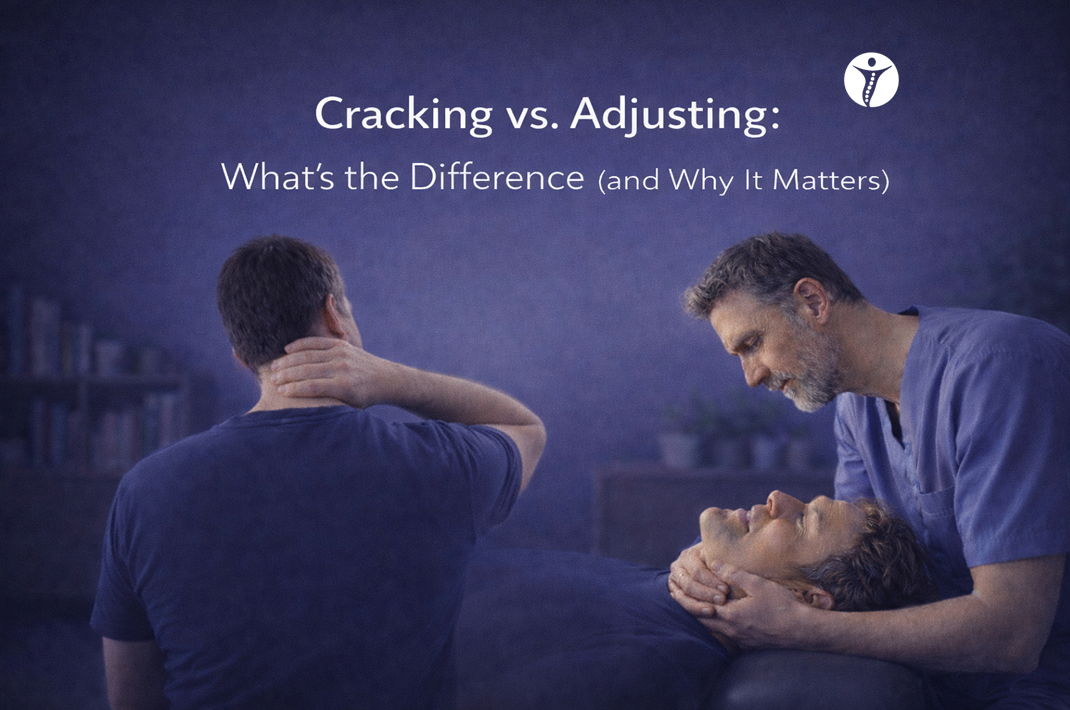
    Infographic comparing self-cracking and chiropractic adjustments, highlighting intent, specificity, screening, and decision rules.
    Image 1: Same sound, different intent—screening and specificity matter.
    Cracking is usually non-specific sensation relief
    Adjusting is targeted and chosen after an exam + screening
    If you “need” to crack often, treat the driver—not the sound

    If you’ve ever thought, “I just need to crack my back/neck,” you’re not alone. The key question is whether you’re getting temporary relief from a sensation, or addressing the reason you keep getting stiff and sore. For the full safety overview, see Chiropractic Adjustment: What It Helps, What to Expect, and Safety.

    • Quick answer + comparison table
    • When cracking becomes a clue (and what to do instead)
    • Clear “when to worry” safety guidance

    Educational only. Not medical advice. Seek urgent evaluation for severe/worsening symptoms or red flags.

    The Quick Answer

    Cracking is usually you chasing a sensation of relief. An adjustment is a specific, targeted input chosen after an exam, with safety screening and technique selection. The sound isn’t the goal.

    Supporting visual reinforcing that frequent self-cracking is a clue to address posture, strength, load, or nerve irritation rather than chasing the pop.
    Image 2: If you feel like you “need” to crack often, treat the driver—not the sound.

    Three differences that matter

    • Intent: cracking chases relief; adjusting targets function and irritation
    • Specificity: cracking is “whatever pops”; adjusting is targeted
    • Screening: adjusting includes history + exam + technique choice

    Comparison Table (Fast, Skimmable)

    Same sound sometimes. Different process.

    Feature Cracking (self / “popping”) Chiropractic adjustment
    GoalFeels better / less pressure right nowRestore targeted motion + reduce irritation safely
    SpecificityUsually non-specific (whatever pops)Specific joint(s) based on exam findings
    ScreeningNoneHistory + exam; we look for red flags first
    Technique selectionOne approach (force/angle varies)Technique matched to your body, comfort, and condition
    Best forTemporary stiffness sensationMechanical patterns + a plan that holds up
    RiskHigher if repeated, especially neck twistingLower when exam-guided and appropriately selected

    Key point

    The sound (“crack”) is not the goal. The goal is improved motion, reduced sensitivity, and a plan that holds up between visits.

    Why the Difference Matters

    Here’s why “just cracking it” can keep you stuck in a loop.

    1) Cracking can mask the driver

    Many people crack because the area feels tight. But tightness can come from posture, stress, overuse, strength imbalance, or nerve irritation. The fix is usually a better plan, not more popping. For desk-related patterns, see Best Desk Setup for Neck Pain.

    2) You can become “pop dependent”

    If you feel like you need to crack multiple times per day, that’s a clue your system is irritated or you’re repeatedly exceeding tolerance. The goal is to reduce the need over time.

    3) Neck self-cracking is the one we’re most cautious about

    Repeated twisting and end-range neck manipulation is not something we recommend. If you have headaches, dizziness, arm tingling, or symptoms that feel “nerve-y,” get evaluated. See: Neck Pain with Arm Tingling: Pinched Nerve vs. Muscle.

    4) Lasting change requires a plan

    Adjustments can help, but long-term results usually depend on load management, strength, posture, sleep, and recovery. If you want the visit-frequency framework, see How Many Chiropractic Adjustments Do I Need?

    When Cracking Becomes a Clue (Not a Solution)

    Use these patterns to decide what to do instead of chasing pops.

    If you crack after sitting

    • Usually a posture + movement “stiffness” pattern
    • Try: brief movement breaks, gentle mobility, and better desk setup

    If you crack before workouts

    • Often a warm-up/tolerance issue
    • Try: warm-up mobility + build training volume gradually (don’t spike)

    If you crack your neck daily

    Do this instead (simple ladder)

    • Step 1: reduce end-range twisting and repeated “testing”
    • Step 2: add small movement breaks (2–3 minutes) through the day
    • Step 3: build strength/tolerance so stiffness doesn’t keep returning
    • Step 4: get evaluated if it’s frequent or symptoms are changing

    Neck Safety (A Calm, Clear Rule)

    Don’t fear your neck—just don’t repeatedly crank it to end range.

    • Avoid repeated end-range twisting and aggressive self-manipulation
    • If you have dizziness, escalating headaches, arm tingling, or weakness—get evaluated
    • If headaches are your main issue, see When to Worry About a Headache

    Want Clarity and a Plan That Holds?

    We’ll screen for red flags, identify the driver, and choose the safest technique—then build a plan that reduces the need to crack over time.

    When to Worry (Red Flags)

    Skip cracking and seek urgent evaluation if any of these are present.

    • Severe/worsening weakness in arm or leg
    • Loss of bowel/bladder control or saddle numbness
    • Fever with spinal pain
    • Major trauma (fall, car accident, injury)
    • Worst headache of your life, chest pain, stroke-like symptoms

    If you’re unsure, start with Contact & Location and we’ll guide you.

    Cracking vs. Adjusting FAQs

    Quick answers—including “when to worry.”

    Is cracking your back the same as a chiropractic adjustment?
    No. Cracking is usually non-specific sensation relief. An adjustment is targeted and chosen after an exam with safety screening.
    Is the cracking sound bad?
    Usually not. The sound is often gas releasing in the joint. The sound isn’t required and isn’t the goal.
    Why does cracking feel good temporarily?
    It can temporarily change joint pressure and reduce stiffness sensation—but may not address posture, strength, workload, or nerve irritation.
    Is it safe to crack your own neck?
    Repeated end-range neck self-cracking isn’t recommended. If you feel you need it often, it’s smarter to get evaluated for the driver.
    Can I get adjusted without hearing a crack?
    Yes. The sound isn’t required. Technique selection depends on your exam, comfort, and what’s safest for your situation.
    What if I feel like I need to crack constantly?
    That’s usually a clue (posture/load/stress/strength imbalance) rather than a solution. The goal is a plan that reduces the need over time.
    When should I worry and seek urgent care?
    Urgent evaluation is needed for severe/worsening weakness, bowel/bladder changes, saddle numbness, fever with spinal pain, major trauma, chest pain, stroke-like symptoms, or the worst headache of your life.
    How do I know if I need an adjustment or something else?
    If symptoms are mechanical and there are no red flags, adjustments may help as part of a plan. If symptoms radiate, worsen, or feel nerve-y, an exam is the safest next step.

  • Do You Need Imaging for a Work Injury? A Clear MRI Decision Guide

    Do You Need Imaging for a Work Injury? A Clear MRI Decision Guide

    WORK & LIFTING INJURIES · MRI DECISION GUIDE · LOGANSPORT, IN

    Evidence-informed, conservative-first guidance Clear red flags + timelines (no fear) Image when it changes decisions

    Do You Need Imaging for a Work Injury? A Clear MRI Decision Guide

    Most work injuries don’t need an MRI right away—but some do. This guide shows you which is which.

    Flowchart showing when imaging is needed after a work injury based on red flags, timeline, and symptom progression.
    Image 1: A simple decision path—red flags, timeline, and when imaging changes the plan.
    Red flags → image urgently / medical evaluation
    No red flags + improving → conservative plan first
    MRI is best when it changes the plan, not just labels it

    Imaging can be valuable—but it’s not always the first best step. Most strains/sprains improve with the right plan and smart work modifications. If your injury is work-related, start with Work & Lifting Injuries. If symptoms involve your low back, see Low Back Pain Treatment.

    • Clear “image now” red flags
    • Timelines that actually match real recovery
    • Simple next steps if you’re unsure

    Educational only. Not medical advice. Seek urgent care for severe/worsening symptoms or red flags.

    Quick Answer (The Simple Rule)

    Most work injuries do not need an MRI right away. Imaging is most important when there are red flags, progressive neurologic symptoms, suspected fracture, or when the result will change decisions.

    Supporting visual reinforcing imaging timelines, red flags, and conservative-first guidance for work injuries.
    Image 2: Most cases improve with the right plan—image sooner only when it changes decisions.

    Image sooner if…

    • There’s progressive weakness or worsening numbness
    • You can’t bear weight or there’s a suspected fracture
    • There are bowel/bladder changes or saddle numbness
    • Severe trauma, rapidly worsening pain, or systemic symptoms

    Conservative plan first if…

    • No red flags
    • Symptoms are stable or improving week-to-week
    • Function is gradually returning (less guarding, better motion)

    Red Flags (Image Now / Urgent Evaluation)

    These aren’t common—but they matter. If any are present, err on the side of safety.

    • Progressive weakness (foot drop, grip loss, can’t raise arm/leg like before)
    • Loss of bowel/bladder control or saddle numbness
    • Severe trauma (fall from height, major accident) or suspected fracture
    • Fever with spinal pain, hot/red swollen joint, or feeling very unwell
    • Rapidly worsening symptoms, or severe night pain that keeps escalating

    If you’re unsure, start with Contact & Location and we’ll guide you to the safest next step.

    Timeline: When Imaging Becomes More Useful

    Imaging is most helpful when it changes the decision-making—not when it just adds labels.

    0–2 weeks (early phase)

    • Most strains/sprains are treated the same early: calm irritation + restore motion
    • MRI often does not change the plan if there are no red flags
    • Watch for: improving motion, fewer spikes, better sleep

    2–6 weeks (rebuild phase)

    • If you’re improving, keep progressing (this is where results compound)
    • If you’re stuck (no progress) or worsening, consider re-evaluation and imaging discussion

    6+ weeks (persistent limitation)

    • Imaging is more likely to change decisions if function is still limited
    • Especially if symptoms are nerve-y, strength is not returning, or pain is worsening

    Progress markers that matter more than “pain today”

    • You move more freely day-to-day
    • Fewer “gotcha” spikes
    • Sleep is improving
    • Work tolerance is improving (even with modifications)

    When Imaging Helps (and When It Often Doesn’t)

    A simple table that keeps you out of “MRI just to see” traps.

    Imaging helps when… Imaging often doesn’t help when…
    • There are red flags or suspected fracture
    • There’s progressive neurologic deficit
    • Symptoms are not improving over a reasonable timeline
    • Considering injections/surgery and imaging will guide decisions
    • Typical strain that’s improving week-to-week
    • Early non-specific pain without red flags
    • Imaging is mainly for reassurance, not a decision change
    • Findings are likely incidental and may increase worry

    High-trust statement

    We’re not anti-imaging—we’re pro-right-timing. The best time to image is when the result changes your next decision.

    MRI vs X-ray vs CT (Simple)

    Here’s the difference in plain language.

    X-ray

    Best for bones—fracture suspicion, major structural concerns, or certain joint issues.

    MRI

    Best for soft tissue—discs, nerves, ligaments. Most useful when symptoms are not improving, neurologic deficits are present, or results change decisions.

    CT

    Best for detailed bone imaging—sometimes used for complex fractures or when MRI isn’t possible.

    MRI Words Explained (Don’t Panic)

    Many MRI findings are common—even in people without pain. The key is whether they match your symptoms and exam.

    Bulge vs herniation vs degeneration

    These terms describe what the disc looks like—not how you’ll feel. A bulge can be painless; a small herniation can be painful; and degeneration is common with age. Read next: Disc Herniation vs. Bulge vs. Degeneration: What MRI Words Actually Mean.

    “Tear” language

    Imaging reports often use “tear” terms that sound scary. The real question is whether it matches your symptoms and function—and what your next best step is.

    Best mindset

    Imaging should be used to guide decisions—not to label you as “broken.” Your symptoms + exam drive the plan.

    What to Do First (Without Guessing)

    A simple action ladder that works for most non-red-flag work injuries.

    Step 1: Reduce the spike (work modifications)

    • Temporarily avoid the exact movement that triggered the flare
    • Use shorter bouts and better positions rather than “powering through”

    Step 2: Restore safe motion

    • Gentle range of motion in pain-safe directions
    • Stop repeatedly “testing” the painful movement

    Step 3: Rebuild tolerance (the part that prevents re-injury)

    Step 4: Recheck milestones and decide on imaging if stalled

    Want a Clear Answer Fast?

    We’ll evaluate the driver, screen for red flags, and tell you whether imaging makes sense now—or what to do first.

    Work Injury Imaging FAQs

    Quick answers—including “when to worry.”

    Do I need an MRI right away after a work injury?
    Usually not. Most strains and mechanical flare-ups improve with the right plan. Imaging matters most when there are red flags, progressive neurologic symptoms, suspected fracture, or when results change decisions.
    When do I need imaging urgently?
    Urgent evaluation is recommended for progressive weakness, bowel/bladder changes, saddle numbness, severe trauma, suspected fracture, fever with spinal pain, or rapidly worsening symptoms.
    What’s the difference between MRI and X-ray?
    X-rays show bones and help rule out fractures. MRI shows soft tissue (discs/nerves/ligaments) and is most useful when it changes the plan.
    Will an MRI change my treatment?
    Sometimes. It’s most likely to change decisions when symptoms aren’t improving, when neurologic deficits are present, or when injections/surgery are being considered. Early strains often improve without it.
    If my MRI shows a bulge, should I panic?
    Not necessarily. Many findings are common even in people without pain. The key is whether findings match your symptoms and exam. See this guide.
    How long should I wait before considering imaging?
    If there are no red flags, a conservative plan is often tried first. Imaging becomes more useful if you’re not improving over a reasonable timeline or symptoms are worsening.
    Can I keep working after a work injury?
    Often yes—with smart modifications. The goal is to stay active in safe ranges while symptoms calm and tolerance rebuilds. If you’re worsening or have red flags, get evaluated.
    When should I worry and get checked?
    Get checked urgently for progressive weakness, bowel/bladder changes, saddle numbness, severe trauma, fever with spinal pain, or rapidly worsening symptoms.

  • Tech Neck Treatment: Ergonomics vs. Exercises vs. Chiropractic—What Works Best?

    Tech Neck Treatment: Ergonomics vs. Exercises vs. Chiropractic—What Works Best?

    POSTURE & TECH NECK · DECISION GUIDE · LOGANSPORT, IN

    Evidence-informed, non-salesy guidance Match the tool to the driver Clear “what to do first” ladder

    Tech Neck Treatment: Ergonomics vs. Exercises vs. Chiropractic—What Works Best?

    All three can help—but they solve different problems. The “best” one depends on what’s driving your symptoms.

    Infographic comparing ergonomics, exercises, and chiropractic care for tech neck, showing what each targets and who benefits most.
    Image 1: Three tools—best results come from matching the tool to the driver.
    Ergonomics reduces load (fastest relief)
    Exercises build tolerance (lasting fix)
    Chiropractic helps when stiffness/irritation is the limiter

    “Tech neck” is usually a load + capacity problem—not a mystery diagnosis. The goal is to reduce neck load, restore motion, and build endurance so your workdays don’t keep resetting you. If your symptoms include arm tingling, start with Neck Pain with Arm Tingling. For service options, see Posture & Tech Neck and Neck Pain Relief.

    • Quick answer + comparison table
    • 3-driver self-test (load vs stiffness vs capacity)
    • Best “combo plan” for most people

    Educational only. Not medical advice. Seek urgent evaluation for severe/worsening symptoms or red flags.

    Quick Answer (What Works Best Most Often)

    Most people do best with ergonomics + exercises. Ergonomics reduces load quickly; exercises build long-term tolerance. Chiropractic can be the bridge when stiffness or irritation is keeping you stuck.

    Supporting visual showing tech neck treatment decision rules: reduce load with ergonomics, build tolerance with exercises, and consider chiropractic when stiffness limits progress.
    Image 2: Start with load reduction, then build capacity—get evaluated if symptoms feel nerve-y.

    Use these simple rules

    • If symptoms flare mainly with sitting/screens and improve with setup changes → Ergonomics first.
    • If symptoms keep returning and you feel weak/deconditioned → Exercises win long-term.
    • If you feel “stuck,” motion is limited, or you can’t get started → Chiropractic can help as a bridge.

    The biggest mistake

    Only doing ergonomics—without building capacity. A better setup reduces load, but endurance and strength keep the problem from returning.

    Comparison Table (Fast, Skimmable)

    Each option has a best use-case. This table keeps it honest.

    Category Ergonomics Exercises Chiropractic
    What it targets Reduces neck load (position + reach) Builds endurance/strength + tolerance Calms irritation + improves motion
    How fast it helps Often same day Days–weeks (compounds) Often fast when mechanical
    Best for Screen-triggered pain, shrugging, reach Recurring patterns, weakness, headaches from load Stuck/stiff patterns, mechanical pain, headache component
    Common mistake Fix setup but never take breaks Too much too soon (flare → quit) Doing care but not changing the driver
    When it’s not enough Symptoms keep returning Severe irritability or nerve-y symptoms If load + capacity aren’t addressed
    First step Screen up + closer + arms supported Small daily endurance drills Exam-guided plan + technique selection

    The 3-Driver Test (Load vs Stiffness vs Capacity)

    Most tech neck is one (or a mix) of these. Match the tool to the driver.

    1

    Load problem

    Clue: pain builds during screen time and improves quickly with better setup.

    Best first tool: ergonomics + breaks.

    2

    Stiffness problem

    Clue: you feel “stuck,” turning/looking up is limited, or headaches feel neck-driven.

    Best first tool: mobility + (sometimes) chiropractic to restore motion.

    3

    Capacity problem

    Clue: you feel fine early, then crash by mid-day; it keeps returning.

    Best first tool: endurance/strength drills (small daily dose).

    Different pathway: nerve-y symptoms

    If you have arm tingling, numbness, weakness, or symptoms past the elbow, don’t just “do more posture.” Start here: Neck Pain with Arm Tingling.

    Ergonomics Plan (What to Do First)

    This is usually the fastest relief because it reduces neck load immediately.

    The “big 3”

    • Screen up: eyes near the top third of the monitor
    • Work close: stop reaching and leaning forward
    • Arms supported: elbows under shoulders; reduce shrugging

    Full setup guide: Best Desk Setup for Neck Pain.

    The break schedule (minimum effective)

    • 30–60 seconds every 20–30 minutes
    • Stand + 3 breaths + 5 chin nods

    Exercise Plan (What to Do First)

    Exercises are how you build tolerance so tech neck doesn’t keep returning.

    Three themes that work

    • Deep neck flexor endurance: gentle chin nod holds (pain-safe)
    • Scapular control: mid/lower trap activation (reduce shrug)
    • Thoracic mobility: extension/rotation in comfortable ranges

    Dose that actually works

    Small daily dose beats occasional long sessions: 2–5 minutes per day, then build. If it flares you for 48 hours, scale down.

    Chiropractic Plan (When It’s Useful)

    Chiropractic can help when stiffness or irritation is keeping you from progressing.

    Chiropractic tends to help most when…

    • You feel “stuck” and motion is limited
    • Symptoms behave mechanically (change with posture/movement)
    • Headaches have a neck component
    • You need a bridge to start the exercise plan without flaring

    What makes it work long-term

    Best outcomes come when care is paired with ergonomics changes and a simple capacity plan. The goal is a plan that tapers as you improve.

    Read next: Cracking vs. Adjusting and What to Expect and Safety.

    The Best Combination Plan (7–14 Days)

    This is the “best of all worlds” approach for most people.

    Day 0–2 (today)

    • Fix screen height + bring work closer
    • Support arms + move mouse closer
    • Start micro-breaks every 20–30 minutes

    Day 3–7 (build consistency)

    • Add 2–3 minutes of endurance drills daily
    • Keep breaks consistent (this is where most people fail)

    Day 7–14 (progress)

    • Increase tolerance gradually (volume before intensity)
    • If you’re still stuck, consider an exam to confirm the driver

    When to book

    • Symptoms persist beyond 2–3 weeks despite setup + breaks
    • It keeps re-flaring with normal workdays
    • You have nerve-y symptoms or worsening headaches

    When to Worry (Red Flags)

    Get evaluated promptly if any of these are true.

    • Progressive weakness or worsening numbness/tingling
    • Severe headache red flags (sudden worst headache, neurologic symptoms)
    • Dizziness/coordination changes that are new or worsening
    • Fever or feeling very unwell with neck pain
    • Major trauma (fall, car accident)

    If you’re unsure, start with Contact & Location and we’ll guide you.

    Want a Plan That Fits Your Workday?

    We’ll identify the driver (load, stiffness, capacity, or nerve irritation) and give you a clear plan—no pressure, no contracts.

    Tech Neck Treatment FAQs

    Quick answers—including “what works best.”

    Which is best for tech neck: ergonomics, exercises, or chiropractic?
    It depends on the driver. Ergonomics reduces load quickly, exercises build tolerance long-term, and chiropractic can help when stiffness/irritation limits progress. Most people do best with ergonomics + exercises, with chiropractic as a bridge when needed.
    How long does tech neck take to improve?
    Many people notice improvement within 1–2 weeks when setup and breaks are consistent. Longer-standing patterns often take longer and improve best with staged progression.
    Can chiropractic help tech neck?
    It can—especially when stiffness and mechanical irritation limit progress. Best results happen when care is paired with ergonomics and a capacity plan.
    Do posture braces help?
    They can be a short-term reminder, but they don’t build capacity. Most people do better with setup changes, breaks, and targeted strengthening.
    What’s the best exercise for tech neck?
    There isn’t one. A strong base is gentle neck endurance + scapular control + thoracic mobility—done consistently in small daily doses.
    How often should I take breaks from screens?
    Minimum effective is 30–60 seconds every 20–30 minutes. More symptomatic people may do 1 minute every 10–15 minutes for a week.
    What if I have arm tingling or numbness?
    That can suggest nerve irritation. If symptoms persist, worsen, or include weakness, get evaluated and see this guide.
    When should I worry and seek urgent evaluation?
    Seek urgent evaluation for progressive weakness, worsening numbness/tingling, severe headache red flags, major trauma, fever, or significant neurologic symptoms.

  • Runner’s Knee vs. Meniscus: How to Tell (and What to Do First)

    Runner’s Knee vs. Meniscus: How to Tell (and What to Do First)

    KNEE PAIN · DECISION GUIDE · LOGANSPORT, IN

    Pattern checks (not guesswork) Clear “when to worry” red flags Conservative first steps that hold

    Runner’s Knee vs. Meniscus: How to Tell (and What to Do First)

    These can feel similar—but the clues (and first step) differ. Use this self-sorter before you guess wrong.

    Infographic comparing runner’s knee and meniscus irritation by pain location, triggers, swelling, and what to do first.
    Image 1: A vs B—location, triggers, swelling, and what to do first.
    Runner’s knee: front/around kneecap + stairs/sitting + volume spikes
    Meniscus: joint-line pain + swelling/catching + twist/deep squat intolerance
    Best next step: reduce spike + choose the right progression

    If your knee hurts with running, stairs, or squats, you’re probably asking: “Is this runner’s knee… or a meniscus problem?” This guide helps you self-sort the pattern, then choose the safest first step. For the service overview, start with Knee Pain Treatment. If stairs are your main trigger, also see Knee Pain on Stairs.

    • 60-second self-check + comparison table
    • What to do first for each pattern
    • Clear “when to worry” guidance

    Educational only. Not medical advice. Patterns overlap—an exam confirms the driver.

    Quick Answer (The Simple Difference)

    Runner’s knee (patellofemoral pain) is usually a front-of-knee / kneecap overload and capacity problem. Meniscus irritation is more likely when pain is at the joint line and paired with swelling or mechanical symptoms (catching/locking).

    Supporting visual reinforcing runner’s knee vs meniscus decision rules and conservative first steps.
    Image 2: Self-sort first—then choose the right progression (don’t guess).

    One rule that prevents most re-flares

    Use the next-day rule: you should feel the same or better the next day (mild soreness is okay). If you swell or worsen, scale down and reassess.

    60-Second Self-Check (Pattern Sorter)

    Answer quickly. You’re looking for the dominant pattern.

    Runner’s knee clue: pain is mostly front/around kneecap (not the joint line).
    Runner’s knee clue: worse with stairs, hills, running volume, or after sitting (“movie sign”).
    Meniscus clue: pain is at the joint line (inside or outside “crease” of knee).
    Meniscus clue: swelling after activity, catching, or pain with twisting/deep squat.
    Red flag clue: knee locks (gets stuck) or gives way repeatedly.
    Red flag clue: large swelling, can’t bear weight, or major trauma.

    Interpretation

    • Mostly runner’s knee clues: treat it like a capacity + load problem (quads/hips + progression).
    • Mostly meniscus clues: treat it like a joint irritation pattern (avoid twists/spikes, restore tolerance).
    • Red flag clues: evaluate sooner.

    Comparison Table (Fast, Skimmable)

    This is the quickest way to self-sort without overthinking it.

    Clue Runner’s Knee (Patellofemoral) Meniscus Irritation Pattern
    Pain location Front/around kneecap Joint line (inside/outside crease)
    Triggers Stairs, hills, sitting-to-standing, volume spikes Twisting, deep squat, pivoting; sometimes stairs too
    Swelling Usually minimal More likely after activity
    Mechanical symptoms Often none Catching/locking more likely
    Best first step Reduce spike + rebuild quads/hips Avoid twist/spike + restore range + graded load
    When to evaluate Persistent, recurrent, or not improving Locking, large swelling, giving way, or persistent mechanical symptoms

    Runner’s Knee Pattern (Patellofemoral Pain)

    This is usually a kneecap load + capacity issue—not a “tear.”

    What it often feels like

    • Front-of-knee ache around kneecap
    • Worse downstairs, hills, or after sitting
    • Often improves after warming up

    Common drivers

    • Running/stairs volume spike (too much too soon)
    • Quad/hip capacity gap (endurance and control)
    • Technique/mechanics: knee “collapse” inward under load

    Big mistake

    Total rest for a week, then going right back to the same volume. A staged progression holds better.

    Meniscus Irritation Pattern

    Keep it calm: “meniscus pain” doesn’t always mean surgery. Many patterns improve conservatively—red flags change the pathway.

    What it often feels like

    • Joint-line pain (inside or outside crease)
    • Swelling after activity
    • Catching, sharp pain with twisting, or deep squat intolerance

    What usually helps first

    • Avoid twisting/pivoting and deep squat spikes temporarily
    • Restore range and reduce swelling
    • Strength in tolerable ranges + graded return

    Evaluate sooner if…

    • True locking (knee gets stuck)
    • Large/recurrent swelling
    • Repeated giving way or inability to bear weight

    What to Do First (Two Ladders)

    Choose the ladder that fits your dominant pattern.

    Runner’s knee ladder

    1. Reduce spike: temporarily reduce hills/stairs/volume for 7–14 days
    2. Quads: isometrics → controlled step-down progression
    3. Hips: glute control + single-leg stability
    4. Return-to-run: gradual volume progression (no sudden jumps)

    Stairs trigger? Read: Knee Pain on Stairs.

    Meniscus ladder

    1. Protect: avoid twisting/pivoting + deep squat spikes early
    2. Restore range: gentle motion + swelling control
    3. Strength: tolerable ranges (progress slowly)
    4. Return: graded reintroduction of squats/running (watch swelling next day)

    If symptoms persist: start with Knee Pain Treatment.

    Next-day swelling rule (high value)

    If your knee swells more the next day, you did too much. Scale volume down and progress more gradually.

    Do I Need Imaging?

    Often not early—if there are no red flags and you’re improving week-to-week.

    • Imaging sooner if true locking, large swelling, inability to bear weight, major trauma, or worsening symptoms.
    • Imaging later if you’re not improving over a reasonable timeline or symptoms keep returning.

    When to Worry (Red Flags)

    Get checked promptly if any of these are present.

    • True locking (knee gets stuck)
    • Repeated giving way or sudden instability
    • Large swelling or rapidly worsening swelling
    • Unable to bear weight or severe worsening pain
    • Fever/hot red joint or feeling very unwell
    • Major trauma (fall, collision)
    • Severe night pain that keeps escalating

    If you’re unsure, start with Contact & Location and we’ll guide you.

    Want a Clear Knee Answer (Not a Guess)?

    We’ll assess motion, swelling, strength, and pattern triggers to confirm the driver—and give you a plan that holds up.

    Runner’s Knee vs Meniscus FAQs

    Quick answers—including imaging and “how to tell.”

    Is runner’s knee the same as patellofemoral pain?
    Yes. Runner’s knee commonly refers to patellofemoral pain—a front-of-knee/kneecap overload pattern often triggered by stairs, hills, and volume spikes.
    How can I tell runner’s knee vs meniscus pain?
    Runner’s knee is often front/around-kneecap pain and worse with stairs or long sitting. Meniscus patterns are more likely with joint-line pain, swelling after activity, catching/locking, and pain with twisting or deep squats. Patterns can overlap—an exam confirms the driver.
    Can a meniscus heal without surgery?
    Many meniscus irritation patterns improve with conservative care and graded strengthening—especially when there is no true locking or severe instability. Persistent mechanical locking or large recurrent swelling should be evaluated.
    Should I stop running if my knee hurts?
    Not always. Many cases improve with smart modifications and gradual return. If swelling, locking, or instability is present, get evaluated.
    Do I need imaging for suspected meniscus pain?
    Often not initially if you’re improving and there are no red flags. Imaging is more important with true locking, large swelling, inability to bear weight, major trauma, or persistent/worsening symptoms.
    Why does it hurt more going down stairs?
    Downstairs requires more eccentric control (braking), increasing kneecap and tendon load—often flaring runner’s knee patterns.
    What’s normal soreness vs a knee injury that needs evaluation?
    Normal soreness is mild and settles within 24–48 hours. Concerning patterns include true locking, repeated giving way, large swelling, inability to bear weight, fever/hot red joint, major trauma, or severe night pain that escalates.
    When should I worry and get checked?
    Get checked promptly for true locking, repeated giving way, large or rapidly worsening swelling, inability to bear weight, fever/hot red joint, major trauma, or worsening symptoms day-to-day.

  • Hip Pain vs. Sciatica vs. Low Back Pain: How to Tell (and What to Do First)

    Hip Pain vs. Sciatica vs. Low Back Pain: How to Tell (and What to Do First)

    HIP PAIN · SCIATICA · LOW BACK · DECISION GUIDE · LOGANSPORT, IN

    Pattern checks (not guesswork) Clear red flags + when to image Conservative first steps for each bucket

    Hip Pain vs. Sciatica vs. Low Back Pain: How to Tell (and What to Do First)

    Same area, different drivers. The best first step depends on where it hurts, what triggers it, and whether symptoms travel.

    Infographic comparing hip pain, sciatica, and low back pain patterns, highlighting location, triggers, and whether symptoms travel below the knee.
    Image 1: Three common patterns—use location, triggers, and “does it travel?” to self-sort.
    Hip pain often = groin/side pain with hip-specific triggers
    Sciatica often = leg symptoms + nerve-y signs (often below knee)
    Low back pain often stays local and changes with posture/movement

    If you’re not sure whether your pain is hip-driven, back-driven, or nerve-driven, you’re not alone—these overlap constantly. This guide helps you self-sort the dominant pattern and choose a safe first step. Service overview links: Hip Pain Treatment, Sciatica Treatment, Low Back Pain Treatment.

    • 60-second self-check + comparison table
    • Three pattern buckets + “what to do first” ladders
    • Clear “when to worry” guidance

    Educational only. Not medical advice. Patterns overlap—an exam confirms the driver.

    Quick Answer (The Biggest Clues)

    Hip pain is often felt in the groin or side of hip and flares with hip-specific tasks (shoes, car, stairs). Sciatica often includes leg symptoms (often below the knee) and may include tingling/numbness/weakness. Low back pain is more often centered in the lumbar area and changes with posture and movement.

    Supporting visual emphasizing that symptoms traveling below the knee often indicates a nerve-driven pattern rather than isolated hip pain.
    Image 2: The biggest clue: symptoms traveling below the knee often points to a nerve pattern.

    One rule that prevents most wrong turns

    If symptoms are traveling below the knee or feel nerve-y (tingling/numbness/weakness), treat it like a nerve pattern first and get evaluated if it’s worsening.

    60-Second Self-Check (3-Way Sorter)

    Answer quickly. You’re looking for the dominant pattern.

    1) Where is it strongest?
    Groin/side hip? Low back? Buttock?
    2) Does it travel below the knee?
    If yes, sciatic/nerve pattern is more likely.
    3) Any tingling, numbness, or weakness?
    If yes, nerve pathway deserves attention.
    4) Worse with sitting?
    Often points toward lumbar/nerve patterns.
    5) Worse putting on socks/shoes or getting in/out of car?
    Often points toward hip-driven patterns.
    6) Worse with cough/sneeze/straining?
    Can point toward nerve irritation in some cases.

    Interpretation

    • Mostly hip clues: groin/side pain + hip tasks trigger it.
    • Mostly nerve clues: travels below knee and/or tingling/numbness/weakness.
    • Mostly low back clues: centered low back pain that changes with movement/posture.

    Comparison Table (Fast, Skimmable)

    This table keeps it simple and prevents “wrong-plan” mistakes.

    Clue Hip Pain Pattern Sciatica Pattern Low Back Pattern
    Common location Groin/side hip (sometimes deep ache) Buttock + leg symptoms (often below knee) Centered low back
    Common triggers Socks/shoes, car, stairs, side sleeping Sitting/bending, certain positions, cough/sneeze sometimes Bending, sitting, standing, lifting
    Does it travel? Often thigh, less often below knee Often below knee Usually stays local (can refer to buttock)
    Nerve-y signs Less common More common (tingling/numbness/weakness) Usually none unless nerve involved
    Best first step Calm hip irritability + restore motion + build strength Stop provocation + positions that centralize + staged return Reduce spike + gentle movement + strength progression
    When to evaluate sooner Severe worsening or inability to bear weight Progressive weakness, bowel/bladder changes, severe nerve symptoms Worsening neuro signs, trauma, systemic illness

    Hip Pain Pattern (Hip-Driven)

    Hip pain is often groin/side pain that’s provoked by hip-specific tasks.

    Common clues

    • Groin pain or deep ache in the hip
    • Side-of-hip pain (especially with side sleeping)
    • Worse with socks/shoes, car in/out, stairs

    Service overview: Hip Pain Treatment.

    What usually helps first

    • Short 7–10 day “calm the spike” window (avoid the worst provokers)
    • Gentle range + walking tolerance
    • Progressive hip/glute strength (pain-safe)

    Night pain? Read: Hip Pain at Night: Best Sleeping Positions.

    Sciatica Pattern (Nerve-Driven)

    Sciatica often includes leg symptoms (often below the knee) and can feel sharp, burning, or electric.

    Common clues

    • Pain traveling into the leg, often below the knee
    • Tingling, numbness, or weakness
    • Often worse with sitting or certain bending positions

    Service overview: Sciatica Treatment.

    What usually helps first

    • Stop repeated provocation (don’t “test” it all day)
    • Walk and use positions that reduce leg symptoms
    • Staged return + strength progression

    Read next: Best Sleeping Positions for Sciatica and Sciatica vs. Piriformis Syndrome.

    Low Back Pain Pattern (Lumbar-Driven)

    Low back pain often stays local and changes with posture, bending, or lifting.

    Common clues

    • Centered low back pain (may refer to buttock)
    • Changes with bending, sitting, standing, lifting
    • Often improves with gentle movement over time

    Service overview: Low Back Pain Treatment.

    What usually helps first

    • Reduce the spike (avoid repeated deep bending early)
    • Gentle movement (short walks) + pain-safe positions
    • Progressive strength and hinge strategy

    Read next: Low Back Pain Causes (and What Helps).

    What to Do First (3 Ladders)

    Pick the ladder that fits your dominant pattern.

    Hip ladder

    1. Calm the spike: avoid the worst hip provokers 7–10 days
    2. Walk: short, frequent walks (tolerance building)
    3. Restore motion: gentle range (no forcing)
    4. Build strength: glute/hip progression

    Sciatica ladder

    1. Stop provocation: avoid positions that worsen leg symptoms
    2. Centralize: choose positions that reduce leg pain (walk often helps)
    3. Stage return: gradual reintroduction of bending/sitting tolerance
    4. Evaluate if worsening or neurologic signs appear

    Low back ladder

    1. Reduce spike: stop repeated painful “tests”
    2. Gentle motion: short walks + pain-safe positions
    3. Strength: progressive trunk/hip strength + hinge strategy
    4. Return: graded return to work/lifting

    Centralization = often a good sign

    If leg symptoms move up and become more local (less traveling), that often suggests you’re moving in the right direction. If symptoms spread farther down the leg, reassess.

    When to Worry (Red Flags)

    Seek urgent evaluation if any of these are present.

    • Progressive weakness (foot drop, worsening leg weakness)
    • Bowel/bladder changes or saddle numbness
    • Fever or feeling very unwell with back/hip pain
    • Major trauma (fall, car accident)
    • Severe night pain that keeps escalating
    • Rapidly worsening symptoms day-to-day

    If you’re unsure, start with Contact & Location and we’ll guide you.

    Want a Clear Answer (Not a Guess)?

    We’ll confirm the driver (hip vs back vs nerve), calm irritation, and build a step-by-step plan that holds up.

    Hip vs Sciatica vs Low Back FAQs

    Quick answers—including the “does it travel?” clue.

    How do I know if it’s sciatica?
    Sciatica often includes pain traveling into the leg (especially below the knee) and may include tingling, numbness, or weakness. Symptoms are often provoked by certain positions (sitting/bending) and may improve with positions that reduce nerve irritation.
    Can hip pain mimic sciatica?
    Yes. Hip joint or glute/tendon pain can refer into the thigh and feel “sciatica-like,” but true sciatica more often includes nerve symptoms and pain traveling below the knee.
    How do I tell hip pain vs low back pain?
    Hip pain is often felt in the groin/side hip and is provoked by hip-specific tasks (car, shoes, stairs). Low back pain is more often centered in the lumbar area and changes with bending, sitting, or standing.
    What’s the safest first step if I’m not sure?
    Start with a short 7–10 day “calm the spike” window: reduce provoking positions, keep gentle walking, and avoid repeated testing. If symptoms travel below the knee, include tingling/numbness, or worsen, get evaluated.
    Do I need imaging?
    Often not initially if there are no red flags and symptoms are improving. Imaging is more important with major trauma, progressive weakness, bowel/bladder changes, fever, severe night pain that escalates, or persistent/worsening symptoms.
    What sleeping positions help sciatica?
    Many people do best with side-lying with a pillow between knees or on the back with knees supported. The best position is the one that reduces leg symptoms and allows sleep.
    How long does it take to improve?
    Many mechanical patterns improve over a few weeks with the right plan. Nerve-driven symptoms can take longer and improve best with staged progression and avoiding repeated provocation.
    When should I worry and get checked urgently?
    Seek urgent evaluation for progressive weakness, new bowel/bladder changes or saddle numbness, fever, major trauma, severe/worsening night pain, or significant neurologic symptoms.
  • Rotator Cuff vs. Impingement vs. Frozen Shoulder: How to Tell (and What to Do First)

    Rotator Cuff vs. Impingement vs. Frozen Shoulder: How to Tell (and What to Do First)

    SHOULDER PAIN · DECISION GUIDE · LOGANSPORT, IN

    Evidence-informed, conservative care We check motion + strength + scapula mechanics Clear “what to do first” guidance

    Rotator Cuff vs. Impingement vs. Frozen Shoulder: How to Tell (and What to Do First)

    They’re commonly confused — but the best first step differs.

    Decision guide infographic comparing rotator cuff irritation, impingement-type pain, and frozen shoulder with key signs and what to do first.
    Image 1: A quick decision guide to narrow which bucket fits best and what to do first.
    Frozen shoulder: stiffness + progressive loss of motion (blocked)
    Impingement-type: painful arc with overhead activity + mechanics/load
    Rotator cuff: tendon overload—pain with lifting/ lowering + common night pain

    If you’ve been told “it’s probably your rotator cuff,” you’re not alone. Use these pattern checks to narrow what’s most likely, then pick the safest first step. For the broader overview, see Shoulder Pain: 7 Common Causes and the care page Shoulder Pain Treatment.

    • Quick answer + table + first-step plan
    • Designed for lifters, workers, and busy humans
    • Clear “when to worry” red flags included below

    Educational only. Not medical advice. Seek urgent care for severe/worsening symptoms or red flags.

    Quick Answer (If You Only Read One Section)

    Frozen shoulder is dominated by stiffness and a “blocked” feeling. Impingement-type pain often has a painful arc with overhead activity. Rotator cuff irritation behaves like tendon overload—pain with lifting/lowering and common night pain.

    Supporting shoulder visual used alongside the decision guide to reinforce the comparison and first-step plan.
    Image 2: Supporting visual for the comparison and action ladder.

    Best first step (simple rule)

    If range of motion is progressively disappearing, treat it like a stiffness pathway. If motion is mostly there but overhead is cranky, treat it like mechanics + load. If lifting/lowering is painful (and night pain is common), treat it like tendon overload.

    Comparison Table (Fast, Skimmable)

    This isn’t a diagnosis — it’s a way to choose the right direction and avoid the wrong plan.

    Feature Frozen Shoulder Impingement-Type Pain Rotator Cuff Irritation
    Dominant feel Stiff + blocked Pinch/painful arc overhead Tendon overload (lift/lower pain)
    Range of motion True loss (esp. external rotation; behind-back) Often available but painful in certain angles Often mostly available; strength tests can hurt
    Classic trigger Reaching behind back; rotating outward Repetitive overhead work; certain angles Lifting away from body; lowering from overhead
    Night pain Common Can happen Common
    Best first step Staged mobility + irritation management Scapula mechanics + mobility + graded strength Load management + tendon-focused strengthening
    What NOT to do Force sharp stretches Keep testing painful overhead reps daily Keep pressing through pain without modifying load

    Quick Pattern Checks

    Use these to narrow the bucket — then confirm with an exam if symptoms persist.

    1

    Frozen Shoulder (stiff + blocked)

    Key sign: you feel “stuck,” especially rotating outward and reaching behind your back.

    First step: consistent, low-intensity mobility (not aggressive forcing) + a staged plan.

    2

    Impingement-Type (painful arc)

    Key sign: pain through a slice of the lift (often 60–120°), worse with repeated overhead work.

    First step: scapular mechanics + thoracic mobility + gradual strengthening.

    3

    Rotator Cuff Irritation (tendon overload)

    Key sign: pain/weakness with lifting away from the body and lowering the arm; night pain is common.

    First step: load management + tendon-strength progression + technique cleanup.

    Not sure? Here’s the safest default

    Stop repeatedly forcing painful overhead reps for a week, keep pain-safe motion daily, and choose a plan matched to your best-fit bucket. If you’re losing motion week-to-week, treat it as a stiffness pathway and get evaluated.

    What to Do First (Action Ladder)

    Simple steps you can follow without guessing.

    First 72 hours

    • Reduce the one movement that reliably spikes pain (usually overhead / deep pressing)
    • Keep pain-safe motion (don’t immobilize)
    • Stop “testing” the painful angle multiple times per day

    Next 7–14 days

    • If you suspect rotator cuff overload: bias pulling/upper back work and build pain-safe strength
    • If you suspect impingement-type: add thoracic mobility + scapular control and adjust pressing angles
    • If you suspect frozen shoulder: daily staged mobility without forcing sharp pain

    Weeks 2–6

    • Progress range first, then strength
    • Reintroduce overhead gradually only when tolerance improves
    • For lifting-related issues, read: Lifting Shoulder Pain Fixes

    When imaging is more reasonable

    • Significant trauma + major weakness, deformity, or severe swelling/bruising
    • Progressive loss of motion week-to-week
    • Stalled progress despite a smart plan and good adherence

    Want a Clear Answer Fast?

    We’ll test range of motion, strength, and shoulder blade mechanics to pinpoint the driver and guide your plan.

    When to Worry (Red Flags)

    Get urgent evaluation if any of these are present.

    • Deformity after injury, suspected dislocation/fracture
    • Inability to lift the arm or sudden major weakness after a pop/injury
    • Sudden severe swelling/bruising
    • Fever with a hot/red shoulder
    • Chest pain/shortness of breath or concerning systemic symptoms
    • New numbness/weakness down the arm

    If you’re unsure, start with Contact & Location and we’ll guide you.

    Rotator Cuff vs. Impingement vs. Frozen Shoulder FAQs

    Quick answers—including “when to worry.”

    What’s the easiest sign of frozen shoulder?
    A progressive loss of range of motion—especially external rotation—where the shoulder feels stiff and blocked, not just painful.
    What does impingement-type pain feel like?
    Often a painful arc when lifting the arm, worse with repetitive overhead work. It often improves when mechanics and mobility are addressed.
    How do I know if it’s rotator cuff irritation?
    Often pain with lifting away from the body or lowering from overhead; night pain is common.
    When should I worry about a tear?
    Seek evaluation if you had a sudden injury with a pop, bruising, significant weakness, or you can’t lift the arm. Urgent care is appropriate for deformity or severe swelling.
    Do I need imaging?
    Not always. Many mechanical shoulder problems improve with the right plan. Imaging is more appropriate with major trauma, big weakness, progressive loss of motion, or stalled progress.
    Why is it worse at night?
    Side-sleep compression and poor support can spike symptoms, and some irritation/stiffness patterns increase night pain.
    What’s the best first step if I’m unsure?
    Stop repeatedly forcing painful overhead movement and get an exam that checks motion, strength, and scapular mechanics.
    When should I worry and get urgent care?
    Urgent evaluation is needed for deformity after injury, inability to lift the arm, sudden severe swelling/bruising, fever with a hot/red joint, chest pain/shortness of breath, or new numbness/weakness down the arm.
  • Rib Pain vs. Mid Back Pain: How to Tell the Difference (and What to Do First)

    MID BACK PAIN · DECISION GUIDE · LOGANSPORT, IN

    Rib Pain vs. Mid Back Pain: How to Tell the Difference (and What to Do First)

    One-sided “mid back pain” is often rib-related — and the fix is different.

    Rib joint irritation, thoracic stiffness, and muscle strain can feel similar at first. Use the patterns below to narrow it down and choose the right first step.

    • Quick pattern checks
    • First-step plan (48–72 hours)
    • Clear “when to worry” guidance

    Not Sure Which One You Have?

    We’ll test the rib cage, thoracic spine, and surrounding tissue to find the true driver—then build a plan that fits.

    The 3 Most Common Patterns

    These are the “big three” we see behind rib/mid-back pain complaints.

    1

    Rib joint irritation (near the spine)

    Often sharp, one-sided, and can flare with deep breaths or twisting. Pain may feel “deep” rather than surface-level.

    2

    Intercostal / mid-back muscle strain

    Typically tender to touch and clearly aggravated by specific movements. Often follows a lift, twist, cough, or workout.

    3

    Thoracic stiffness + posture overload

    Dull ache between shoulder blades that worsens after desk work. If screens are part of your day, also see: Posture & Tech Neck →

    What to Do First (48–72 Hours)

    • Avoid the one motion that reliably spikes pain (temporarily).
    • Take short walks and gentle thoracic mobility (don’t force cracks).
    • Use heat 10–15 minutes to calm protective muscle guarding.
    • If work or lifting is the trigger, consider a technique reset: Work & Lifting Injuries →

    When to Worry

    Get urgent medical evaluation for chest pressure, shortness of breath, fever, cough with blood, fainting, severe constant pain, or if you feel significantly unwell.

    Next Step

    If your pain is persistent, worsening, or keeps returning, an exam saves time and prevents guesswork.

    Get a Clear Diagnosis (Not a Guess)

    We’ll identify whether your ribs, thoracic spine, or muscles are the main driver—and build a plan around that.

  • Running Pain Checklist: Runner’s Knee, Shin Splints, and Foot Pain (What’s Driving It)

    RUNNING · SPORTS & ATHLETIC PERFORMANCE · PATIENT EDUCATION · LOGANSPORT, IN

    Running Pain Checklist: Runner’s Knee, Shin Splints, and Foot Pain (What’s Driving It)

    Most running pain isn’t “random.” Use this checklist to find your driver fast.

    The #1 driver is load change (miles, speed, hills, less recovery)
    Cadence + shoes + calf/hip strength often determine where pain shows up
    Worsening daily pain, limping, or focal bone tenderness = get checked

    Runner’s knee, shin splints, and foot pain often share the same root problem: your tissues are doing more than they’re ready for. The good news is that most running pain improves when you identify the driver and rebuild capacity in the right places. If you want an exam-driven plan, start with Sports & Athletic Performance. If your pain is clearly in the knee or foot/ankle, treat the chain—not just the symptom.

    • We assess running load + mechanics + hip/foot strength together
    • Conservative plan: calm irritation → rebuild capacity → progress safely
    • Red flags and “when to worry” included below

    Educational only. Not medical advice.

    Start Here: The “Big 5” Checks (Do These Before You Guess)

    Most runners can identify the driver in 2–3 minutes with this checklist.

    1) Load change (last 7–21 days)

    • Mileage up > ~10–20%?
    • Added hills, speed work, intervals, or longer runs?
    • Less sleep or fewer rest days?

    Quick win: reduce volume 20–40% for 7–10 days and remove hills/speed temporarily.

    2) Cadence / stride change

    A long stride and low cadence can increase braking forces and joint load. A small cadence increase (often 5–10%) can reduce stress for many runners.

    3) Shoes (new model, worn-out pair, or sudden shift)

    New shoes, a different drop, or a worn-out midsole can change loading quickly. If symptoms started within 1–2 weeks of a shoe change, that’s a strong clue.

    4) Calf/foot capacity

    Shin and foot pain often show up when calves/feet are underprepared for volume, hills, or speed. If you’ve also had plantar fascia or top-of-foot pain, see Foot & Ankle Pain.

    5) Hip control (especially for runner’s knee)

    Knee pain with running often reflects hip control and strength. If stairs also trigger pain, read Knee Pain on Stairs: Why It Happens (and 5 Fixes).

    Match Your Pain Location to the Most Likely Driver

    These are the most common patterns we see with runners in Logansport and across Cass County.

    Runner’s knee (front/around kneecap)

    Often load + hip control + cadence/stride. Common triggers: hills, stairs, squats, long sitting.

    Shin splints (diffuse ache along inner shin)

    Often impact volume + calf capacity + hills + footwear. Usually improves with smart deload + strength.

    • Usually helps: reduce impact volume + avoid hills temporarily + build calves/feet gradually
    • Big warning: focal bone tenderness + worsening daily pain can be a stress reaction
    • Related: Ankle Sprain Recovery Timeline (ankle control matters)

    Foot pain (heel/arch/top of foot)

    Often load distribution + shoe change + foot mechanics + calf tightness.

    Want a Runner-Specific Plan (Not Guesswork)?

    We’ll identify your driver, calm irritation, and build a return-to-running progression that holds up. If mechanics are part of the problem, we may discuss Custom Orthotics.

    When to Worry (Red Flags)

    Get checked promptly if any of these are true.

    • Limping or pain that changes your gait
    • Focal bone tenderness (one spot) + worsening daily pain (stress reaction concern)
    • Significant swelling, bruising, or inability to bear weight
    • Night pain that is escalating
    • Numbness/tingling or weakness

    Not sure? Start with Contact & Location and we’ll guide next steps.

    Running Pain FAQs

    Quick answers—including “when to worry.”

    Why do runners get knee, shin, or foot pain when training increases?
    Most commonly from a sudden load change: more miles, hills, speed work, or less recovery. The fix is usually a short deload plus strength and gradual progression.
    When should I stop running and get checked?
    If you’re limping, pain is worsening daily or weekly, there’s swelling, night pain, numbness/tingling, or pain doesn’t settle with smart modifications, get evaluated.
    Is runner’s knee the same as a meniscus injury?
    No. Runner’s knee is usually a diffuse ache around/behind the kneecap; meniscus patterns are more likely with sharp joint-line pain, swelling, and catching/locking. See Runner’s Knee vs. Meniscus.
    Do shoes or orthotics help running pain?
    Sometimes. Supportive shoes or custom orthotics can help if mechanics and load distribution are a key driver—best paired with strength and gradual progression.
    What’s the fastest way to calm shin splints?
    Reduce impact volume briefly, avoid hills/speed for 7–14 days, improve calf/foot strength gradually, and address footwear and cadence. Focal bone pain that worsens daily should be checked.
    How long does running pain usually take to improve?
    Many cases improve over a few weeks when you reduce irritability first, then rebuild capacity progressively. Longer-standing issues typically need a structured plan.
  • Youth Sports Injuries: When Soreness Is Normal vs. When to Get Checked

    PEDIATRIC · SPORTS & ATHLETIC PERFORMANCE · LOGANSPORT, IN

    Youth Sports Injuries: When Soreness Is Normal vs. When to Get Checked

    A parent-friendly guide to safe decisions—without panic or guesswork.

    Mild soreness that improves in 24–72 hours is usually normal
    Limping, swelling, or worsening day-to-day = get checked
    “Too much, too soon” load spikes are the #1 injury driver

    Kids get sore. Kids also get injured. The hard part is knowing which is which—especially during season starts, tournament weekends, or growth spurts. This guide gives you a simple way to decide what’s safe today, what to monitor, and when it’s time for an exam. If your child is active and you want performance-focused care, start with Sports & Athletic Performance. If you’re looking for kid-specific care and safety expectations, see Pediatric Chiropractic.

    • We look at movement patterns (not just the painful spot)
    • Conservative, goal-based plan with clear return-to-play steps
    • “When to worry” red flags included below

    Educational only. Not medical advice. Seek urgent evaluation for severe/worsening symptoms or red flags.

    Start Here: 6 Quick Checks That Tell You “Soreness vs. Injury”

    Use this as a simple parent decision tree. You’re not diagnosing—you’re choosing the safest next step.

    1) Can they move normally?

    If there’s limping, refusal to bear weight, or obvious compensation, treat it like an injury and get checked.

    2) Is the pain improving in 24–72 hours?

    Normal soreness usually gets better day-to-day. Pain that’s worsening deserves evaluation.

    3) Is it diffuse soreness or one specific spot?

    Soreness is often “all over the muscle.” Injury is often focal (one spot that hurts sharply).

    4) Was there a clear moment of injury?

    A twist, pop, collision, fall, or “felt something pull” moment increases injury likelihood.

    5) Is there swelling or bruising?

    Visible swelling/bruising, warmth, or rapid changes are not typical “just sore” findings.

    6) Does pain wake them up at night?

    Night-waking pain, escalating pain, or systemic symptoms (fever) should be checked promptly.

    Common Youth Sports Injury Patterns (and What Usually Helps First)

    Most youth sports problems fit one of these patterns—especially during growth spurts and season starts.

    1) “Too much, too soon” overuse pain

    The #1 driver: sudden increases in practices, games, tournaments, conditioning, or new sports. Pain often ramps up over days—not seconds.

    • Usually helps: reduce load 20–40% for 7–10 days + keep movement gentle
    • Fast win: swap impact for bike/pool/flat walking short term

    2) Growth-related “traction” pain (common at growth plates)

    Kids’ bones grow faster than muscles/tendons sometimes, increasing tension at attachment points. This often shows up as knee/heel pain in active kids (especially during growth spurts).

    • Usually helps: smart activity modification + mobility + strength progression
    • Fast win: shorten practice intensity temporarily and prioritize recovery sleep

    3) Sprains/strains (a specific incident)

    A clear twist, fall, collision, or “pulled” feeling suggests a sprain/strain. Swelling and limping matter more than the exact diagnosis at first.

    • Usually helps: protect + reduce aggravation + gentle range early
    • Fast win: avoid testing it daily; let symptoms settle before progressing

    4) Shoulder/elbow pain from throwing

    Throwing and overhead sports can overload the shoulder and elbow—especially with workload spikes. If the shoulder is a recurring issue, see Shoulder Pain Treatment.

    • Usually helps: reduce throwing volume + restore shoulder blade control + strength
    • Fast win: add rest days and stop throwing through sharp pain

    5) Headaches after sports or screen-heavy school weeks

    Some headache patterns are linked to neck tension, posture, and poor recovery. See Headache & Migraine Relief and Kids’ Posture & “Tech Neck”.

    • Usually helps: posture breaks + neck mobility + load management + sleep
    • Fast win: screen breaks + hydration + earlier bedtime during heavy weeks

    6) Running-related knee/shin/foot pain

    If pain shows up with running volume increases, use this: Running Pain Checklist. For persistent knee patterns, see Knee Pain Treatment.

    • Usually helps: reduce volume + rebuild strength + evaluate mechanics
    • Fast win: reduce hills/sprints for 7–10 days

    Want a Clear Return-to-Play Plan?

    We’ll evaluate movement, identify the likely driver, and give you a conservative plan that fits practices, games, and school. If you’re unsure whether to rest or push, an exam removes guesswork.

    When to Worry (Red Flags)

    If any of these are true, get checked promptly.

    • Unable to bear weight or persistent limping
    • Major swelling, bruising, deformity, or suspected fracture
    • Pain that is worsening day-to-day despite rest/modification
    • Night pain that wakes them up or escalating pain patterns
    • Numbness/tingling/weakness or symptoms spreading
    • Fever with joint pain, redness, or warmth
    • A clear injury moment (twist/pop/collision) with ongoing pain

    Not sure? Start with Contact & Location and we’ll guide the next step.

    Youth Sports Injury FAQs

    Quick answers—including “when to worry.”

    Is it normal for kids to be sore after sports?
    Yes. Mild soreness that improves within 24–72 hours and doesn’t change normal movement is usually normal—especially after season starts or growth spurts.
    How do I tell soreness from an injury?
    Soreness is often diffuse and improves as they warm up. Injury pain is often focal, sharper, linked to a specific movement, and may come with limping, swelling, or worsening day-to-day pain.
    Should my child keep playing if something hurts?
    If there’s limping, sharp pain, swelling, or pain that changes mechanics, it’s safer to stop and get checked. If it’s mild soreness with normal movement, light activity and recovery are usually fine.
    When should I worry and seek urgent care?
    Seek urgent evaluation for inability to bear weight, major swelling/bruising, deformity, severe/worsening pain, fever with a hot/red joint, spreading numbness/tingling/weakness, or pain after a clear traumatic injury.
    When do kids need imaging (X-ray/MRI)?
    Imaging may be appropriate with inability to bear weight, suspected fracture, deformity, significant swelling, a clear injury event, or persistent/worsening pain despite smart modification. An exam helps decide.
    What’s a safe first step at home?
    Protect the area, reduce aggravating activity, use gentle range as tolerated, and watch whether symptoms improve within 24–72 hours. If pain worsens or movement is abnormal, get checked.

  • Pelvic Girdle Pain in Pregnancy: SI Joint vs. Pubic Pain (How to Tell)

    PREGNANCY · PELVIC PAIN · PATIENT EDUCATION · LOGANSPORT, IN

    Pelvic Girdle Pain in Pregnancy: SI Joint vs. Pubic Pain

    Understand the pattern. Change the triggers.

    Pelvic pain during pregnancy is common—and frustrating. The most helpful thing is identifying your pain pattern (SI region vs. pubic region) so you can reduce the triggers and stay active safely.

    Educational only. Not medical advice. Follow your OB/midwife guidance.

    Quick “Pattern Check”

    SI-region pattern (often back of pelvis)

    • Buttock/low back pelvis pain on one side
    • Worse with long steps, hills, single-leg standing
    • Sometimes relieved by shorter stride + support

    Pubic symphysis pattern (front of pelvis)

    • Sharp pain in the front of pelvis/groin area
    • Worse with rolling in bed, stairs, getting in/out of car
    • Often improved by “knees together” strategies

    What Helps Most (Practical Tips)

    • Roll with knees together: squeeze a pillow between knees when turning in bed
    • Shorter stride: avoid long, painful steps and hills when flared
    • Support options: supportive shoes; some benefit from pelvic support belts (ask your prenatal provider)
    • Activity pacing: smaller “doses” of activity are often better than one long bout

    Want Help Identifying Your Pelvic Pain Pattern?

    We’ll keep care pregnancy-appropriate, focus on comfort and function, and communicate clearly about next steps.

  • Osteoarthritis vs. Rheumatoid Arthritis: How to Tell (and When to Get Help)

    ARTHRITIS & JOINT PAIN · DECISION GUIDE · LOGANSPORT, IN

    Osteoarthritis vs. Rheumatoid Arthritis: How to Tell

    Different patterns. Different next steps.

    If you’ve been told you have “arthritis,” it’s worth clarifying which kind. This guide explains common OA vs. RA clues—and when it’s smart to pursue further evaluation.

    Educational only. Not medical advice. If you suspect inflammatory arthritis or have red flags, consult your primary care provider promptly.

    Quick Comparison: OA vs. RA Patterns

    These aren’t absolutes—but they’re helpful “directional” clues.

    Osteoarthritis (OA) often looks like:

    • Joint stiffness that eases as you warm up
    • Pain tied to load (stairs, gripping, long walks)
    • One or a few joints more than many
    • Flare-ups after overdoing activity

    Rheumatoid arthritis (RA) often looks like:

    • Longer morning stiffness + persistent swelling
    • Multiple joints involved (often both sides)
    • Fatigue, feeling run-down, systemic symptoms
    • Symptoms that progress without a clear “overuse” trigger

    The goal isn’t to self-diagnose—it’s to choose the right next step: conservative load strategy vs. medical evaluation (or both).

    When to Pursue Further Evaluation

    Consider checking in with your PCP if you notice:

    • Visible, persistent swelling in multiple joints
    • Morning stiffness lasting a long time, most days
    • Symptoms affecting both sides (both hands/wrists, etc.)
    • Unexplained fatigue, feverish feelings, or weight changes
    • Rapid progression over weeks

    Conservative Comfort Steps That Often Help

    Whether it’s OA, RA, or something else, these foundations usually support better days:

    1

    Load management

    Pick the smallest change that reduces flare-ups: shorter walks, fewer stairs trips, larger grips, more breaks.

    2

    Low-impact strength

    Stable strength improves tolerance. Think: gentle, repeatable, pain-aware—not “go hard.”

    3

    Movement variety

    Swap long static positions for frequent micro-movement. Your joints like options.

    If you’d like, we can evaluate your pattern and build a plan you can actually maintain.

    Want Help Clarifying What Type of Arthritis Pattern You Have?

    We’ll assess mechanics, discuss your symptoms clearly, and coordinate next steps if medical evaluation is appropriate.