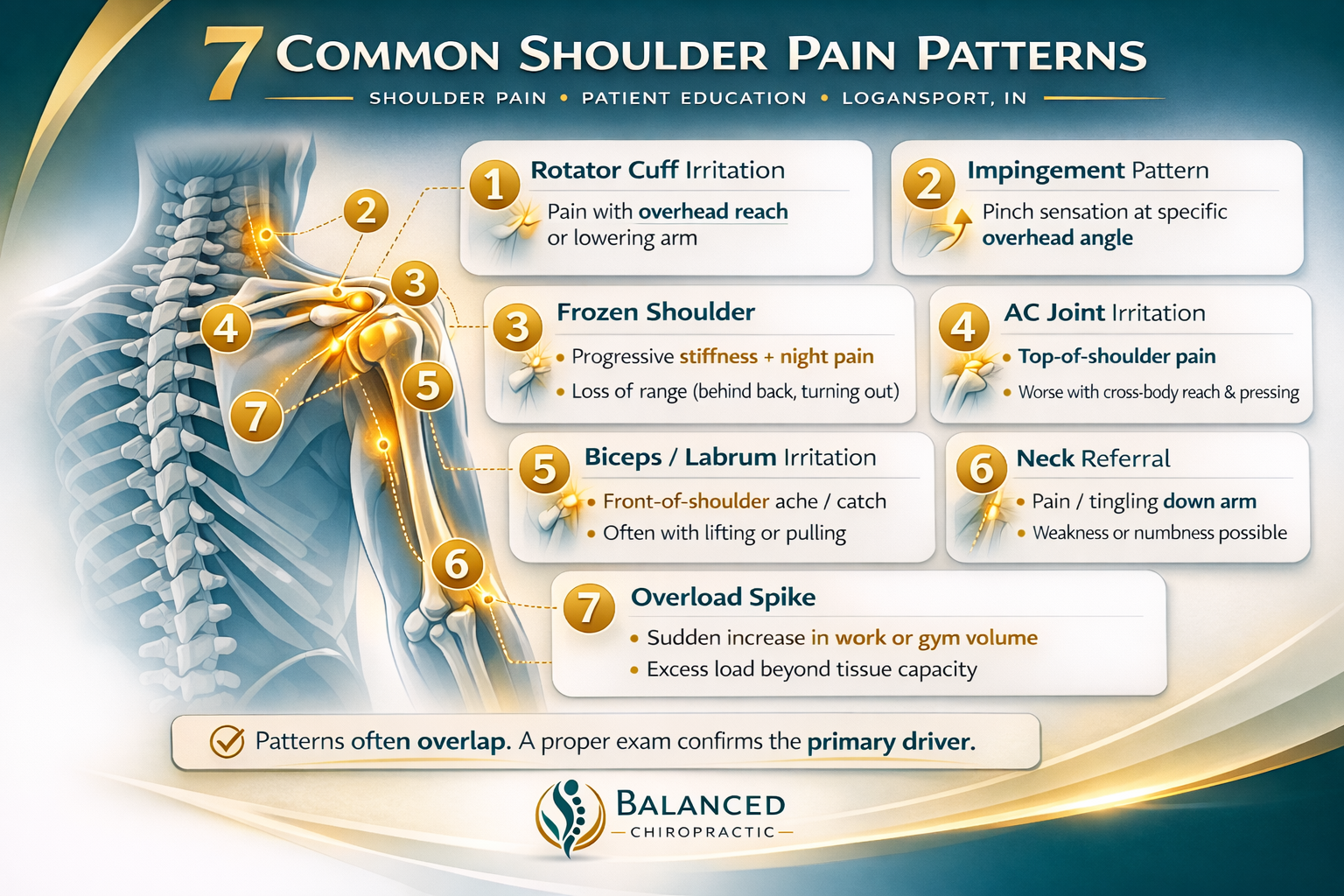
SHOULDER PAIN · PATIENT EDUCATION · LOGANSPORT, IN
Best Sleeping Positions for Shoulder Pain (Plus What to Avoid)
Night pain is usually a position + compression problem. Fix the setup—don’t just “power through.”
Shoulder pain that’s worse at night is extremely common — and usually fixable. Most “night shoulder pain” is driven by compression, poor shoulder position, or the arm drifting into a cranky angle for hours. This guide shows the best sleeping positions, pillow setups, what to avoid, and when to get checked. If your symptoms persist or you want a clear plan, start with our Shoulder Pain Treatment page.
- Goal: keep the shoulder “stacked” and supported—not rolled forward or compressed
- Pillow placement matters more than the “perfect mattress”
- Red flags + “when to worry” included below
Educational only. Not medical advice.
Start Here: Why Shoulder Pain Gets Worse at Night
Most nighttime shoulder pain comes from one (or more) of these drivers.
1) Compression for hours
Sleeping on the sore shoulder (or letting it roll forward) increases pressure on irritated tissues.
2) The arm drifts into a “bad angle”
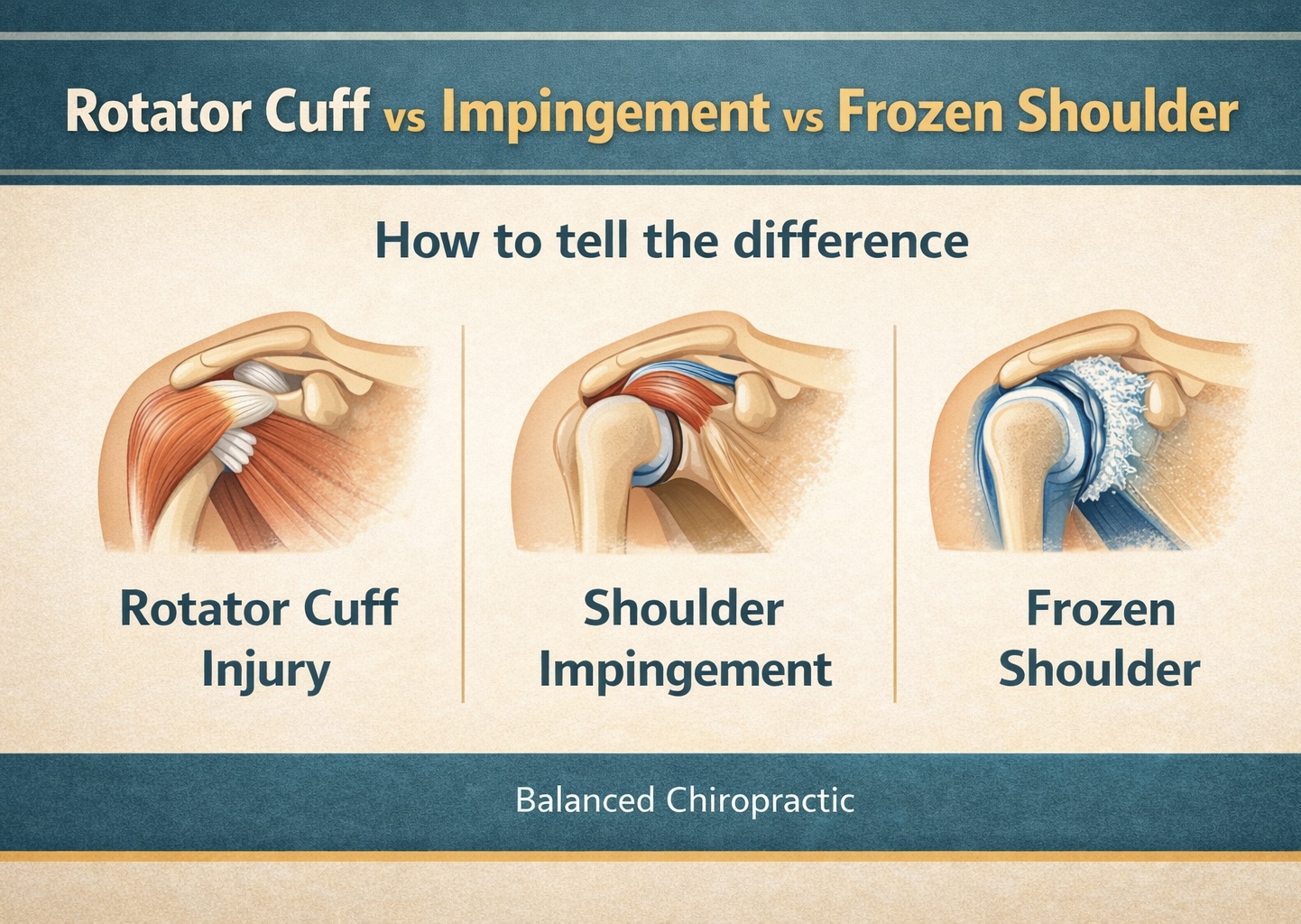
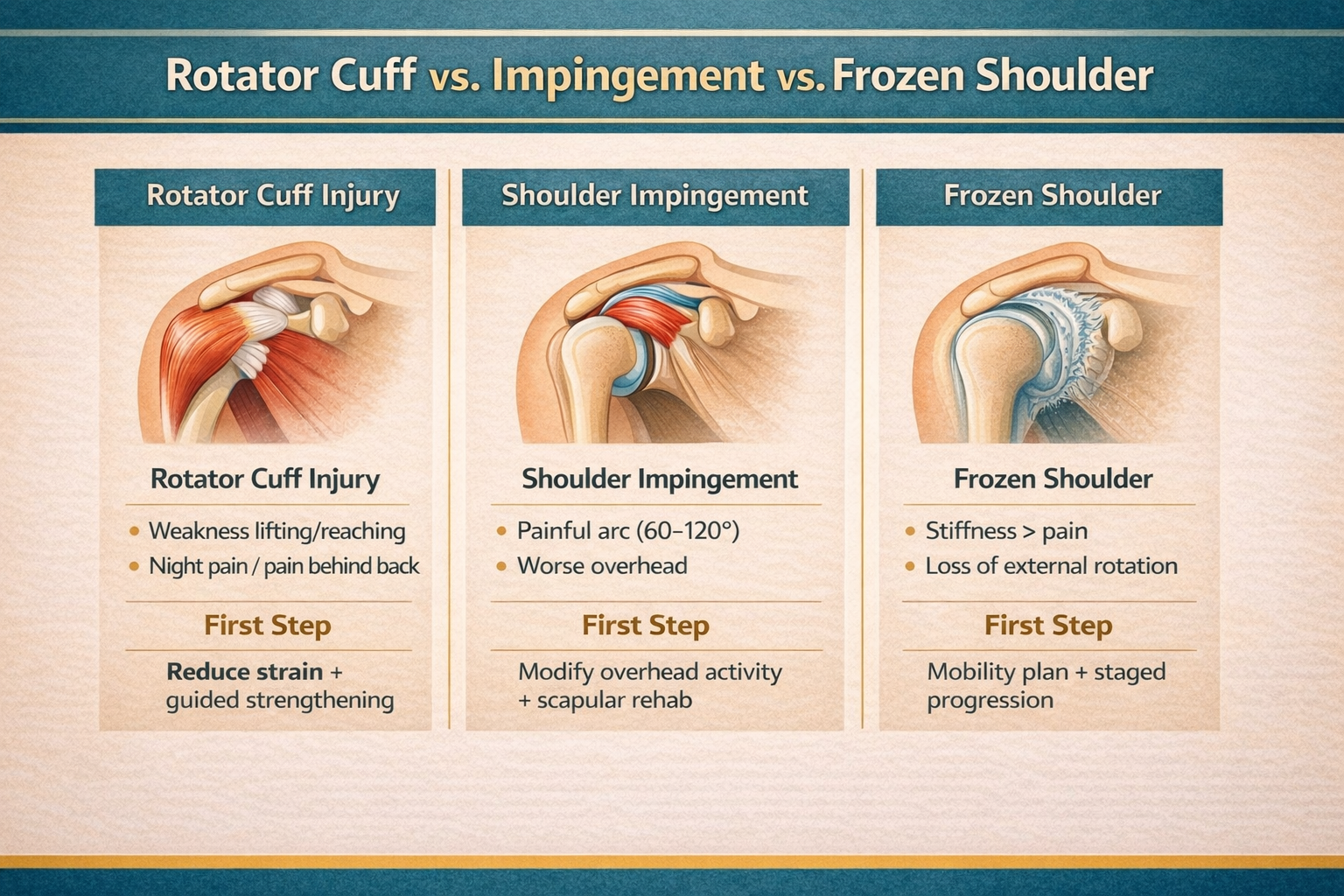
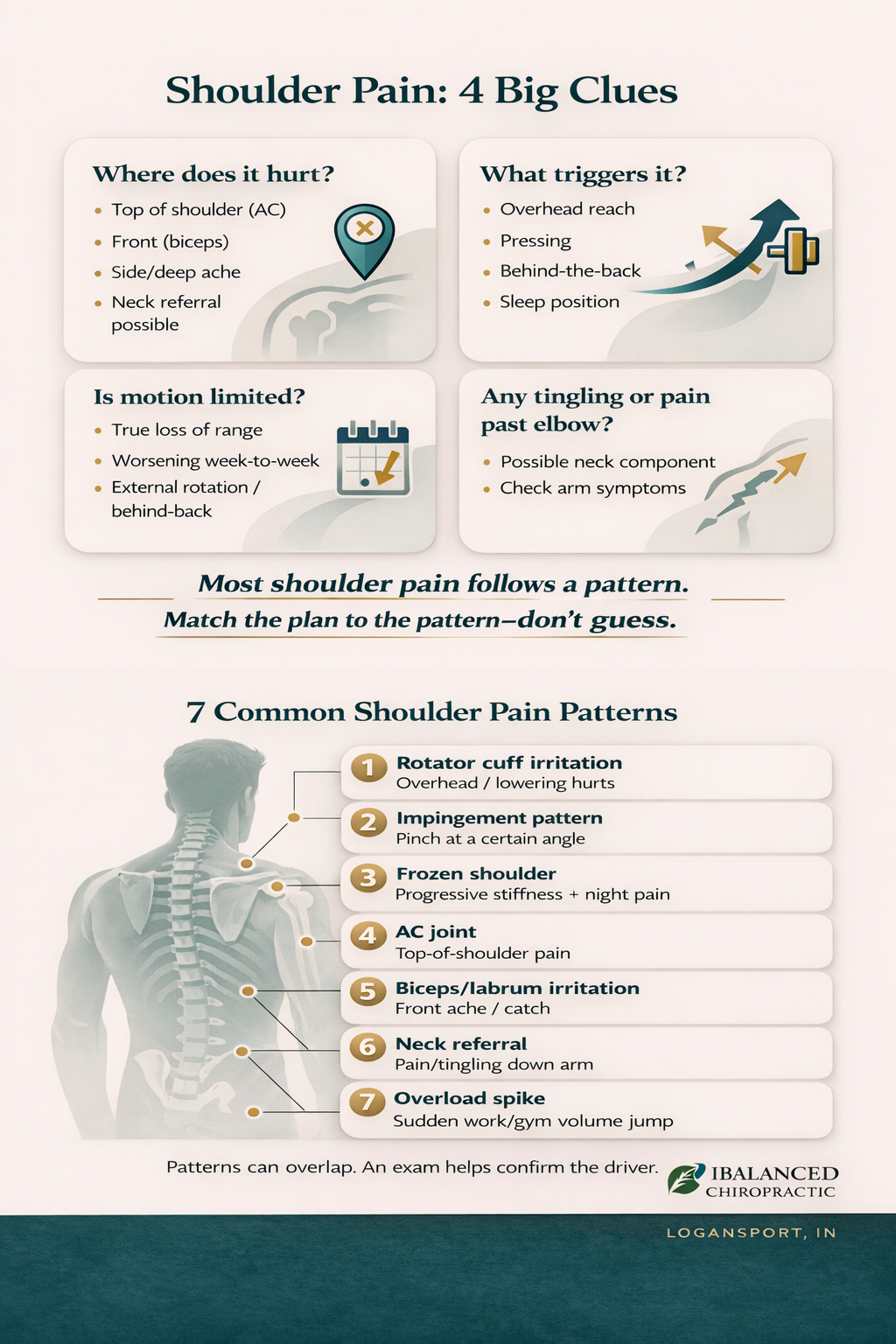
Overhead positions, arm across the body, or the shoulder collapsing forward can aggravate rotator cuff or impingement patterns.
3) Reduced movement = more stiffness
When you don’t move for hours, stiff joints and sensitive tendons can feel worse when you finally shift positions.
4) Inflammation or tendon irritation can peak at night
Some cases are more “inflammatory,” but positioning is still the #1 fix you can control immediately.
The Best Sleeping Positions for Shoulder Pain
Use the setup that keeps the shoulder supported and neutral.
Option 1: Sleep on your back + support the painful arm
This is often the most shoulder-friendly option because it avoids compression and reduces “rolling forward.” Place a pillow under the forearm and hand of the painful side so the shoulder stays supported.
- Pillow setup: one pillow under the forearm/hand (elbow slightly away from the body)
- Extra win: small towel roll under the upper arm if the shoulder feels “pulled forward”
- Avoid: arm overhead or tucked hard under your head
Option 2: Sleep on the non-painful side + hug a pillow
Side sleeping can work great if you prevent the painful shoulder from rolling forward. Hugging a pillow supports the arm and keeps the shoulder in a safer position.
- Pillow setup: hug a pillow so the painful arm rests on it (not across your chest)
- Keep it stacked: shoulder stays “on top,” not dumped forward
- Hip alignment: optional pillow between knees so your trunk doesn’t twist
Option 3: Reclined (for severe night pain)
If flat positions are unbearable, a recliner or adjustable bed can reduce shoulder strain temporarily. Support the elbow and forearm with a small pillow so the shoulder isn’t hanging.
- Best for: acute flare-ups, severe impingement patterns, or when lying flat is impossible
- Goal: calm symptoms, then transition back to back/side sleeping as tolerated
If your shoulder pain is linked to lifting or overhead work, also read Lifting Shoulder Pain: 5 Common Mistakes (and Fixes).
What to Avoid (Common Sleep Mistakes That Flare Shoulders)
If you fix these, many people sleep better within a few nights.
1) Sleeping on the painful shoulder
Compression for hours is a classic reason rotator cuff and impingement patterns feel worse at night.
2) Arm overhead (“goalpost” or under the pillow)
This position often irritates the front/outer shoulder and can trigger pinching or tendon pain.
3) Arm across your chest (shoulder rolls forward)
Common in side sleepers. Fix it by hugging a pillow to keep the shoulder supported and stacked.
4) Too many pillows under your head (neck + shoulder tension)
Excess neck flexion can increase upper trap/neck tension, feeding shoulder discomfort. Consider a neutral neck setup.
When to Worry (Red Flags)
Get checked promptly if any of these are true.
- Sudden weakness after an injury (can’t raise the arm like before)
- Visible deformity, major swelling, or significant bruising
- Numbness/tingling that’s progressive or traveling down the arm
- Fever or a hot/red swollen joint
- Night pain that is rapidly worsening or not improving with position changes
Not sure? Start with Contact & Location and we’ll guide next steps.
Shoulder Pain Sleeping FAQs
Quick answers—including “when to worry.”
What is the best sleeping position for shoulder pain?
What sleeping position makes shoulder pain worse?
Why does shoulder pain get worse at night?
How long should I try pillow changes before getting evaluated?
Can rotator cuff issues cause night pain?
When should I worry about shoulder pain at night?
Related Reading
More shoulder guides (ROOT blog URLs).
Related Services
Common next steps for persistent shoulder pain and sleep disruption.