Category: Pregnancy & Prenatal Chiropractic

Pregnancy-safe chiropractic education—pelvic and low back pain relief, posture and mobility tips, comfort strategies by trimester, and what to expect in prenatal care in Logansport.

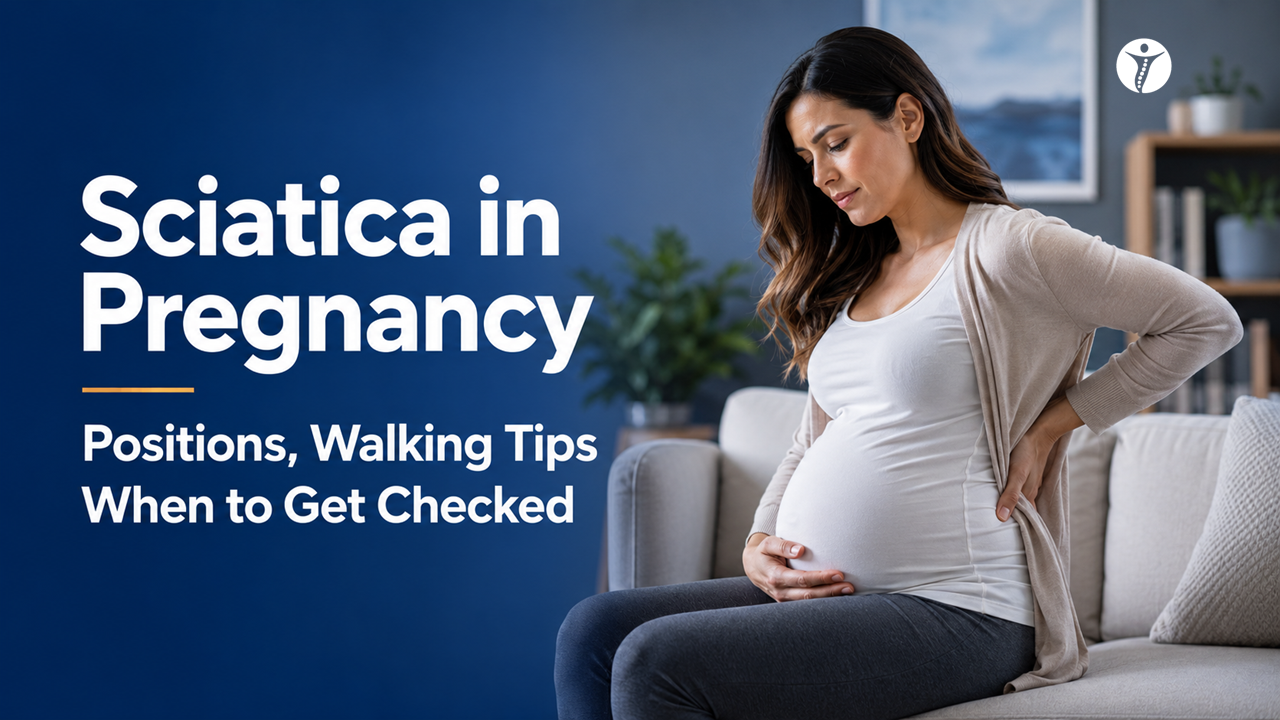
  • Sciatica in Pregnancy: Positions, Walking Tips, and When to Get Checked

    Sciatica in Pregnancy: Positions, Walking Tips, and When to Get Checked

    PREGNANCY SCIATICA · WALKING + POSITIONS · LOGANSPORT, IN

    Conservative, pregnancy-safe guidance Positions + walking tips that reduce spikes Clear “when to get checked” red flags

    Sciatica in Pregnancy: Positions, Walking Tips, and When to Get Checked

    Most pregnancy sciatica responds to smarter positions, walking tweaks, and load management—plus knowing when to get checked.

    Infographic showing pregnancy-safe positions and walking tips for sciatica symptoms, including sleep, sitting, standing, and when to get checked.
    Image 1: Small position changes can make a big difference—sleep, sit, stand, and walk smarter.
    Small position changes often reduce symptoms fast
    Walking tweaks can help without “resting all day”
    New weakness, saddle numbness, bowel/bladder changes → urgent evaluation

    Pregnancy can change how your pelvis, hips, and low back share load—so sciatic-type symptoms can flare. This guide gives pregnancy-safe position and walking strategies and a clear “when to get checked” screen. For prenatal care, see Pregnancy & Prenatal Chiropractic. For pregnancy back pain patterns, see Pregnancy Back Pain: What’s Normal, What’s Not.

    • Positions for sleep, sitting, and standing
    • Walking tips + a short daily reset routine
    • Self-sort: sciatica vs pelvic girdle pain + red flags

    Educational only. Not medical advice. Always coordinate with your prenatal provider for concerning symptoms.

    Quick Answer (What to Do Today)

    Start with positions that reduce pressure (supported side-lying, hips stacked), short walks with a shorter stride, and breaks from long sitting. Avoid aggressive stretching into nerve pain. Use the next-day rule: same or better tomorrow is the goal. If you have new weakness, saddle numbness, or bowel/bladder changes—seek urgent evaluation.

    Supporting visual reinforcing pregnancy-safe sciatica positions, walking tips, and the next-day rule for symptom response.
    Image 2: Use the next-day rule—same or better tomorrow is the goal.

    Provider coordination (trust)

    We keep care conservative and pregnancy-safe and can coordinate with your OB/midwife when needed.

    Is It Sciatica… or Pelvic Girdle Pain?

    These are commonly confused. This quick self-sort helps you choose the right “bucket” before changing everything.

    More “sciatica / nerve-ish” clues
    • Pain that travels past the knee
    • Tingling/numbness or a “zing” sensation
    • Often worse with long sitting or certain bending positions
    • Relief with position changes and short walks
    More “pelvic girdle (SI/pubic)” clues
    • Pain around SI joint, groin, or pubic region
    • Worse with rolling in bed, stairs, or single-leg tasks
    • “Waddling” or pain when getting in/out of the car
    • Often responds to support + symmetry + pacing

    Best Positions (Sleep, Sit, Stand)

    Goal: reduce asymmetry and avoid long, compressed positions.

    Sleep

    • Side-lying with a pillow between knees
    • Add belly support (pillow/rolled blanket) so hips don’t twist
    • Keep hips “stacked” (avoid rolling forward)

    Sitting

    • Use a small lumbar roll (towel)
    • Hips slightly higher than knees if possible
    • Take a short standing/walking break every 20–30 minutes

    Standing

    • Avoid long “one hip popped” standing
    • Use a small foot stool in the kitchen (switch sides)
    • Change positions before symptoms spike

    Walking Tips That Reduce Symptom Spikes

    Walking is often helpful—when it’s done in a way your body tolerates.

    The three biggest tweaks

    • Shorter stride (less tug/rotation)
    • Flatter routes (hills can spike symptoms)
    • Stop before limping (don’t push through)

    Support options (optional)

    • Supportive shoes (avoid worn-out or floppy pairs)
    • Some find a belly band/SI belt helpful for walking tolerance
    • If you’re unsure, coordinate with your prenatal provider

    Progress rule

    Increase time gradually only if your next-day response is the same or better.

    3–5 Minute Daily Reset (Pregnancy-Safe)

    Gentle movements that often calm sensitivity without aggressive stretching.

    Reset routine (choose pain-safe ranges)

    • 60 seconds: slow breathing (ribcage + belly)
    • 60 seconds: gentle pelvic tilts (comfortable range)
    • 60 seconds: glute activation (easy bridges or standing squeeze)
    • 60 seconds: short walk (or gentle march in place)

    Rule

    If any movement increases tingling/sharp nerve pain, stop and switch to positions and gentle walking instead.

    What to Avoid (Common Triggers)

    These are the moves and patterns that most often keep symptoms active.

    • Aggressive hamstring stretching into nerve pain
    • Long car rides or long static sitting without breaks
    • Heavy asymmetric carrying (one hip/one side)
    • Repeated deep forward bending when symptoms are active
    • Long standing without switching stance/support

    Car Ride Strategy (Common Flare Trigger)

    Small setup changes can reduce the “drive → flare” cycle.

    Before you drive

    • Use a small lumbar roll
    • Keep hips supported (avoid slumping)
    • Slide seat to avoid reaching forward

    During + after

    • Take breaks every 20–30 minutes when possible
    • Do a 1–2 minute walk after driving
    • Avoid immediately doing a long standing task after a long drive

    7-Day Symptom Tracker (So You Don’t Guess)

    This makes patterns obvious fast—and helps your provider help you.

    Track these daily (30 seconds)

    Pain (0–10)

    Morning / evening rating.

    Location

    Buttock? down leg? past knee? groin/pubic?

    Triggers

    Sitting, walking, stairs, rolling in bed, car rides.

    What helped

    Position changes, short walk, pillow setup, breaks.

    Next-day response

    Same/better/worse after walking or activity.

    Red flags?

    New weakness, numbness, bladder changes—seek care.

    Win condition

    Your goal is stable or improved next day. If you’re worse next day, you did too much—scale down.

    When to Get Checked (Red Flags)

    Seek urgent evaluation if any of these are present.

    • New or worsening weakness in the leg/foot
    • Saddle numbness (numbness in groin/saddle region)
    • Bowel or bladder changes (difficulty controlling)
    • Severe/worsening pain that escalates day-to-day
    • Fever or feeling very unwell with pain
    • Concerning symptoms like shortness of breath or significant one-sided leg swelling (seek urgent medical evaluation)

    If you’re unsure, start with Contact & Location and we’ll guide you to the safest next step.

    Want a Pregnancy-Safe Plan That Fits Your Day?

    We’ll identify your likely driver (nerve vs pelvic girdle pattern), calm symptoms, and help you walk and sleep more comfortably.

    Pregnancy Sciatica FAQs

    Quick answers—including “when to get checked.”

    Is sciatica common in pregnancy?
    Sciatica-like symptoms and pelvic/hip-related referral pain can be common in pregnancy due to changing mechanics. Many cases improve with smarter positions, walking tweaks, and load management.
    How do I tell sciatica from pelvic girdle pain?
    Sciatica often feels nerve-y and can travel below the knee. Pelvic girdle pain often centers around the pelvis (SI/groin/pubic area) and is worse with rolling in bed, stairs, or single-leg tasks. See this guide.
    Is walking safe with pregnancy sciatica?
    Often yes if it doesn’t cause limping or sharp pain. Shorter stride, flatter routes, and stopping before symptoms spike can help. Use next-day response to guide progress.
    What sleeping position helps?
    Side-lying with pillows between knees and under the belly often helps. Keep hips stacked and avoid twisting.
    Should I stretch my hamstrings?
    Avoid aggressive stretching into nerve-type pain. Gentle movement and position changes are often better early on. If stretching increases tingling or sharp pain, stop and reassess.
    Can a belly band or SI belt help?
    Some people find support belts helpful for walking and standing tolerance. Fit matters. Coordinate with your prenatal provider if you’re unsure.
    When should I get checked urgently?
    Seek urgent evaluation for new/worsening weakness, saddle numbness, bowel/bladder changes, severe/worsening pain, fever, or concerning symptoms like shortness of breath or significant unilateral leg swelling.
    How long does it take to improve?
    Many people notice improvement within 1–2 weeks with the right position and walking changes. If symptoms persist or limit function, an exam-guided plan is often the fastest path to clarity.
    Can prenatal chiropractic care help?
    It can help when symptoms relate to mechanics and load tolerance. Care should be pregnancy-safe, conservative, and coordinated with your prenatal provider as needed.
    What should I do if car rides flare my symptoms?
    Use a small lumbar roll, keep hips supported, take breaks every 20–30 minutes when possible, and do a short walk after driving. Avoid long static sitting when symptoms are active.

  • Pelvic Girdle Pain in Pregnancy: SI Joint vs. Pubic Pain (How to Tell)

    Pelvic Girdle Pain in Pregnancy: SI Joint vs. Pubic Pain (How to Tell)

    PELVIC GIRDLE PAIN · SI vs PUBIC · PREGNANCY · LOGANSPORT, IN

    Conservative, pregnancy-safe guidance Pattern checks that reduce guesswork Clear “when to get checked” red flags

    Pelvic Girdle Pain in Pregnancy: SI Joint vs. Pubic Pain (How to Tell)

    Both can feel similar—but your best first step differs. Use this quick sorter.

    Infographic comparing pelvic girdle pain in pregnancy: SI joint versus pubic symphysis pain patterns and what to do first.
    Image 1: SI vs pubic pain—quick pattern checks that guide your best first step.
    Rolling in bed / stairs / single-leg tasks are key clues
    Symmetry + support often helps fast
    New weakness, saddle numbness, bowel/bladder changes → urgent evaluation

    Pelvic girdle pain in pregnancy can come from different “drivers,” and the right first step depends on which pattern fits. This guide helps you self-sort SI-dominant vs pubic-dominant patterns (and what to do first). For prenatal care, see Pregnancy & Prenatal Chiropractic. If your symptoms feel more nerve-like down the leg, see Sciatica in Pregnancy.

    • Comparison table + 60-second self-sorter
    • Movement modifications that work today (bed/car/stairs)
    • 7-day tracker + pregnancy-safe red flags

    Educational only. Not medical advice. Always coordinate with your prenatal provider for concerning symptoms.

    Quick Answer (SI vs Pubic vs Both)

    SI joint pattern is often one-sided back pelvis/buttock pain that flares with asymmetry. Pubic/symphysis pattern is often front pelvic/groin pain that flares with rolling in bed, stairs, car entry, and single-leg tasks. Many people have overlap. Your goal is matching the movement modifications to your dominant triggers.

    Supporting visual reinforcing symmetry, pacing, and smart transitions for pelvic girdle pain in pregnancy.
    Image 2: Symmetry + pacing + smart transitions usually help fast.

    Provider coordination (trust)

    We keep care conservative and pregnancy-safe and can coordinate with your OB/midwife when needed.

    Comparison Table (Fast, Skimmable)

    This is the simplest way to self-sort and pick a smarter first step.

    Clue SI joint-dominant Pubic symphysis-dominant Could be both
    Location One-sided back pelvis/buttock Front pelvis/groin/pubic region Front + back pelvic pain
    Big triggers Asymmetry, long standing, long stride Rolling in bed, stairs, car entry, single-leg tasks Multiple triggers across both columns
    What helps Symmetry + pacing; short flat walks Knees together transitions; step-to stairs Support + pacing + both sets of rules
    What worsens Hills, wide stance, long static standing Split stance, lunges, single-leg stance Both worsen with “pushing through”
    Best first step Reduce asymmetry + gentle glute support Modify transitions + reduce single-leg load Combine both + consider evaluation
    Evaluate sooner if… Worsening function or limping Worsening function or severe flares Red flags or daily worsening

    60-Second Self-Sort (Decision Rules)

    Answer quickly—then go to the section that fits best.

    Rolling in bed is the #1 trigger?

    That often points toward pubic/symphysis involvement.

    Stairs and single-leg tasks spike it?

    That leans pubic (and sometimes mixed patterns).

    One-sided back pelvis/buttock pain?

    That often leans SI joint.

    It feels “unstable” or you start waddling?

    That often means your body needs support + pacing (could be both).

    Big picture

    Most pelvic girdle pain improves when you reduce the biggest trigger and keep movement symmetrical and paced.

    SI Joint-Dominant Pattern (What It Feels Like + What Helps)

    Often one-sided back pelvic pain that flares with asymmetry and long stride/standing.

    Common clues

    • One-sided pain near the “dimple” area of the low back/pelvis
    • Flares with long standing, hip-popped stance, long stride
    • Often improves with short flat walks and symmetry

    Best first steps (7–14 days)

    • Reduce asymmetry: avoid long split stance; switch sides often
    • Short, flat walks (shorter stride) instead of long/hilly walks
    • Gentle glute support (squeeze/bridge if tolerated)
    • Consider support belt if it improves tolerance (comfort matters)

    Do NOT

    • Push through waddling/limping
    • Do aggressive stretching into sharp pain
    • Do long hills when symptoms are active

    Pubic/Symphysis-Dominant Pattern (What It Feels Like + What Helps)

    Often front pelvic/groin pain that spikes with rolling in bed, stairs, car entry, and single-leg tasks.

    Common clues

    • Front pelvic pain near the pubic bone/groin
    • Sharp spikes with rolling in bed or getting in/out of the car
    • Stairs and single-leg tasks are big triggers

    Best first steps (7–14 days)

    • Keep knees together during transitions (bed and car)
    • Step-to stairs (one step at a time) + use the railing
    • Avoid split stance and wide stance positions
    • Shorter, controlled walks; stop before instability

    Do NOT

    • Do lunges/split squats when symptoms are active
    • Stand on one leg to put pants on (sit instead)
    • Rush transitions (bed/car) when it’s flaring

    Movement Modifications That Work Today

    This is the “save and share” section—small changes that reduce flares immediately.

    Getting out of bed

    • Log roll (shoulders + hips together)
    • Keep knees together as you roll
    • Sit first, then stand

    Getting in/out of the car

    • Back up to the seat, sit first
    • Swivel both legs together (avoid one-leg stepping in)
    • Use hands for support; move slowly

    Stairs

    • Step-to pattern (both feet on each step)
    • Use the railing
    • Avoid carrying heavy loads on stairs

    Standing tasks (kitchen, brushing teeth)

    • Use a small foot stool; switch sides often
    • Avoid hip-popped stance for long periods
    • Short breaks beat powering through

    Walking

    Shorter stride + flatter routes + stop before wobble/limp is the fastest win for most people.

    3–5 Minute Daily Reset (Pregnancy-Safe)

    Gentle is the point. Choose pain-safe ranges and stop if symptoms spike.

    Reset routine

    • 60 seconds: slow breathing (ribcage + belly)
    • 60 seconds: gentle pelvic tilts (comfortable range)
    • 60 seconds: glute squeeze/bridge (if tolerated)
    • 60 seconds: short flat walk (or march in place)

    Rule

    Your goal is stable or improved next day—not forcing a big change in one session.

    What to Avoid (Common Flares)

    These are the moves and patterns most likely to keep pelvic pain active.

    • Long single-leg stance (pants on, leaning on one hip)
    • Wide stance / split stance lunges when symptoms are active
    • Aggressive stretching into pain
    • Long hills or long walks without pacing
    • Rushed bed/car transitions

    7-Day Symptom Tracker (So You Don’t Guess)

    Track for one week and your main driver usually becomes obvious.

    Track these daily (30 seconds)

    Pain (0–10)

    Morning / evening rating.

    Location

    Back pelvis/SI? front/pubic? both?

    Top triggers

    Rolling, stairs, car, standing, walking, hills.

    What helped

    Support, knees-together transitions, stride change, breaks.

    Next-day response

    Same/better/worse after activity.

    Red flags?

    Weakness, numbness, bladder changes—seek care.

    Win condition

    Same or better next day. If worse, reduce the biggest trigger and reassess.

    When to Get Checked (Red Flags)

    Seek urgent evaluation if any of these are present.

    • New or worsening weakness in the leg/foot
    • Saddle numbness (numbness in groin/saddle region)
    • Bowel or bladder changes (difficulty controlling)
    • Severe/worsening pain that escalates day-to-day
    • Fever or feeling very unwell with pain
    • Concerning symptoms like shortness of breath or significant one-sided leg swelling (seek urgent medical evaluation)

    If you’re unsure, start with Contact & Location and we’ll guide you to the safest next step.

    Want a Pregnancy-Safe Plan That Fits Your Day?

    We’ll confirm your dominant pattern (SI vs pubic vs both) and build a conservative plan that helps you move more comfortably.

    Pelvic Girdle Pain FAQs

    Quick answers—including “can it be both?”

    Can pelvic girdle pain be both SI and pubic pain?
    Yes. Many people have overlap. The goal is identifying what triggers symptoms most (rolling, stairs, single-leg tasks, long standing) so you can choose the most helpful first steps.
    How do I tell SI joint pain from pubic symphysis pain?
    SI pain is often one-sided back pelvis/buttock pain and flares with asymmetry. Pubic pain is often front pelvic/groin pain and flares with rolling in bed, stairs, car entry, and single-leg tasks.
    Is walking good or bad for pelvic girdle pain?
    It depends. Short, flat walks with a shorter stride often help. Long walks, hills, and pushing through waddling/limping often flare symptoms. Use next-day response to guide.
    Do SI belts or support bands help?
    Some people find support belts helpful for standing/walking tolerance. Fit matters and comfort is the priority. Coordinate with your prenatal provider if you’re unsure.
    What should I avoid if my pubic symphysis hurts?
    Avoid long single-leg stance, wide stance/split lunges, aggressive stretching into pain, and rushed transitions. Keep knees together during bed and car transitions.
    What sleeping position helps?
    Side-lying with pillows between knees and supporting the belly often helps. Keeping hips stacked and reducing twisting during rolling can reduce flares.
    When should I get checked urgently?
    Seek urgent evaluation for new/worsening weakness, saddle numbness, bowel/bladder changes, fever, severe/worsening pain, or concerning symptoms like shortness of breath or significant unilateral leg swelling.
    Can prenatal chiropractic care help?
    It can help when symptoms relate to mechanics, mobility restrictions, and load tolerance. Care should be pregnancy-safe, conservative, and coordinated with your prenatal provider as needed.
    How long does it take to improve?
    Many people improve within 1–2 weeks when they match movement modifications to the pattern and reduce triggers. If symptoms persist or limit function, an exam-guided plan helps clarify the driver.

  • Pregnancy Back Pain in Logansport, IN: What’s Normal, What’s Not, and What Helps

    Pregnancy Back Pain in Logansport, IN: What’s Normal, What’s Not, and What Helps

    PREGNANCY BACK PAIN · WHAT’S NORMAL vs NOT · LOGANSPORT, IN

    Conservative, pregnancy-safe guidance Pattern checks that reduce anxiety + guesswork Clear “when to get checked” red flags

    Pregnancy Back Pain in Logansport, IN: What’s Normal, What’s Not, and What Helps

    Back pain is common in pregnancy—but not all patterns are “normal.” Self-sort your pattern and choose the safest next step.

    Infographic mapping pregnancy back pain patterns (mechanical, pelvic girdle, sciatica-like) to safe first steps and red flag screening.
    Image 1: Self-sort your pattern—then use the smallest change that works.
    Many patterns improve with positions + pacing + gentle strength support
    Next-day response is the best guide
    Red flags (weakness, bowel/bladder, fever, severe worsening) → urgent evaluation

    Pregnancy changes how your pelvis, hips, and low back share load—so back pain can flare. This guide helps you decide what’s common vs concerning, and what to do first. For prenatal care, see Pregnancy & Prenatal Chiropractic. If symptoms feel nerve-like down the leg, see Sciatica in Pregnancy.

    • Self-sort your pattern (mechanical vs pelvic vs sciatica)
    • Positions + walking rules + 3–5 minute reset
    • Clear red flags (when to get checked)

    Educational only. Not medical advice. Always coordinate with your prenatal provider for concerning symptoms.

    Quick Answer (Calm, Practical)

    Most pregnancy back pain is mechanical and responds to supportive positions, pacing, short walks with a shorter stride, and gentle strength support. Use the next-day rule: same or better tomorrow is the goal. If you have new weakness, saddle numbness, bowel/bladder changes, fever, or severe worsening pain—seek urgent evaluation.

    Supporting visual summarizing a simple pregnancy back pain plan: positions and pacing today, gentle strength this week, and when to get checked.
    Image 2: Today: positions + pacing. This week: gentle strength. If not improving: get checked.

    Provider coordination (trust)

    We keep care conservative and pregnancy-safe and can coordinate with your OB/midwife when needed.

    The One-Page Plan

    Today
    • Support sleep (pillows, hips stacked)
    • Break up long sitting/standing
    • Short flat walk (short stride)
    This week
    • 3–5 minute reset daily
    • Gentle glute/core support (pain-safe)
    • Avoid biggest trigger (hills, long drives, asymmetry)
    If not improving
    • Use the self-sort below
    • Track symptoms for 7 days
    • Get evaluated for the driver

    What’s Normal vs Not (Which Bucket Are You In?)

    This is the fastest way to reduce anxiety and choose the right first step.

    1) Mechanical low back pain
    • Changes with posture and movement
    • Often improves with short walks and position changes
    • Usually worse after long sitting/standing

    Best first step: positions + pacing + gentle reset routine.

    2) Pelvic girdle pain (SI/pubic)
    • Worse with rolling in bed, stairs, or single-leg tasks
    • Front pelvic/groin or back pelvis/SI pain
    • Often needs symmetry + transition rules

    Best first step: use this guide: SI vs Pubic Pain (How to Tell).

    3) Sciatica / nerve-ish pattern
    • Pain can travel below the knee
    • Tingling/numbness or “zing” sensation
    • Often worse with certain sitting/bending positions

    Best first step: see Sciatica in Pregnancy.

    4) “Not normal” / red flag bucket
    • New/worsening weakness
    • Saddle numbness or bowel/bladder changes
    • Fever/unwell or severe worsening pain

    Best first step: urgent medical evaluation.

    Most common truth

    Many pregnancy pain patterns overlap. That’s why tracking triggers and next-day response works so well.

    Common Causes (Simple, Not Scary)

    Pregnancy changes load, posture, and tissue sensitivity. That’s often enough to create symptoms—without anything being “damaged.”

    • Center of mass shifts → different back/hip demands
    • Pelvic tissues become more load-sensitive
    • Glute/core endurance changes as pregnancy progresses
    • Sleep changes + stress can increase muscle tension
    • Activity spikes (long walks, hills, long drives) can trigger flares

    What Usually Helps (The Plan)

    Think “support + pacing + gentle strength,” not “push through.”

    Core principles

    • Support: pillows, lumbar roll, stable shoes
    • Pacing: break up long sitting/standing/walking
    • Strength support: gentle glute/core work (pain-safe)
    • Next-day rule: same or better tomorrow is the goal

    When to escalate

    If symptoms persist beyond 10–14 days despite smart modification—or you’re limping, losing sleep, or function is dropping—get evaluated.

    Positions (Sleep, Sit, Stand)

    Goal: reduce long static positions and keep hips supported and stacked.

    Sleep

    • Side-lying with pillow between knees
    • Add belly support (pillow/rolled blanket)
    • Keep hips stacked (avoid twisting)

    Sitting

    • Small lumbar roll (towel)
    • Hips slightly higher than knees if possible
    • Stand/walk break every 20–30 minutes

    Standing

    • Avoid long “one hip popped” stance
    • Use a small foot stool; switch sides
    • Change positions before symptoms spike

    Walking + Activity Rules (Pregnancy-Friendly)

    Walking is often helpful—when dose and mechanics match your tolerance.

    The best tweaks

    • Shorter stride + flatter routes
    • Stop before limping or waddling
    • Use “doses” (10–20 minutes) rather than one long walk
    • Don’t increase volume and intensity in the same week

    Rule

    Progress only if you’re stable or improved the next day.

    3–5 Minute Daily Reset (Pregnancy-Safe)

    Gentle movements that often reduce sensitivity without aggressive stretching.

    Reset routine

    • 60 seconds: slow breathing (ribcage + belly)
    • 60 seconds: gentle pelvic tilts (comfortable range)
    • 60 seconds: glute activation (easy bridge or standing squeeze)
    • 60 seconds: short walk (or march in place)

    Rule

    If any movement increases sharp pain or nerve symptoms, stop and return to positions + pacing.

    Car Ride Strategy (Common Trigger)

    Small setup changes can reduce the “drive → flare” cycle.

    Before you drive

    • Use a small lumbar roll
    • Keep hips supported (avoid slumping)
    • Slide seat forward so you’re not reaching

    During + after

    • Break every 20–30 minutes when possible
    • Walk 1–2 minutes after driving
    • Avoid immediately doing a long standing task after a long drive

    7-Day Symptom Tracker (So You Don’t Guess)

    Track for one week and your biggest driver usually becomes obvious.

    Track these daily (30 seconds)

    Pain (0–10)

    Morning / evening rating.

    Location

    Low back? SI? pubic/groin? down the leg?

    Top triggers

    Rolling, stairs, sitting, walking, car rides, standing.

    What helped

    Pillows, breaks, stride change, reset routine.

    Next-day response

    Same/better/worse after activity.

    Red flags?

    Weakness, numbness, bladder changes—seek care.

    Win condition

    Stable or improved next day. If worse, reduce the biggest trigger and reassess.

    When to Get Checked (Red Flags)

    Seek urgent evaluation if any of these are present.

    • New or worsening weakness in the leg/foot
    • Saddle numbness (numbness in groin/saddle region)
    • Bowel or bladder changes (difficulty controlling)
    • Severe/worsening pain that escalates day-to-day
    • Fever or feeling very unwell with pain
    • Concerning symptoms like shortness of breath or significant one-sided leg swelling (seek urgent medical evaluation)

    If you’re unsure, start with Contact & Location and we’ll guide you to the safest next step.

    Want a Pregnancy-Safe Plan That Fits Your Day?

    We’ll confirm your pattern (mechanical vs pelvic vs sciatica) and build a conservative plan that helps you move and sleep more comfortably.

    Pregnancy Back Pain FAQs

    Quick answers—including “what’s normal vs not.”

    Is back pain normal in pregnancy?
    Back and pelvic pain can be common in pregnancy due to changing mechanics. Many patterns improve with positions, pacing, and gentle strength support. Some patterns require evaluation—see the red flags section above.
    How do I tell pelvic girdle pain from sciatica?
    Pelvic girdle pain often centers around the pelvis and flares with rolling in bed, stairs, or single-leg tasks. Sciatica-like symptoms often feel nerve-y and can travel below the knee. See this guide and this guide.
    Is walking safe if I have pregnancy back pain?
    Often yes if it doesn’t cause limping or sharp pain. Shorter stride, flatter routes, and stopping before symptoms spike can help. Next-day response is the best guide.
    What sleeping position helps?
    Side-lying with pillows supporting the belly and between the knees often helps. Keeping hips stacked (not twisted) reduces strain.
    Should I stretch when my back hurts during pregnancy?
    Avoid aggressive stretching into sharp pain or nerve symptoms. Gentle movement, breathing, and position changes are often better early on.
    Can a belly band or SI belt help?
    Some people find support belts helpful for standing and walking tolerance. Comfort and fit matter. Coordinate with your prenatal provider if you’re unsure.
    When should I get checked urgently?
    Seek urgent evaluation for new/worsening weakness, saddle numbness, bowel/bladder changes, fever, severe/worsening pain, or concerning symptoms like shortness of breath or significant unilateral leg swelling.
    How long does it take to improve?
    Many people notice improvement within 1–2 weeks with the right modifications. If symptoms persist or limit function, an exam-guided plan is often the fastest path to clarity.
    Can prenatal chiropractic care help?
    It can help when pain relates to mechanics and load tolerance. Care should be pregnancy-safe, conservative, and coordinated with your prenatal provider as needed.
    What should I do if car rides flare my back pain?
    Use a small lumbar roll, keep hips supported, take breaks every 20–30 minutes when possible, and do a short walk after driving. Avoid long static sitting when symptoms are active.