Category: Custom Orthotics

Guides on custom orthotics, arch support, and footwear choices—who they help, when they’re worth it, and how we decide what’s right for your feet and goals.

  • Custom Orthotics vs. Over-the-Counter Inserts: A Clear Comparison (Who Wins and Why)

    Custom Orthotics vs. Over-the-Counter Inserts: A Clear Comparison (Who Wins and Why)

    CUSTOM ORTHOTICS · DECISION GUIDE · LOGANSPORT, IN

    Evidence-informed, non-salesy guidance We consider gait + shoes + load Clear “who benefits / who doesn’t” rules

    Custom Orthotics vs. Over-the-Counter Inserts: A Clear Comparison (Who Wins and Why)

    Both can help — but they solve different problems. Match the insert to the job (and the shoe).

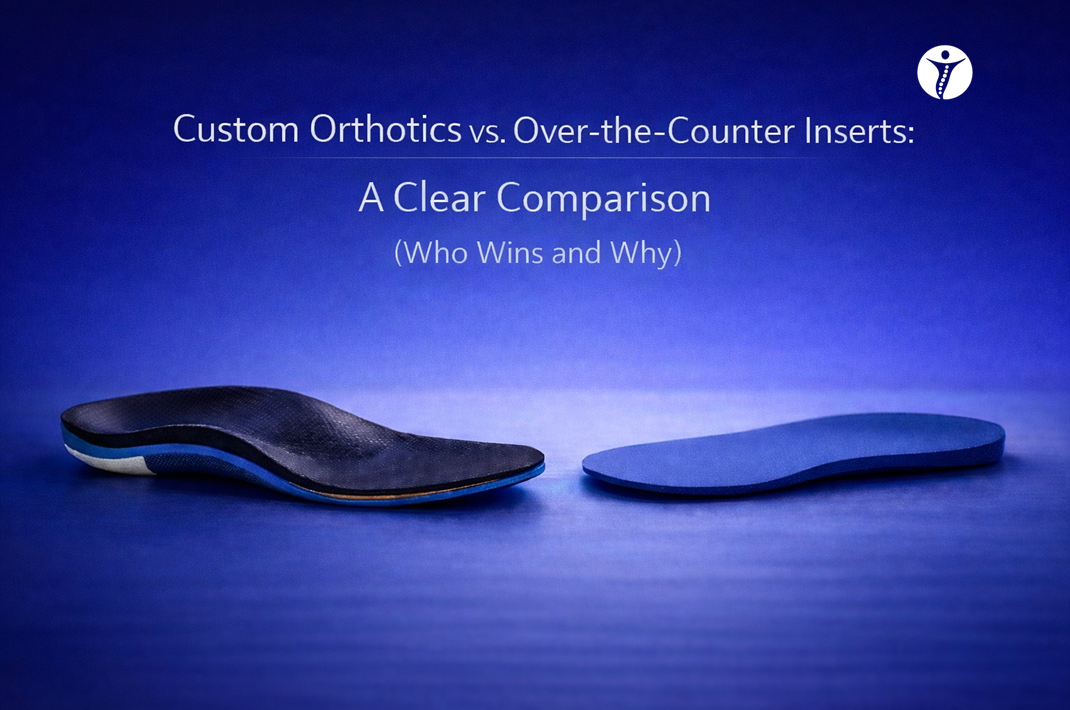
    Infographic comparing custom orthotics and over-the-counter inserts, including best use cases, pros/cons, and decision rules.
    Image 1: A clear comparison—who wins, why, and what to do first.
    OTC inserts often win for comfort + mild support
    Custom orthotics win when symptoms repeat despite OTC/shoe changes
    The shoe matters as much as the insert

    If you’re deciding between a $30 insert and custom orthotics, you’re asking the right question: “What actually fits my problem?” For the service overview, start with Custom Orthotics. If your main issue is foot or heel pain, also see Foot & Ankle Pain and Plantar Fasciitis Treatment.

    • Quick answer + comparison table + decision rules
    • Break-in expectations (what’s normal vs not)
    • Clear “when to worry” guidance

    Educational only. Not medical advice. Seek urgent care for severe/worsening symptoms or red flags.

    Quick Answer (If You Only Read One Section)

    OTC inserts are usually enough when you need comfort and mild support and symptoms improve quickly. Custom orthotics are usually worth it when symptoms are recurring, you’ve already tried OTC more than once, or your workload (work/sport) keeps re-triggering the same pattern.

    Supporting visual reinforcing decision rules for choosing between OTC inserts and custom orthotics, emphasizing matching the insert to the shoe and symptoms.
    Image 2: Quick answer—match the insert to the job (and the shoe).

    Rule of thumb (simple and honest)

    If you’ve tried a reasonable OTC insert and better shoes and you still flare repeatedly (or can’t build tolerance), custom orthotics become the higher-value step because they’re built around your mechanics + your shoe + your goals.

    Comparison Table (Fast, Skimmable)

    Not everyone needs custom. Not every OTC insert is a good match. This table keeps it simple.

    Feature OTC Inserts Custom Orthotics
    Goal Comfort + mild support Targeted mechanics/load strategy
    Customization Limited (generic shapes) Matched to your foot + gait + symptoms
    Best for First-time flare or mild recurring issues Repeatable flare pattern, stubborn symptoms, higher demands
    Shoe match Often the limiting factor Built with your footwear and use-case in mind
    Break-in Usually faster Usually more structured (progressive)
    Durability Variable Typically higher (depends on use)
    Risk of “wrong match” Higher if you guess arch height/stiffness Lower with exam-guided selection and adjustment
    Cost/value Lower upfront Higher upfront; higher value when it solves recurring pattern

    Important (and rarely said): “Neither wins if the shoe is wrong.”

    If your shoe is too narrow, too low-volume for the insert, too flexible, or too worn out, the best orthotic in the world won’t feel right. The insert has to match the shoe.

    Who Should Choose Which (Decision Rules)

    Use this section to self-sort honestly—then decide what’s worth your time and money.

    1

    OTC is usually enough if…

    Symptoms are mild, first-time, or improve quickly with better shoes and a reasonable insert.

    Green signs: better within 7–14 days, next-day soreness settles, no repeated flare pattern.

    2

    Custom is usually worth it if…

    You have a repeatable flare pattern (work/sport), or you’ve already tried OTC (more than once) and symptoms keep returning.

    Green signs: same hotspot flares, tolerance won’t build, mechanics clearly matter.

    3

    Neither “wins” if…

    The problem isn’t primarily mechanics/load (or there’s a red-flag pattern).

    Examples: significant swelling/bruising, suspected stress fracture, worsening numbness/weakness, systemic symptoms.

    What custom orthotics actually do (the honest version)

    Orthotics can change how load is distributed and how your foot interacts with the ground and shoe. That can reduce repeated tissue irritation and make walking/running/work more tolerable. They work best when paired with a plan (strength + load progression + shoe strategy).

    Fit, Comfort, and Break-In (What’s Normal vs Not)

    This is the section most people wish they had before buying anything.

    Normal early sensations

    • Mild “new pressure” under arch or heel
    • A short adjustment window as your feet adapt
    • Comfort improves as shoe + insert pairing improves

    Not normal (scale back and reassess)

    • Sharp pain, worsening symptoms, or swelling that increases
    • Numbness/tingling that starts or worsens
    • New pain in a totally different hotspot that persists

    Read next: Orthotics Break-In Schedule: What’s Normal, What’s Not.

    Quick shoe checklist (high impact)

    • Heel counter: stable (not collapsing)
    • Width/volume: enough room for the insert without squeezing
    • Midsole: not completely worn out
    • Use-case match: work shoe vs running shoe vs casual shoe

    What to Do First (Without Guessing)

    A simple ladder that avoids wasted money and repeated flare-ups.

    Step 1: Fix the shoe fit (today)

    • Choose a shoe with enough width and volume for an insert
    • Replace worn-out shoes that have “collapsed” support

    Step 2: Try a reasonable OTC insert for 7–14 days

    • Track next-day response (better/same/mild soreness = okay)
    • If symptoms improve and stay improved, you likely don’t need custom

    Step 3: If symptoms repeat (or you’ve tried OTC twice)

    • Consider an exam-guided plan + custom orthotics matched to your mechanics
    • Start here: Custom Orthotics

    Common mistakes (quick fixes)

    • Buying the “squishiest” insert and expecting it to control mechanics
    • Using inserts in the wrong shoe (too narrow/low volume)
    • Switching too fast without a break-in period
    • Expecting inserts to replace strength + load progression

    Want the Right Choice for Your Feet and Shoes?

    We’ll evaluate gait, foot mechanics, and symptoms—then tell you exactly what makes sense (and what doesn’t).

    When to Worry (Red Flags)

    Get checked promptly if any of these are true.

    • Unable to bear weight or rapidly worsening pain
    • Significant swelling/bruising after a twist/fall
    • Hot/red joint with fever or systemic symptoms
    • Spreading numbness/weakness or severe nerve symptoms
    • Pain that is worsening day-to-day despite reducing activity

    If you’re unsure, start with Contact & Location and we’ll guide you.

    Orthotics vs. Inserts FAQs

    Quick answers—including “when to worry.”

    Are custom orthotics worth it?
    They can be—especially if symptoms keep returning despite good shoes and reasonable OTC inserts. Custom is most valuable when a repeatable mechanics/load pattern needs a targeted solution.
    When are OTC inserts enough?
    Often for mild comfort/support needs, first-time flare-ups, or when symptoms improve quickly with better shoes + a reasonable insert.
    Can OTC inserts make things worse?
    Sometimes. The wrong stiffness, arch height, or shoe match can increase pressure and irritate tissues. If symptoms worsen over 24–48 hours or you develop numbness/tingling, stop and reassess.
    Do I need orthotics forever?
    Not always. Some people use them long-term for work/sport demands; others use them as a bridge while strength, tolerance, and footwear strategy improve.
    How long does it take to adjust?
    Most people use a short break-in period. Mild new pressure can be normal; sharp pain, worsening symptoms, or numbness/tingling is not.
    What shoe should I use?
    The shoe matters as much as the insert. A stable heel counter, adequate width, and enough internal volume usually improves comfort and results.
    When should I worry and get checked?
    Get checked if you can’t bear weight, have rapidly worsening swelling/bruising, the foot is hot/red with fever, pain worsens daily, or you have spreading numbness/weakness.
    What’s the best next step if I’m not sure?
    Start with better shoes and a reasonable OTC insert for 7–14 days and track next-day response. If symptoms keep returning or you’ve tried OTC twice, an exam-guided custom plan is often the smarter step.

  • Orthotics Break-In Schedule: What’s Normal, What’s Not (and When to Call Us)

    Orthotics Break-In Schedule: What’s Normal, What’s Not (and When to Call Us)

    CUSTOM ORTHOTICS · EXPECTATIONS GUIDE · LOGANSPORT, IN

    Start low, build gradually (no “push through”) Shoe pairing matters as much as the orthotic Clear “what’s normal / when to call” rules

    Orthotics Break-In Schedule: What’s Normal, What’s Not (and When to Call Us)

    Most “orthotics problems” are really a break-in or shoe-fit problem. Here’s the safe way to ramp up.

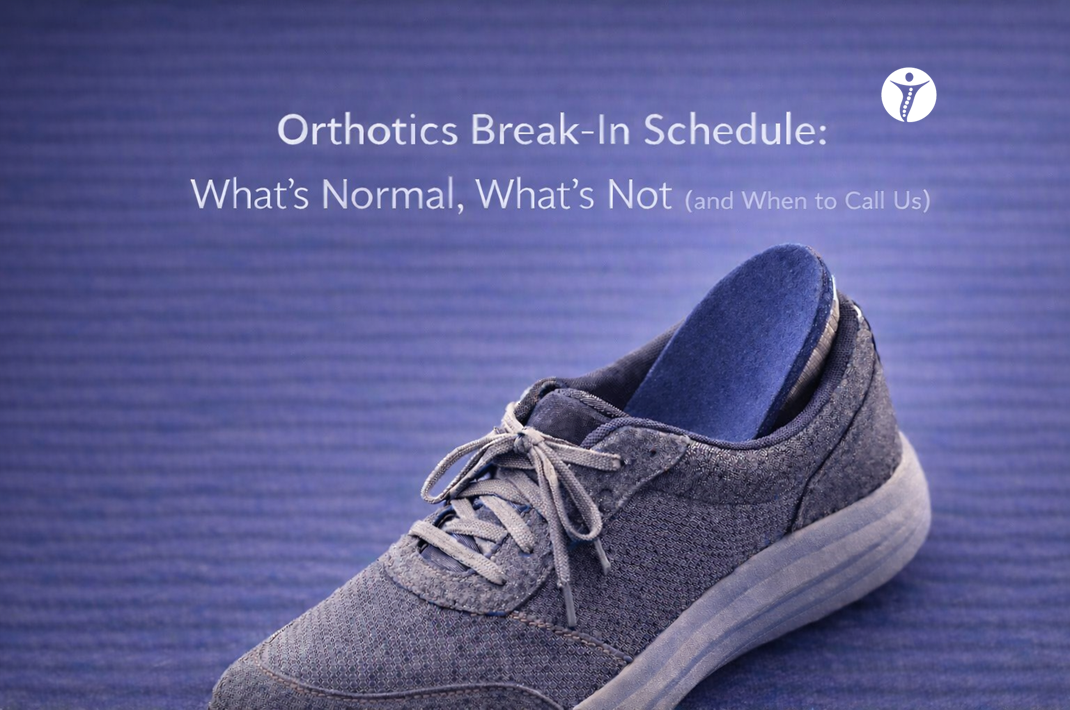
    Infographic showing an orthotics break-in schedule and guidance on what sensations are normal vs not normal.
    Image 1: Start low, build gradually—comfort and tolerance win long-term.
    Increase wear time before you increase activity intensity
    Mild new pressure can be normal; sharp pain or numbness/tingling is not
    If symptoms worsen over 24–48 hours, scale back and re-ramp slower

    If you’re unsure whether what you’re feeling is normal, this guide will help you self-sort quickly. For the full service overview, see Custom Orthotics. If your main complaint is foot/heel pain, start with Foot & Ankle Pain.

    • Two schedules: standard + high-demand work
    • Clear “normal vs not” and a flare protocol
    • When to call us (so you don’t guess)

    Educational only. Not medical advice. Seek urgent care for severe/worsening symptoms or red flags.

    Quick Answer: The Safe Break-In Rule

    Break orthotics in by increasing wear time first. Your goal is better or the same the next day — not “pushing through.”

    Supporting visual explaining the next-day rule for orthotics break-in and how to scale wear time safely.
    Image 2: The next-day rule helps you adjust safely—better or same is the goal.

    The “next-day rule” (simple and powerful)

    • Better: keep progressing slowly
    • Same: progress is still progress (continue the schedule)
    • Slightly sore: okay if it settles within 24 hours
    • Worse: scale back to the last tolerable step for 1–2 days

    One key rule: don’t increase two variables at once

    Increase wear time first. Then increase activity intensity. If you change both at the same time, it’s hard to know what caused the flare.

    Orthotics Break-In Schedule (Two Options)

    Choose the schedule that matches your workload. If in doubt, use the slower one.

    Schedule A: Standard break-in (desk-to-normal activity)

    Day Wear time Notes
    1–230–60 minutesBest-fitting shoes only. Easy activity.
    3–41–2 hoursIf next-day rule is stable, progress.
    5–72–4 hoursKeep intensity low; focus on tolerance.
    Week 2Half-day → full-dayIncrease by 1–2 hours every 2 days as tolerated.
    Week 3+Normal wearAdd higher activity gradually (walks, training, long errands).

    Schedule B: High-demand break-in (long shifts, factory, healthcare, trades)

    Day Wear time Notes
    1–230–45 minutesBest shoes only. No “test days” yet.
    3–560–90 minutesKeep steps lower than usual if possible.
    6–82 hoursHold here if you’re borderline; don’t rush.
    Week 22–4 hoursIncrease by 30–60 min every 2 days if stable.
    Week 34–6 hoursGradually introduce longer shifts.
    Week 4+Full shiftOnce full shift is tolerated, then build “extra” activity.

    If you’re a runner

    Break in orthotics during normal daily life first. Then reintroduce running as a separate ramp (short, flat runs, small increases). Don’t start break-in on hill repeats.

    What’s Normal (Early On)

    Most of these improve quickly with a gradual ramp and good shoe pairing.

    • Mild arch pressure that improves as you adapt
    • Mild muscle soreness in feet/calves (like a new workout)
    • “Awareness” of a new contact point under the foot
    • Better or the same the next day (even if you felt it during wear)

    What’s Not Normal (Scale Back + Check In)

    If you see these patterns, don’t grind through it.

    • Sharp pain (especially a single hot spot)
    • Worsening trend over 24–48 hours
    • Numbness/tingling/burning (nerve irritation pattern)
    • New swelling that doesn’t settle
    • Skin hot spots / blisters from rubbing or shoe fit
    • New pain that feels “wrong” and doesn’t improve when you scale back

    Fast fix: try the best-fitting shoe only

    If a symptom appears only in one shoe, it’s usually the shoe volume/width/heel counter—not the orthotic itself.

    Shoe Checklist (This Prevents Most Problems)

    The shoe matters as much as the orthotic. Use this checklist before you assume the orthotic is “wrong.”

    • Heel counter: stable (not collapsing)
    • Width/volume: enough space so the insert doesn’t “overfill” the shoe
    • Midsole: not worn out or tilted
    • Remove factory insole if needed to create room
    • Orthotic sits flat: no rocking or curling in the shoe

    Top-of-foot pressure?

    If the top of your foot hurts, loosen laces and avoid cranking the tongue down. Lace pressure is a common culprit.

    Related: Top of Foot Pain in Logansport, IN: 6 Common Causes

    Flare Protocol + When to Call Us

    Here’s exactly what to do if you overdid it—and when to contact us.

    If you flare (simple ladder)

    • Step 1: Drop back to the last tolerable wear time for 1–2 days
    • Step 2: Reduce activity intensity (flat walking only)
    • Step 3: Re-ramp slower (increase 15–30 minutes at a time)
    • Step 4: Use the best-fitting shoe only until stable

    Call us if any of these are true

    • You have sharp pain or a worsening trend over 24–48 hours
    • You develop numbness/tingling or burning
    • You get skin hot spots/blisters or the shoe feels too tight
    • You can’t tolerate short wear times after a week

    Bring the shoes you wear most. Small adjustments often solve it quickly.

    Want a Fit + Shoe Pairing Check?

    We’ll confirm comfort, shoe match, and your ramp plan so you don’t guess.

    Orthotics Break-In FAQs

    Quick answers—including what’s normal and when to call.

    How long does it take to break in orthotics?
    Many people adapt within 1–2 weeks with a gradual schedule. High-demand work or sport often needs a slower ramp over 2–3 weeks.
    Should orthotics hurt at first?
    They shouldn’t cause sharp pain. Mild new pressure or mild muscle soreness can be normal. Sharp pain, worsening symptoms, or numbness/tingling is not normal.
    Is arch pressure normal with new orthotics?
    Mild arch pressure can be normal early on. It should improve as you ramp up gradually. If it becomes sharp or worsens day-to-day, scale back and contact us.
    What if I feel it in my knee, hip, or back?
    A mild adjustment period can happen, but persistent or worsening symptoms aren’t expected. Reduce wear time, confirm shoe fit, and contact us for a quick check.
    What shoes work best with orthotics?
    A stable heel counter, adequate width and volume, and a supportive midsole usually improves comfort and effectiveness. The shoe matters as much as the orthotic.
    What should I do if I flare during break-in?
    Drop back to the last tolerable wear time for 1–2 days, reduce activity, and re-ramp more slowly. Avoid increasing wear time and intensity at the same time.
    When should I call about orthotics?
    Call if you have sharp pain, worsening symptoms over 24–48 hours, new numbness/tingling, skin hotspots/blisters, or you can’t tolerate short wear times after a week.
    Do orthotics need adjustments?
    Sometimes. Small fit or comfort adjustments can make a big difference. If something feels off, a quick check is often the fastest fix.
  • Custom Orthotics: Do You Need Them? 9 Signs Your Feet Need Support

    CUSTOM ORTHOTICS · FOOT & ANKLE PAIN · LOGANSPORT, IN

    Custom Orthotics: Do You Need Them? 9 Signs Your Feet Need Support

    Orthotics aren’t for everyone. Here’s how to tell when they’re worth it.

    Recurring heel/arch pain + “same flare-up every week” is a strong clue
    Foot mechanics can drive knee, hip, and low back overload
    Custom works best when it’s exam-guided + paired with strength

    Custom orthotics can be a game-changer for the right person—and a waste of money for the wrong person. The goal is simple: reduce overload and improve how force travels up the chain (ankle → knee → hip → low back). If you want the “full picture” approach, start with Custom Orthotics and Foot & Ankle Pain Treatment.

    • Best results come from matching orthotics to your feet + your shoes + your lifestyle
    • We always start conservative (shoes + load + strength) before “selling solutions”
    • Red flags (“when to worry”) included below

    Educational only. Not medical advice.

    Start Here: 3 Questions That Decide 80% of Orthotics Cases

    Orthotics help most when mechanics + load distribution are truly the driver.

    1) Do symptoms keep returning despite “smart basics”?

    If you’ve already tried better shoes, reduced aggravating load, and did some basic strengthening—but flare-ups keep returning, custom support becomes more worth it.

    2) Is the pain pattern “foundation-driven”?

    Foot mechanics can contribute to knee pain, hip pain, and even low back pain. If multiple areas flare together, it’s a strong clue the foundation matters.

    3) Is your daily life high-load on your feet?

    If you’re on hard surfaces all day (factory, healthcare, warehouse, retail), your feet take a constant beating. Orthotics can help distribute load—especially when paired with strength and mobility.

    9 Signs You May Benefit From Custom Orthotics

    Not all signs have to be present—look for the best match to your pattern.

    1) Heel pain or arch pain that’s worst in the morning

    Classic plantar fascia overload pattern—especially if it keeps returning. Read next: Plantar Fasciitis: Morning Heel Pain Fixes.

    2) Your shoes wear unevenly (one side always breaks down)

    Uneven loading is one of the best real-world clues that mechanics are driving stress.

    3) You “roll” ankles easily or have recurring ankle sprains

    Instability patterns often benefit from a plan that includes foot/ankle support + balance/strength work. See: Ankle Sprain Recovery Timeline.

    4) Knee pain that worsens after long days on your feet

    The knee often takes the hit when the foot collapses or load is not distributed well. See: Knee Pain: 7 Common Causes.

    5) Hip tightness or hip pain that flares with walking/standing

    Hip symptoms can be driven by how your foot loads the ground—especially when walking volume is high. See: Hip Pain: 6 Common Causes.

    6) Low back pain that worsens after standing or walking

    If the foundation isn’t stable, the spine often compensates. Orthotics can help in the right cases—especially when paired with strength.

    7) You have frequent “shin splints” or foot flare-ups when running volume increases

    Running pain is often load + capacity + mechanics. Use this: Running Pain Checklist.

    8) You’ve tried multiple OTC inserts but symptoms keep returning

    OTC can help mild cases. If pain is persistent or multi-area, custom often performs better. Read: Custom Orthotics vs. OTC Inserts (Comparison).

    9) One foot always feels “different” (more tired, more achy, less stable)

    Asymmetry matters. A gait/foot scan plus movement exam can identify what’s driving the imbalance.

    Quick reality check

    Orthotics aren’t magic. The best results come from: shoe match + break-in + strength + gradual load progression. If your issue is mainly shoe pressure or a suspected stress injury, orthotics aren’t the first step.

    Want to Stop the “Same Foot Flare-Up” Cycle?

    We’ll evaluate your feet, posture, and gait, then tell you honestly if custom orthotics make sense for your case. If they do, we’ll match them to your shoes and give you a simple break-in plan. For what “normal” feels like, see Orthotics Break-In Schedule.

    When to Worry (Red Flags)

    These patterns deserve prompt evaluation rather than “waiting it out.”

    • Inability to bear weight or a severe limp
    • Major swelling, bruising, deformity, or a clear injury mechanism
    • Pain that is worsening day-to-day (especially after a recent volume spike)
    • Escalating night pain, fever, or a hot/red swollen foot
    • Numbness/tingling that is spreading or weakness

    Not sure if it’s urgent? Start with Contact & Location and we’ll guide you.

    Custom Orthotics FAQs

    Quick answers—including “when to worry.”

    Do custom orthotics actually work?
    They can—when mechanics and load distribution are truly part of the driver. They work best when exam-guided and paired with strength and mobility.
    How do I know if I need custom orthotics or just better shoes?
    If better shoes reduce symptoms and flare-ups don’t return, you may not need custom. If symptoms keep recurring despite smart shoes and load changes, a custom evaluation is often worth it.
    What’s the difference between custom orthotics and OTC inserts?
    OTC inserts are generalized and can help mild cases. Custom orthotics are designed for your structure and mechanics and are often better for persistent, recurrent, or multi-area symptoms.
    How long does it take to get used to orthotics?
    Most people adapt over 1–3 weeks with a gradual break-in plan. See Orthotics Break-In Schedule.
    Can orthotics help knee, hip, or low back pain?
    Sometimes. If the foot is contributing to overload up the chain, orthotics can reduce strain—especially when paired with strengthening.
    When should I worry about foot pain and get checked?
    Get checked promptly for inability to bear weight, major swelling/bruising, worsening daily pain, escalating night pain, fever/redness/warmth, or spreading numbness/tingling.