Category: Custom Orthotics

Guides on custom orthotics, arch support, and footwear choices—who they help, when they’re worth it, and how we decide what’s right for your feet and goals.

  • Custom Orthotics vs. Over-the-Counter Inserts: A Clear Comparison (Who Wins and Why)

    CUSTOM ORTHOTICS · FOOT & ANKLE PAIN · PATIENT EDUCATION · LOGANSPORT, IN

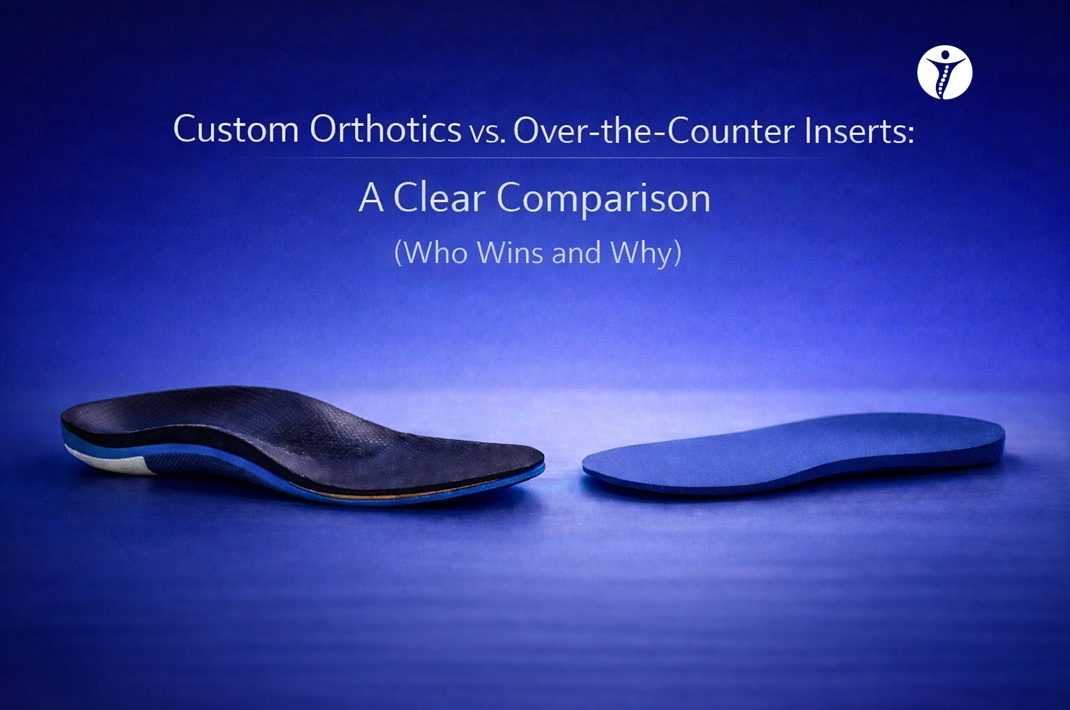
    Custom Orthotics vs. Over-the-Counter Inserts: A Clear Comparison (Who Wins and Why)

    The “best” choice depends on your pattern, your shoes, and your goals—not marketing.

    OTC inserts are often the best first step for mild-to-moderate symptoms
    Custom orthotics win when pain keeps coming back or mechanics are clearly driving overload
    The right shoe + break-in plan matters as much as the insert

    If you’re trying to decide between custom orthotics and over-the-counter (OTC) inserts, here’s the honest truth: both can help—when they match the right problem. The goal isn’t “more expensive = better.” The goal is to reduce the driver (usually load + mechanics), then build durability with smart progression. If you’re dealing with recurring heel or arch pain, start with our Foot & Ankle Pain page or explore Custom Orthotics.

    • Choose the option that matches your pain pattern and activity demands
    • We use conservative care and clear expectations—no cookie-cutter plans
    • We’ll tell you honestly if OTC is enough for your case

    Educational only. Not medical advice. If symptoms are severe or rapidly worsening, seek urgent evaluation.

    Start Here: The “Big 4” Clues (Custom vs. OTC)

    These clues usually make the decision obvious.

    1) Is this your first attempt at support?
    If you haven’t tried a quality OTC insert and shoe change yet, that’s often the best, lowest-cost first step.
    First time trying support Mild to moderate symptoms Clear shoe trigger
    2) Does pain keep coming back?
    Recurring flare-ups after standing, walking, running, or work shifts often mean mechanics + load distribution are a key driver.
    Same spot, repeat flare-ups Worse with long days “I can’t trust my feet”
    3) Are you clearly asymmetric?
    One foot collapsing more, one knee caving in, one shoe wearing out faster, or one side always flaring = custom often wins.
    Uneven shoe wear One-sided pain “Crooked” mechanics
    4) Have you already tried good OTC—and still relapse?
    If you’ve done OTC + shoe changes + a smart break-in plan and symptoms still return, that’s when custom earns its keep.

    Fast rule

    If you have recurring flare-ups, clear asymmetry, or you’re on your feet for work/sport and need reliability, custom orthotics tend to outperform OTC—because they’re built to match your mechanics and shoes.

    Custom Orthotics vs. OTC Inserts: The Clear Comparison

    Here’s what matters (and what doesn’t).

    Category OTC Inserts Custom Orthotics Who “Wins”
    Best for Mild–moderate support, general comfort, first-step trials Recurring pain, clear overload patterns, asymmetry, high-demand work/sport Depends on the pattern
    Fit & precision Standard shapes (may match you well—or not) Built to match your foot mechanics and shoe demands Custom (when mechanics drive symptoms)
    Durability Varies; often shorter lifespan Typically more durable and predictable Custom
    Cost Lower Higher upfront OTC (for first step)
    How fast you feel it Sometimes immediate comfort if it matches you Often noticeable support; must be broken in correctly Tie (break-in matters)
    Most common mistake Buying “soft cushioning” with no support or wrong arch shape Skipping break-in, using the wrong shoe, or expecting a “magic fix” without strength/progression Avoidable with guidance

    What actually “wins” long-term

    The best outcomes come from support + shoe match + progressive strength. Inserts help manage load. Strength and smart progression keep you better. If your pain includes knee/hip/back stress, see our Low Back Pain page and we’ll help you connect the dots.

    Who Should Choose OTC Inserts?

    OTC is often the best first step when the pattern is simpler.

    OTC is a great choice if you…

    • Have mild-to-moderate foot fatigue or soreness
    • Notice pain mostly with one pair of shoes (shoe trigger)
    • Are trying support for the first time
    • Want a cost-effective trial before going custom

    Quick wins

    • Match the insert to your foot (arch shape + firmness), not just “soft” comfort
    • Pair with a supportive shoe (some shoes defeat even good inserts)
    • Use a gradual break-in plan (see Orthotics Break-In Schedule)

    Who Should Choose Custom Orthotics?

    Custom tends to win when you need reliability and repeatable relief.

    Custom is usually worth it if you…

    • Have pain that keeps returning (especially during long work shifts or training blocks)
    • Have clear mechanical overload patterns (collapsing arch, one-sided symptoms, uneven shoe wear)
    • Need support that’s consistent across your lifestyle (work shoes + athletic shoes)
    • Have already tried quality OTC inserts and still relapse
    • Want a plan that pairs orthotics with strength and progression (not just “wear these forever”)

    Where custom really shines

    • Repeatable results: built to your mechanics, not a generic mold
    • Better shoe matching: we choose the right profile for your footwear needs
    • Long-term plan: support now + durability later through strength and capacity

    Important note

    Orthotics aren’t a substitute for strength and smart progression. They’re a tool to reduce overload while your tissues rebuild capacity. If you want the full “candidate checklist,” see Custom Orthotics: 9 Signs You Need Them.

    Want a Clear Recommendation for Your Feet?

    We’ll evaluate your walking mechanics, shoe match, and activity demands—then tell you honestly whether OTC is enough or custom is the smarter move.

    Break-In: The Part People Skip (and Regret)

    Most “orthotics didn’t work” stories are really break-in, shoe match, or expectation problems.

    1

    Start slow

    Wear them for short periods first, then build up. Your body needs time to adapt to new support.

    2

    Match the shoe

    Some shoes defeat support. We’ll help you choose footwear that works with your insert, not against it.

    3

    Track the pattern

    Improving vs. stable vs. worsening? If you’re not trending better, adjust the plan early.

    Use this guide

    For a simple schedule and what’s normal vs. not, read: Orthotics Break-In Schedule: What’s Normal, What’s Not (and When to Call Us).

    When to Worry (Red Flags)

    If any of these are true, don’t just “try an insert.” Get checked promptly.

    • Can’t bear weight or a severe limp
    • Major swelling, bruising, deformity, or a clear injury mechanism
    • Pain that is worsening day-to-day (especially after an activity spike)
    • Escalating night pain, fever, or unexplained swelling
    • Numbness/tingling or burning that’s spreading

    Custom Orthotics vs. OTC Inserts FAQs

    Quick answers (and “when to worry”).

    Are custom orthotics always better than over-the-counter inserts?
    Not always. OTC inserts are often a great first step for mild-to-moderate symptoms or general support. Custom orthotics tend to make the biggest difference when symptoms keep returning, mechanics are clearly driving overload, or you’ve already tried good OTC options without lasting relief.
    What’s the best OTC insole for plantar fasciitis?
    A supportive insole that matches your arch shape and controls heel-to-forefoot load is usually the best starting point. If morning heel pain keeps returning, you’ll also want a plan that includes strength, walking-load management, and shoes. See Plantar Fasciitis: Morning Heel Pain Fixes.
    How do I know if I’m a good candidate for custom orthotics?
    Good candidates often have recurring flare-ups, clear overload patterns with standing/walking/running, visible wear-pattern asymmetry, and short-term improvement with support followed by relapse when support is removed.
    Can orthotics help knee, hip, or low back pain?
    Sometimes. If foot mechanics contribute to knee/hip/back stress, orthotics can reduce the driver. They work best paired with mobility/strength and a progressive return plan. See Low Back Pain or Hip Pain.
    How long does it take to get used to orthotics?
    Most people need a short break-in period. Start with limited wear time and build gradually. For a simple schedule, read Orthotics Break-In Schedule. If pain is sharp, worsening, or not trending better, get the fit and plan checked.
    When should I worry about foot pain instead of trying inserts?
    Get checked promptly if you can’t bear weight, have major swelling/bruising, pain that’s worsening day-to-day, escalating night pain, numbness/tingling, fever, or pain after a clear injury.
  • Orthotics Break-In Schedule: What’s Normal, What’s Not (and When to Call Us)

    CUSTOM ORTHOTICS · PATIENT EDUCATION · LOGANSPORT, IN

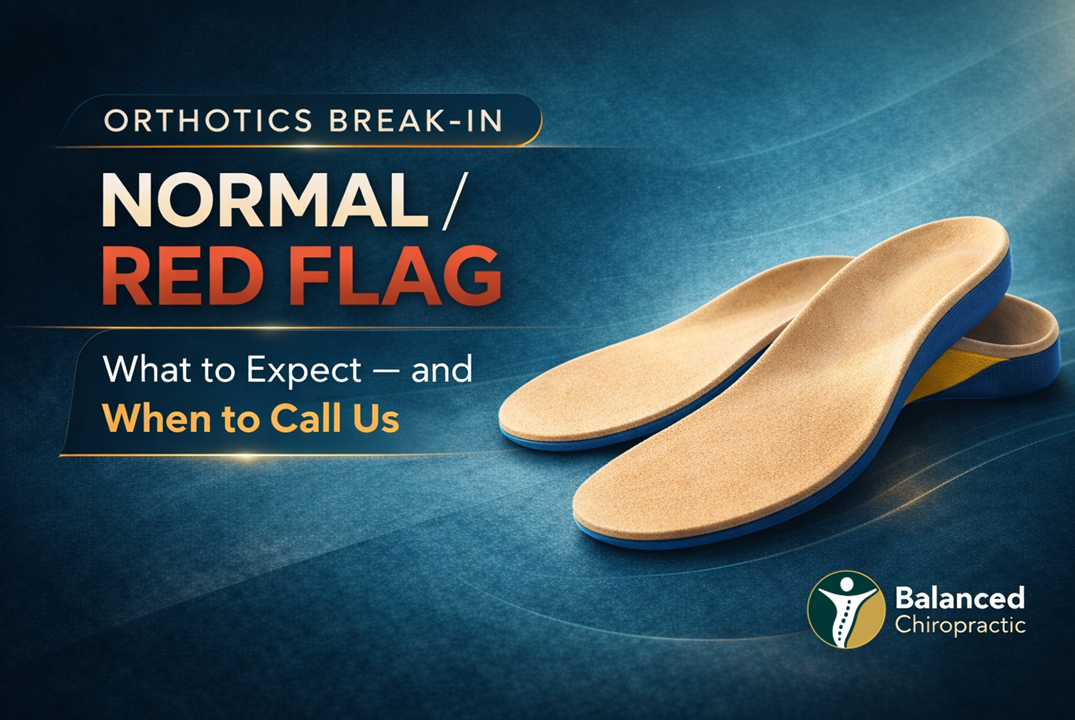
    Orthotics Break-In Schedule: What’s Normal, What’s Not (and When to Call Us)

    A simple plan to adapt comfortably—without flaring your feet, knees, hips, or back.

    Start low and progress gradually (all-day wear too soon is the #1 mistake)
    Mild “arch awareness” is normal—sharp pain, numbness, or blistering isn’t
    If you can’t progress by day 7–10, we should re-check fit and plan

    New orthotics change how force moves through your feet—and that can affect your calves, knees, hips, and low back. The goal is a smooth adaptation, not a “push through it” approach. If you’re getting orthotics for recurring foot pain, start with Custom Orthotics and our Foot & Ankle Pain page for the big-picture plan.

    • Most people adapt over 1–3 weeks when wear time increases gradually
    • Feet may feel “worked”—but pain should not escalate day-to-day
    • Clear “when to worry” and “when to call us” guidance below

    Educational only. Not medical advice.

    Start Here: What “Normal” Feels Like

    Use this quick checklist to self-sort before you change anything.

    Normal early sensations (usually OK)

    • Mild arch “awareness” or pressure that feels different (not sharp)
    • Calf or foot muscle fatigue (like you used muscles differently)
    • Mild soreness that resolves within 24 hours
    • A “taller” or more supported feel in standing/walking

    Not normal (pause + adjust plan, or call us)

    • Sharp pain in the arch/heel/ankle
    • Numbness/tingling or burning sensations
    • Blistering or a “hot spot” that gets worse each wear
    • Knee/hip/low-back pain that escalates day-to-day
    • Pain that lasts longer than 24–48 hours after wear

    Fast rule

    If symptoms improve when you reduce wear time, that’s a strong sign you simply progressed too fast. If symptoms persist even with reduced wear—or are sharp/neurological—get checked.

    Orthotics Break-In Schedule (Simple and Safe)

    This schedule fits most people. If you’re on your feet all day, use the slower version.

    Option A: Standard break-in (most people)

    • Days 1–2: 1–2 hours/day
    • Days 3–4: 2–4 hours/day
    • Days 5–7: 4–6 hours/day
    • Week 2: add 1–2 hours/day as tolerated
    • Week 3: full-day wear as tolerated (if goals require it)

    If you’re breaking in orthotics because of heel pain, see Plantar Fasciitis: Morning Heel Pain Fixes.

    Option B: Slow break-in (high sensitivity, chronic pain, or long hours on feet)

    • Days 1–3: 30–90 minutes/day
    • Days 4–7: 1–3 hours/day
    • Week 2: 3–5 hours/day
    • Week 3: 5–7 hours/day
    • Week 4: full-day wear as tolerated

    If you had an old ankle sprain that never fully normalized, it can affect how orthotics feel. Review Ankle Sprain Recovery Timeline.

    What to do if you flare

    • Drop back to the last “good” wear time for 2–3 days
    • Then increase by 30–60 minutes/day (not hours)
    • Make sure shoes fit correctly (orthotics take up space)
    • If you keep flaring by day 7–10, it’s time to contact us

    Footwear matters (more than people think)

    • If shoes are tight, orthotics can create pressure points
    • Choose a stable shoe with removable insole
    • Wear the orthotics in the same “main” shoes during break-in

    If top-of-foot pressure shows up, see: Top of Foot Pain: 6 Common Causes.

    Want Us to Check Your Fit and Progression?

    If you’re unsure what’s normal, we’ll look at your shoes, fit, wear time, and symptoms. If mechanics are a driver, we’ll tie orthotics into your full plan—not a standalone fix.

    When to Call Us (and When to Worry)

    These patterns deserve a check rather than “pushing through.”

    • Sharp arch/heel pain that doesn’t calm when you reduce wear time
    • Numbness/tingling, burning, or nerve-like symptoms
    • Blistering or a hotspot that worsens each wear
    • New knee/hip/low-back pain that is worsening day-to-day
    • Pain that lasts longer than 24–48 hours after wear
    • You cannot progress wear time by day 7–10 despite going slower

    If you have major swelling, inability to bear weight, or severe/worsening symptoms, seek urgent evaluation.

    Orthotics Break-In FAQs

    Quick answers—including what’s normal and when to call us.

    How long does it take to break in orthotics?
    Most people adapt over 1–3 weeks when wear time increases gradually. If you’re on your feet all day, expect closer to 2–4 weeks.
    What’s normal to feel when starting orthotics?
    Mild arch awareness, muscle fatigue, or mild soreness that resolves within 24 hours can be normal early on.
    What is NOT normal when breaking in orthotics?
    Sharp pain, numbness/tingling, blistering/hot spots, or pain that escalates day-to-day is not normal and should be addressed.
    Should I wear orthotics all day right away?
    Usually no. Going all-day immediately is a common reason people flare. A gradual schedule helps your feet and the rest of the chain adapt safely.
    When should I call you to adjust my orthotics?
    Call if you have sharp pain, numbness/tingling, persistent hotspots, blistering, pain lasting longer than 24–48 hours, or you can’t progress wear time after 7–10 days.
    Can orthotics cause knee, hip, or low back soreness at first?
    Sometimes. Orthotics change load distribution. Mild temporary soreness can be normal if it improves as you progress gradually. Persistent or worsening pain should be checked.
  • Custom Orthotics: Do You Need Them? 9 Signs Your Feet Need Support

    CUSTOM ORTHOTICS · FOOT & ANKLE PAIN · LOGANSPORT, IN

    Custom Orthotics: Do You Need Them? 9 Signs Your Feet Need Support

    Orthotics aren’t for everyone. Here’s how to tell when they’re worth it.

    Recurring heel/arch pain + “same flare-up every week” is a strong clue
    Foot mechanics can drive knee, hip, and low back overload
    Custom works best when it’s exam-guided + paired with strength

    Custom orthotics can be a game-changer for the right person—and a waste of money for the wrong person. The goal is simple: reduce overload and improve how force travels up the chain (ankle → knee → hip → low back). If you want the “full picture” approach, start with Custom Orthotics and Foot & Ankle Pain Treatment.

    • Best results come from matching orthotics to your feet + your shoes + your lifestyle
    • We always start conservative (shoes + load + strength) before “selling solutions”
    • Red flags (“when to worry”) included below

    Educational only. Not medical advice.

    Start Here: 3 Questions That Decide 80% of Orthotics Cases

    Orthotics help most when mechanics + load distribution are truly the driver.

    1) Do symptoms keep returning despite “smart basics”?

    If you’ve already tried better shoes, reduced aggravating load, and did some basic strengthening—but flare-ups keep returning, custom support becomes more worth it.

    2) Is the pain pattern “foundation-driven”?

    Foot mechanics can contribute to knee pain, hip pain, and even low back pain. If multiple areas flare together, it’s a strong clue the foundation matters.

    3) Is your daily life high-load on your feet?

    If you’re on hard surfaces all day (factory, healthcare, warehouse, retail), your feet take a constant beating. Orthotics can help distribute load—especially when paired with strength and mobility.

    9 Signs You May Benefit From Custom Orthotics

    Not all signs have to be present—look for the best match to your pattern.

    1) Heel pain or arch pain that’s worst in the morning

    Classic plantar fascia overload pattern—especially if it keeps returning. Read next: Plantar Fasciitis: Morning Heel Pain Fixes.

    2) Your shoes wear unevenly (one side always breaks down)

    Uneven loading is one of the best real-world clues that mechanics are driving stress.

    3) You “roll” ankles easily or have recurring ankle sprains

    Instability patterns often benefit from a plan that includes foot/ankle support + balance/strength work. See: Ankle Sprain Recovery Timeline.

    4) Knee pain that worsens after long days on your feet

    The knee often takes the hit when the foot collapses or load is not distributed well. See: Knee Pain: 7 Common Causes.

    5) Hip tightness or hip pain that flares with walking/standing

    Hip symptoms can be driven by how your foot loads the ground—especially when walking volume is high. See: Hip Pain: 6 Common Causes.

    6) Low back pain that worsens after standing or walking

    If the foundation isn’t stable, the spine often compensates. Orthotics can help in the right cases—especially when paired with strength.

    7) You have frequent “shin splints” or foot flare-ups when running volume increases

    Running pain is often load + capacity + mechanics. Use this: Running Pain Checklist.

    8) You’ve tried multiple OTC inserts but symptoms keep returning

    OTC can help mild cases. If pain is persistent or multi-area, custom often performs better. Read: Custom Orthotics vs. OTC Inserts (Comparison).

    9) One foot always feels “different” (more tired, more achy, less stable)

    Asymmetry matters. A gait/foot scan plus movement exam can identify what’s driving the imbalance.

    Quick reality check

    Orthotics aren’t magic. The best results come from: shoe match + break-in + strength + gradual load progression. If your issue is mainly shoe pressure or a suspected stress injury, orthotics aren’t the first step.

    Want to Stop the “Same Foot Flare-Up” Cycle?

    We’ll evaluate your feet, posture, and gait, then tell you honestly if custom orthotics make sense for your case. If they do, we’ll match them to your shoes and give you a simple break-in plan. For what “normal” feels like, see Orthotics Break-In Schedule.

    When to Worry (Red Flags)

    These patterns deserve prompt evaluation rather than “waiting it out.”

    • Inability to bear weight or a severe limp
    • Major swelling, bruising, deformity, or a clear injury mechanism
    • Pain that is worsening day-to-day (especially after a recent volume spike)
    • Escalating night pain, fever, or a hot/red swollen foot
    • Numbness/tingling that is spreading or weakness

    Not sure if it’s urgent? Start with Contact & Location and we’ll guide you.

    Custom Orthotics FAQs

    Quick answers—including “when to worry.”
    Do custom orthotics actually work?
    They can—when mechanics and load distribution are truly part of the driver. They work best when exam-guided and paired with strength and mobility.
    How do I know if I need custom orthotics or just better shoes?
    If better shoes reduce symptoms and flare-ups don’t return, you may not need custom. If symptoms keep recurring despite smart shoes and load changes, a custom evaluation is often worth it.
    What’s the difference between custom orthotics and OTC inserts?
    OTC inserts are generalized and can help mild cases. Custom orthotics are designed for your structure and mechanics and are often better for persistent, recurrent, or multi-area symptoms.
    How long does it take to get used to orthotics?
    Most people adapt over 1–3 weeks with a gradual break-in plan. See Orthotics Break-In Schedule.
    Can orthotics help knee, hip, or low back pain?
    Sometimes. If the foot is contributing to overload up the chain, orthotics can reduce strain—especially when paired with strengthening.
    When should I worry about foot pain and get checked?
    Get checked promptly for inability to bear weight, major swelling/bruising, worsening daily pain, escalating night pain, fever/redness/warmth, or spreading numbness/tingling.