
CUSTOM ORTHOTICS · EXPECTATIONS GUIDE · LOGANSPORT, IN
Orthotics Break-In Schedule: What’s Normal, What’s Not (and When to Call Us)
Most “orthotics problems” are really a break-in or shoe-fit problem. Here’s the safe way to ramp up.
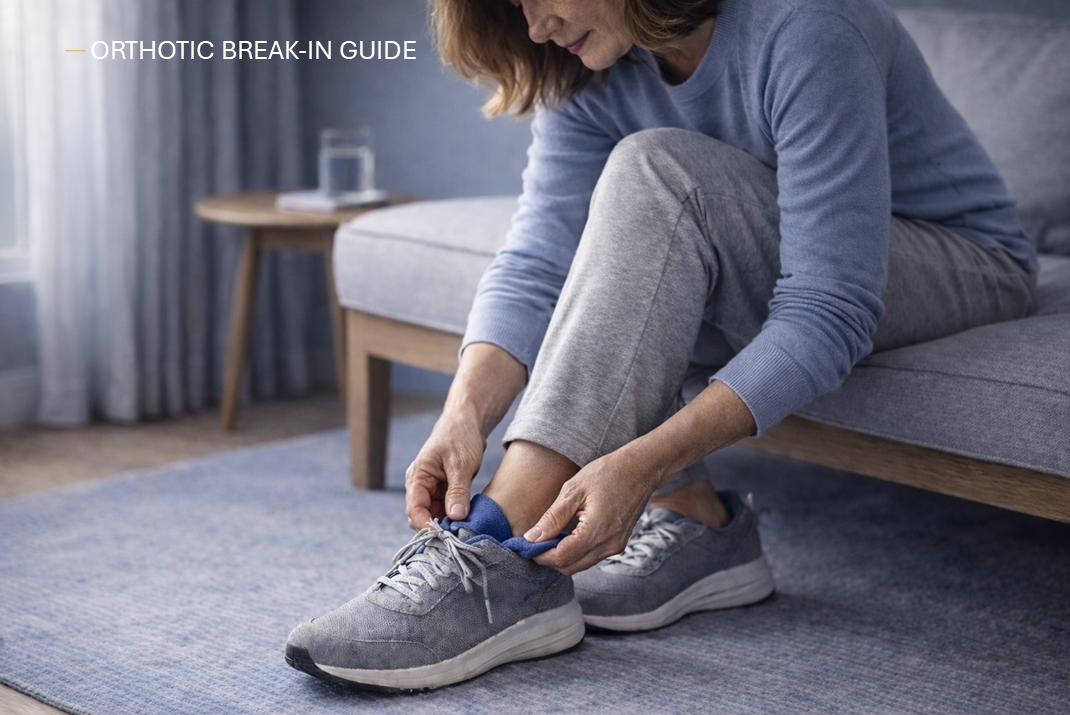
If you’re unsure whether what you’re feeling is normal, this guide will help you self-sort quickly. For the full service overview, see Custom Orthotics. If your main complaint is foot/heel pain, start with Foot & Ankle Pain. If you feel the change higher in the chain, review Knee Pain, Hip Pain, or Low Back Pain.
- Two schedules: standard + high-demand work
- Clear “normal vs not” and a flare protocol
- When to call us (so you don’t guess)
Educational only. Not medical advice. Seek urgent care for severe/worsening symptoms or red flags.
Quick Answer: The Safe Break-In Rule
Break orthotics in by increasing wear time first. Your goal is better or the same the next day — not “pushing through.”
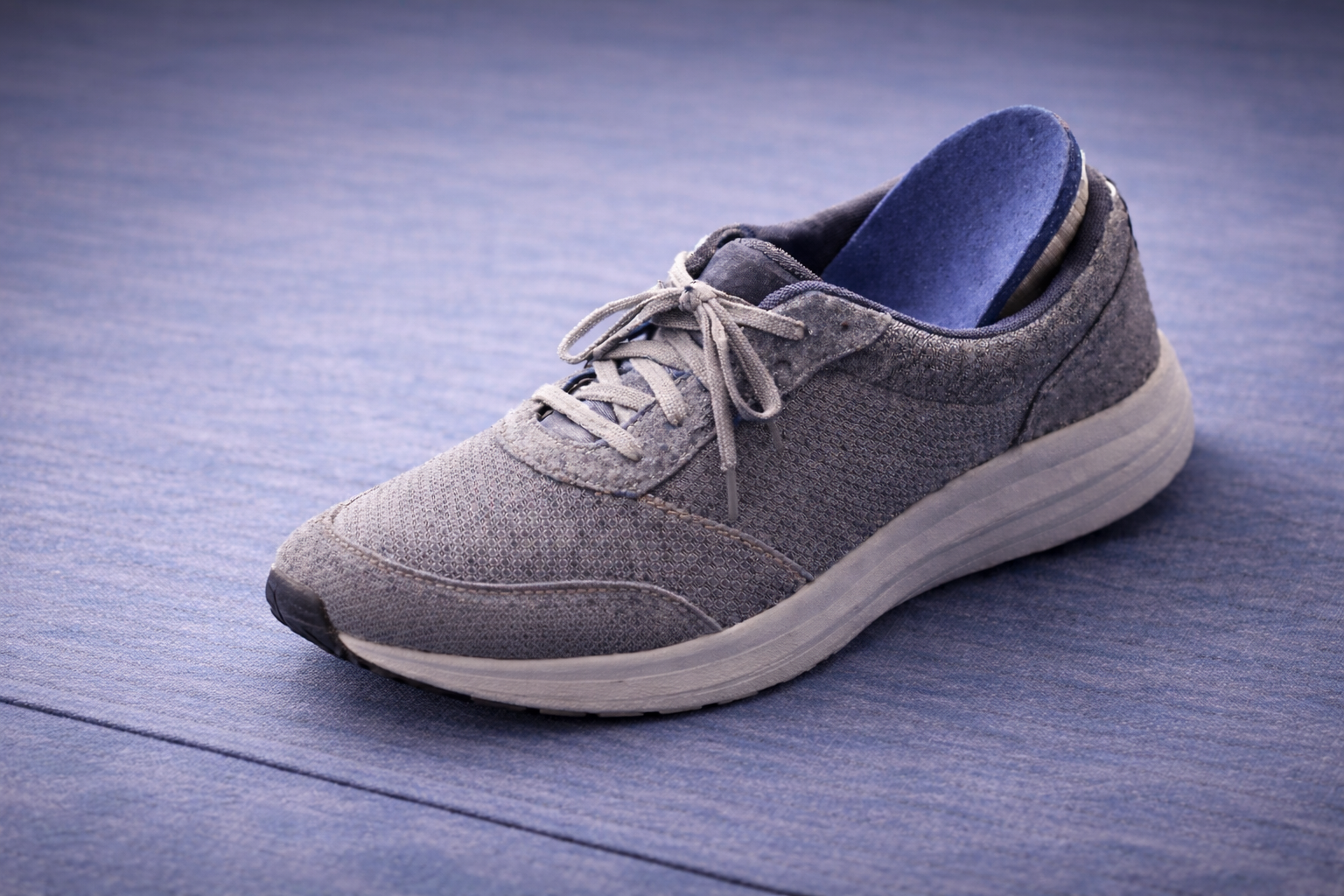
The “next-day rule” (simple and powerful)
- Better: keep progressing slowly
- Same: progress is still progress (continue the schedule)
- Slightly sore: okay if it settles within 24 hours
- Worse: scale back to the last tolerable step for 1–2 days
One key rule: don’t increase two variables at once
Increase wear time first. Then increase activity intensity. If you change both at the same time, it’s hard to know what caused the flare.
Orthotics Break-In Schedule (Two Options)
Choose the schedule that matches your workload. If in doubt, use the slower one.
Schedule A: Standard break-in (desk-to-normal activity)
| Day | Wear time | Notes |
|---|---|---|
| 1–2 | 30–60 minutes | Best-fitting shoes only. Easy activity. |
| 3–4 | 1–2 hours | If next-day rule is stable, progress. |
| 5–7 | 2–4 hours | Keep intensity low; focus on tolerance. |
| Week 2 | Half-day → full-day | Increase by 1–2 hours every 2 days as tolerated. |
| Week 3+ | Normal wear | Add higher activity gradually (walks, training, long errands). |
Schedule B: High-demand break-in (long shifts, factory, healthcare, trades)
| Day | Wear time | Notes |
|---|---|---|
| 1–2 | 30–45 minutes | Best shoes only. No “test days” yet. |
| 3–5 | 60–90 minutes | Keep steps lower than usual if possible. |
| 6–8 | 2 hours | Hold here if you’re borderline; don’t rush. |
| Week 2 | 2–4 hours | Increase by 30–60 min every 2 days if stable. |
| Week 3 | 4–6 hours | Gradually introduce longer shifts. |
| Week 4+ | Full shift | Once full shift is tolerated, then build “extra” activity. |
If you’re a runner
Break in orthotics during normal daily life first. Then reintroduce running as a separate ramp (short, flat runs, small increases). Don’t start break-in on hill repeats.
Why Orthotics Can Affect Your Knees, Hips, or Low Back
Your feet are the foundation for how your ankles, knees, hips, pelvis, and low back share load. When new orthotics change how your feet contact the ground, the rest of the chain may need time to adapt.
Mild awareness can be normal. Worsening pain is not.
Some people notice mild soreness in the calves, knees, hips, or low back during the first week. That should settle as wear time increases gradually. If symptoms are sharp, worsening, or lasting into the next day, scale back and let us check the fit.
Related: Knee Pain Treatment, Hip Pain Treatment, and Low Back Pain Treatment.
Use the “one variable at a time” rule
If your orthotics feel good for normal walking, do not immediately add a longer shift, harder workout, and different shoes on the same day. Change one variable, watch the next-day response, then progress.
What’s Normal (Early On)
Most of these improve quickly with a gradual ramp and good shoe pairing.
- Mild arch pressure that improves as you adapt
- Mild muscle soreness in feet/calves (like a new workout)
- “Awareness” of a new contact point under the foot
- Better or the same the next day (even if you felt it during wear)
What’s Not Normal (Scale Back + Check In)
If you see these patterns, don’t grind through it.
- Sharp pain (especially a single hot spot)
- Worsening trend over 24–48 hours
- Numbness/tingling/burning (nerve irritation pattern)
- New swelling that doesn’t settle
- Skin hot spots / blisters from rubbing or shoe fit
- New pain that feels “wrong” and doesn’t improve when you scale back
Fast fix: try the best-fitting shoe only
If a symptom appears only in one shoe, it’s usually the shoe volume/width/heel counter—not the orthotic itself.
Shoe Checklist (This Prevents Most Problems)
The shoe matters as much as the orthotic. Use this checklist before you assume the orthotic is “wrong.”
- Heel counter: stable (not collapsing)
- Width/volume: enough space so the insert doesn’t “overfill” the shoe
- Midsole: not worn out or tilted
- Remove factory insole if needed to create room
- Orthotic sits flat: no rocking or curling in the shoe
Top-of-foot pressure?
If the top of your foot hurts, loosen laces and avoid cranking the tongue down. Lace pressure is a common culprit.
Related: Top of Foot Pain in Logansport, IN: 6 Common Causes
Flare Protocol + When to Call Us
Here’s exactly what to do if you overdid it—and when to contact us.
If you flare (simple ladder)
- Step 1: Drop back to the last tolerable wear time for 1–2 days
- Step 2: Reduce activity intensity (flat walking only)
- Step 3: Re-ramp slower (increase 15–30 minutes at a time)
- Step 4: Use the best-fitting shoe only until stable
Call us if any of these are true
- You have sharp pain or a worsening trend over 24–48 hours
- You develop numbness/tingling or burning
- You get skin hot spots/blisters or the shoe feels too tight
- You can’t tolerate short wear times after a week
Bring the shoes you wear most. Small adjustments often solve it quickly.
Orthotics Break-In FAQs
Quick answers—including what’s normal and when to call.
Leave a Reply